WooCommerce custom theme development shaped around your catalog
A bought theme is designed for a demo store with twelve products and perfect photos. Our WooCommerce custom theme development starts from your catalog instead: The attributes buyers compare, the photos you actually have and the phone most of them are holding.
Certified

When the theme fights the products
Multipurpose themes ship every layout anyone might want, which means your shop loads code for sliders, portfolios and mega footers it never shows. Then a page builder goes on top, then a plugin per missing feature, and every update becomes a small gamble.
The bigger cost is fit. A jewelry store needs close-up imagery and stone details above the fold; an industrial supplier needs spec tables on the category page. A generic product template gives both the same layout, and both lose sales to it. It is why every store our WooCommerce team designs gets templates drawn for its own products, often after a UX audit of the old store.
Product pages that hide the details buyers compareList pages with no room for specs, so every click is a guessMobile layouts that are the desktop page, squeezedTheme customization trapped in a page builder only one person understandsSlow pages from code the store never uses
What goes into a custom WooCommerce theme
Mobile-first design in Figma
Every key template designed for the phone first, then desktop, and signed off by you before development starts.
Block editor build
WooCommerce theme development on Gutenberg, so your team edits pages with blocks instead of shortcodes or a separate builder.
Product page templates
Layouts per product type where it matters: Gallery, options, specs, shipping notes and reviews in the order your buyers need them.
Category and list pages
Flattened navigation, useful filters and spec-rich product lists for catalogs where buyers compare before they click.
Cart and checkout layout
WooCommerce theme design for the steps that pay the bills, reviewed against Baymard checkout research.
Lean plugin set
Plugins used sparingly. Small features are written into the theme, so there are fewer moving parts to update.
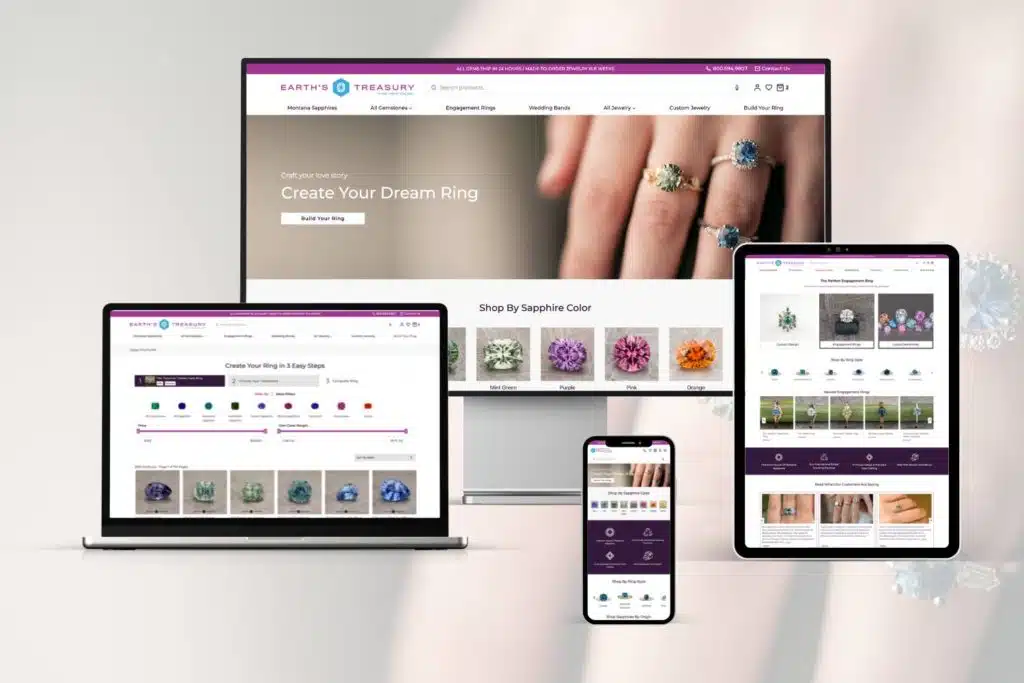
Earth’s Treasury: A mobile-first redesign that paid for itself
Earth’s Treasury sells gemstones and fine jewelry. We redesigned the store mobile-first in Figma, moved it to faster servers, added Algolia search and built a custom ring builder into the theme, so shoppers could pick a setting and a stone without leaving the product flow.
After launch the store saw conversion rate +56%, revenue +113% and AOV +16%. A very different catalog, ARCH Cutting Tools, got a rethemed store with flattened categories and spec-rich list pages, because machinists compare numbers, not photos.
Mobile-first design in Figma, signed off before the buildAlgolia search and a custom ring builder in the themeResult: Conversion rate +56%, revenue +113%, AOV +16%
From Figma file to live theme
Audit the catalog
We list product types, attributes and photo assets, and look at how your current pages perform on phones.
Design key templates
Home, category, product, cart and checkout in Figma, with real products in them, not lorem ipsum.
Build on staging
The theme is built on a staging copy of your store, with your data, so you review the real thing.
Launch and tune
We switch over, watch analytics and fix the rough edges in the first weeks.
WooCommerce custom theme development questions
Related WooCommerce services
WooCommerce UX Audit Services
Find out what your current store gets wrong before you design the new one.
WooCommerce Speed Optimization
Faster pages for stores that are slow from hosting, plugins or a heavy theme.
Full-Stack WooCommerce Development
The full build around the theme: Features, integrations, hosting and support.
Send us your store and the theme you’re stuck with. We’ll show you what a custom one would change, and what it costs.
A plan, price and timeline inside five business days.