Beyond Brainstorming: Mastering the Art of Brand Naming
Why Your Brand Name Matters More Than You Think
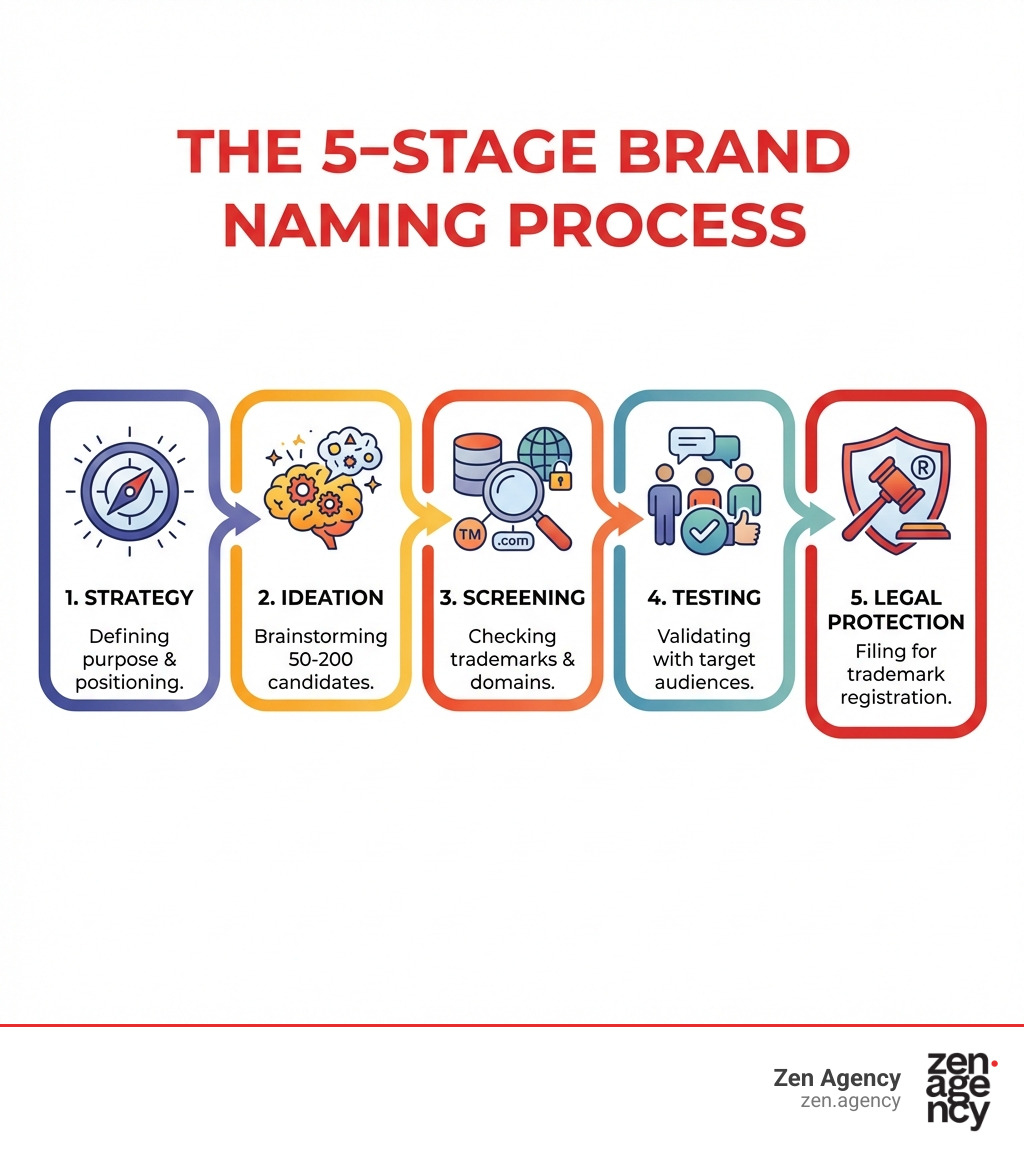
The brand naming process is a strategic exercise that transforms your business vision into a memorable, legally protectable identity. Here’s what you need to know:
The Core Brand Naming Process:
- Strategy – Define your brand purpose, target audience, and positioning before generating names
- Ideation – Brainstorm 50-200+ name candidates using diverse creative techniques
- Screening – Check trademark availability, domain prospects, and cultural appropriateness
- Testing – Validate top contenders with target audiences and stakeholders
- Legal Protection – Conduct comprehensive trademark searches and file for registration
We are exposed to 6,000 to 10,000 ads every day. Each one promotes a different brand personality, fighting for attention in an increasingly cluttered marketplace. Your brand name is often the first—and sometimes only—chance to make an impression that sticks.
A well-crafted name does more than identify your business. It communicates your unique value proposition, differentiates us from competitors, and creates an emotional connection with our audience. When Nike shifted from “Blue Ribbon Company” to a name representing the Greek goddess of victory, they weren’t just rebranding—they were building a foundation for a global empire.
The stakes are high. Research suggests a solid brand name can significantly increase sales and investor interest. Yet in 99% of cases, this doesn’t happen by chance. It requires a deep understanding of the science behind naming and applying it systematically.
Most companies approach naming backwards. They brainstorm words they like, check if the domain is available, and hope for the best. This reactive approach leads to generic names that limit growth, legal conflicts that cost thousands to resolve, or cultural missteps that damage reputation before launch.
The real challenge isn’t generating ideas—it’s knowing which ideas will work for your business in the long term. It’s understanding when to be descriptive versus evocative, how to balance memorability with legal protectability, and why our favorite name might be the wrong choice for our audience.
I’m Joseph Riviello, and over my 22 years leading digital marketing strategy, I’ve guided countless companies through the brand naming process, helping them build memorable identities that support sustainable growth. This comprehensive guide will show you exactly how to develop a name that becomes a powerful marketing asset, not a liability.
The Strategic Foundation of Brand Naming
Choosing a brand name isn’t just about picking a pretty word; it’s a profound strategic decision that lays the groundwork for your entire brand. A well-chosen name serves as the cornerstone of your identity, supporting your long-term strategy and purpose. It’s an asset that can significantly increase sales and investor interest, driving business success far beyond mere recognition. When we approach brand naming process strategically, we’re building a name for scale, ensuring it remains relevant as your business grows and evolves.

The strategic importance of brand naming becomes clear when we consider its long-term impact. A name should be a vehicle for storytelling and emotional connection, evoking feelings and establishing positioning in the minds of consumers. According to research from Bergische University, brands can evoke the same positive emotions in us that we experience with people. This emotional resonance is critical for consumer connection and loyalty.
The Psychology Behind a Great Name
Human psychology plays a crucial role in the brand naming process. A name isn’t just a label; it’s a package of associations, emotions, and perceptions. We aim for names that are memorable, meaningful, and distinctive, leveraging psychological principles to make them stick.
- Semantics and Sound Symbolism: The meaning (semantics) and sound (sound symbolism) of a name powerfully influence how it’s perceived. For instance, names with plosive consonants (like ‘P’ or ‘K’) can feel more impactful and modern, while softer sounds might evoke comfort. Effective names often make us think and resonate on a deeper level. Experts note that three key factors affect a name’s performance: semantics, structure, and sound symbolism.
- Emotional Connection: A great name can evoke emotions, creating a sense of identity and establishing a brand’s positioning. Our goal is to craft names that resonate emotionally with the target audience, drawing them in and fostering connection. You can learn more about this in our article on The Psychology of Branding: How Consumers Connect with Brands Emotionally.
- Cultural Factors: In today’s interconnected world, cultural and linguistic context is paramount. A name developed for the USA might have unintended, even offensive, meanings in other cultures. We carefully check for cultural biases and potential misunderstandings to ensure your brand name translates positively wherever your business may go. This attention to detail prevents costly reputational damage and ensures broad appeal.
- Memorability and Processing: A memorable name is easy to pronounce, spell, and recall. It should be distinctive enough to stand out from competitors but simple enough to process quickly. This ease of processing contributes to brand recognition and recall, which are vital for growth. The benefits of a strong brand name extend far beyond mere recognition; they improve customer perception and build trust, as discussed in Why Branding Matters: How a Strong Brand Drives Business Growth.
Choosing Your Naming Style: Descriptive vs. Evocative
One of the first strategic decisions in the brand naming process is determining the naming style. This choice impacts brand flexibility and how effectively the name communicates your unique value proposition.
- Descriptive Names: These names clearly state what the company or product does (e.g., “General Motors,” “Internet Explorer”). While straightforward, they can be restrictive. If “XYZ Software” wants to branch into hardware, the descriptive name becomes a liability, potentially confusing customers and limiting future growth. We generally advise avoiding overly descriptive names for brands, as they can hinder “naming for scale” and line extensions.
- Evocative Names: These names hint at a brand’s benefits or attributes without explicitly stating them (e.g., “Nike” suggests victory, “Amazon” implies vastness). They require more marketing effort to build meaning but offer immense flexibility for future expansion. They are often more memorable and distinctive, sparking curiosity and imagination.
- Abstract Names: These are coined names with no inherent meaning (e.g., “Kodak,” “Xerox”). They are highly distinctive and easily trademarked but require significant marketing investment to imbue them with brand meaning.
- Coined Names: These names are invented words. They offer strong legal protection and distinctiveness. Examples like “Sonos” (combining “son” for sound with “os” for operating system) show how coined names can be strategically built to communicate a brand’s essence.
The choice between descriptive and evocative names depends on your brand’s unique value proposition and long-term strategy. While descriptive names offer immediate clarity, evocative or abstract names provide greater flexibility and long-term potential for differentiation and growth. Understanding your brand’s positioning is key to this decision, as explored in What is Brand Positioning?.
A Step-by-Step Guide to the Brand Naming Process
The brand naming process is complex, but with a structured approach, it becomes manageable and highly effective. We apply a systematic, science-backed methodology to ensure every name we develop is not just creative, but strategically sound and legally viable.

This structured process is why professionals like Rob Meyerson, a brand consultant and namer, emphasize clear steps from brief to legal. We believe in leveraging both expert human insight and cutting-edge technology. Naming agencies bring specialized expertise, helping businesses steer the intricate landscape of linguistics, psychology, and trademark law. Technology, including AI and LLMs, can assist in rapid ideation and preliminary legal checks, streamlining the initial stages of the process. This blend of art and science helps us build a memorable brand identity, as detailed in The Ultimate Guide to Building a Memorable Brand Identity.
Step 1: Create a Comprehensive Naming Brief
The foundation of any successful brand naming process is a comprehensive naming brief. This document acts as your North Star, guiding every subsequent step. It’s not just a checklist; it’s a deep dive into your brand’s DNA.
- Defining Objectives: What do you want your name to achieve? Is it to convey innovation, trust, affordability, or something else entirely?
- Target Audience Analysis: Who are you speaking to? Understanding their demographics, psychographics, and preferences is crucial. A name that resonates with “Mary, a busy mom” might differ greatly from one aimed at “John, a 32-year-old entrepreneur.”
- Brand Personality and Values: How do you want your brand to feel? Is it playful, authoritative, innovative, or comforting? The name should reflect this personality. Our article How to Create a Brand Persona That Resonates with Your Audience offers further insights here.
- Competitor Analysis: What are your competitors named? We want to stand out, not blend in. This step helps us identify naming trends to avoid and opportunities for differentiation.
- Naming Criteria: Establish clear criteria for evaluation. This includes desired length, phonetic characteristics, and any specific linguistic requirements.
- Getting Stakeholder Buy-in: This is crucial. As Rob Meyerson highlights, the single biggest problem in naming is when key decision-makers are not involved early. We ensure all stakeholders review and approve the brief, preventing late-stage vetoes and ensuring everyone is aligned. For deeper strategic insights, we often refer to classics like Reality in Advertising.
Step 2: Conduct Effective Brainstorming Sessions
With a solid brief in hand, it’s time to release creativity. Brainstorming is more than just shouting out ideas; it’s a structured exercise designed to generate a vast pool of potential names.
- Assembling a Diverse Team: Research indicates small, diverse teams significantly outperform larger groups, avoiding “groupthink” and fostering unique perspectives. We bring together individuals from various backgrounds – product, marketing, strategy – to ensure a rich mix of ideas.
- Quantity Over Quality (Initially): The goal of initial brainstorming is volume. We encourage generating hundreds of ideas without judgment. Even “bad” ideas can spark new, brilliant connections. Professional namers often generate thousands of names for a project.
- Brainstorming Techniques: We employ various techniques:
- Word Association: Starting with keywords from the brief and exploring synonyms, antonyms, and related concepts.
- Metaphorical Thinking: Using metaphors to connect abstract ideas to tangible concepts.
- Twisting Ideas: Playing with existing words, adding prefixes or suffixes, or combining elements.
- “Rabbit Holes”: Exploring seemingly unrelated concepts that might lead to unique, unexpected names.
- Overcoming Creative Blocks: When ideas dry up, we encourage techniques like taking a break, purposely generating “bad” ideas, or even naming something completely unrelated to reset the creative flow.
Step 3: Evaluate and Shortlist Your Top Contenders
Once we have a longlist of names, the rigorous process of evaluation begins. This step is about sifting through the volume to find the gems that meet our strategic criteria.
- Evaluating Against the Brief: Every potential name is measured against the naming brief. Does it align with the brand’s purpose, appeal to the target audience, and reflect the desired personality?
- Objective Criteria: We use objective criteria, such as Marty Neumeier’s seven criteria (distinctiveness, brevity, appropriateness, easy spelling/pronunciation, likability, extendibility, protectability) and Alexandra Watkins’s SMILE qualities (Suggestive, Memorable, Imagery, Legs, Emotional), to assess each name.
- Preliminary Screening: This is a crucial, early step to weed out obvious conflicts. We conduct “knockout searches” for trademark availability and domain availability. For domain checks, tools like NAME.com are invaluable. We also check for social media handle availability, as a consistent digital presence is vital. For example, if
NAME.comis taken, we might try adding a suffix or prefix, likeonepeloton.comortryfigma.com.
Validation: Testing, Feedback, and Legal Clearance
The brand naming process culminates in rigorous validation. This phase is where we stress-test our top contenders, gather crucial feedback, and secure the chosen name legally. It’s where data-driven decisions ensure the name’s long-term success and protect your investment.
This stage is non-negotiable because even the most brilliant name on paper can fall flat in the real world. By embracing market research and feedback, we refine our choices and build a name that resonates deeply with your audience. The goal is finalization and effective implementation, ensuring the name is a living, breathing part of your brand identity. For guidance on maintaining this identity, refer to The Importance of a Brand Style Guide.
Why Name Testing is a Non-Negotiable Step
Ignoring name testing results can negatively affect a brand, leading to unintended consequences. This is why testing is critical:
- Gathering Audience Feedback: We test potential names with segments of the target audience. This isn’t about asking which name they like best (consumers often gravitate towards descriptive or safe options), but rather how they perceive it. Does it evoke the right emotions? Does it communicate the intended message?
- A/B Testing Names: For digital applications, A/B testing can provide quantitative data on which names perform better in terms of click-through rates or recall.
- Stress-Testing Applications: We mock up names in various contexts – on a logo, a website, a product package, or an advertisement. This helps us visualize how the name will function in the real world and identify any visual or phonetic issues.
- Checking for Unintended Meanings: This is particularly important for brands with global aspirations. A name that sounds great in English might be problematic elsewhere. We conduct thorough linguistic and cultural disaster checks, often with native speakers in relevant markets (like our local markets in Pennsylvania, Montana, and across the USA), to uncover any negative connotations or pronunciation difficulties. This helps us avoid the hidden costs of poor branding, as detailed in The Hidden Costs of Poor Branding: Mistakes to Avoid.
Securing Your Name: The Legal side of the brand naming process
Legal protection is paramount. A fantastic name is worthless if it infringes on an existing trademark or cannot be legally protected.
- Trademark Infringement: The US trademark database alone sees over 569,270 names registered annually. This makes finding a truly unique and protectable name a challenge. A name similar to a registered trademark in the same industry can lead to costly legal disputes.
- Legal Protection: Trademarking your name provides exclusive rights to use it for your goods or services, preventing competitors from using similar names. This is a valuable intellectual property asset.
- Trademark Search Process: After preliminary screening, we engage experienced trademark attorneys for full legal searches. These searches go beyond simple keyword checks, delving into nuances of “likelihood of confusion.” We need to consider the relevant International Classes for goods and services to ensure comprehensive protection. The US trademark database is a public, free resource, but efficient searching requires expertise.
- Working with a Trademark Attorney: A qualified attorney will conduct comprehensive searches, evaluate the strength and distinctiveness of the name, and advise on the registration process with the US Patent and Trademark Office (USPTO). This step is non-negotiable for any serious brand.
Finalizing and Launching Your New Brand Name
After thorough testing and legal clearance, it’s time to make the final decision and bring your new brand name to life.
- Making the Final Call: This decision is informed by all the research, feedback, and legal assessments. It’s about choosing the name that best aligns with the brand’s strategic objectives and long-term vision.
- Building a Narrative: A name is the foundation for your brand’s story, not the entire story itself. Once chosen, we begin to build the narrative around it, crafting compelling messages that explain its meaning and connect with the audience. This is where The Art of Brand Storytelling – Part 1: Finding Your Story becomes vital.
- Integrating the Name Across All Brand Assets: The new name needs to be seamlessly integrated into every aspect of your brand identity – from your logo and website to marketing materials and internal communications. This requires updating your visual style guide, as discussed in Creating a Visual Style Guide for Your Business.
Common Naming Mistakes and Myths to Avoid
The path to a great brand name is often littered with pitfalls. Understanding common mistakes and debunking prevalent myths can save you time, money, and headaches in the brand naming process.
- Being too descriptive or generic: A name like “Fast Couriers” might seem clear, but it lacks distinctiveness and flexibility. It also makes it harder to stand out in a crowded market.
- Ignoring negative connotations: As we’ve seen, cultural and linguistic checks are vital. A seemingly innocent name can carry offensive meanings elsewhere.
- Skipping legal due diligence: This is perhaps the most dangerous mistake. Launching a brand without thorough trademark searches can lead to costly rebranding, legal battles, and loss of brand equity.
- Naming by committee: While stakeholder buy-in is important, making decisions by a large committee often leads to bland, “least common denominator” names that please everyone but excite no one. Small teams are more effective for creative generation.
- Underestimating cultural differences: Assuming a name will translate universally without proper vetting is a recipe for disaster.
Debunking Common Naming Myths
Let’s clear up some widespread misconceptions about naming:
- Myth 1: A great name must describe what you do.
- Reality: While descriptive names have their place, they often lack distinctiveness and limit future growth. Iconic brands like “Apple” or “Google” don’t describe their products but have built immense meaning through branding. Effective names focus on being remarkably distinctive and noteworthy.
- Myth 2: You’ll know “the one” when you see it.
- Reality: Naming often feels like a gut feeling, but the best names aren’t always the most comfortable or popular initially. Sometimes, the most distinctive names feel a “bit strange” at first, as was the case with “Pentium.” The best names involve a degree of risk and require strategic justification.
- Myth 3: Coined names require a huge marketing budget.
- Reality: While coined names like “Kodak” require building meaning, they offer unparalleled distinctiveness and legal protection. They can be highly effective, creating a unique space for your brand.
- Myth 4: The name is the most important part of your brand.
- Reality: The name is the foundation for your brand’s story, not the entire story itself. A strong brand is built on its unique value proposition, visual identity, brand voice, customer experiences, and consistent messaging. The name is the first step, but it’s the entire brand ecosystem that creates lasting impact.
Frequently Asked Questions about the Brand Naming Process
What’s the difference between a brand name and a product name?
A brand name represents the overarching identity and values of an entire company or organization. It aims to evoke emotions and associations about the entire brand, serving as a long-term identifier that can encompass many products or services. Think “Apple” – it represents the company, its values, and its ecosystem.
A product name, on the other hand, refers to a specific individual product or a line of products within a larger brand. Product names often emphasize features, benefits, or purposes of that particular item. For example, “iPhone” is a product name under the “Apple” brand. Product names can change more frequently and are often designed to address specific customer needs for that offering.
How do you create a name that is memorable and distinctive?
Creating a memorable and distinctive name involves a blend of art and science.
- Memorability: Names that are short, easy to pronounce, and easy to spell tend to be more memorable. Phonetic rhythm and pleasing sounds (euphony) also contribute. Names that create vivid imagery or have a slight element of surprise can also stick in consumers’ minds.
- Distinctiveness: To be distinctive, a name must stand out from competitors and avoid industry clichés. This often involves using unexpected word combinations, creating unique coined terms, or leveraging suggestive names that spark curiosity rather than explicitly describing. Distinctive names are “noteworthy” – they make your audience think and your competitors wince.
Should I use a naming agency or do it myself?
The decision to use a naming agency or undertake the brand naming process yourself depends on your resources, expertise, and the stakes involved.
- DIY Approach: This can work for founders or small businesses with a clear vision, sufficient time, and a willingness to dive deep into research (linguistic, cultural, and legal). There are many DIY resources available, including guides and brainstorming tools.
- Naming Agency: For businesses with complex naming needs, global aspirations, or high stakes, a professional naming agency offers significant advantages. We bring a structured, data-driven process, deep linguistic and psychological expertise, and experience in trademark screening and legal navigation. Agencies like ours can prevent costly mistakes, deliver a more strategic and protectable name, and free up your internal team to focus on core business operations. While full-service naming can start around $25k and go up to six figures, the investment often pays for itself by avoiding legal pitfalls and securing a powerful, long-lasting brand asset.
Conclusion
The brand naming process is far more than a creative exercise; it’s a strategic imperative that shapes your business’s future. From understanding the psychology behind consumer perception to navigating complex legal landscapes, every step is crucial. A well-chosen name is a powerful asset, driving sales, attracting investors, and forming the emotional core of your brand identity. It’s the foundation upon which your entire brand story is built.
At Zen Agency, we understand the art and science of naming. Our expertise in branding, custom website development, and digital marketing strategies ensures that your brand name is not just a label, but a catalyst for growth. We help businesses in Pennsylvania, Montana, and across the USA craft names that increase visibility, profitability, and ROI.
Ready to open up the full potential of your brand? Explore our Branding Graphic Design Services and let us help you build a brand identity that truly resonates.