Convert More Leads: B2B CRO for Digital Dominance
Why CRO for B2B Websites Is Your Secret Weapon for Growth
CRO for B2B websites is the systematic process of increasing the percentage of website visitors who take valuable actions—like requesting a demo, downloading a resource, or submitting a contact form. Here’s what you need to know:
Key Elements of B2B CRO:
- Optimize high-impact pages – Homepage, navigation, forms, pricing, and demo request pages
- Reduce friction points – Simplify forms, improve site speed, clarify messaging
- Test systematically – Run A/B tests on headlines, CTAs, layouts, and form fields
- Personalize for stakeholders – Tailor content for different buying committee members
- Track the right metrics – Conversion rate, visitor-to-lead rate, funnel drop-offs, and cost per acquisition
Most B2B websites do a lot of work for little reward. Good traffic? Check. Decent session duration? Check. But actual conversions? Crickets.
Here’s the reality: B2B websites convert just 2-3% of visitors on average. That means 97-98 out of every 100 visitors leave without taking action. It’s like pouring expensive water into a bucket full of holes.
The problem isn’t your traffic. It’s what happens after someone lands on your site.
B2B buyers follow a longer, more complex journey than B2C consumers. They research for months, involve multiple stakeholders, and need to justify investments of thousands—sometimes millions—of dollars. A flashy homepage or generic CTA won’t cut it.
The good news? Small, strategic changes can deliver massive results. Companies that focus on CRO see:
- Higher ROI from existing traffic
- Better lead quality
- Shorter sales cycles
- More predictable pipeline growth
A B2B SaaS company saw a 30% increase in demo requests after simplifying their form, optimizing for mobile, and making their CTA clearer. Another company switched from a single-step to a multi-step form and saw their conversion rate jump from 0.96% to 8.1%—a 700% increase.
I’m Joseph Riviello, and over 22 years leading digital marketing strategy, I’ve helped countless B2B companies plug the leaks in their conversion funnels and turn more visitors into qualified leads. Effective CRO for B2B websites isn’t about quick tricks—it’s about understanding your buyers, removing friction, and testing what actually works.
The B2B vs. B2C Divide: Why Your CRO Strategy Must Be Different
If you’ve ever tried to apply a B2C conversion strategy directly to a B2B website, you’ve probably felt like you’re trying to fit a square peg into a round hole. While both aim to convert visitors, the underlying psychology, process, and stakes are vastly different. Understanding these distinctions is the first step toward building an effective CRO for B2B websites strategy.
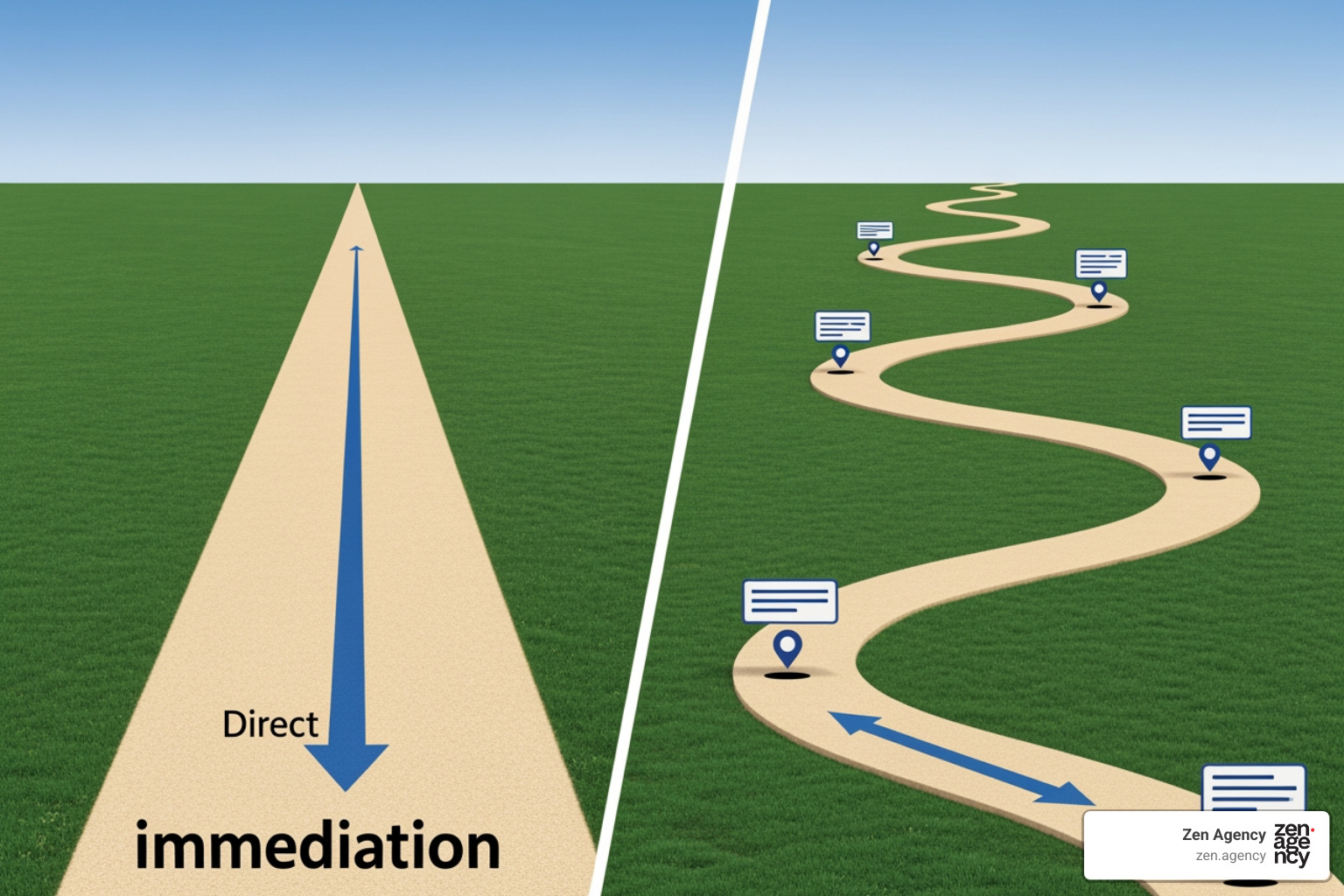
The B2B buying journey is a marathon, not a sprint. Unlike B2C buyers who often make impulse decisions, B2B buying teams take their time. They’re often 70% through their buying process before they even reach out to sales. This means our CRO efforts must focus on building trust, providing value, and nurturing leads over an extended period, rather than pushing for an immediate transaction. We’re optimizing for relationships, not just transactions.
B2B purchases are driven by logic, problem-solving, and long-term return on investment (ROI). Businesses aren’t buying a new gadget because it’s shiny; they’re investing in solutions that address critical pain points, improve efficiency, or drive revenue. This contrasts sharply with B2C, where emotional appeal and instant gratification often play a larger role. The purchase value is also significantly higher in B2B, involving investments that can range from thousands to millions of dollars. A minor dip in B2B conversion rates can have massive financial repercussions.
The table below highlights some key differences in CRO strategies for B2B versus B2C:
| Feature | B2B CRO | B2C CRO |
|---|---|---|
| Decision-Maker | Multiple stakeholders (up to 10) | Individual consumer |
| Sales Cycle Length | Longer (months to years) | Shorter (minutes to days) |
| Purchase Value | High-ticket, significant investment | Lower value, frequent purchases |
| Key Motivations | Logic, ROI, problem-solving, efficiency | Emotion, desire, instant gratification |
| Conversion Goals | Lead generation (demo, consultation, download) | Direct sale, add-to-cart, sign-up |
| Relationship Focus | Long-term partnership, trust-building | Transactional, brand loyalty |
Understanding the B2B Buying Committee
One of the most critical aspects differentiating CRO for B2B websites is the concept of the buying committee. B2B buying decisions often involve up to 10 stakeholders, and the decision cycle can span around four months and involve as many as seven different channels. This means we’re not just optimizing for one person, but for a diverse group with varying needs and priorities.
Our approach must account for different user personas within the buying committee:
- Technical users care about specifications, integration, and functionality.
- Financial decision-makers focus on cost, ROI, and budget adherence.
- Executive sponsors look for strategic value, competitive advantage, and overall business impact.
To effectively convert, we must align our content and messaging to speak to each of these roles. This might involve creating persona-specific landing pages, providing shareable assets that champions can use internally to make their case, or offering different content types (e.g., detailed whitepapers for technical users, ROI calculators for finance). The goal is to provide each member of the buying committee with the information they need, when they need it, to move the decision forward.
Building Your Foundation: Core Elements for B2B Website Conversion
A strong foundation is essential for any successful CRO for B2B websites strategy. We’ve seen countless businesses pouring resources into driving traffic, only to find their website acts like a sieve, letting valuable leads slip through. This is often due to common friction points that hinder the user experience (UX) and obscure the path to conversion.
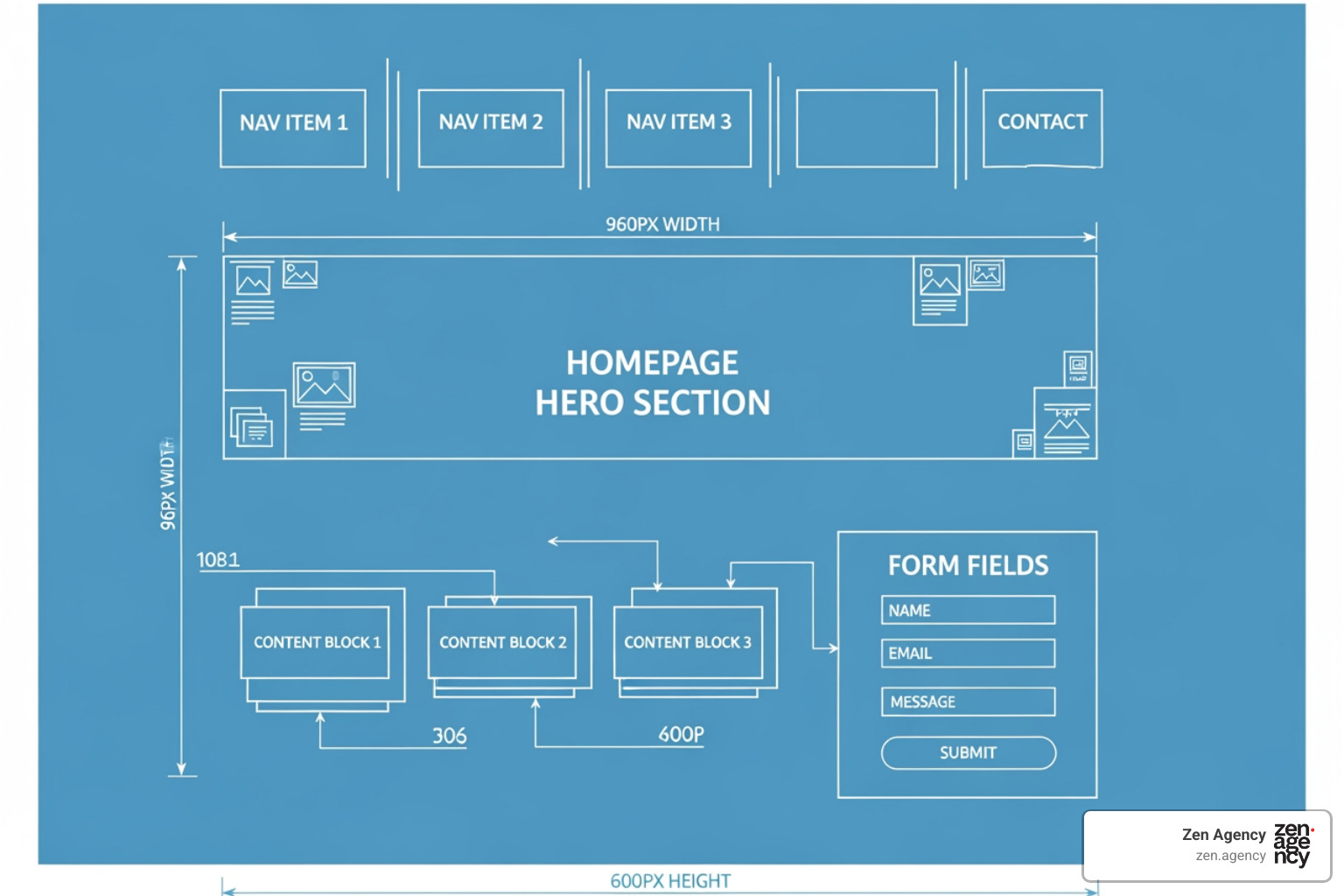
Website design isn’t just about aesthetics; it’s a critical factor influencing the buying decisions of 76% of B2B buyers. A well-designed, intuitive site reduces friction, builds trust, and guides visitors toward conversion. Similarly, clear and concise content is paramount. B2B decision-makers are busy; they don’t have time for fluff or vague marketing speak. Our content needs to get straight to the point, highlight benefits, and provide practical value.
Homepage, Navigation, and Site Speed
The homepage is often your first (and sometimes only) chance to make an impression. We believe your B2B homepage needs to clearly state what you do within five seconds. A strong headline and brief, scannable supporting copy are far more effective than flashy visuals or lengthy videos that search engines and time-crunched decision-makers can’t easily interpret.
Credibility is king in B2B. Displaying social proof like customer testimonials and trusted client logos high on the homepage helps build this trust. Buyers are almost twice as likely to opt for a supplier who builds trust from the start. Using images of real customers can further reinforce this credibility.
Navigation should be simple, intuitive, and consistent. We recommend using standard, familiar labels (e.g., ‘Home’, ‘Services’, ‘Contact’) and limiting main navigation items to five or six for clarity. Crucially, key pages like ‘Pricing’ or ‘Request a Demo’ should be prominently placed in the main navigation, not buried in sub-menus. A visual cue indicating the current page also helps users stay oriented.
Finally, site speed and mobile-friendliness are non-negotiable. A mere few seconds delay in page load speed can dramatically impact conversions. A website conversion rate drops by as much as 4.42% per additional second your site loads during the first five seconds. Moreover, mobile influences more than 40% of revenue in B2B organizations, and 60% of B2B buyers research on mobile devices. Our websites must be optimized for a seamless experience across all devices.
Compelling CTAs and High-Converting Forms
Calls-to-Action (CTAs) are the signposts guiding your visitors toward conversion. We ensure CTAs are impossible to miss by placing them in high-contrast buttons that stand out from the background. Sprinkling CTAs strategically throughout the website, rather than just at the bottom of pages, provides multiple opportunities for conversion. The language used in CTAs should be action-oriented and specific, clearly stating the benefit or next step. For example, “Get Your Free Demo” is much more compelling than a generic “Learn More.”
Lead generation forms are where the rubber meets the road for many B2B conversions. Our goal is to make these forms as frictionless as possible. This means asking only for the information you absolutely need, keeping forms short (3-4 fields are often ideal for initial conversions), and marking required fields clearly. One of the most impactful strategies we’ve seen is using multi-step forms. Breaking down complex forms into smaller, digestible steps can significantly improve user engagement and conversion rates. For instance, one example showed conversion rates increasing from 0.96% to 8.1% by switching to a multi-step signup form.
For crucial pages like demo request and pricing pages, we recommend:
- Showing pricing (or at least a range): While complex, B2B buyers appreciate transparency.
- Using embedded calendars: This can increase demo requests by 30% or more by making scheduling instant.
- Adding social proof: Testimonials or logos near the CTA build confidence.
- Authentic urgency: Highlighting limited-time offers or upcoming deadlines without being sleazy.
Content, Design, and Message Matching
The content and design of your B2B website must work in harmony to drive conversions. We prioritize high-quality, relevant visuals, such as crisp product screenshots instead of dated stock images, to build trust and aid understanding. Vague language, filled with fluff and long paragraphs, is a conversion killer for busy B2B buyers. Our content is clear, concise, and highlights the benefits and outcomes for the buyer, getting straight to the point.
A critical aspect of CRO for B2B websites is message matching. Before someone lands on your website, an event often triggers their visit—it could be an ad click, a Google search, or a LinkedIn post. This pre-visit context shapes what they expect to find on your site. Our job is to sync up with that backstory. If an ad promises a “business plan in 15 minutes,” your landing page must immediately deliver on that promise. We use keyword research tools to understand visitor expectations from search queries and ensure our landing page content explicitly addresses those needs, providing a seamless and reassuring journey from click to conversion.
Advanced Strategies for CRO for B2B Websites
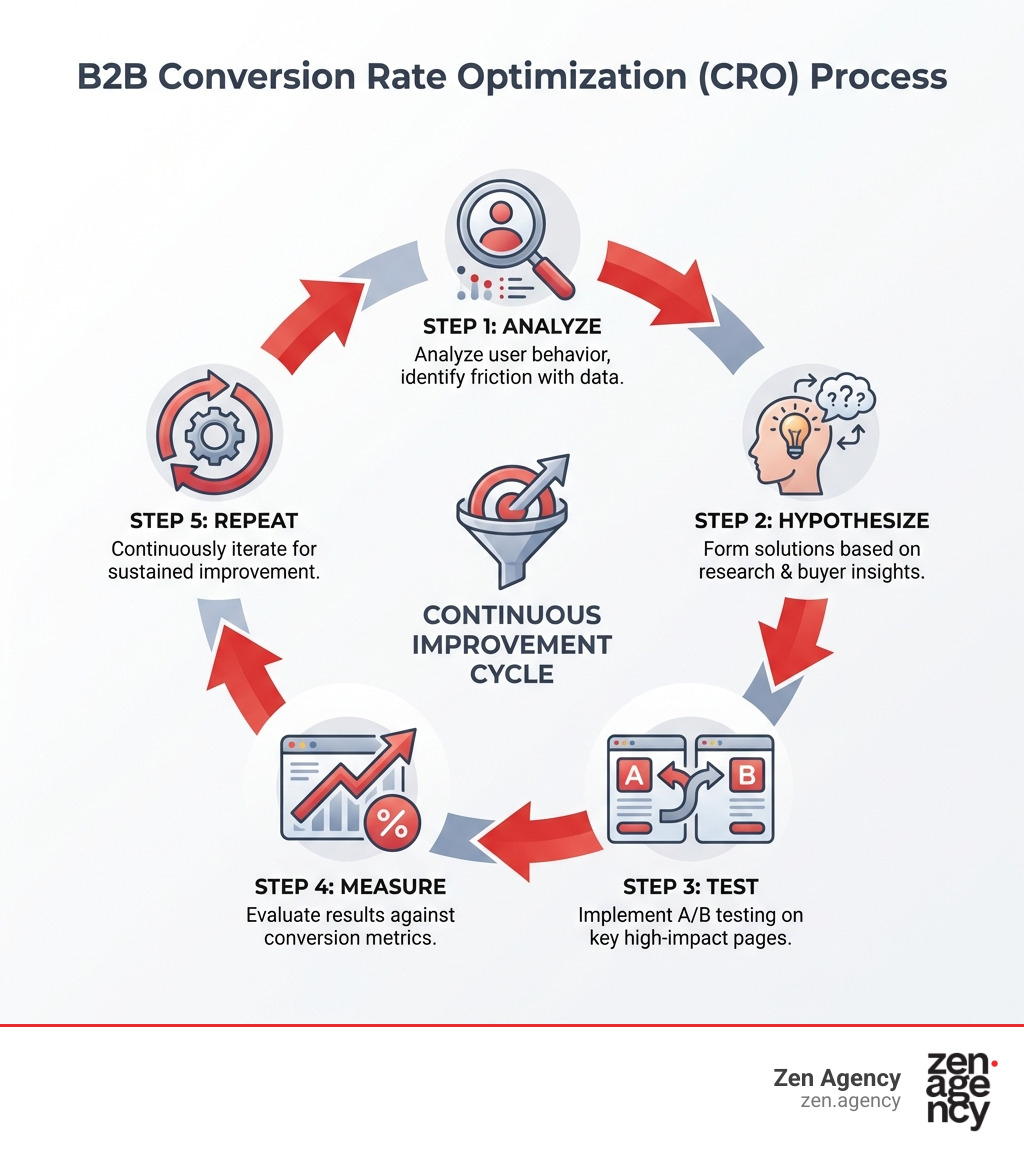
Once the foundational elements are in place, we turn our attention to advanced strategies that drive continuous improvement. CRO for B2B websites is not a one-and-done project; it’s an ongoing, data-driven process. We accept an experimentation loop: analyze, hypothesize, test, measure, and repeat. This systematic approach ensures we’re always learning and refining our website’s performance.
Data-Driven Experimentation and Personalization
A/B testing is our second most popular method for improving conversion rates, and for good reason. It allows us to compare different versions of a webpage element—like a headline, a hero image, a CTA button, or even the layout of a form—to see which performs better. The key is to test one variable at a time to accurately attribute results. HubSpot demonstrated this by testing four offer page variants, with one generating 1,400 more B2B leads.
What should we test?
- Headlines and hero images: Do they grab attention and convey value?
- CTA buttons: Is the copy compelling, and does the color stand out?
- Landing page layout: Does the flow guide users effectively?
- Form length and fields: What’s the optimal balance between information gathering and ease of completion?
Personalization plays a vital role in B2B CRO. Gartner reports that 86% of B2B buyers expect organizations to be well-informed about their personal information, needs, and preferences. We leverage data to create dynamic content that tailors the experience based on client backgrounds, industries, or even where they are in the buying journey. By building landing pages for distinct personas and creating shareable assets, we help the “champion” within the buying committee sell our solution internally, making the conversion process smoother for everyone involved.
Leveraging AI for B2B CRO
Artificial intelligence (AI) is rapidly changing how we approach CRO for B2B websites. AI doesn’t just analyze data faster; it helps us generate actionable insights and provide highly personalized customer experiences at scale.
Here’s how we’re leveraging AI:
- AI for data analysis and predictive analytics: AI can sift through vast amounts of behavioral and analytical data to identify hidden patterns and predict where conversion bottlenecks might occur. This allows us to focus our optimization efforts on the most impactful areas.
- AI-powered chatbots and assistants: Tools like Intercom’s Fin or Tidio offer 24/7 lead engagement. These chatbots can answer common questions, qualify leads, and even route them to the right human agent if needed. The research shows that lead conversion rates are 8X higher when inbound leads are contacted within 5 minutes, and AI can significantly speed up this initial interaction.
- AI for generating test ideas: Some platforms now use AI to generate optimization ideas and hypotheses based on website pages, streamlining the CRO team’s work and ensuring we’re testing the most promising changes.
- Dynamic content personalization: AI enables us to update landing pages, emails, and CTAs in real-time, adjusting headings or offers to match a visitor’s traffic source, industry, or past behavior. This creates a highly relevant experience that resonates with the individual buyer.
Measuring Success: Key Metrics and Tools for B2B CRO
In CRO for B2B websites, what gets measured gets managed. Without a clear understanding of our performance metrics, we’re simply guessing. We rely on a robust data and analytics framework to track success, identify areas for improvement, and ultimately demonstrate the return on investment (ROI) of our CRO efforts.
Essential B2B CRO Metrics to Track
While conversion rate is the most obvious metric, we track a comprehensive set of indicators to get a holistic view of our B2B conversion funnel:
- Conversion Rate (CR): This is the percentage of website visitors who complete a desired action. We calculate it as (Desired Actions Taken / Opportunities for Desired Action) x 100. This might be demo requests, content downloads, or contact form submissions.
- Visitor-to-Lead Rate: How many of our website visitors become identifiable leads? This helps us understand the effectiveness of our top-of-funnel content and CTAs.
- Lead-to-MQL Rate (Marketing Qualified Lead): This measures how many leads meet our criteria for sales readiness.
- MQL-to-SQL Rate (Sales Qualified Lead): This metric shows how many MQLs are accepted by sales as genuinely qualified opportunities.
- Funnel Drop-off Rates: We carefully track where users abandon our conversion paths. High drop-off rates on forms or specific pages signal friction points that need immediate attention.
- Cost Per Acquisition (CPA): By increasing conversion rates, we naturally lower our CPA, making our marketing spend more efficient and boosting overall ROI.
- Average Deal Cycle & Average Deal Size: CRO efforts can also impact these, potentially shortening the sales cycle by providing relevant information upfront and increasing deal size through better lead qualification.
- Customer Lifetime Value (LTV): Our CRO efforts aim to attract high-quality leads who become long-term, valuable customers.
The Ultimate Toolkit for CRO for B2B Websites
A skilled craftsman is only as good as their tools, and the same applies to CRO for B2B websites. We leverage a suite of powerful tools to gather data, run experiments, and gain insights:
- Analytics Tools: These are foundational for understanding user behavior, traffic sources, and conversion paths.
- Google Analytics 4 (GA4): Essential for tracking user behavior, traffic sources, and conversion paths. We can assign unique user IDs to track account-level behavior.
- Adobe Analytics: A high-end tool for advanced segmentation and real-time insights, ideal for large enterprises with complex customer journeys.
- Mixpanel: Focuses on tracking user engagement within web and mobile applications, helping understand how users interact with key features.
- Behavior Analysis Tools: These give us a visual understanding of how users interact with our site.
- Hotjar: Provides heatmaps, scroll maps, and session recordings to show where users click, how far they scroll, and where friction points exist.
- VWO (Visual Website Optimizer): Offers heatmaps and session recordings alongside its testing capabilities.
- A/B Testing Platforms: Crucial for running experiments and validating hypotheses.
- Optimizely: A robust platform for A/B, split, and multivariate testing.
- VWO (Visual Website Optimizer): Another comprehensive tool for various testing types.
- Unbounce: Excellent for building and A/B testing landing pages quickly.
- User Feedback Tools: Directly gathering insights from our audience.
- SurveyMonkey: Useful for collecting direct feedback from users through customizable surveys, helping uncover unclear messaging or friction points.
- Customer Data Platforms (CDPs): For unifying customer data across touchpoints.
- VWO Data 360: A CDP that integrates with VWO’s other tools for comprehensive data management.
- AI Chatbots:
- Intercom: AI-powered chatbots like Fin can resolve queries and qualify leads.
- Tidio: Offers AI-driven customer engagement solutions.
- Marketing Automation Tools:
- Salesforce Pardot: A leading B2B marketing automation tool.
- HubSpot: Offers extensive marketing, sales, and service tools, including AI customer agents.
Frequently Asked Questions about B2B Website CRO
We often hear similar questions from B2B businesses looking to optimize their websites. Let’s tackle some of the most common ones.
What is a good conversion rate for a B2B website?
This is the million-dollar question, and the answer, like many things in life, is “it depends!” B2B conversion rates are typically lower than B2C due to longer sales cycles and higher stakes. The average conversion rate for B2B websites hovers around 2.23%, with some sources putting the average closer to 2.9%.
However, what’s “good” varies significantly by industry:
- Professional Services: Can see rates as high as 4.6%
- Industrial: Averages around 4.0%
- B2B SaaS: Often lower, with a median of 3.8% or even 1.1% in some reports, due to extensive research and decision cycles.
While the median conversion rate across all industries is 6.6%, B2B often lags behind due to its inherent complexities. The top 25% of B2B websites achieve 4.31% or higher, and the top 10% can reach approximately 11.7%. Our focus isn’t just on hitting an average, but on continuous improvement. Even a 1% increase can translate into significant incremental leads and revenue for your business.
How do I start CRO with low website traffic?
If your website receives less than 10,000 monthly sessions, traditional A/B testing might not yield statistically significant results quickly. Don’t worry, you can still kickstart your CRO for B2B websites efforts effectively:
- Pre-Post Analysis: Instead of A/B testing, implement a single, targeted change (e.g., a new CTA button) and monitor its impact over time, comparing performance before and after. Ensure you have at least 50 conversions to draw meaningful conclusions.
- Focus on Qualitative Data:
- User Feedback: Implement simple polls or feedback forms on key pages to directly ask visitors about their experience and any friction points.
- Usability Tests: Observe a small group of target users navigating your site to identify where they get stuck or confused.
- Heatmaps and Session Recordings: Tools like Hotjar can provide invaluable insights into user behavior, even with moderate traffic. See where users click, how far they scroll, and watch recordings of their journeys to pinpoint issues.
- Prioritize High-Impact Pages: Start with pages that are critical to your conversion funnel, even if they don’t get the most traffic. For example, optimize your “Request a Demo” page first.
- Interview Your Sales Team: They interact directly with prospects and can provide crucial insights into common questions, objections, and what ultimately drives a decision.
How long does it take to see results from CRO?
CRO for B2B websites is a journey, not a destination. While some small tweaks can yield quick wins (e.g., changing a CTA color might show results in days), more significant changes, especially in B2B with its longer sales cycles, will take more time to measure.
- Immediate Impact: Simple, high-contrast CTA changes or form field reductions can sometimes show an uplift in a few weeks, once enough data for statistical significance is collected.
- Mid-term Gains: Optimizing landing page layouts or implementing multi-step forms might take a month or two to gather conclusive data.
- Long-term Strategy: For B2B, where sales cycles can be months long, we often focus on optimizing early and mid-funnel touchpoints (like whitepaper downloads or webinar registrations) that predict future conversions. Measuring the full impact on revenue might take several months.
The key is consistency. Small, compounding gains from ongoing experimentation lead to significant improvements over time. It’s about building a culture of continuous optimization.
Conclusion: Start Converting More, Not Just Attracting More
We’ve explored the intricate world of CRO for B2B websites, from understanding its unique challenges compared to B2C, to laying a strong foundation with optimized homepages, navigation, and forms, and finally, to leveraging advanced strategies like data-driven experimentation, personalization, and AI.
The core takeaway is clear: simply driving traffic to your website is no longer enough. To achieve digital dominance, you must actively work to convert that traffic into qualified leads and, ultimately, revenue. This requires a continuous, user-focused, and data-driven approach to your website.
At Zen Agency, we specialize in enterprise-grade solutions and innovative strategies to help struggling-to-scale businesses increase visibility, profitability, and ROI. We understand the nuances of the B2B buyer journey and have the expertise to plug the leaks in your conversion funnel.
Ready to turn more of your website visitors into valuable business opportunities? Don’t let another lead slip away.
Start optimizing your website for higher conversions with our expert CRO services.