The Ultimate Playbook to Skyrocket Ecommerce Conversion Rates
Understanding the Fundamentals to Boost Ecommerce Conversion Rates
Before we can effectively boost ecommerce conversion rates, we must understand exactly what we are measuring. In digital commerce, your conversion rate is the heartbeat of your business. It tells you how well your website’s design, copy, and technical performance align with your customers’ needs.
Defining and Calculating Conversion Rates
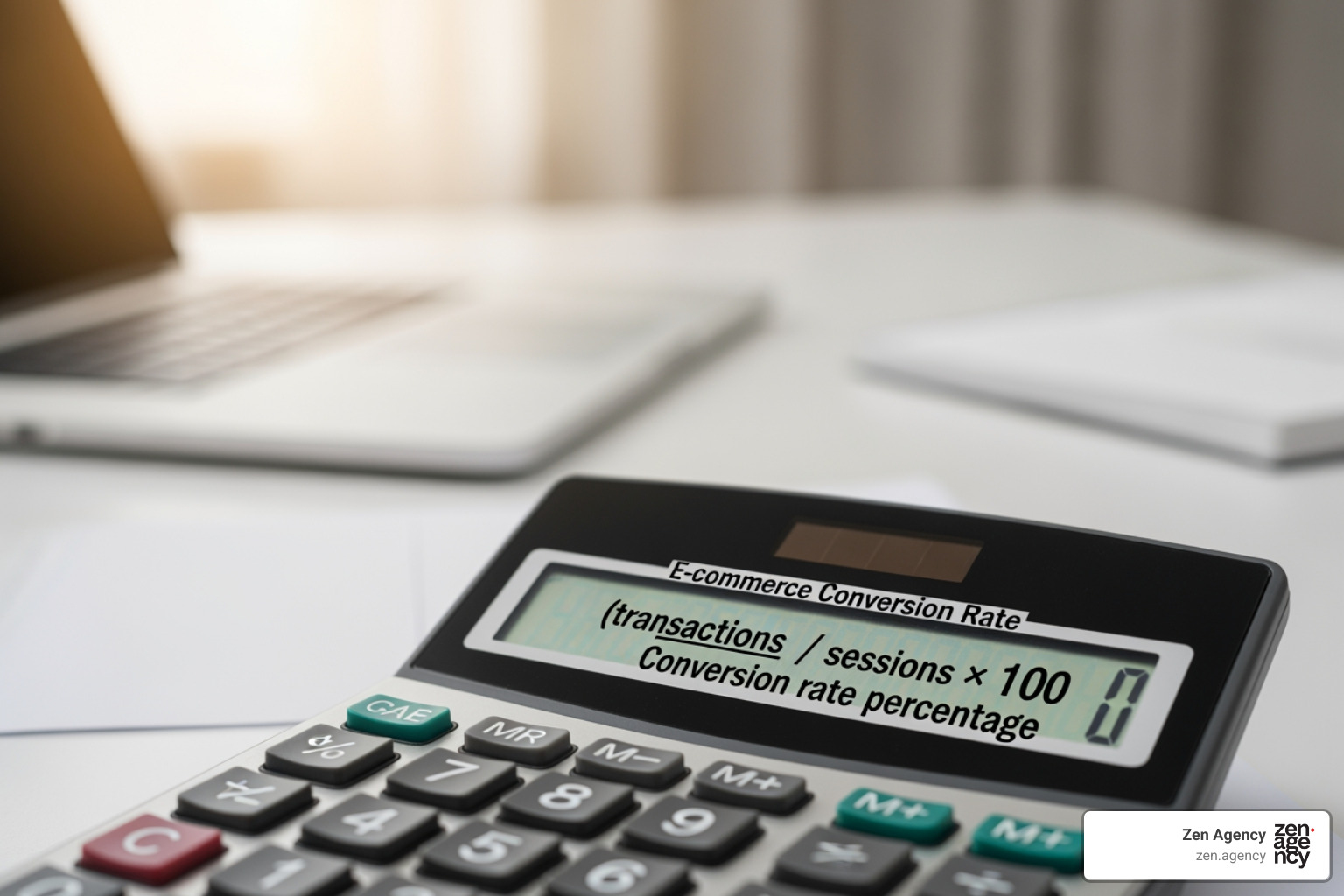
E-commerce Conversion Rate is defined by Google as the ratio of transactions to sessions. To put it simply: if 1,000 people visit your store and 29 of them make a purchase, your conversion rate is 2.9%. While this is the standard “macro-conversion,” we also track “micro-conversions,” such as newsletter sign-ups or adding an item to a cart.
Tracking 4 Essential Success Metrics E-Commerce Store owners need to know—including Average Order Value (AOV) and Customer Acquisition Cost (CAC)—provides the context necessary to see the bigger picture. When you improve your conversion rate, you essentially lower your CAC and increase the efficiency of every dollar spent on marketing.
Benchmarking Success Across Industries
What constitutes a “good” rate? It depends heavily on what you sell. View eCommerce statistics and KPI benchmarks to see how you stack up. For instance, the Food & Beverage sector enjoys a high average conversion rate of 4.9%, while Home & Furniture retailers often see rates as low as 1.4% due to the higher price points and longer consideration phases.
View Ecommerce Market Data and Ecommerce Benchmarks to understand regional and device-based differences. For example, while mobile accounts for 75% of traffic, desktop conversion rates are typically 1.7x higher. This disparity highlights a massive opportunity: if you can bridge the usability gap on mobile, you can significantly boost ecommerce conversion rates across your entire brand.
Optimizing User Experience and Mobile Design
The modern shopper is a mobile shopper. With 59% of ecommerce sales now happening on mobile devices, a “desktop-first” mentality is a recipe for failure. We focus on UX for E-Commerce Stores: Tips Make Your Customers Keep Coming Back for More to ensure that the transition from a social media ad to a mobile product page is seamless.

Accelerating Site Speed to Boost Ecommerce Conversion Rates
Patience is a luxury ecommerce owners don’t have. Google reports that over half of mobile users will abandon a site if it takes more than three seconds to load. A single-second delay doesn’t just annoy users; it can slash your conversions by double digits.
To combat this, we recommend:
- Image Compression: Use modern formats like WebP to keep visuals crisp but files small.
- Caching: Implementing server-side caching to serve content faster.
- Minimizing Redirects: Every extra hop adds milliseconds that kill momentum.
Intuitive Navigation and Search Functionality
Users arrive at your site with mental models built from thousands of hours spent on sites like Amazon or eBay. This is Jakob’s Law: users prefer your site to work the same way as all the other sites they already know. If your navigation is “too creative,” you’re creating friction.
We use Baymard Institute research to implement effective breadcrumbs. Breadcrumbs should follow both the product hierarchy and the user’s history, allowing them to jump back to a category page without hitting the “back” button repeatedly. Additionally, your search bar must handle misspellings and offer category-specific filters. If a user searches for “blue sneakers,” they shouldn’t have to sift through blue socks to find what they want.
Building Trust and Social Proof
In a physical store, a customer can touch the fabric or see the build quality. Online, they only have the trust you build through your interface. Boosting Your Website Conversions with Better Design involves more than just aesthetics; it’s about creating a “security gut-feeling.”
Leveraging Social Proof and User-Generated Content
Social proof is the psychological phenomenon where people mirror the actions of others to find the “correct” behavior. It’s why 95% of users rely on product reviews before clicking “buy.”
Data from Statista shows that sites featuring User-Generated Content (UGC)—like photos of real customers using the product—see a 3.8% higher likelihood of conversion. We encourage our clients to display star ratings prominently near product titles and to include a “Verified Buyer” badge to ensure authenticity.
Establishing Security and Transparency
If a customer feels even a hint of unease about their data, they will leave. According to Baymard, 18% of shoppers abandon carts because they did not trust the site with their credit card info.
To fix this:
- Display SSL certificates and recognizable security seals (like Norton or McAfee).
- Be transparent about your return policy; 11% of buyers abandon orders because they can’t find clear return info.
- Ensure your site is accessible. Beyond being the right thing to do, failing to meet WCAG standards can lead to financial penalties and lost sales from a significant portion of the population.
Streamlining the Checkout Process
The checkout is the “final mile” of ecommerce. This is where the most revenue is lost, with an average abandonment rate of around 75%. Our goal is to make this process so easy it feels automatic. We often recommend The 6 Best WooCommerce Checkout Plugins That Will Increase Sales to help our clients remove unnecessary problems.
Frictionless Checkout Strategies to Boost Ecommerce Conversion Rates
One of the biggest conversion killers is the mandatory account creation. According to Facebook, 87% of consumers will abandon a cart if the process is “complicated.”
The solution is simple: Guest Checkout. Don’t force a relationship before the first date. Let them buy first, then offer to save their details for next time on the “Thank You” page. Additionally, reduce your form fields. The average checkout has 11.8 fields, but most stores only need 8. Every field you remove increases the chance of a completed sale.
Reducing Abandonment with Incentives and Automation
Sometimes, life just gets in the way of a purchase—a phone rings, or the baby starts crying. This is where automation saves the day. Knowing How to Use Abandoned Cart Emails to Recapture Lost Sales is vital. A well-timed sequence (1 hour, 24 hours, and 48 hours after abandonment) can recover up to 10% of lost revenue.
Other high-impact incentives include:
- Free Shipping: 50% of consumers abandon carts due to “extra costs” like shipping. Even if you have to raise product prices slightly to cover it, “Free Shipping” is a powerful psychological trigger.
- Exit-Intent Popups: Offer a small discount or a “Save my cart” option when a user’s mouse moves toward the “X” button.
- Payment Flexibility: Integrate options like Apple Pay, Google Pay, or “Buy Now, Pay Later” services like Klarna.
Advanced Personalization and A/B Testing
Once you have the basics right, it’s time to use data to outpace the competition. We use 3 Simple Ways to Maximize Revenue Opportunities for Your Ecommerce Store to move beyond generic experiences and toward true personalization.
Data-Driven Experimentation and A/B Testing
Never guess when you can test. A/B testing involves showing two versions of a page to different segments of your audience to see which performs better. However, you must ensure statistical significance before declaring a winner.
You don’t need a massive focus group to start. Research shows you only need 5 participants to find 85% of the usability problems on a site. The key is “experiment velocity”—the more tests you run, the more you learn, and the faster you grow.
Increasing Average Order Value Through Personalization
Personalization isn’t just about using the customer’s name in an email. It’s about showing them the right product at the right time. Adobe’s Personalization at Scale report highlights that 80% of organizations see personalization as critical to growth.
You can use IP geolocation Dynamic Content to show winter coats to customers in Billings, MT, while showing swimwear to those in warmer climates. Use “Frequently Bought Together” bundles to increase AOV and upsell customers to premium versions of products by highlighting the added value clearly.
Frequently Asked Questions about Ecommerce Conversions
What is a good ecommerce conversion rate?
While it varies, the general benchmark is between 2% and 3%. However, you should look at Hubspot – Ecommerce Conversion Rates Across Industries for specific targets. If you are in the Food & Beverage space, aim for 4.9%. If you’re in Consumer Electronics, 1.1% might be your baseline.
How can I reduce my shopping cart abandonment rate?
Focus on transparency and speed. Research shows 18% of users abandon orders due to checkout UX issues. Eliminate surprise shipping costs, offer guest checkout, and use progress indicators so customers know exactly how many steps are left.
Does site speed really affect conversion rates?
Absolutely. A one-second site speed improvement can increase mobile conversions by up to 27%. In ecommerce, speed is literally money.
Conclusion
At Zen Agency, we specialize in helping businesses in Wilkes Barre, Scranton, and across the USA turn their digital storefronts into high-performing assets. Whether you’re a scaling brand in Billings, MT, or a local powerhouse in Hazleton, PA, our Websites e-Commerce – Conversion Rate Optimization Services provide the enterprise-grade strategies you need to succeed.
Ready to see how the latest technology can revolutionize your store? Explore our insights on https://zen.agency/ai-vision-transforming-e-commerce/ and let’s start building a store that doesn’t just attract visitors—it creates loyal customers. Reach out to us today, and let’s boost ecommerce conversion rates for your business together.