Stop the Manual Data Entry Madness with ERP Integration
Stop the Manual Data Entry Madness with ERP Integration
Manual Data Entry Is Killing Your E-commerce Growth
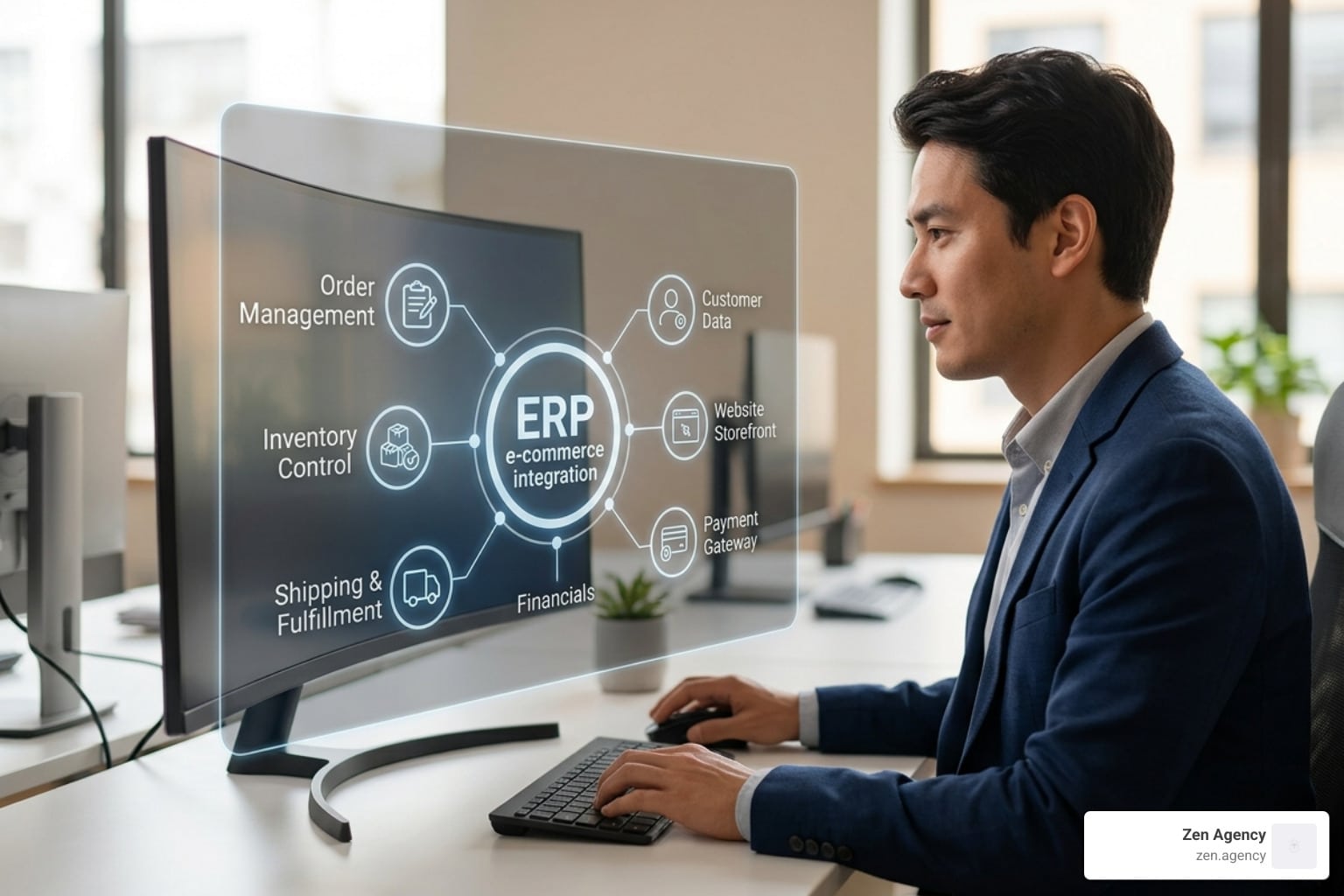
ERP e-commerce integration is the process of connecting your e-commerce storefront directly to your back-office ERP system so that data — orders, inventory, pricing, customer records, financials — flows automatically between both systems without manual input.
Here’s what it does at a glance:
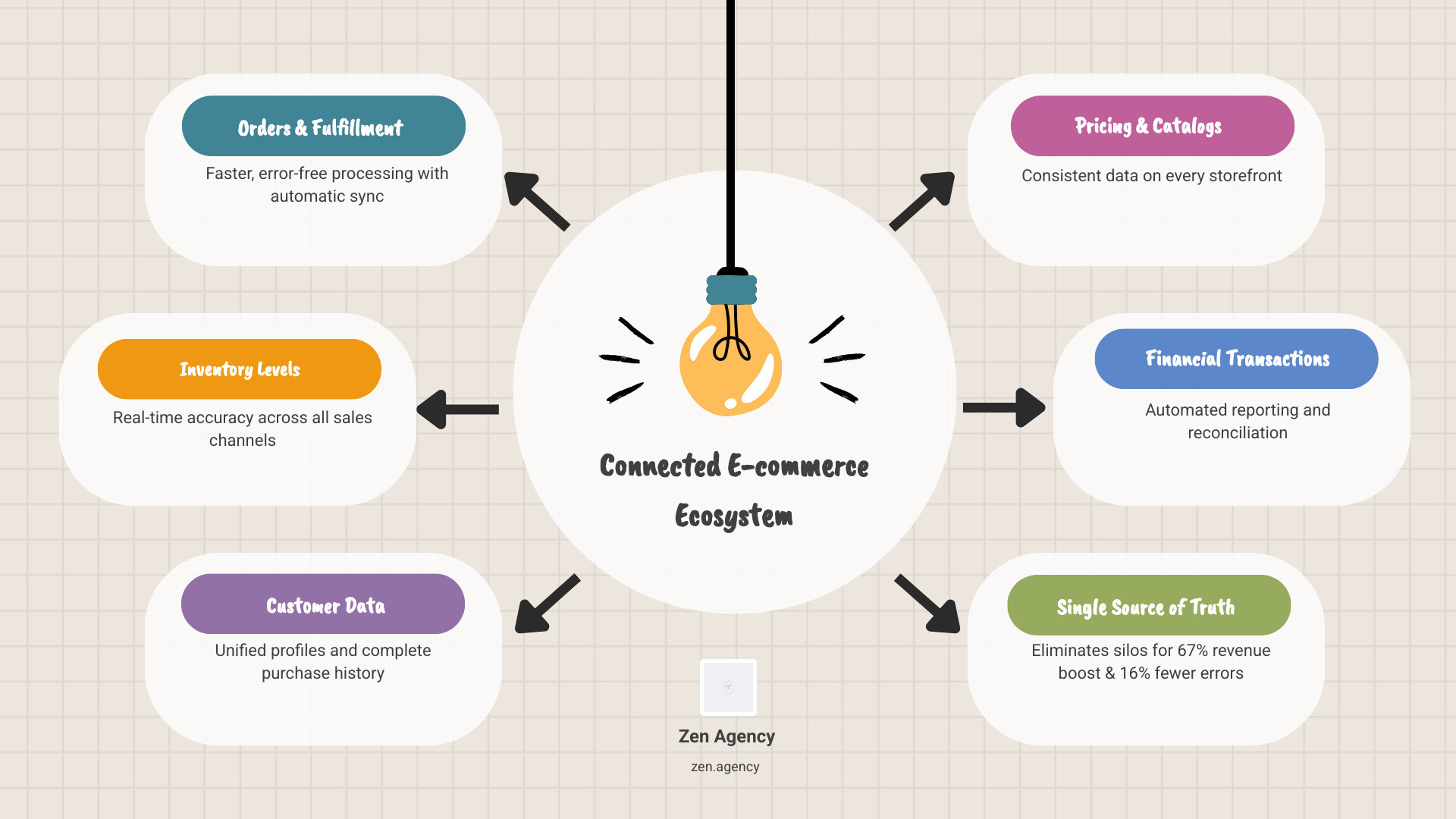
| What Gets Synced | What You Gain |
|---|---|
| Orders & fulfillment | Faster, error-free processing |
| Inventory levels | Real-time accuracy across all channels |
| Customer data | Unified profiles and purchase history |
| Pricing & product catalogs | Consistent data on every storefront |
| Financial transactions | Automated reporting and reconciliation |
Right now, you might be running your store on one system and your back office on another. Your team manually exports spreadsheets, re-enters order data, and chases down inventory numbers — every single day. It’s slow, it’s error-prone, and it doesn’t scale.
The cost is real. A disjointed setup leads to overselling, missed orders, incorrect pricing, and customers who stop coming back. In fact, businesses that properly integrate their ERP with their e-commerce platform report a 67% increase in revenue and a 16% drop in order errors — not because they hired more people, but because they stopped doing things twice.
That’s the promise of ERP e-commerce integration: one connected system where your front end and back end always agree.
I’m Joseph Riviello, CEO and Founder of Zen Agency, and over my 22+ years in digital strategy I’ve helped businesses eliminate exactly these kinds of operational bottlenecks through smart ERP e-commerce integration — turning disconnected tech stacks into unified, revenue-generating systems. Let’s break down how it works and how you can get there.
Basic ERP e-commerce integration terms:
What is ERP E-commerce Integration and Why Does It Matter?
At its core, ERP e-commerce integration is about creating a “single source of truth.” In many businesses, the “truth” is scattered. The website thinks there are ten items in stock, but the warehouse knows five were sold over the phone this morning. The accounting department is waiting for a CSV file of yesterday’s sales, while the customer service team is fielding calls about why an order hasn’t shipped yet.
When you integrate your Enterprise Resource Planning (ERP) system with your e-commerce store, you bridge the gap between your backend (where you manage resources, manufacturing, and finance) and your frontend (where customers browse and buy). This creates a unified commerce experience where data moves in real-time.
Why does this matter so much? Because how integrated ERP elevates modern e-commerce performance is directly tied to your bottom line. Research shows that organizations implementing this level of automation see an average 21% increase in conversion rates and an 11% increase in returning customers.
When your E-commerce ERP setup is healthy, your business gains the agility to scale. You stop being a “manual data entry company” and start being a strategic retailer. You can launch new products faster, handle holiday spikes without hiring temporary data-entry staff, and make decisions based on actual business intelligence rather than “best guesses” from outdated spreadsheets.
Core Benefits of a Unified Business System
The benefits of ERP e-commerce integration aren’t just theoretical; they show up in every department of your company, from the warehouse floor to the C-suite.
Inventory Management and Automated Restocking
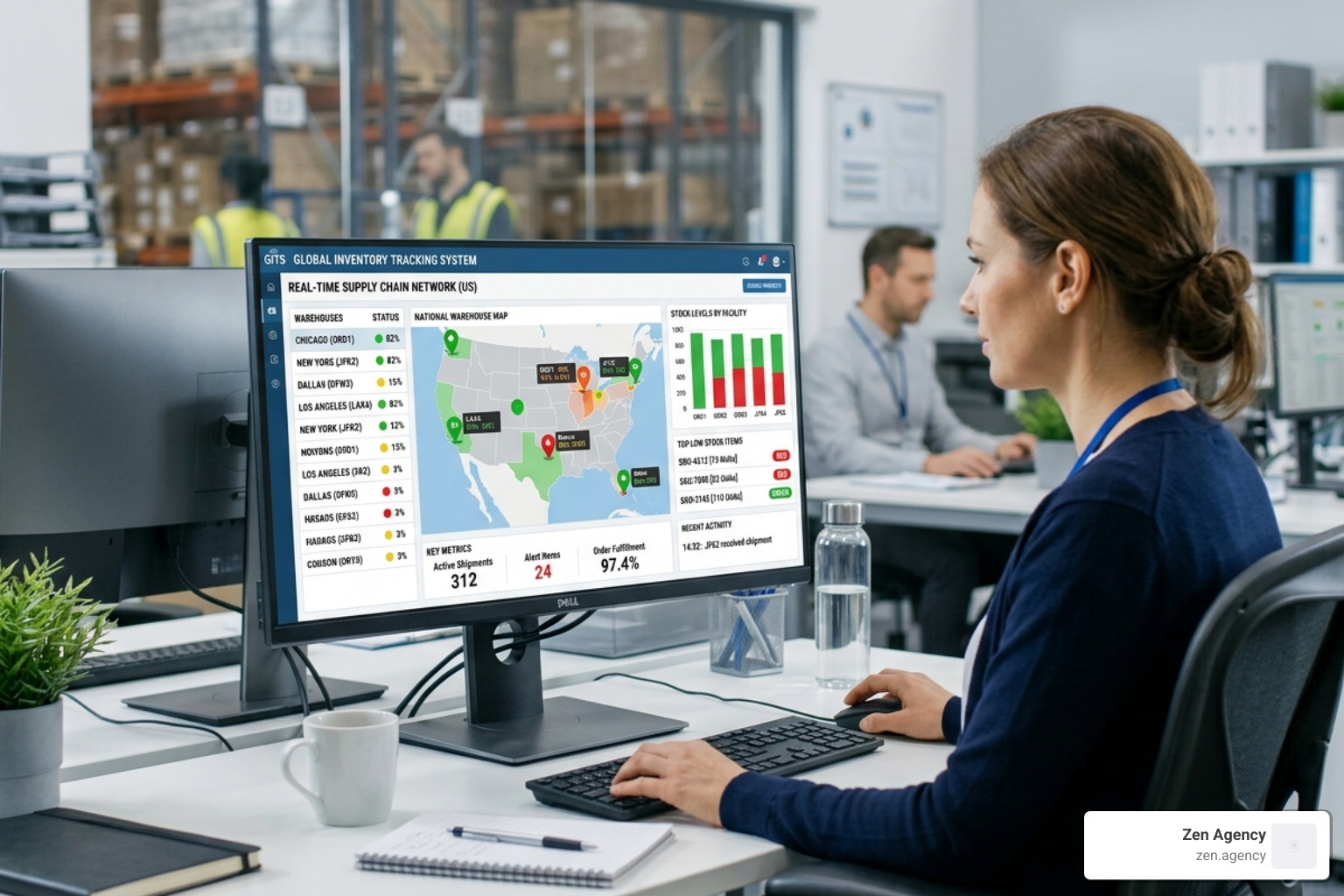
Overselling is the ultimate “customer experience killer.” If a customer buys a product only to receive an “out of stock” email three hours later, they likely won’t return. Integration provides real-time visibility. As soon as an order is placed on Shopify, BigCommerce, or Adobe Commerce, the ERP updates the inventory levels across all channels.
Order Fulfillment and Customer Experience
Speed is the new currency in e-commerce. Manual order entry creates a lag between the “Buy” button and the picking slip hitting the warehouse. With integration, orders flow directly into your fulfillment system. This efficiency has led companies to see an 80% reduction in customer service calls because customers receive accurate, automated tracking info immediately.
Financial Reporting and Accuracy
If your accounting team spends the first week of every month reconciling bank statements against e-commerce sales, you’re wasting valuable talent. A successful ERP implementation can lead to a 92% decrease in bank reconciliation time. Transactions flow directly into your General Ledger, ensuring your financial reports are always up to date.
Boosting the Bottom Line
The numbers speak for themselves:
- 67% increase in revenue due to improved operational capacity.
- 16% drop in order errors by removing the “human element” from data transfer.
- 1 hour a day saved for internal teams per department.
How ERP E-commerce Integration Works: Data Flow and Methods
To understand how to fix the “madness,” we have to look under the hood. Integration is essentially a conversation between two different languages: your e-commerce platform’s language (usually JSON or XML via API) and your ERP’s language.
The Mechanics of ERP E-commerce Integration Data Flow
The most effective integrations use bi-directional sync. This means data doesn’t just go one way; it’s a two-way street.
- From E-commerce to ERP: New customer profiles, web orders, payment confirmations, and tax details.
- From ERP to E-commerce: Updated inventory levels, shipment tracking numbers, product catalogs, and customer-specific pricing tiers.
For retail and e-commerce software, this sync ensures that if a B2B customer has a negotiated 10% discount in your ERP, they see that exact price when they log into your web store.
Common Integration Methods: iPaaS vs. Point-to-Point
There are several ways to build this bridge:
- Point-to-Point (Direct API): This is a direct connection between your store and your ERP. It’s often cheaper initially but can become brittle. If you update your ERP version, the connection might break.
- iPaaS (Integration Platform as a Service): This is a middleware solution. It acts as a “translator” in the middle. It’s highly scalable and allows you to connect other systems—like 3PL integrations—into the same ecosystem easily.
- Native Connectors: Some modern cloud-native ERPs offer built-in connectors for platforms like Shopify or BigCommerce. These are often the most stable because the ERP vendor maintains the connection. For example, ERP software integration with Shopify is often handled through these native, “plug-and-play” modules.
Overcoming Challenges and Implementing Best Practices
Integrating two massive systems isn’t without its hurdles. At Zen Agency, we’ve seen where the “potholes” are and how to steer around them.
Navigating Integration Hurdles
The biggest challenge isn’t usually the technology; it’s the data. If your ERP has “Widget A” listed as “SKU-123” and your Shopify store has it as “Blue-Widget-01,” the systems won’t know they are the same thing.
- Legacy Software: Older, on-premise ERPs may lack the modern APIs needed for easy connection.
- Data Silos: Different departments may have different “versions” of customer data that need to be merged.
- Budget Creep: Without a clear scope, integration projects can expand in cost as “nice-to-have” features are added mid-project.
Best Practices for Successful ERP E-commerce Integration
To ensure your project is a win, follow these best practices:
- Data Cleaning First: Before you connect the pipes, make sure the water is clean. Audit your SKUs, customer records, and tax settings.
- Choose Cloud-Native: Whenever possible, opt for cloud-based systems. They are built for connectivity and offer better security protocols.
- Stakeholder Communication: Ensure your warehouse manager, accountant, and marketing lead are all in the room during the planning phase.
- Phased Implementation: Don’t try to sync everything at once. Start with orders and inventory, then move to customer history and advanced pricing.
- Security Audits: Since you are moving sensitive financial and customer data, ensure your integration partner uses encrypted protocols and is PCI compliant.
Frequently Asked Questions about ERP Integration
When is the right time to integrate an ERP with my store?
If you find your team spending more than an hour a day on manual data entry, or if you are managing more than one physical location, it’s time. Specifically, if you manufacture products, have complex B2B pricing, or deal with high order volumes (over 50-100 orders a day), a manual process will eventually break your growth.
Can ERP integration help with multi-channel selling?
Absolutely. This is one of the strongest use cases. If you sell on your own site, Amazon, and eBay, an ERP acts as the central hub. It pulls orders from all “spokes” and pushes out a single, accurate inventory count to every platform. This prevents the nightmare scenario of selling your last item on Amazon while a customer on your website is also checking out with it.
What is the difference between real-time and batch synchronization?
- Real-time: Data moves instantly. A sale happens, and inventory drops immediately. This is best for high-volume stores where stock moves fast.
- Batch: Data moves in intervals (e.g., every 30 minutes or once an hour). This is easier on server loads but can lead to slight data lag. Most modern businesses should aim for real-time or “near-real-time” (every few minutes) sync.
Conclusion: The Future of Your E-commerce Operations
The “manual data entry madness” is a choice, not a requirement of doing business. As we look toward the future, ERP e-commerce integration is becoming even more powerful with AI-driven forecasting and IoT tracking in the supply chain. Businesses that automate today are the ones that will have the data and the time to leverage those emerging trends tomorrow.
At Zen Agency, we specialize in taking businesses in locations like Wilkes Barre, Scranton, and Billings MT—and across the USA—and helping them achieve this digital transformation. We don’t just build websites; we build enterprise-grade ecosystems that increase your ROI and give you back your time.
If you are tired of spreadsheets and ready for a system that “just works,” we are here to help. Whether you need a fully integrated eCommerce solution or a custom-built connector, our team has the expertise to streamline your operations from the frontend to the backend.
Ready to scale without the stress? Discover more about our website e-commerce services and let’s put an end to the manual madness together.