A Practical Guide to Conversion Optimization
A Practical Guide to Conversion Optimization
Why Most Websites Leave Money on the Table
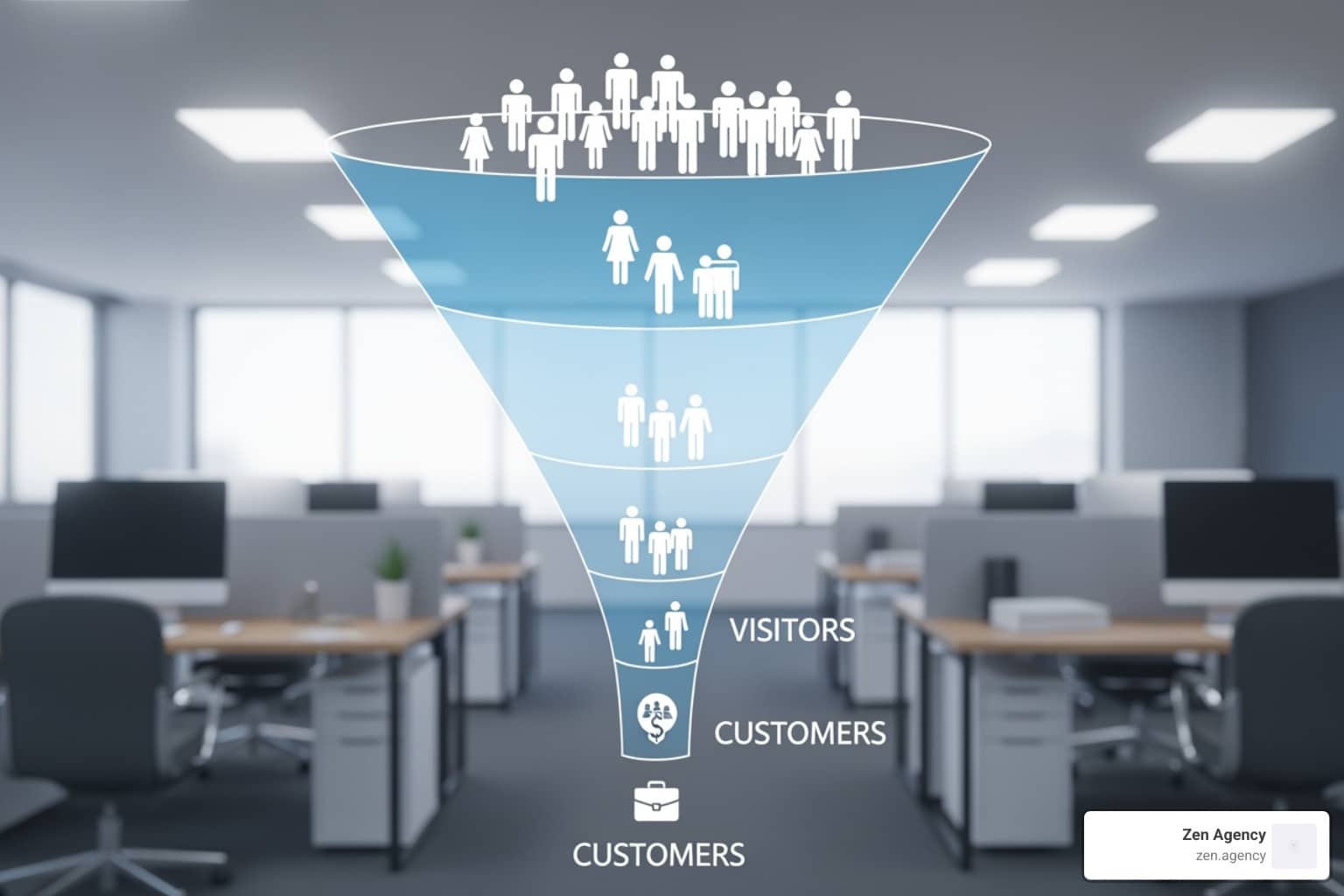
Conversion optimization is the process of increasing the percentage of website visitors who take a desired action — like making a purchase, filling out a form, or signing up for a demo.
Here’s the quick answer:
| Question | Answer |
|---|---|
| What is it? | Improving your site so more visitors convert into customers |
| Why does it matter? | Most sites convert only 1-2% of visitors — small gains mean big revenue |
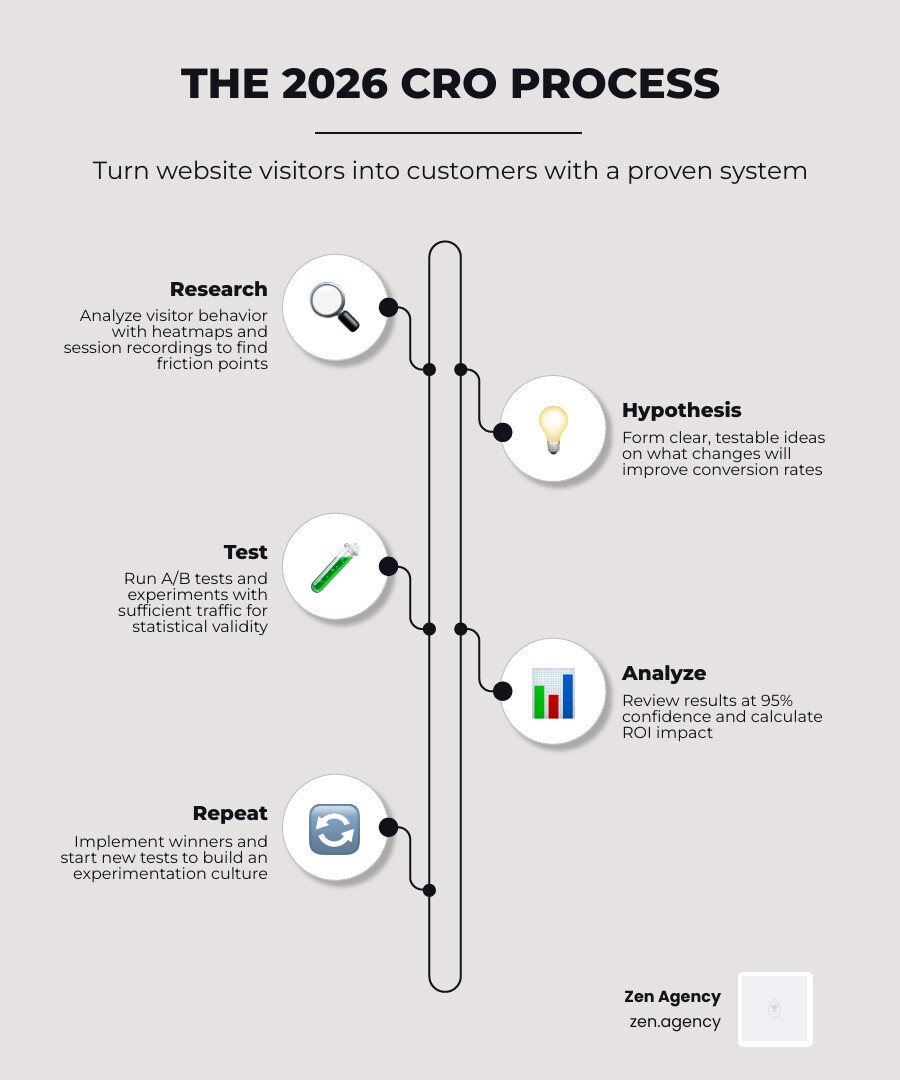
| How does it work? | Research → Hypothesis → Test → Analyze → Repeat |
| Key tools | Heatmaps, A/B testing, session recordings, analytics |
| Who needs it? | Any business that wants more leads or sales from existing traffic |
On average, only 1.7% of website visitors convert across all industries. That means roughly 98 out of every 100 people who land on your site leave without taking action.
Think about that for a second.
You’re spending money on ads, SEO, and content to drive traffic. But if your site isn’t built to convert, most of that investment is wasted.
The good news? You don’t need more traffic to grow. You need to do more with the traffic you already have. A jump from a 2% to a 3% conversion rate — that’s a 50% increase in revenue from the exact same number of visitors, with zero additional ad spend.
That’s the leverage that conversion optimization offers. And in 2026, with AI-driven search reducing organic click-through rates and making every visitor harder to earn, that leverage matters more than ever.
I’m Joseph Riviello, CEO and Founder of Zen Agency, and over my 22+ years in digital marketing I’ve seen how a disciplined conversion optimization program can transform a business’s bottom line — often faster than any traffic-focused strategy.
Defining conversion optimization and its Core Elements
To truly master your website’s performance, we first need to understand that Conversion rate optimization (CRO) isn’t just about changing button colors. It is a systematic, data-driven process aimed at understanding user behavior and removing the friction that stops them from taking action.
At Zen Agency, we view CRO as a blend of psychology, data science, and user experience (UX) design. It starts with identifying your goals, which we categorize into two main types:
- Macro-conversions: These are your primary business objectives. Think of a completed purchase on an ecommerce site or a requested quote for a B2B service.
- Micro-conversions: These are smaller steps that indicate a user is moving toward a macro-conversion. Examples include signing up for a newsletter, adding an item to a cart, or watching a product video.

Many people ask us how CRO differs from SEO. While SEO focuses on getting people to the door, CRO focuses on what they do once they are inside. Interestingly, they are two sides of the same coin; a well-optimized site often ranks better because search engines favor pages with high engagement and low bounce rates. For a deeper dive into these fundamentals, check out our Ultimate Guide to Improving Your Conversion Rate.
The core elements of a winning strategy always include a strong value proposition (why should they choose you?), social proof (why should they trust you?), and a clear path to action. Following CRO Best Practices ensures you aren’t just guessing, but building on a foundation of proven human behavior.
Why conversion optimization is critical in 2026
As we move through May 2026, the digital landscape has shifted dramatically. The rise of AI Overviews in search results has fundamentally changed how users interact with the web. Many queries are now answered directly on the search results page, leading to “zero-click” searches. This means traffic is becoming scarcer and more expensive to acquire.
When you do manage to get a visitor to your site in this competitive environment, you cannot afford to waste the opportunity. High customer acquisition costs (CAC) are the “silent killer” of scaling businesses. By focusing on conversion optimization, you improve your revenue efficiency. You’re effectively lowering your cost per lead because you’re getting more value out of the same marketing budget.
Real-world marketing case studies with brands that used 5 types of CRO tools show that those who adapt to these AI-driven changes by focusing on the “post-click” experience are the ones seeing sustainable growth.
Establishing conversion metrics for different industries
Success looks different depending on what you sell. You can’t use a media site’s playbook for an ecommerce store. Here is how we break down metrics across sectors:
- Ecommerce: The focus is on sales, average order value (AOV), and reducing cart abandonment (which averages a staggering 70%).
- B2B Lead Gen: Success is measured by the number of qualified leads, demo requests, and form completions.
- Media/Publishing: Metrics revolve around pageviews, newsletter signups, and ad impressions.
- Travel: It’s all about bookings and inquiry completions.
To get your metrics right from the start, we recommend following a Step-by-Step Guide to Website Conversion Optimization to ensure your tracking is accurate before you begin testing.
Measuring Success: Formulas and Industry Benchmarks
If you can’t measure it, you can’t improve it. The basic formula for conversion rate is simple:
Conversion Rate = (Total Conversions / Total Visitors) x 100
For example, if you have 2,000 monthly visitors and 40 of them buy something, your conversion rate is 2%. While that might sound low, it’s actually quite common.

Industry Benchmarks (Average 2026 Data)
| Industry | Average Conversion Rate |
|---|---|
| Ecommerce | 1.0% – 4.0% |
| B2B / SaaS | 2.0% – 5.0% |
| Finance | 5.0% – 10.0% |
| Healthcare | 3.0% – 6.0% |
| Landing Pages (Average) | 23.0% (for signup forms) |
While benchmarks are helpful, the most important benchmark is your own historical data. Your goal should be to beat your own “best” every single month. You can find several resources to help with this in our list of Boost Your Site with These Amazing Free CRO Tools.
Leveraging behavioral analytics for conversion optimization
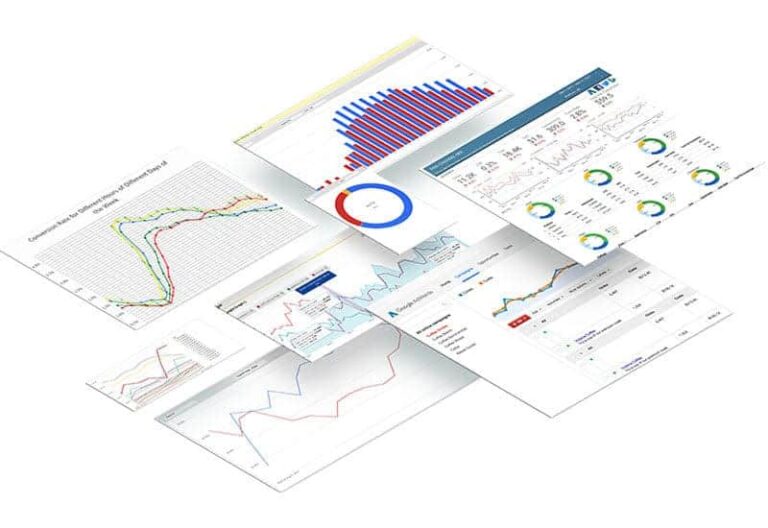
Numbers tell you what is happening, but behavioral analytics tell you why. At Zen Agency, we use tools like heatmaps and session recordings to peer over the shoulder of your visitors (anonymously, of course!).
- Heatmaps: These show where people click, move, and scroll. If your main CTA is in a “cold” blue area and a random image is getting all the “hot” red clicks, you have a problem.
- Session Recordings: Watching a user struggle to find a checkout button is a painful but necessary way to identify friction.
- Surveys: Sometimes, the best way to find out why people aren’t converting is to ask them.
By combining this qualitative data with your hard numbers, you can uncover the “hidden” reasons you’re losing money. We dive deeper into these tactics in our post on how to Stop Losing Leads with These CRO Secrets.
The experimentation process and statistical significance
We don’t believe in “gut feelings.” We believe in the PIE framework to prioritize what to test:
- Potential: How much improvement can be made on this page?
- Importance: How valuable is the traffic to this page?
- Ease: How difficult is it to implement the test?
Once we have a priority, we form a hypothesis: “Because we observed [Data Point], we believe that changing [Element] will result in [Outcome].”
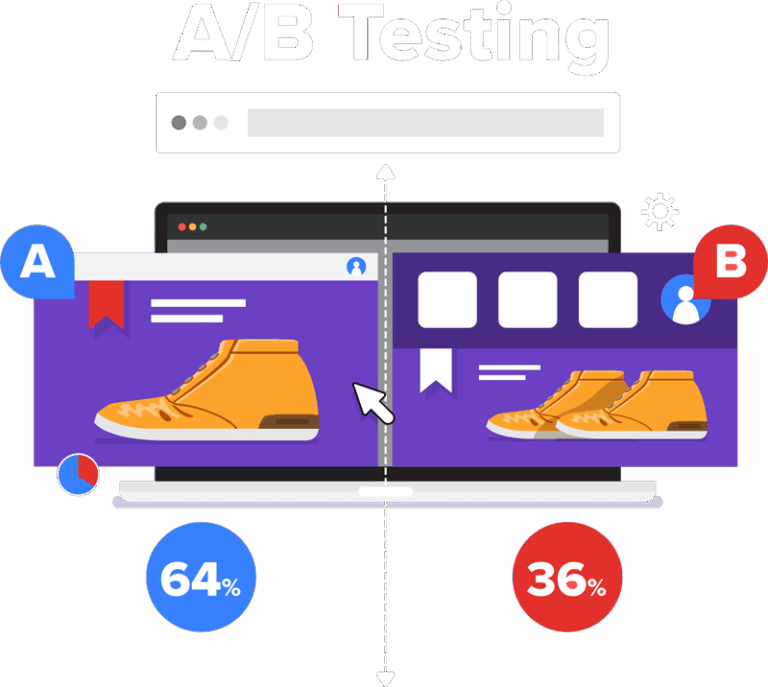
Then, we run the test. But here is the catch: you can’t stop a test just because you see a quick win. You must reach statistical significance—usually a 95% confidence level. This ensures that your results aren’t just a fluke of timing or luck. Only 12% of experiments actually produce a winning result, which is why a systematic approach is so vital. You can learn more about managing these tests in our CRO Best Practices guide.
Advanced Techniques to Scale Your Results
Once you’ve fixed the obvious “leaks” in your funnel, it’s time to scale. Advanced conversion optimization involves moving beyond basic A/B tests into multivariate testing and personalization.
Personalization is a massive trend in 2026. Over 60% of consumers view brands more positively when content is personalized to their needs. This could mean showing different hero images based on whether a visitor is from a B2B or B2C background. For B2B companies, this is the key to Digital Dominance.
For ecommerce brands, we focus heavily on the checkout flow. With an average cart abandonment rate of 70%, even a 1% improvement here can result in hundreds of thousands of dollars in “found” revenue. We’ve compiled our top strategies for this in The Ultimate Playbook to Skyrocket Ecommerce Conversion Rates.
Lastly, never underestimate page speed. A one-second delay in load time can reduce conversions by 7%. When 53% of users leave a page if it takes more than three seconds to load, speed is no longer just a technical metric—it’s a conversion metric.
Frequently Asked Questions about Conversion Optimization
What is a good conversion rate in 2026?
While the average across all industries is roughly 1.7%, a “good” rate is one that is better than last month. Ecommerce typically aims for 2-4%, while high-performing B2B landing pages can hit 10% or more. Focus on your specific industry benchmarks and your own performance tracking.
How does AI impact conversion optimization?
AI is a double-edged sword. AI Overviews can reduce your traffic, but AI-driven CRO tools allow us to analyze thousands of user sessions in seconds. We use AI for predictive modeling and personalization at scale, allowing us to show the right offer to the right person at exactly the right time.
How long should an A/B test run?
A test should run until it reaches statistical significance (usually 95% confidence) and has been live for at least one full business cycle (usually 1-2 weeks). This accounts for variations in behavior between weekdays and weekends.
Conclusion
At Zen Agency, we don’t just build websites; we build revenue engines. We’ve spent years helping businesses across Pennsylvania—from Wilkes Barre to Scranton—and throughout the USA stop the “leaky bucket” syndrome.
Building a sustainable, data-driven experimentation culture is the highest-leverage move you can make for your business growth in 2026. If you’re ready to stop guessing and start growing, you might find that you Need Professional CRO Implementation Services to scale effectively.
Don’t let another 98% of your visitors walk away. Request a Quote today and let’s turn your existing traffic into your greatest competitive advantage.