Navigating the Lead Landscape: B2B vs. B2C Strategies
Why B2B and B2C Lead Generation Matters for Your Business
B2B and B2C lead generation are fundamentally different approaches to attracting potential customers, each requiring distinct strategies, timelines, and tactics. Here’s what separates them:
| Aspect | B2B Lead Generation | B2C Lead Generation |
|---|---|---|
| Target Audience | Organizations and decision-makers | Individual consumers |
| Sales Cycle | Weeks to months (avg. 12 touchpoints to SQL) | Minutes to days |
| Decision Process | Multiple stakeholders, ROI-focused | Single buyer, emotion-driven |
| Key Channels | LinkedIn (85% usage), webinars, email | Social media (3B+ Facebook users), influencers |
| Content Focus | Thought leadership, industry reports | Quick conversions, brand awareness |
Across sectors, lead generation drives sales and ultimately determines the longevity of a business. With competition rapidly growing, you need to be proactive in convincing potential customers to stay interested in your products and services.
The challenge? 37% of B2B marketers consider generating high-quality leads their top challenge, while B2C brands struggle to stand out among billions of social media users. Whether you’re targeting businesses or consumers, understanding these distinctions is critical for building effective campaigns that convert.
Traditional methods like trade shows and word of mouth are no longer enough. More than 70% of the B2B buyer’s journey happens digitally before any sales involvement. Meanwhile, B2C buyers expect instant gratification and seamless mobile experiences.
The good news? Both B2B and B2C businesses can leverage proven strategies like content marketing, SEO, and paid advertising—but the execution must match your audience’s buying behavior. Quality matters more than quantity when it comes to leads that actually convert.
I’m Joseph Riviello, and over my 22 years in digital marketing, I’ve helped countless companies master B2B and B2C lead generation strategies that drive measurable growth. At Zen Agency, we’ve seen how the right approach transforms struggling pipelines into revenue engines.
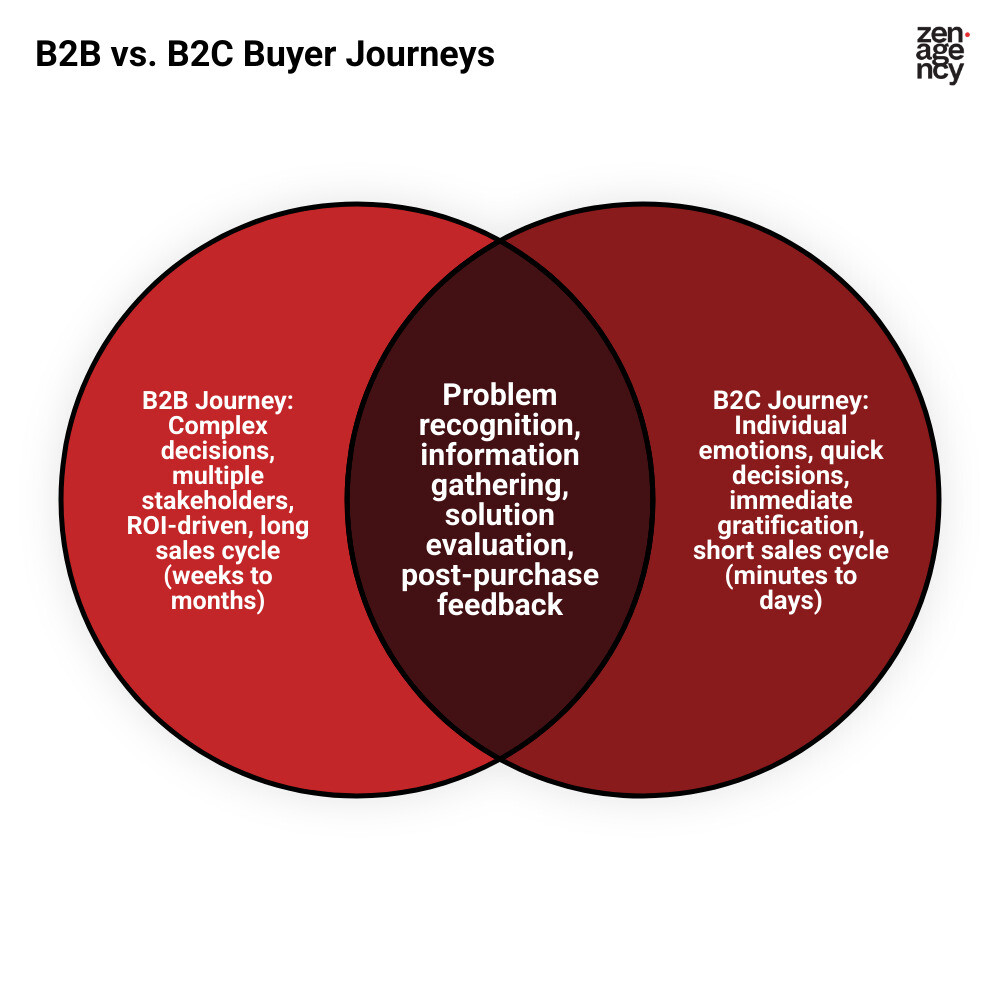
B2b and b2c lead generation terms to learn:
Understanding the Core Differences in B2B and B2C Lead Generation
When we talk about b2b and b2c lead generation, we are essentially looking at two different animals in the same marketing jungle. The end goal—revenue—is identical, but the path to get there requires a different set of boots.

The Marathon vs. The Sprint: Sales Cycle Length
In the B2B world, lead generation is like a serious, long-term relationship. It requires patience, nurturing, and a lot of talking. Research indicates that it takes on average 12 points of contact to turn a prospect into a sales-qualified lead (SQL) in B2B. This long cycle exists because the stakes are higher; you aren’t just selling a product; you’re often selling a solution that impacts an entire organization’s workflow.
Conversely, B2C lead generation is more like a quick fling. A consumer sees a pair of shoes, reads a few reviews, and clicks “buy” within minutes. The sales cycle is concise, often completing in hours or even minutes.
Decision-Making and Stakeholder Buy-In
In B2B, you aren’t just convincing “John the IT Manager.” You’re likely convincing John, his boss, the procurement team, and the CFO. Decisions are ROI-driven, logical, and require consensus. In B2C, the decision-maker is usually an individual or a head of household. Buying is driven by personal desire, trends, and emotional triggers.
To steer these differences, businesses must learn how to qualify leads for better conversion rates, ensuring that the energy spent on a B2B stakeholder committee or a B2C impulsive shopper is proportionate to the potential return.
| Metric | B2B Lead Gen | B2C Lead Gen |
|---|---|---|
| Primary Driver | Logic & ROI | Emotion & Status |
| Market Size | Narrow & Focused | Broad & Mass |
| Relationship | Deep & Consultative | Transactional |
| Cost Per Lead | Typically Higher | Typically Lower |
Organic Strategies for Sustainable Growth
Organic lead generation is the “house” that keeps on giving. While paid ads are great for a quick spike, organic strategies build a sustainable, long-term presence. SEO and content marketing are the bedrock of this approach.
The Power of Content
Did you know that 93% of B2B companies say content marketing generates more leads than traditional marketing strategies? This is because content allows you to solve your audience’s problems before they even sign a contract. By providing value upfront, you position your brand as an industry authority. Whether it’s a blog post explaining a complex regulation or a white paper on industry trends, using content marketing for lead generation is essential for building the trust necessary to close high-value deals.
Authority Building in B2B and B2C Lead Generation
For B2B brands, LinkedIn is the undisputed heavyweight champion. Statistics show that 40% of LinkedIn visitors engage with a page organically each week. This platform allows for sophisticated thought leadership. Sharing high-quality, informative content helps position your brand as the go-to expert in your niche.
At Zen Agency, we focus heavily on b2b lead generation and appointment setting by leveraging these trust signals. When a prospect sees your team consistently providing insights on LinkedIn, the “cold” outreach eventually becomes a “warm” conversation.
Driving Quick Conversions for B2C Brands
B2C brands need to be where the people are, and currently, the people are on social media. With Facebook boasting almost 3 billion monthly users, the opportunity for organic reach is massive. However, B2C organic growth isn’t just about posting; it’s about engagement.
Successful B2C strategies include:
- Influencer Partnerships: Leveraging the trust individuals have in creators to drive quick brand awareness.
- Local SEO: Ensuring your business appears when someone searches for services “near me” in Scranton or Wilkes-Barre.
- Social Proof: Using customer testimonials to generate leads to build immediate credibility.
For those running digital storefronts, implementing effective lead generation strategies for e-commerce websites—such as “spin-to-win” wheels or exclusive first-purchase discounts—can turn a casual browser into a lead in seconds.
Paid Advertising and Advanced Techniques
When organic growth needs a boost, paid advertising (PPC) steps in. However, the way you manage a PPC campaign for b2b and b2c lead generation varies wildly in terms of cost and scheduling.
Ad Scheduling and Cost-Per-Lead (CPL)
B2B ads generally perform best during business hours (Monday through Friday, 9 AM to 5 PM). Why? Because that’s when your target decision-makers are in “work mode.” B2B keywords are often more competitive and expensive because the lifetime value of a single B2B client can be worth hundreds of thousands of dollars.
B2C ads, on the other hand, are a 24/7 game. People shop for skincare at 2 AM on a Saturday just as often as they do during their lunch break. The CPL is usually lower, but you need a much higher volume of leads to sustain growth. Learning how to use paid ads for lead generation requires a deep dive into these demographic behaviors to ensure you aren’t wasting budget on “dead” airtime.
Specialized B2B and B2C Lead Generation Tactics
- Account-Based Marketing (ABM): This is a B2B-specific powerhouse. Instead of casting a wide net, you target specific high-value organizations with personalized campaigns.
- Webinars: These are gold for B2B. Salesforce’s Dreamforce event in 2020 attracted more than 200 million views, proving that interactive, educational content is a massive lead magnet. If you’re looking to scale, utilizing webinars for lead generation is a proven way to capture high-intent data.
- Contests and Mobile Marketing: These are B2C favorites. A well-timed “tag a friend” contest on Instagram or a geo-fenced SMS coupon can drive a surge of individual leads overnight.
Optimizing the Funnel with Tools and Analytics
You can’t manage what you can’t measure. In the modern b2b and b2c lead generation landscape, tools and technology are the “secret sauce” that separates the pros from the amateurs.
The Role of Automation and AI
The impact of technology is staggering: using marketing automation to nurture leads brings a 451% increase in qualified leads. Automation ensures that no lead falls through the cracks. Whether it’s an automated email sequence for a B2B prospect or a chatbot handling B2C customer queries in real-time, lead generation automation streamlines the journey from stranger to customer.
AI-improved lead scoring is another game-changer. By analyzing user behavior—like how many times they visited your pricing page or which white papers they downloaded—AI can tell your sales team exactly who to call first. This prevents your team from wasting time on “window shoppers” and allows them to focus on high-intent prospects.
Essential Tech Stack
To succeed, we recommend integrating the following top tools for lead generation success:
- CRM (Customer Relationship Management): Like HubSpot or Salesforce, to track every interaction.
- Email Marketing Platforms: To nurture leads with personalized content.
- Analytics: Using tools like Google Analytics to uncover your best traffic sources and measure conversion rates.
Frequently Asked Questions about B2B and B2C Lead Generation
What is the primary difference between B2B and B2C lead generation?
The primary difference lies in the audience and the intent. B2B targets professional decision-makers looking for solutions to business problems, resulting in a longer, more complex sales cycle. B2C targets individual consumers looking to satisfy personal needs or desires, leading to faster, more emotional purchasing decisions.
Which channels are most effective for B2B lead generation?
LinkedIn is the powerhouse for B2B, with nearly 85% of B2B teams using LinkedIn during the buying process. Other effective channels include professional webinars, email marketing, and deep-dive content marketing like white papers and case studies.
How do you measure the success of a lead generation campaign?
Success is measured through several Key Performance Indicators (KPIs):
- Conversion Rate: The percentage of visitors who become leads.
- Cost Per Lead (CPL): How much you spend to acquire one lead.
- Lead Quality: How many leads actually turn into sales (SQLs).
- ROI: The total return on investment for your marketing spend.
Conclusion: Quality Over Quantity
Navigating the lead landscape requires more than just a “post and pray” strategy. Whether you are building a complex ABM campaign for a B2B enterprise or launching a viral influencer campaign for a B2C brand, the core principle remains the same: focus on quality over quantity.
A thousand low-quality leads will only clog your CRM and frustrate your sales team. However, a handful of high-intent, well-nurtured leads can transform your revenue. This requires tight alignment between your sales and marketing teams—a “smarketing” approach where everyone agrees on what a “good” lead looks like.
At Zen Agency, we specialize in helping businesses in Pennsylvania, Montana, and across the USA bridge the gap between visibility and profitability. Since 2008, our team in locations like Scranton, Wilkes-Barre, and Billings has provided enterprise-grade lead generation services custom to both B2B and B2C markets.
Ready to fill your pipeline with leads that actually convert? Let’s build a strategy that works for your unique business goals. Contact us today to start your journey toward sustainable growth.