Unwrapping the Perfect Branding Package for Small Businesses
Unwrapping the Perfect Branding Package for Small Businesses
Why a Branding Package for Small Businesses Is the Foundation of Real Growth
A branding package for small businesses is a complete set of visual and strategic assets that defines how your company looks, feels, and communicates — across every touchpoint, from your website to your business card to your social media profiles.
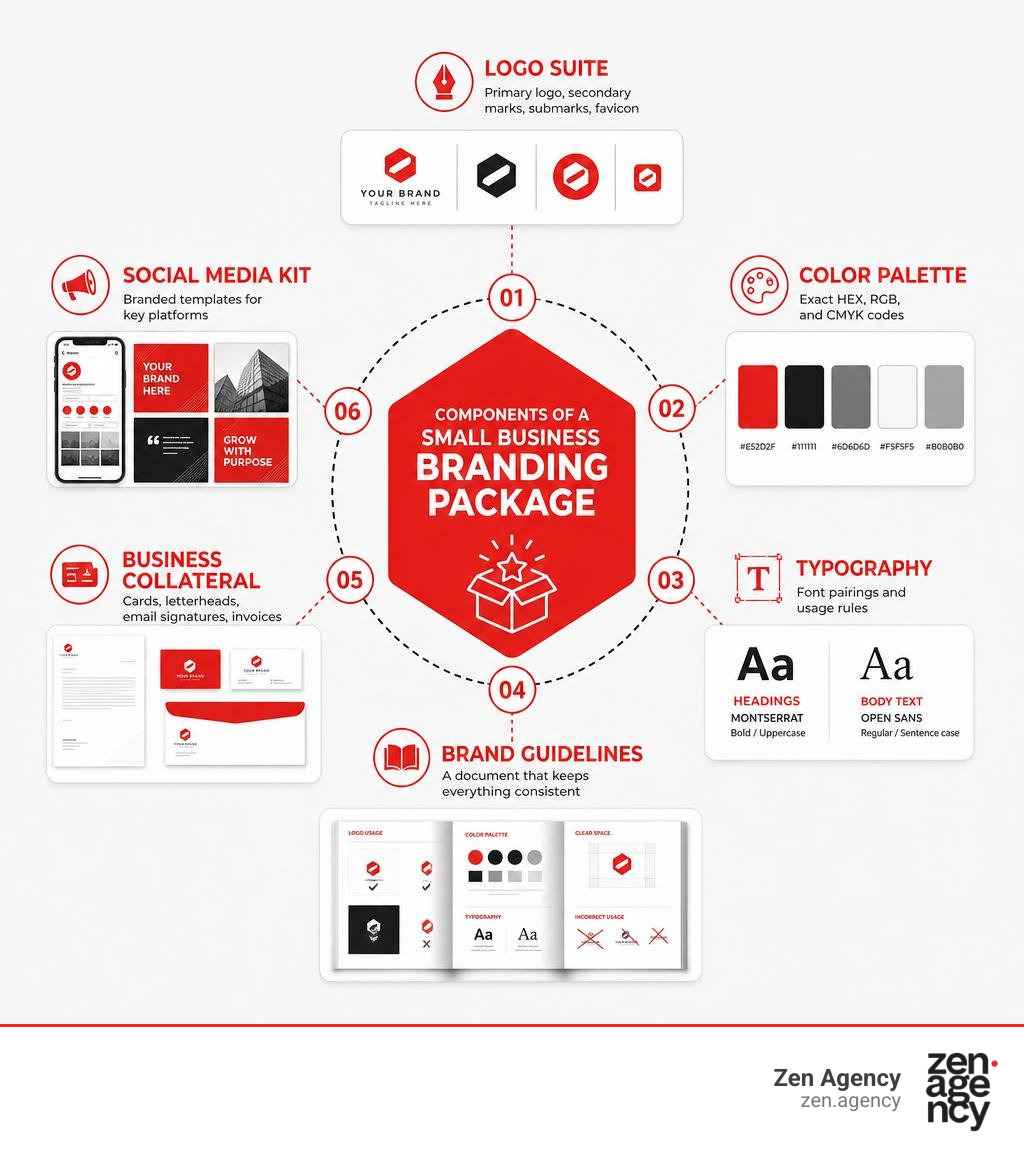
Here’s a quick breakdown of what’s typically included:
| Component | What It Is |
|---|---|
| Logo suite | Primary logo, secondary marks, submarks, favicon |
| Color palette | Exact HEX, RGB, and CMYK color codes |
| Typography | Font pairings and usage rules |
| Brand guidelines | A document that keeps everything consistent |
| Business collateral | Cards, letterheads, email signatures, invoices |
| Social media kit | Branded templates for key platforms |
Think of it this way: a logo is just one piece of your brand. A branding package is the whole system.
Without that system, most small businesses end up with a patchwork of mismatched visuals — a logo designed one year, a business card made the next, and a social profile that looks like it belongs to a different company entirely. That inconsistency quietly erodes trust with every potential customer who encounters it.
And trust matters. 87% of shoppers will pay more for a product from a brand they trust. That’s not a small edge — that’s the difference between competing on price and commanding a premium.
This guide covers everything: what’s included, how much it costs, how the process works, and how to avoid the most common (and expensive) mistakes.
I’m Joseph Riviello, CEO and Founder of Zen Agency, with over 22 years of experience helping businesses scale through digital marketing and brand strategy — including guiding hundreds of companies through selecting and executing the right branding package for small businesses. If you’ve been struggling to stand out or convert attention into revenue, you’re in exactly the right place.
What is a Branding Package for Small Businesses?
A branding package for small businesses is far more than a folder of pretty graphics. It is a strategically engineered toolkit designed to establish your company’s identity, build market authority, and drive customer loyalty. While many business owners assume that branding begins and ends with a logo, a true branding package is a comprehensive system. It bridges the gap between your internal business values and the external perception of your audience.
At its core, a professional brand identity consists of three pillars:
- Brand Strategy: Defining your mission, target audience, market positioning, and unique value proposition.
- Visual Brand Identity: The tangible assets—logos, color systems, typography, and graphics—that make your business instantly recognizable.
- Brand Guidelines: The rulebook that dictates how those visual assets are applied across digital and physical platforms to maintain absolute consistency.
When you invest in a complete branding package, you are not just buying design files. You are buying a cohesive visual language. This language communicates professionalism, builds immediate credibility, and helps you stand out in crowded local markets, whether you are operating in Scranton, PA, or Billings, MT. To truly understand why this holistic approach is vital, explore our deep dive on Beyond Logos: Why Your Business Needs a Digital Branding Agency.
Logo vs. a Complete Branding Package for Small Businesses
To understand the difference between a standalone logo and a complete branding package, think of a country. A logo is like a flag—it is a vital symbol of identity. However, a flag is not the country itself. The country is the infrastructure, the culture, the laws, and the landscape.
Similarly, a logo is just one touchpoint of your brand. A complete branding package for small businesses builds the entire visual infrastructure around that logo. It includes:
- Logo Variations: A primary logo for your website, a secondary horizontal logo for headers, and simplified submarks or brandmarks for social media icons and favicons.
- Typography Systems: Curated font pairings (such as a bold header font and a clean, readable body font) that establish visual hierarchy.
- Color Systems: A defined palette complete with HEX codes for web use, RGB for digital screens, and CMYK or Pantone matching for print materials to prevent color shifting.
- Supporting Visual Assets: Custom patterns, textures, and iconography that add depth and versatility to your marketing materials.
Without these supporting elements, your marketing can quickly look disjointed. For a step-by-step look at how to establish these rules for your business, check out Your Brand Your Rules: A Guide to Custom Identity Design.
Why a Single Logo is No Longer Enough in 2026
In July 2026, the digital landscape is more fragmented and competitive than ever. Your customers do not just see your sign on a physical storefront in Hazleton or Wyoming, PA; they interact with you across dozens of digital touchpoints. They might find you on Instagram, visit your mobile website, receive an HTML email newsletter, view a PDF proposal, and finally receive a physical product with custom packaging.
If you rely on a single logo file, it will inevitably fail to look professional across all these mediums. A logo designed for a wide website header will become unreadable when squeezed into a circular Instagram profile picture or a tiny browser favicon.
Furthermore, modern consumers expect a seamless user experience. When your visual identity shifts from platform to platform, it signals a lack of organization and professionalism. Investing in a comprehensive visual system ensures that your brand looks polished, cohesive, and trustworthy, no matter where your audience finds you. Learn more about how modern brands integrate these visual elements seamlessly by reading about Small Business Branding, Packaging, & Web Design.
Essential Components of a Professional Brand Identity
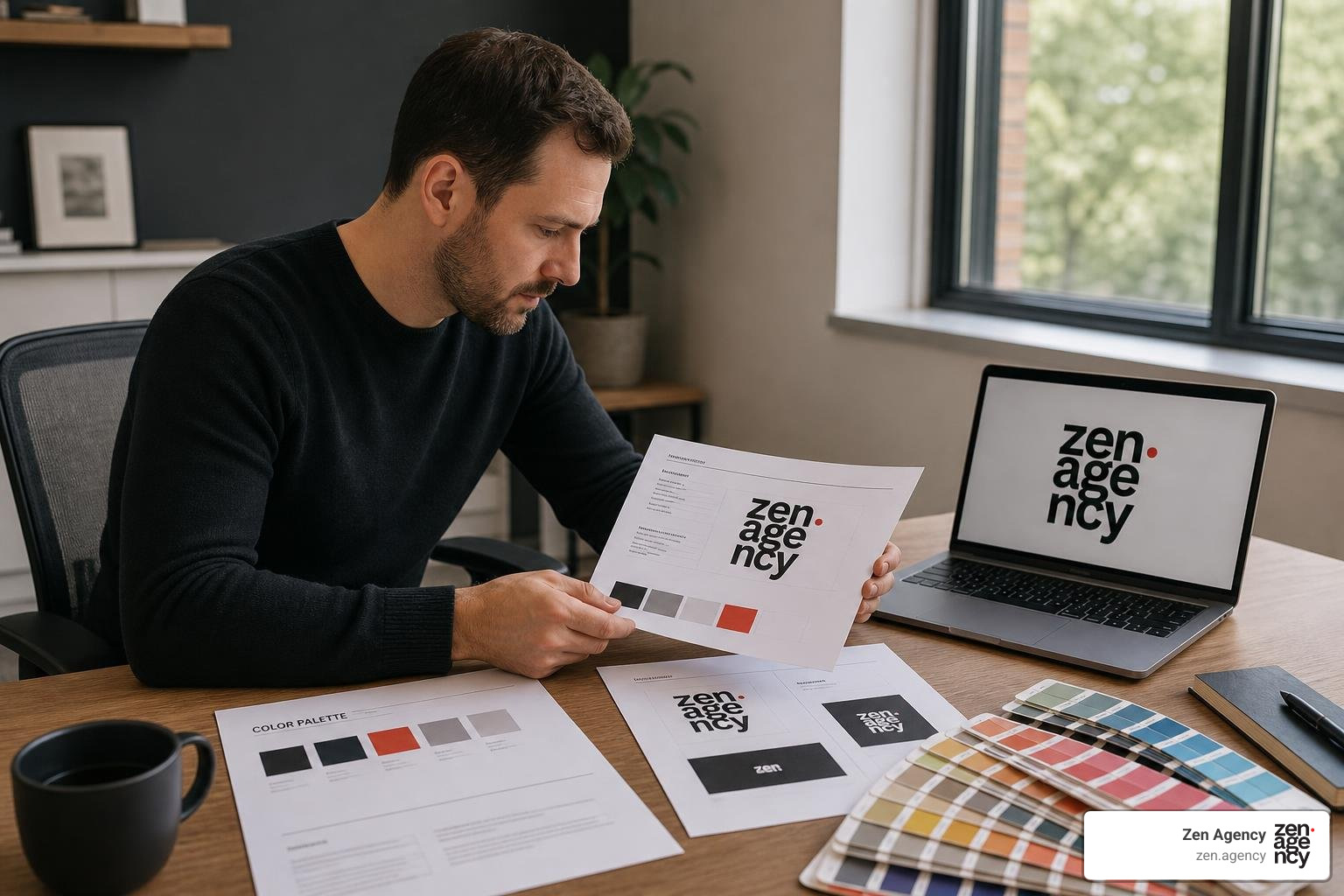
A professional brand identity must be highly functional. Every element in your brand kit should serve a specific purpose, designed to make your daily marketing operations simpler and more effective.
Core Visual Assets
The visual foundation of your brand is built on assets that work together to create depth and flexibility. When we design a branding package for small businesses, we focus on delivering a highly versatile visual system:
- The Logo Suite: This includes your primary logo (the main representative of your brand), a secondary logo (rearranged for different spacing needs), and a submark or brandmark (a simplified icon version).
- Brand Typography: Clear font rules prevent your team from using random system fonts on your materials. We define primary, secondary, and accent typefaces.
- Color Palette: A curated selection of primary and secondary colors. We provide exact color specifications to ensure your brand colors look identical on a screen in Wilkes-Barre and on a printed banner in Montana.
- Patterns and Textures: These are the unsung heroes of brand consistency. Custom patterns and textures give your website backgrounds, social media graphics, and physical packaging a premium, custom feel.
In fact, industry data shows that most clients who originally came for a smaller branding package ended up adding on patterns, textures, and extra marketing materials after realizing the importance of these branding assets. They realize that without these supporting graphics, their marketing still feels somewhat empty. To learn how to protect and implement these visual assets correctly, consult The Ultimate Guide to Brand Guideline Creation.
If you are looking for inspiration on how these assets come together to form a beautiful, functional visual system, you can explore professional portfolios like Custom Brand Identity & Logo Design for Small Businesses.
Marketing and Business Collateral
Once your visual assets are established, they must be applied to the real-world items you use to run your business. A standard professional branding package translates your visual identity into essential business collateral, including:
- Business Cards: Designed with correct margins, typography, and color applications, ready for high-quality printing.
- Email Signatures: Clean, professional digital signatures that make every daily email look like a formal business communication.
- Stationery & Letterheads: Branded templates for physical letters, digital PDFs, and corporate announcements.
- Invoice Templates: Standardized invoices that ensure even your billing process reinforces your brand’s professionalism.
- Social Media Kits: Custom templates (often delivered via editable platforms like Canva) for Instagram posts, stories, Facebook banners, and LinkedIn headers.
For business owners looking to manage their social media graphics easily while staying strictly on-brand, tools like the Small Business Branding Kit | Canva, a Branding & Logo Template by Ederra Design offer an excellent way to maintain visual control after your core identity is established.
Tiers, Costs, and Pricing Factors
When shopping for a branding package for small businesses, you will encounter a wide range of pricing. Because branding is a highly customized service, costs vary based on the experience of the provider, the complexity of your industry, and the scope of the deliverables.
Generally, the market is divided into three provider categories:
- Freelancers: Charging anywhere from $15 to $300 per hour, freelance designers can deliver branding packages ranging from $500 to $6,000. While highly budget-friendly, working with a solo freelancer means you are relying on a single person’s skill set, which may lack deep strategic marketing or web development expertise.
- Small Design Studios: Typically charging between $3,000 and $12,000, small studios offer a more collaborative experience and a higher degree of design refinement.
- Full-Service Agencies: A full branding package from an agency can cost between $5,000 to $100,000+ depending on the size of the package and the depth of market research required. Agencies provide an integrated team of strategists, designers, and web developers, ensuring your brand is built to convert visitors into customers from day one.
To see how different branding services stack up against each other in terms of value and deliverables, read our comparison guide on The 5 Best Company Branding Services Compared.
Starter vs. Growth vs. Premium Packages
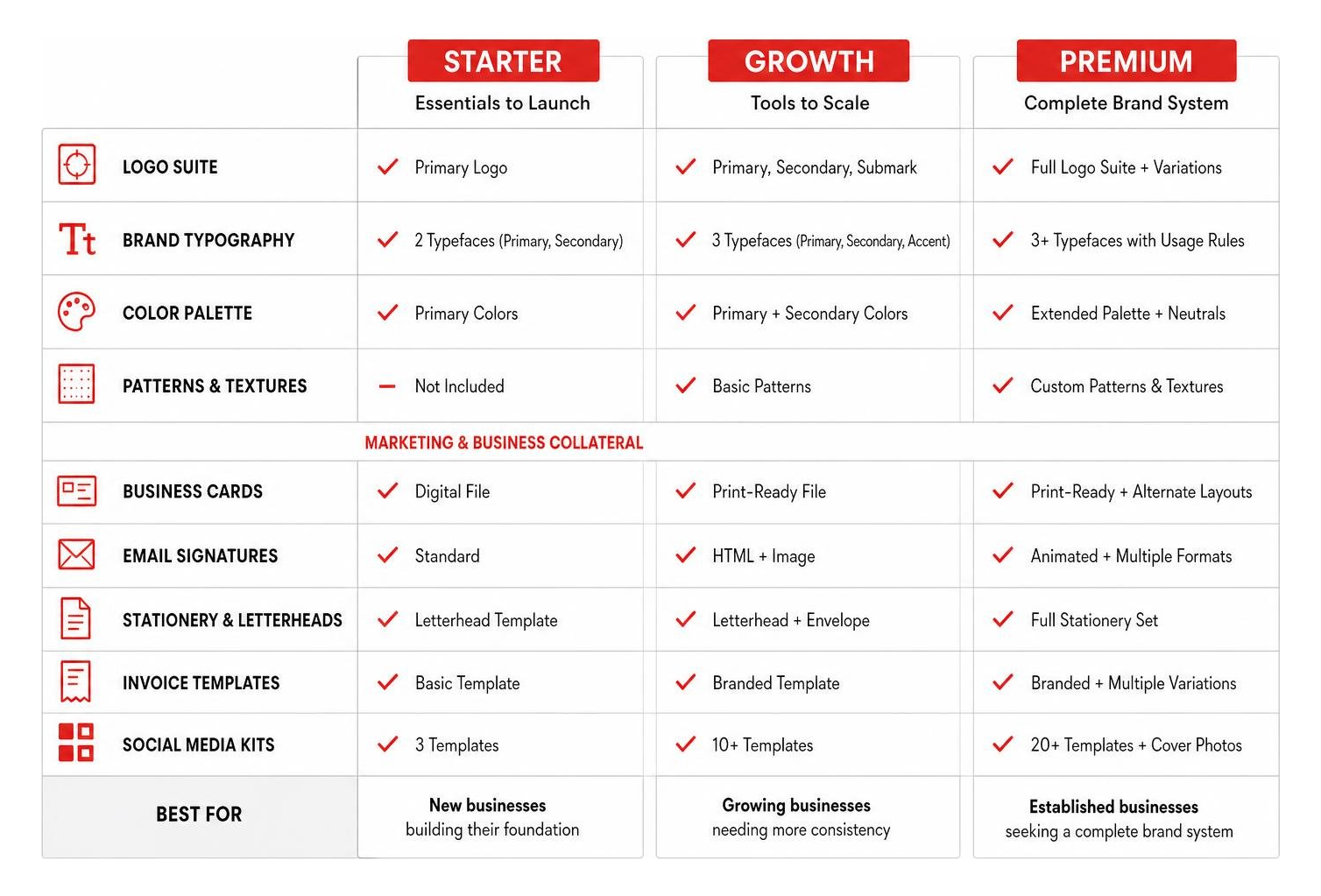
To help you identify which level of investment matches your current business needs, we have broken down the typical branding package tiers:
| Package Tier | Typical Cost | Best For | Core Deliverables |
|---|---|---|---|
| Starter Kit | $500 – $2,500 | Solo entrepreneurs, side hustles, and brand-new startups on a tight budget. | Primary logo, basic color palette, font selection, and a simple one-page style guide. |
| Growth Package | $2,500 – $7,500 | Established small businesses looking to scale, refresh an outdated look, or launch a professional digital presence. | Complete logo suite, color palette, typography guidelines, business collateral (cards, email signature), social media kit, and a 10-12 page brand guide. |
| Premium Brand Identity | $7,500 – $25,000+ | High-growth companies, businesses entering competitive markets, or those needing seamless web integration. | Full brand strategy, comprehensive logo suite, custom patterns/textures, full stationery suite, customized packaging design, social media templates, 20+ page brand guidelines, and direct integration with web design. |
For businesses looking for a structured, fast-turnaround starter option to get their foot in the digital door, products like the Start-Up Brand Kit | Logo, Social Media & Brand Guidelines – Andreas Antonos show how much value can be packed into a well-organized starter system.
Choosing the Right Branding Package for Small Businesses
Selecting the right package is a balance of your current business stage, your immediate growth goals, and your budget. Ask yourself these critical questions:
- What is my primary business goal? If you are simply testing a new business idea in Kingston, PA, a starter kit is a sensible way to begin without overcommitting. If you are a local service provider trying to stand out from aggressive competitors, a Growth or Premium package is required to build the trust necessary to win market share.
- Who is my target audience? High-value corporate clients expect a level of visual sophistication that DIY templates simply cannot deliver.
- What is the cost of poor branding? If your current branding looks amateurish, you are likely losing leads to competitors who look more established. In this case, investing in a professional brand identity is not an expense—it is a high-ROI business correction.
For a comprehensive walkthrough on how to evaluate design talent and select the right partner for your project, read The Ultimate Guide to Hiring a Branding Graphic Designer.
The Step-by-Step Branding Process and Timeline
A professional branding package is not created overnight. It requires a structured, collaborative process that typically takes between 2 and 8 weeks to complete, depending on the scope of the package and the speed of communication.

To build a brand that lasts and scales, we follow a proven, strategic process. You can explore the philosophy behind this methodology in our guide, How to Build a Brand That Lasts: A Step-by-Step Strategy Guide.
Phase 1: Discovery, Research, and Strategy
Designing without strategy is just decoration. The first phase of any professional branding project must focus on building a strategic foundation:
- Brand Discovery: A deep-dive session where we clarify your business mission, core values, and long-term vision.
- Target Audience Profiling: Developing a clear picture of your ideal customer—their pain points, desires, and behaviors.
- Competitor Research: Analyzing your local and digital competitors to find visual and strategic gaps in the market. This ensures your brand looks unique and avoids accidental design overlap.
- Moodboarding: Creating visual direction boards containing color concepts, photography styles, and typography directions to align our creative visions before any custom design begins.
For a deeper understanding of how professional brand strategy shapes your market positioning, read our insights on How to Pick Brand Strategy Companies That Actually Get You.
Phase 2: Design, Refinement, and Final Handoff
Once the strategic direction is approved, the visual creation begins:
- Concept Development: The design team translates the strategy into multiple distinct logo and visual concepts.
- Collaborative Refinement: We present these concepts, gather your feedback, and refine the chosen direction through structured revision rounds.
- Collateral Application: Applying the finalized visual identity to your business cards, email signatures, social media templates, and other package deliverables.
- Brand Guidelines Finalization: Compiling your brand rules into a clean, easy-to-use PDF guide.
- Delivery and Handoff: Delivering your finalized assets in all industry-standard file formats. This includes vector formats (SVG, EPS, PDF) for infinite scalability and high-quality printing, alongside raster formats (PNG, JPG) optimized for web and social media use.
If you are a business owner operating in the Pacific Northwest or looking for inspiration from agencies that specialize in regional business growth, exploring resources like Montana Graphic Design & Branding for Small Businesses can provide great context on how local strategy influences visual design.
Red Flags and Common Mistakes to Avoid
Because your brand identity is a long-term business asset, making a mistake during the purchasing phase can be incredibly costly. Rebranding a year after launch because your initial assets were poorly designed wastes time, money, and customer recognition. For a look at what successful brand execution looks like, read Why These Branding and Logo Design Companies Are Killing It.
Avoiding the “Logo-Only” Trap
The single most common mistake small business owners make is purchasing a cheap, standalone logo online and assuming their branding is complete. This inevitably leads to the “patchwork brand” problem.
Without a defined color palette, typography rules, and supporting collateral templates, you will struggle to build a consistent marketing presence. Your website won’t match your business cards, your social media graphics will look chaotic, and your brand will fail to build recognition. Over time, the cost of constantly hiring designers to fix individual, mismatched assets will far exceed the cost of purchasing a cohesive branding package for small businesses from the start.
For those tempted by quick, low-cost online logo offers, it is important to understand the limitations of these transactions. You can read more about how standard online logo ordering works at Logo & Branding Package for Small Businesses | Order Online.
Spotting Low-Quality Design Providers
When evaluating branding agencies or freelancers, be on high alert for these common red flags:
- No Strategy Phase: If a provider offers to design a logo without asking about your target audience, business goals, or competitors, run. They are selling generic graphics, not a strategic brand.
- Use of Stock Templates: Low-cost providers often customize pre-made templates from public sites. This means your logo could look identical to hundreds of other businesses online, making it impossible to trademark or stand out.
- Strict, Unrealistic Revision Limits: A professional branding process is highly collaborative. Avoid providers who offer only one or two rigid revision rounds with no flexibility.
- Vague File Deliverables: Ensure your contract explicitly states that you will receive fully editable, vector source files (AI, EPS, SVG) and that 100% of the design copyright ownership transfers to you upon final payment.
To protect your investment and ensure you are partnering with an agency that delivers genuine, custom results, read our guide on Top Branding Companies for Small Business Success.
Frequently Asked Questions About Small Business Branding
How long does it take to complete a branding package?
A standard, professional branding package typically takes between 2 and 8 weeks to complete. The timeline depends heavily on the scope of the package, the complexity of the research phase, and how quickly your team provides feedback during creative review cycles.
Can I update my branding later as my business grows?
Absolutely. A strong brand identity is a living system. We always recommend starting with a solid core identity (your primary logos, colors, and typography) and then adding on extra collateral—such as custom packaging, slide decks, or vehicle wraps—as your business scales and your budget allows.
Do I need a branding package before building a website?
Yes, we highly recommend establishing your branding package before beginning custom web design. Your brand identity acts as the visual and structural blueprint for your website. Trying to design a website without established colors, fonts, and logo variations often results in a disjointed user experience and expensive redesign cycles later.
Conclusion
Investing in a professionally crafted branding package for small businesses is one of the most powerful strategic moves you can make. It transforms your business from a basic service provider into a memorable, trusted brand. It gives you the confidence to charge premium prices, makes your marketing efforts highly efficient, and builds lasting equity in your local and digital markets.
At Zen Agency, we have spent nearly two decades delivering enterprise-grade digital marketing, branding, and web development solutions to businesses looking to break through growth plateaus. We don’t just design pretty logos; we build cohesive, conversion-focused brand systems designed to maximize your visibility, profitability, and long-term ROI.
Whether you are operating in Wilkes-Barre, Scranton, PA, or Billings, MT, we are here to help you own your market edge.
Ready to build a brand that actually works for your business? Learn more about our custom design solutions and Elevate Your Brand with Zen Agency’s Branding and Graphic Design Services.