Packaging Design 101: Learn the Basics
Packaging Design 101: Learn the Basics
Why Product Packaging Design Can Make or Break Your Brand
Product packaging design is the process of creating the visual appearance, structure, and messaging of a product’s exterior — combining brand identity, materials, and function to protect the product and connect with buyers.
Quick answer: What is product packaging design?
- What it is: The strategic and creative process of designing how a product looks, feels, and communicates on shelf or online
- What it includes: Structure, materials, typography, color, imagery, and required information (ingredients, barcodes, legal text)
- Why it matters: Shoppers decide in under 2 seconds whether to pick up or click on a product — packaging is that first impression
- Who needs it: Any business selling a physical product, from small Etsy shops to large consumer goods brands
- Key outcome: Strong packaging builds brand recognition, increases perceived value, and drives conversions both in-store and online
Most business owners think of packaging as a box or a label. But it is much more than that.
Your packaging is often the first physical touchpoint a customer has with your brand. It shapes how they feel about the product before they ever open it. It signals quality, communicates your values, and sets expectations for what is inside.
And in e-commerce? It goes even further. Research shows that a visual mismatch between your online ads and your actual packaging can directly increase return rates and tank conversions. Your packaging has to work on a retail shelf and as a 2-second thumbnail on a mobile screen.
Getting it right is not just a design challenge — it is a business growth challenge.
I’m Joseph Riviello, CEO and Founder of Zen Agency, and with over 22 years of experience in digital marketing and brand strategy, I have helped businesses at every stage use smart product packaging design to strengthen their brand presence and drive measurable revenue growth. In this guide, I will walk you through everything you need to know — from choosing materials to preparing print-ready files.
What is Product Packaging Design and Why Does It Matter?

At its core, product packaging design is the silent spokesperson of your brand. When a consumer walks down a retail aisle in Scranton, PA, or scrolls through an e-commerce store in Billings, MT, they do not have time to read your mission statement. They rely on visual shorthand.
In fact, 93% of consumers say visual content is the single most important deciding factor in their purchasing decisions. If your packaging looks amateurish, chaotic, or completely disconnected from your brand, shoppers will pass it by without a second thought.
Great packaging acts as a bridge to your broader brand identity design. It is not just about looking pretty; it is about building a cohesive visual ecosystem. Consider how a household brand like Native transformed its business. By treating packaging as an active marketing channel rather than a logistical afterthought, they aligned their digital ad aesthetics directly with their physical products. You can read more about this incredible strategy in the case study on How Native Turned Packaging Into Its Highest-Converting Creative Asset.
When your physical packaging matches your digital presence, magic happens. You build trust, eliminate visual dilution, and drastically reduce customer return rates. (Did you know that 22% of e-commerce returns happen simply because the physical product did not look like the image online? Consistent packaging solves that problem instantly.)
The Psychology of the Unboxing Experience
The customer journey does not end when someone clicks “Buy Now” or hands over their cash at a register in Wilkes-Barre. The unboxing experience is a critical psychological touchpoint. It is the physical manifestation of anticipation.
When a box feels heavy, has a smooth matte finish, and opens with a satisfying slide, it triggers positive tactile engagement. This physical sensation increases the perceived value of the product inside. By incorporating thoughtful inner elements—like branded tissue paper, custom thank-you inserts, or structured compartments—you turn a routine task into a shareable event.
In the age of TikTok and Instagram, a beautiful unboxing experience is free marketing. Customers love sharing their purchases online, and that organic word-of-mouth is worth its weight in gold for customer retention and brand loyalty.
Current Trends in Packaging Design
If you want your products to stand out in 2026, you need to know what is capturing consumer attention. Today’s trends lean heavily toward authenticity and conscious consumerism:
- Sustainability: Eco-friendly materials are no longer optional. Consumers actively look for biodegradable, recycled, or FSC-certified packaging.
- Minimalist Aesthetics: Clean layouts, generous white space, and clear messaging. In a noisy world, quiet design stands out.
- Bold Typography: Letting custom, expressive fonts do the heavy lifting instead of cluttered illustrations.
- Illustrated Ingredients: Showing exactly what is inside the product (like botanical sketches on a skincare bottle) to convey transparency and natural quality.
- Personalized Packaging: Using limited-edition runs, custom stickers, or regional touches to make the consumer feel uniquely valued.
Choosing the Right Packaging Structure and Materials
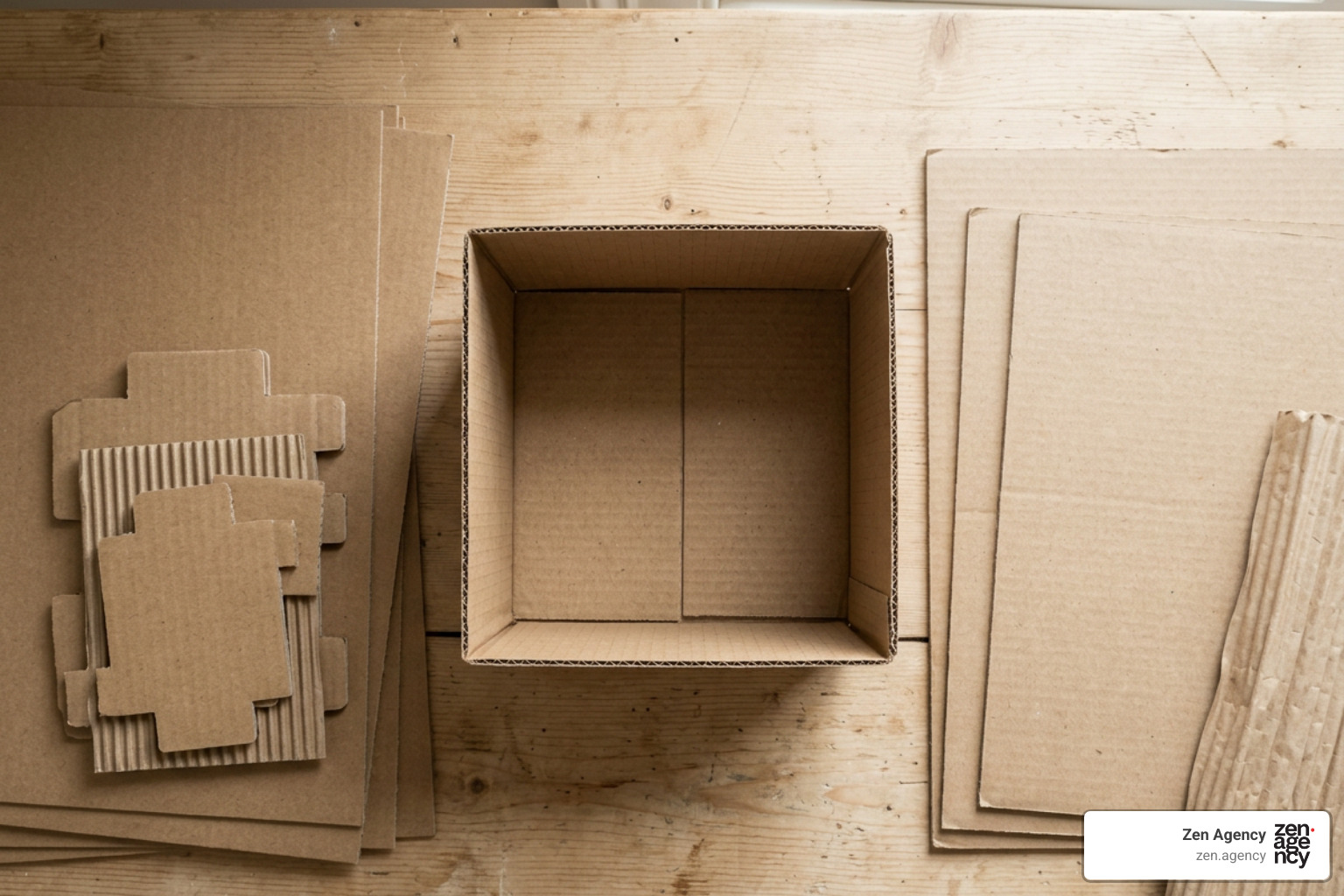
Before you can paint the canvas, you have to choose the canvas. The physical structure and materials of your packaging are just as important as the graphics printed on them. If your gorgeous design is printed on a flimsy box that crushes in transit between Kingston and Hazleton, your brand image will suffer.
To help you get started, here is a quick breakdown of the three most common packaging substrates:
| Material Type | Best Used For | Key Benefits | Environmental Impact |
|---|---|---|---|
| Corrugated Cardboard | Shipping boxes, subscription mailers, heavy items | Highly durable, shock-absorbent, structurally rigid | Fully recyclable, often made from recycled content |
| Paperboard | Cosmetics, cereals, lightweight retail cartons | Smooth printing surface, easy to fold, highly customizable | Biodegradable, lightweight, recyclable |
| Rigid Boxes | Luxury goods, electronics, high-end gift sets | Premium tactile feel, maximum protection, highly durable | Long lifespan (often reused by consumers), recyclable |
Aligning Structure with Product Needs
When selecting your packaging structure, you must weigh several practical factors:
- Product Dimensions & Weight: A heavy product needs thick, corrugated walls, while a lightweight cosmetic tube can sit comfortably in a thin paperboard folding carton.
- Fragility: Glass jars require protective inner inserts (like custom pulp trays or cardboard dividers) to prevent rattling and breakage.
- Shelf Life: Food and beverage products require specialized barrier coatings or airtight pouches to maintain freshness and comply with health regulations.
- E-commerce vs. Retail: E-commerce packaging must survive the rough-and-tumble environment of shipping carriers. Retail packaging, on the other hand, needs to be optimized for shelf space and easy stacking.
Sourcing Sustainable and Eco-Friendly Materials
Modern shoppers expect brands to do their part for the environment. Sourcing sustainable materials is one of the easiest ways to build goodwill. Look for paper-based packaging that carries the Forest Stewardship Council (FSC) certification, which guarantees the wood pulp was harvested from responsibly managed forests.
Using biodegradable films, water-based inks, and starch-based packing peanuts also reduces your environmental footprint. Beyond the ethical benefits, optimizing your packaging to use less material overall—known as material efficiency—saves on production and shipping costs by reducing dimensional weight.
The Step-by-Step Packaging Design Process
Designing packaging is a journey of collaboration, refinement, and technical precision. At Zen Agency, we believe in a hybrid approach that blends analytical research with human creativity to ensure your packaging performs beautifully.
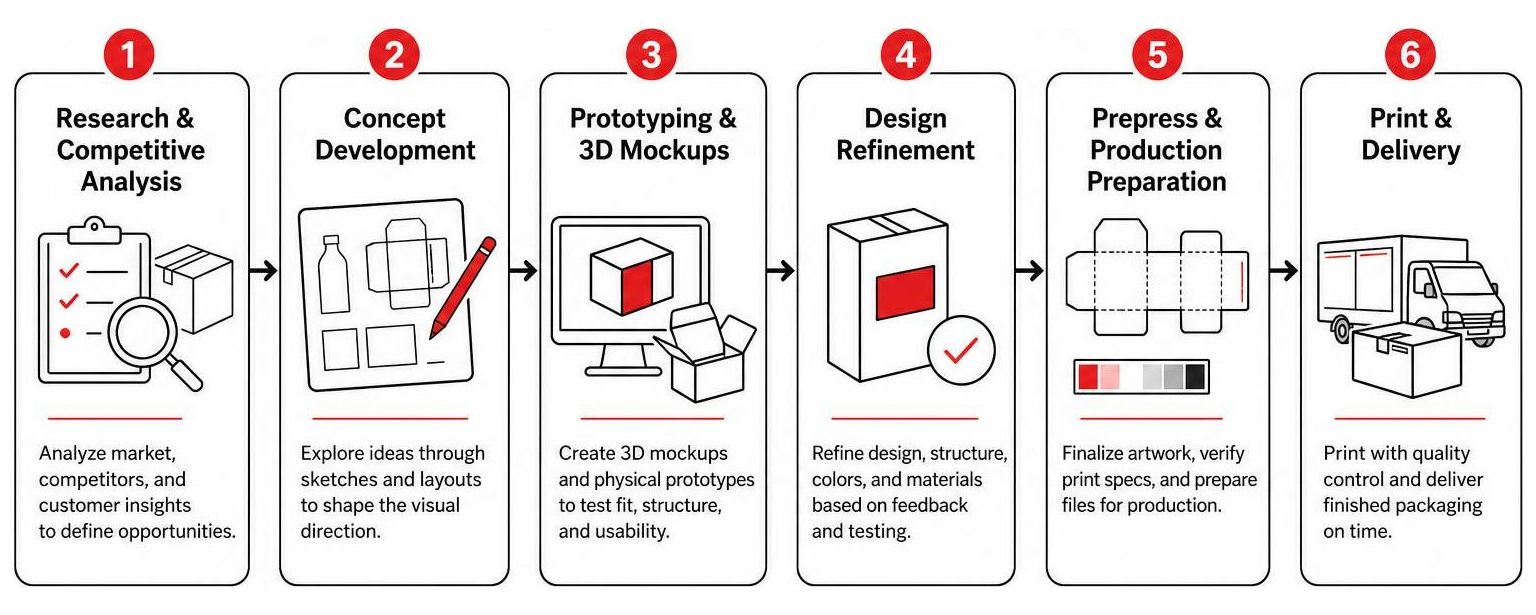
This workflow keeps your project on track and ensures no detail is missed:
- Research & Competitive Analysis: We look at your competitors’ packaging in Pennsylvania and Montana retail stores to see what colors and structures dominate the shelves—and how we can make your brand stand out.
- Concept Development: We sketch and explore various visual directions, testing how different layouts, fonts, and colors tell your brand’s story. For a deeper look at how we approach this creative phase, check out our guide on Beyond Moodboards: Mastering the Brand Identity Design Process.
- Prototyping & 3D Mockups: Before printing anything, we create 3D digital mockups to visualize the product from every angle. This is also when we recommend printing a 1:1 scale paper prototype on your office printer to physically fold and test the sizing.
- Feedback & Refinement: We gather feedback, tweak the copy hierarchy, and ensure the design is both beautiful and highly functional.
Essential Brand Assets for Product Packaging Design
Before you or a design agency can start laying out artwork, you must compile your core brand assets. Having these ready prevents delays and keeps your design perfectly aligned with your brand guidelines:
- Vector Logos: Always use vector formats (.AI, .EPS, or vector PDF) rather than flat JPEGs or PNGs. Vector files can scale to any size without pixelating.
- Color Palettes: Specify exact CMYK and Pantone color codes to ensure your brand colors look identical on paper as they do on screen.
- Typography: Provide the specific font files authorized for your brand.
- Brand Guidelines: If you don’t have these yet, we highly recommend reading The Ultimate Guide to Brand Guideline Creation to establish a consistent visual rulebook.
Modern Tools for Product Packaging Design
The packaging design landscape has evolved rapidly. Designers rely on vector-based software like Adobe Illustrator to create dielines and crisp typography, while using Adobe Photoshop for advanced image editing.
For structural engineering, CAD software is used to design precise box templates. Today, we also see the rise of AI packaging design generators, which are fantastic tools for rapid brainstorming and creating rough concept mockups during the early ideation stages.
Preparing Your Files for Flawless Printing
The most creative design in the world is useless if it cannot be printed correctly. Preparing print-ready files—a process known as prepress—requires strict attention to technical specifications. To avoid costly printing errors, you must understand how to translate digital pixels into physical ink. For a deeper dive into layout creation, explore The Ultimate Guide to Creating a Box Packaging Layout That Pops.
Understanding Dielines, Bleed, and Margins
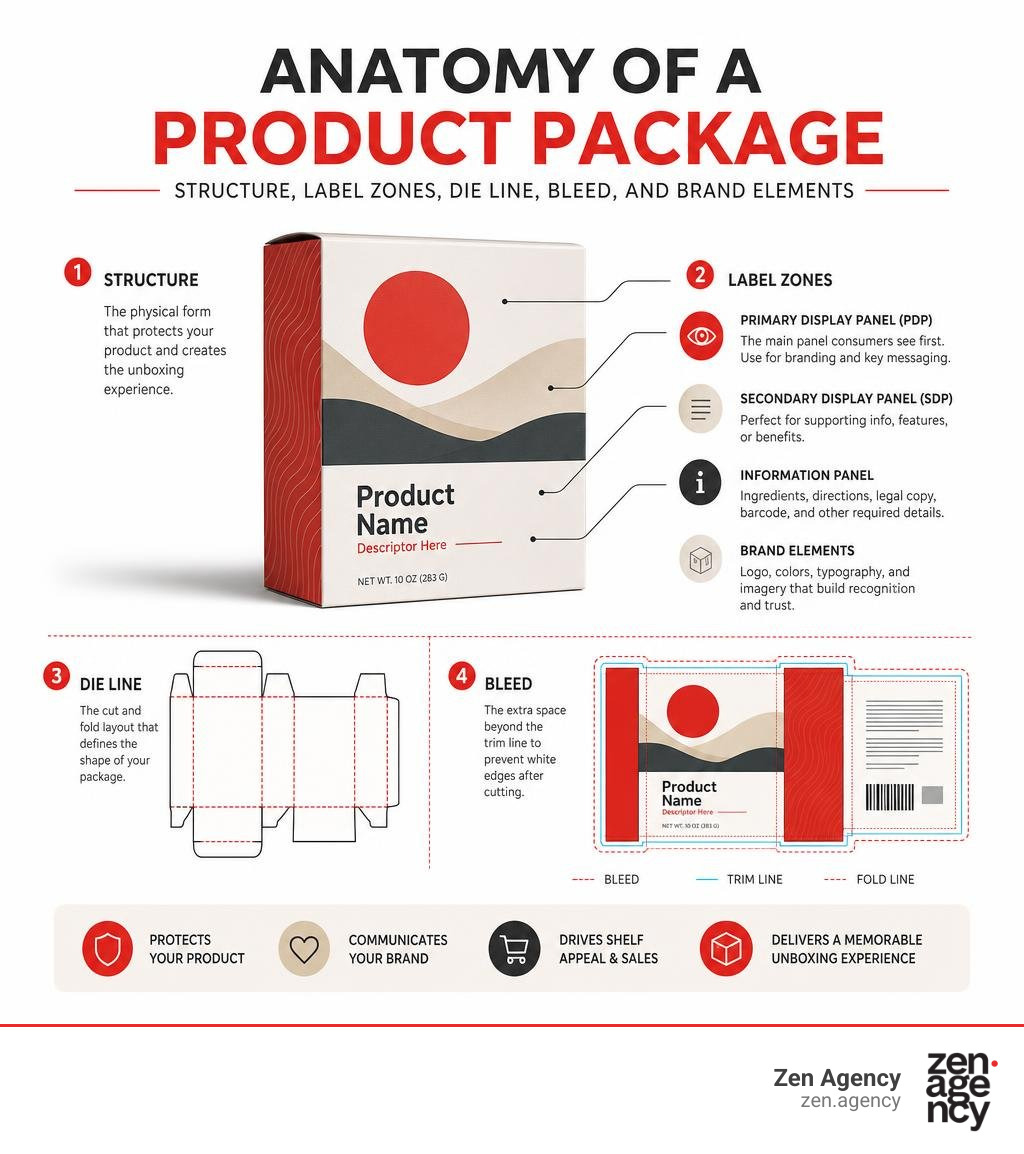
A dieline is the flat, 2D template that shows the exact blueprint of your packaging. It contains three critical lines that guide the manufacturing machines:
- Cut Lines (Solid Lines): These show where the machine will physically cut the paperboard or cardboard.
- Fold Lines (Dashed Lines): These indicate where the packaging will be folded during assembly.
- Bleed Area: This is a safety zone that extends beyond the cut lines (usually 3mm). Your background artwork must stretch all the way to the edge of the bleed line. This ensures that if the printing paper shifts slightly during cutting, you won’t end up with ugly white slivers on the edges of your box.
- Safe Zone (Margins): Keep all important text, logos, and compliance information inside this boundary (usually 3mm inside the cut lines) so nothing gets accidentally cut off.
Color Management: CMYK vs. Pantone
Digital screens display colors using light (RGB mode). Printers, however, apply physical ink to paper. To prevent your vibrant screen colors from looking muddy in print, you must design in CMYK color mode.
For absolute color consistency—especially for brand logos—we use the Pantone Matching System (PMS). Pantone colors are pre-mixed inks that guarantee your brand’s signature blue or red looks identical whether it is printed on a box in Wyoming, PA, or a label in Billings, MT.
Budget-Friendly Strategies and Common Mistakes to Avoid
For growing businesses, spending thousands of dollars on custom printed boxes isn’t always feasible. Fortunately, you do not need a massive budget to create high-impact packaging.
Designing Packaging on a Limited Budget
If you are operating on a tight budget, try these clever workarounds:
- Custom Stamps and Stickers: Buy standard, wholesale kraft boxes in bulk and personalize them using high-quality custom rubber stamps or beautifully designed stickers.
- Standard Box Sizes: Custom-sized boxes require expensive tooling and setup fees. Stick to standard industry sizes to keep your per-item costs low.
- Single-Color Printing: Limit your design to one or two ink colors. It looks incredibly chic and minimalist while saving you money on printing plates.
- Temporary Content Spaces: Instead of printing expiration dates or batch numbers directly onto your boxes, leave a clean space for a custom stamp or thermal printed sticker. This keeps your main packaging inventory flexible and reusable across different batches.
Common Pitfalls and How to Avoid Them
Even seasoned brands make mistakes. Keep an eye out for these common packaging design errors:
- Over-Packaging: Using way too much plastic, bubble wrap, or oversized boxes. It frustrates consumers and drives up shipping costs.
- Unreadable Typography: Using tiny, low-contrast, or overly decorative fonts. If your customer has to squint to read your instructions, your design has failed.
- Ignoring Regulatory Compliance: Forgetting to leave room for nutrition panels, ingredient lists, or warning symbols.
- Lack of Contrast: Placing dark text over dark backgrounds, making your copy invisible on crowded retail shelves.
- Scaling Issues: Designing on a computer screen without printing a physical mockup, leading to logos that are way too big or text that is microscopic.
Frequently Asked Questions about Packaging Design
What is the difference between primary, secondary, and tertiary packaging?
- Primary Packaging: The packaging that directly touches the product (e.g., the glass bottle holding a face serum).
- Secondary Packaging: The outer packaging that protects the primary pack and is seen on retail shelves (e.g., the paperboard box holding the serum bottle).
- Tertiary Packaging: The bulk shipping cartons, pallets, and shrink-wrap used by warehouses to transport products safely in bulk.
How do I ensure my packaging design is legally compliant?
Compliance depends heavily on your industry and location. For food, cosmetics, and supplements, you must display accurate nutrition or supplement facts, detailed ingredient lists (using INCI standards for cosmetics), clear allergen warnings, net weight, and country of origin. Always consult with a legal expert or regulatory consultant to ensure your labels meet all federal and state guidelines.
Can I design product packaging without a manufacturer’s dieline?
We strongly advise against this. While you can sketch concepts using generic dimensions, you should never finalize packaging artwork without the official dieline (sometimes called a Key Line Drawing or KLD) provided by your specific manufacturer. Even a 1mm measurement discrepancy can cause your packaging to fold incorrectly, tear, or fail to fit your product, resulting in incredibly expensive printing errors.
Conclusion
At the end of the day, your product packaging design is more than just a protective shell—it is a powerful business asset. It has the power to turn casual shoppers into lifelong brand advocates, elevate your digital marketing campaigns, and drive real, measurable ROI.
At Zen Agency, we specialize in helping businesses scale through integrated branding, custom web development, and high-converting marketing strategies. Whether you are launching a brand-new product line or looking to refresh your current retail presence, our team is here to deliver enterprise-grade solutions tailored to your unique goals.
Ready to elevate your brand’s physical and digital presence? Let us help you create designs that pop. Explore our branding and graphic design services and let’s build something remarkable together!