Conversion Rate Optimisation 101: How to Turn Lurkers into Buyers
Conversion Rate Optimisation 101: How to Turn Lurkers into Buyers
Why Most Websites Fail to Convert (And What to Do About It)
Conversion rate optimisation is the process of increasing the percentage of website visitors who take a desired action — such as making a purchase, filling out a form, or booking a call — without spending more to attract new traffic.
Here’s a quick summary of what you need to know:
| Question | Answer |
|---|---|
| What is CRO? | Systematically improving your site so more visitors convert into leads or customers |
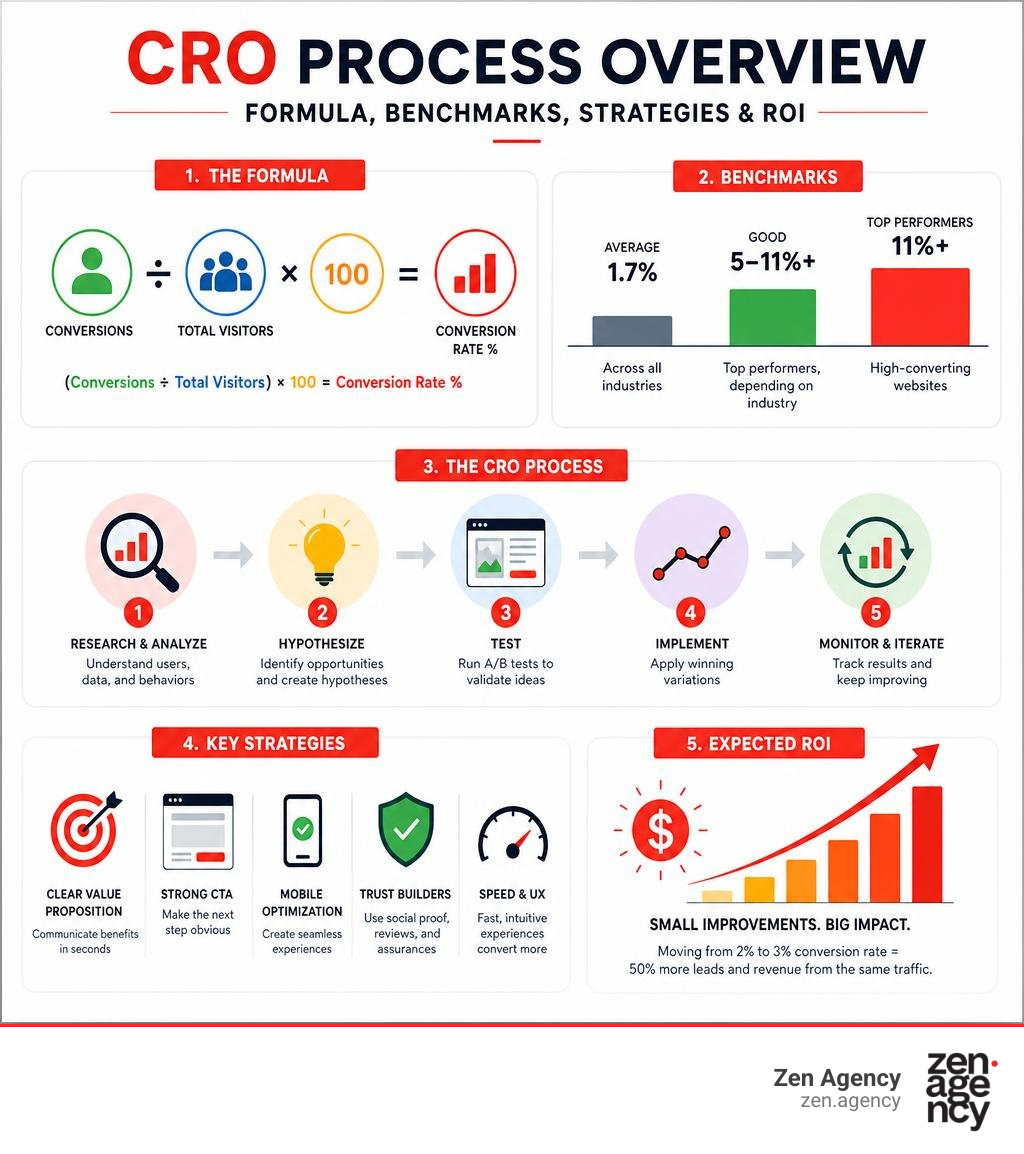
| How do you calculate it? | (Conversions ÷ Total Visitors) × 100 = Conversion Rate % |
| What’s the average conversion rate? | 1.7% across all industries |
| What’s a good conversion rate? | Top performers hit 5–11%+, depending on industry |
| Why does it matter in 2026? | Rising ad costs and AI-driven search mean you must do more with existing traffic |
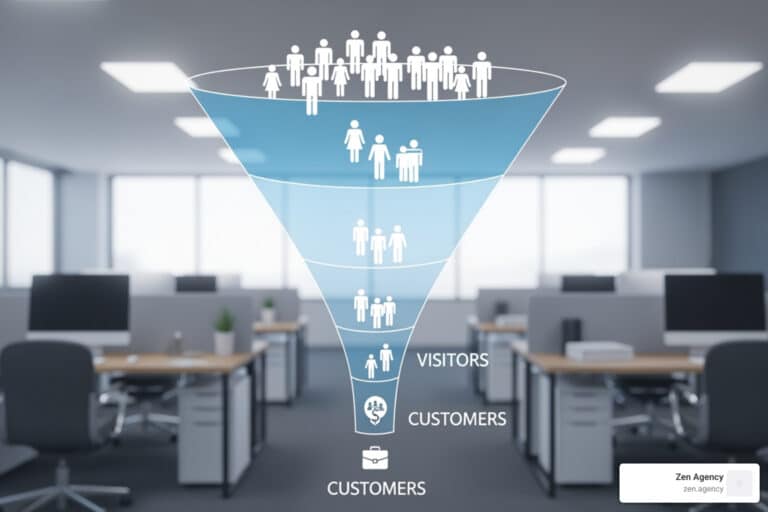
Here’s the uncomfortable truth: the average website converts just 1.7% of its visitors. That means 98 out of every 100 people who land on your site leave without doing anything.
For most businesses, the instinct is to spend more on ads to drive more traffic. But that approach is getting harder and more expensive — customer acquisition costs have risen 222% over the past decade, and AI-powered search results are now intercepting users before they even reach your site.
The smarter move? Get more value from the traffic you already have.
That’s exactly what a structured CRO program does. Small improvements compound quickly. Moving your conversion rate from 2% to 3% doesn’t just add 1% — it generates 50% more leads and revenue from the same budget.
I’m Joseph Riviello, CEO and Founder of Zen Agency, and with over 22 years in digital marketing, conversion rate optimisation has been central to how I’ve helped businesses scale profitably without simply throwing more money at acquisition. In this guide, I’ll walk you through everything you need to build a CRO strategy that actually moves the needle.
Must-know conversion rate optimisation terms:
What is Conversion Rate Optimisation and Why is it Critical in 2026?
As we navigate July 2026, the digital landscape is undergoing a massive shift. The era of relying solely on cheap, top-of-funnel organic search traffic is drawing to a close. With search engines aggressively rolling out AI Overviews, organic click-through rates (CTR) are compressing. Users are increasingly finding their answers directly on search engine results pages, which means fewer searchers are actually clicking through to your website.
Because traffic is harder and more expensive to earn, traffic monetization is no longer an optional growth hack—it is a baseline survival strategy. If you cannot convert the visitors you do get, your customer acquisition cost (CAC) will spiral out of control.
This is where a structured HubSpot’s CRO strategy becomes your secret weapon. Instead of burning your budget on increasingly expensive paid acquisition channels, CRO focuses on maximizing the value of your existing traffic. By analyzing user experience (UX), stripping away friction, and optimizing critical touchpoints, you can systematically lower your Cost Per Lead (CPL) and make your marketing spend far more predictable.
Think of it this way: if you run a business in Pennsylvania or Montana, your local or national buyers expect a seamless, fast digital experience. When you invest in improving your conversion rate, you are building a highly efficient engine. Even if AI Overviews cut your organic traffic in half, doubling your conversion rate ensures your revenue remains completely unaffected.
How to Calculate Your Conversion Rate: Key Formulas and Benchmarks
Before you can optimize your website, you need to understand where you are starting. Measuring CRO success requires looking at your data through different lenses depending on your business model.
For instance, should you calculate conversion rates using total sessions, unique visitors, or lead-to-customer ratios?
- Session-based calculations are ideal for ecommerce brands where you want to encourage a purchase during every single visit.
- Unique visitor-based calculations are better for B2B SaaS or high-ticket service companies where buyers conduct extensive research across multiple sessions before making a decision.
- Lead-to-customer ratio calculations help you identify if the bottleneck lies on your website or in your sales team’s follow-up process.
To help you get started, we have outlined the core formulas and industry benchmarks below. For a deeper dive into establishing these metrics, you can read our practical guide to conversion optimization.
The Core Formulas for Conversion Rate Optimisation
To accurately measure your performance, you must understand the difference between macro-conversions (primary goals like a completed purchase or a signed contract) and micro-conversions (smaller, supporting actions like newsletter signups, adding a product to a cart, or downloading a PDF).
To calculate your baseline conversion rate, use this standard mathematical formula:
For example, if your website receives 10,000 sessions in a month and generates 200 sales (macro-conversions), your conversion rate is:
If you are trying to project your lead goals and calculate how many net new customers you need to hit your revenue targets, you can work backward using these three steps:
- Determine Net New Customers Needed:
Revenue Goal ÷ Average Sale Price = Customers Needed - Calculate Lead Goal:
Customers Needed ÷ Lead-to-Customer Win Rate % = Leads Needed - Determine Traffic Goal:
Leads Needed ÷ Website Conversion Rate % = Traffic Needed
By mapping out these calculations, you can easily spot where your funnel is leaking. If you want to explore more about tracking these metrics, check out Moz’s CRO guide.
What Constitutes a Good Conversion Rate across Industries?
A “good” conversion rate is highly relative. A high-traffic blog post will naturally drag down your site-wide conversion rate, whereas a dedicated landing page for a targeted paid search campaign should convert at a much higher clip.
Generally, the average website conversion rate hovers around 1.7%. However, top-quartile performers convert at roughly three to five times the median. Below is a comparison table of average conversion rates by industry in 2026:
| Industry | Average Conversion Rate | Top-Quartile Performers (10%) |
|---|---|---|
| Food & Beverage | 6.0% | 12.0%+ |
| B2B Landing Pages | 13.3% | 25.0%+ |
| Legal Services | 7.4% | 15.0%+ |
| Healthcare | 5.6% | 11.0%+ |
| Financial Services | 4.3% | 9.0%+ |
| B2B SaaS | 3.1% | 7.0%+ |
| E-commerce (Americas) | 2.96% | 5.3% – 11.4%+ |
| Luxury Apparel & Jewelry | 0.4% – 0.9% | 2.5%+ |
If you are running an online store and want to push past these averages, take a look at our playbook on boosting ecommerce conversion rates.
High-Impact Strategies for Key Website Elements
To turn casual lurkers into active buyers, you must optimize the critical touchpoints where users make decisions. This means streamlining your landing pages, form fields, and checkout flows to eliminate cognitive friction.
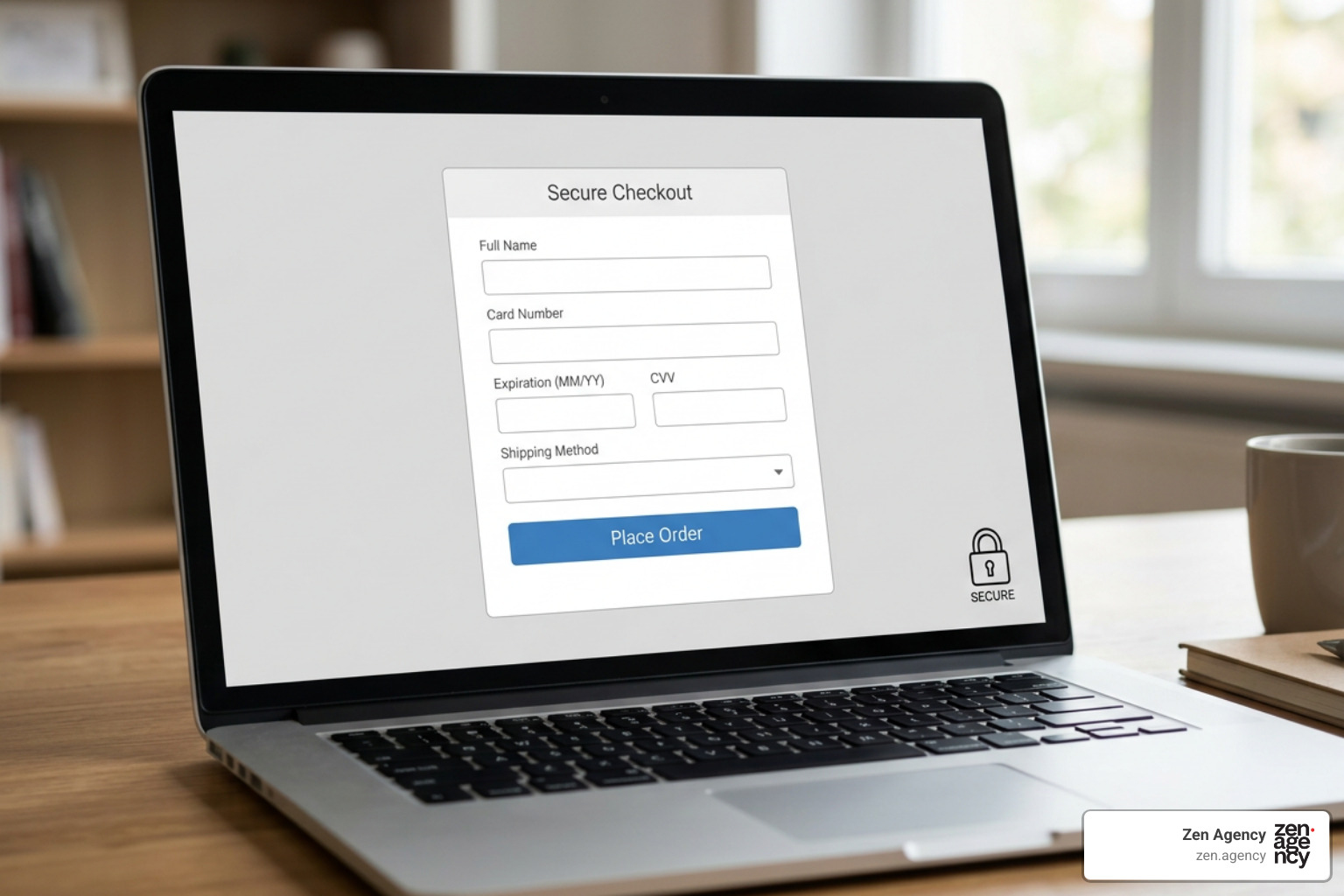
If your website has high traffic but low conversions, you are likely losing prospects at the final hurdle. For actionable tips on plugging these leaks, read our guide on how to stop losing leads.
Optimizing Landing Pages and CTAs for Maximum Impact
Your landing page must pass the “3-second test.” When a visitor lands on your page, they should immediately understand:
- What you are offering.
- Why they should care (your value proposition).
- What they need to do next (your primary CTA).
To achieve this, keep your primary value proposition and a clear hero CTA above the fold. Users spend approximately 57% of their viewing time above the fold, so do not force them to scroll to find your offer.
Additionally, leverage anchor-text CTAs within your content. Research shows that standalone lines of text styled as H3 or H4 headers within the body of a page can drive up to 93% of a post’s leads, compared to a measly 6% from traditional banners buried at the bottom of the page.
Keep your CTA language benefit-oriented. Replace generic, low-commitment words like “Submit” or “Get Started” with action-driven phrases like “Claim Your Free Audit” or “Get My Discount.” For more landing page design fundamentals, consult Shopify’s guide on CRO.
Streamlining Forms and Checkout Flows to Reduce Friction
Cart abandonment is the silent killer of ecommerce, with the global average cart abandonment rate sitting at 70.22%.
One of the most effective ways to combat this is by simplifying your checkout process. The average US checkout form displays 23.48 elements. However, reducing checkout form elements down to 12 to 14 can lift your conversion rate by an average of 35.26%. Only ask for the absolute essentials.
Additionally, implement these best practices:
- Offer Guest Checkout: Forcing users to create an account before buying causes 19% of shoppers to abandon their carts. Let them buy first, and offer account creation on the “Thank You” page.
- Use Inline Validation: Show real-time checkmarks when fields are completed correctly, and provide clear, polite error messages if a user makes a typo.
- Display Trust Signals: Place security badges, SSL certificates, and third-party payment icons (like Shop Pay or PayPal) close to your CTA buttons to reassure buyers.
By implementing these small adjustments, you will make the purchasing process incredibly smooth. Learn more about how to increase online sales through checkout optimization.
Technical and Behavioral Optimization: Speed, Mobile UX, and Personalization
A beautiful website is useless if it is too slow to load or impossible to navigate on a smartphone. Modern CRO requires a deep focus on technical performance and real-time behavioral targeting.

To ensure your technical foundation is solid, make sure your team is aligned with the latest CRO best practices.
How Page Speed Directly Impacts Conversion Rates
Website speed is not just an SEO ranking factor—it is a direct conversion driver. Website conversion rates drop by an average of 4.2% for each additional second a site takes to load.
Google’s Core Web Vitals set the standard for modern performance:
- Largest Contentful Paint (LCP): Under 2.5 seconds.
- Interaction to Next Paint (INP): Under 200 milliseconds.
- Cumulative Layout Shift (CLS): Under 0.1.
Every 100 milliseconds of additional load time costs approximately 1% in conversions. Conversely, a tiny 0.1-second improvement in mobile site speed produces an average 8.4% conversion lift for retail brands. Compress your images, clean up render-blocking JavaScript, and invest in high-quality hosting to keep your site lightning-fast.
Leveraging Personalization and Behavioral Targeting
Static, one-size-fits-all websites are becoming obsolete. Modern buyers expect personalized experiences tailored to their current needs and behavior.
Instead of relying on demographic data, focus on behavioral targeting. For example, if a returning visitor has viewed your pricing page three times in the last week, show them a targeted chatbot message offering a personalized demo. If a user is reading a blog post about organic gardening, display an in-text lead magnet offering a free composting guide.
By matching user intent with dynamic content, you can make your site feel incredibly relevant, boosting conversions without annoying your visitors with irrelevant pop-ups.
Building a Structured Testing Framework and Aligning with SEO
Too many businesses treat CRO as a series of random guesses. They change a button color because they saw a competitor do it, or they rewrite a headline based on a gut feeling. To get real, compounding results, you must build a scientific, repeatable testing framework.
To help you get started, we have compiled a list of free CRO tools that make tracking and testing accessible for businesses of all sizes.
The Role of A/B Testing in Conversion Rate Optimisation
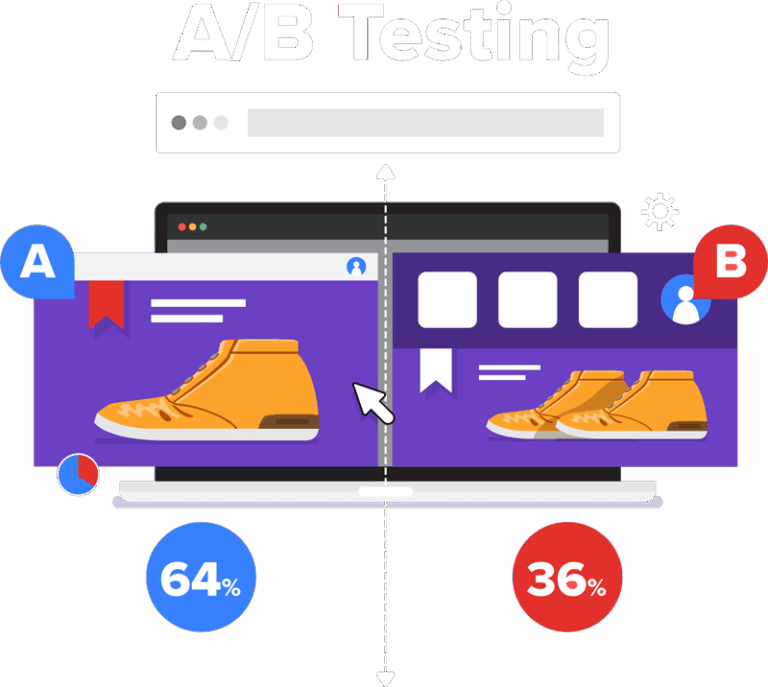
A/B testing (or split testing) is the process of comparing two versions of a webpage—Version A (the control) and Version B (the variant)—to see which one performs better.
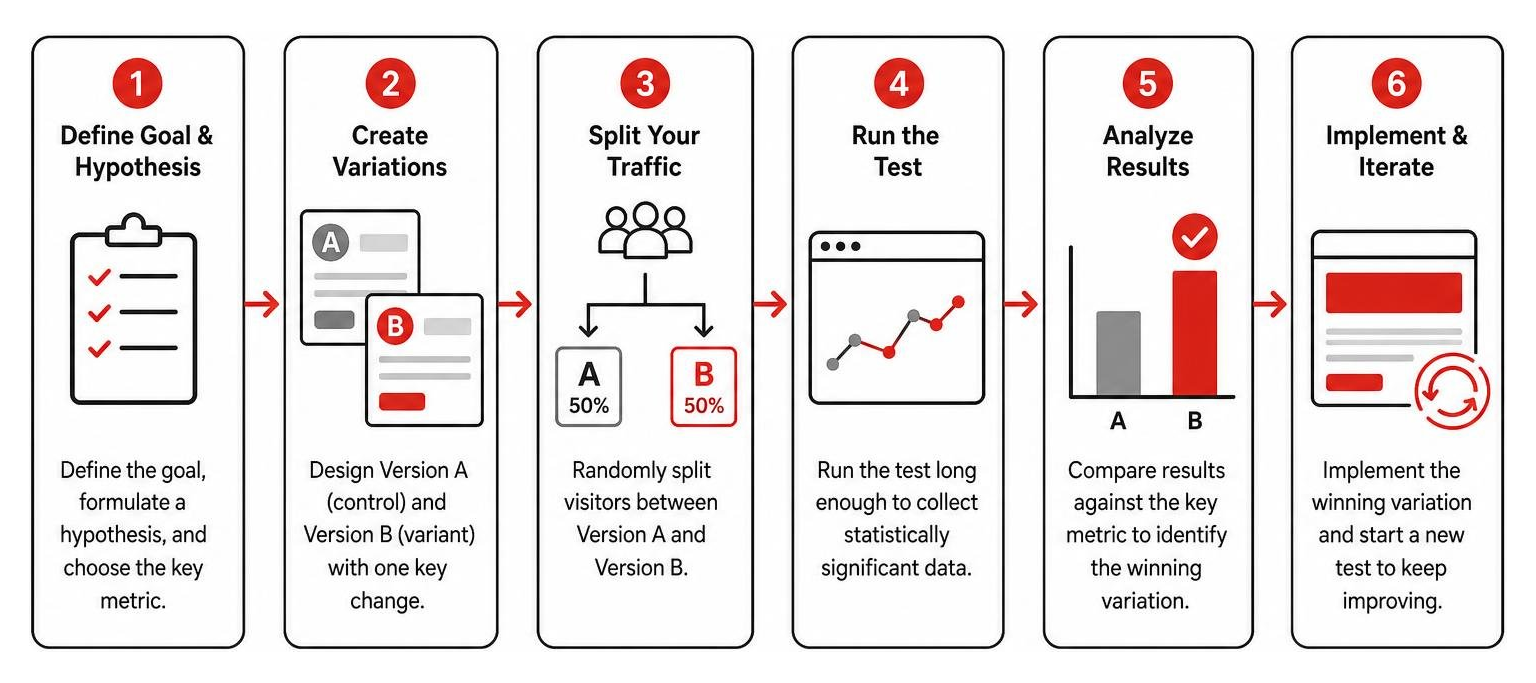
To run a successful testing program, follow these rules:
- Formulate a Clear Hypothesis: Never test at random. Use this structure: “If we change [Element] to [Variation], then [Metric] will improve because of [User Psychology Insight].”
- Prioritize with PIE or ICE: Score your testing ideas from 1 to 5 based on:
- Potential (or Impact): How much improvement can this page realistically see?
- Importance (or Confidence): How valuable is the traffic on this page?
- Ease (or Effort): How simple is it to implement this test?
- Ensure Statistical Significance: Never stop a test early because one version has a temporary lead. Run your tests for at least 14 days (to account for weekly traffic cycles) and until you reach a 95% confidence level with at least 200 conversions per variant.
Only about 12% of experiments produce a winning result. A “losing” test is not a failure—it is a highly valuable learning experience that tells you exactly what your audience does not want. If you want a step-by-step roadmap, follow our website conversion optimization guide.
Aligning Search Intent with On-Page Conversions
SEO and CRO are two sides of the same coin. SEO brings qualified searchers to your virtual door, while CRO ensures they buy once they step inside.
If your SEO strategy focuses solely on driving traffic without considering search intent, your conversion rate will suffer. For example, if a user searches for “how to fix a leaky faucet” (informational intent) and you drive them to a high-pressure sales page for plumbing services (transactional intent), they will immediately bounce.
Instead, align your landing pages with what the user is actually looking for:
- Informational Intent: Offer a helpful guide or video with an anchor-text CTA for a free consultation.
- Transactional Intent: Provide a streamlined landing page with a clear form and prominent contact options.
By matching search intent with your on-page conversion goals, you will lower your bounce rate, improve user engagement, and get far more value out of your organic traffic. For B2B companies, this alignment is critical to dominating your niche—learn more about B2B CRO.
Common Mistakes to Avoid in Your Optimization Journey
As you build out your CRO program, keep an eye out for these common traps:
- Chasing “Best Practices” Blindly: Just because a 3D product view worked for a massive fashion retailer doesn’t mean it will work for your niche B2B service. Always validate changes with your own user data.
- Overcomplicating the User Journey: Do not bombard visitors with pop-ups, hello bars, slide-ins, and cookie consent banners all at once. Keep the interface clean and the next step obvious.
- Ignoring Qualitative Data: Quantitative data (Google Analytics) tells you what is happening, but qualitative data (heatmaps, session recordings, and user surveys) tells you why. You need both to form winning hypotheses.
- Using Dark Patterns: Tricking users into subscriptions, hiding exit options, or using fake countdown timers might give you a temporary conversion spike, but they destroy brand trust and customer lifetime value.
Frequently Asked Questions
What is a realistic ROI from a structured CRO program?
A structured CRO program offers some of the highest returns in digital marketing. Because you are converting existing traffic, your customer acquisition cost drops immediately, increasing your overall revenue efficiency. A simple 1% lift in your conversion rate can easily double your leads and generate substantial incremental revenue without adding a single dollar to your advertising budget.
How long does it take to see meaningful results from CRO?
While individual A/B tests typically run for 2 to 4 weeks to reach statistical confidence, a comprehensive CRO program is an ongoing, iterative process. You can often implement “quick wins” (like fixing broken checkout fields or adding trust signals) within days to see immediate lifts, while compounding, long-term revenue gains build over 3 to 6 months.
Can you perform CRO on a low-traffic website?
Yes! While low-traffic websites (under 10,000 monthly visitors) may struggle to reach statistical significance quickly in A/B split tests, you can still achieve massive conversion lifts using qualitative research. Tools like heatmaps, session recordings, and user testing sessions with just five target users can help you uncover and fix up to 85% of your website’s usability issues.
Conclusion
At Zen Agency, we have been helping businesses scale since 2008. We know that driving traffic is only half the battle—the real magic happens when you turn that hard-earned traffic into predictable, compounding revenue.
Whether you are located near our Pennsylvania offices in Scranton, Wilkes Barre, Wyoming PA, Hazleton PA, Kingston PA, or out in Billings MT, our mission remains the same: to deliver enterprise-grade, innovative strategies that help struggling-to-scale businesses increase visibility, profitability, and ROI.
If you are ready to stop losing leads and start turning your website into a high-converting sales engine, check out our professional CRO implementation services or explore our fully managed conversion rate optimization services. Let’s make your website work smarter, not harder!