All About Social Media Marketing
Social Media Marketing: What Every Business Needs to Know in 2026
Social media marketing is the use of social media platforms to build your brand, drive website traffic, and grow sales by connecting with your audience where they already spend time.
Quick answer:
- What it is: Creating and sharing content on platforms like Instagram, Facebook, TikTok, and LinkedIn to promote your business
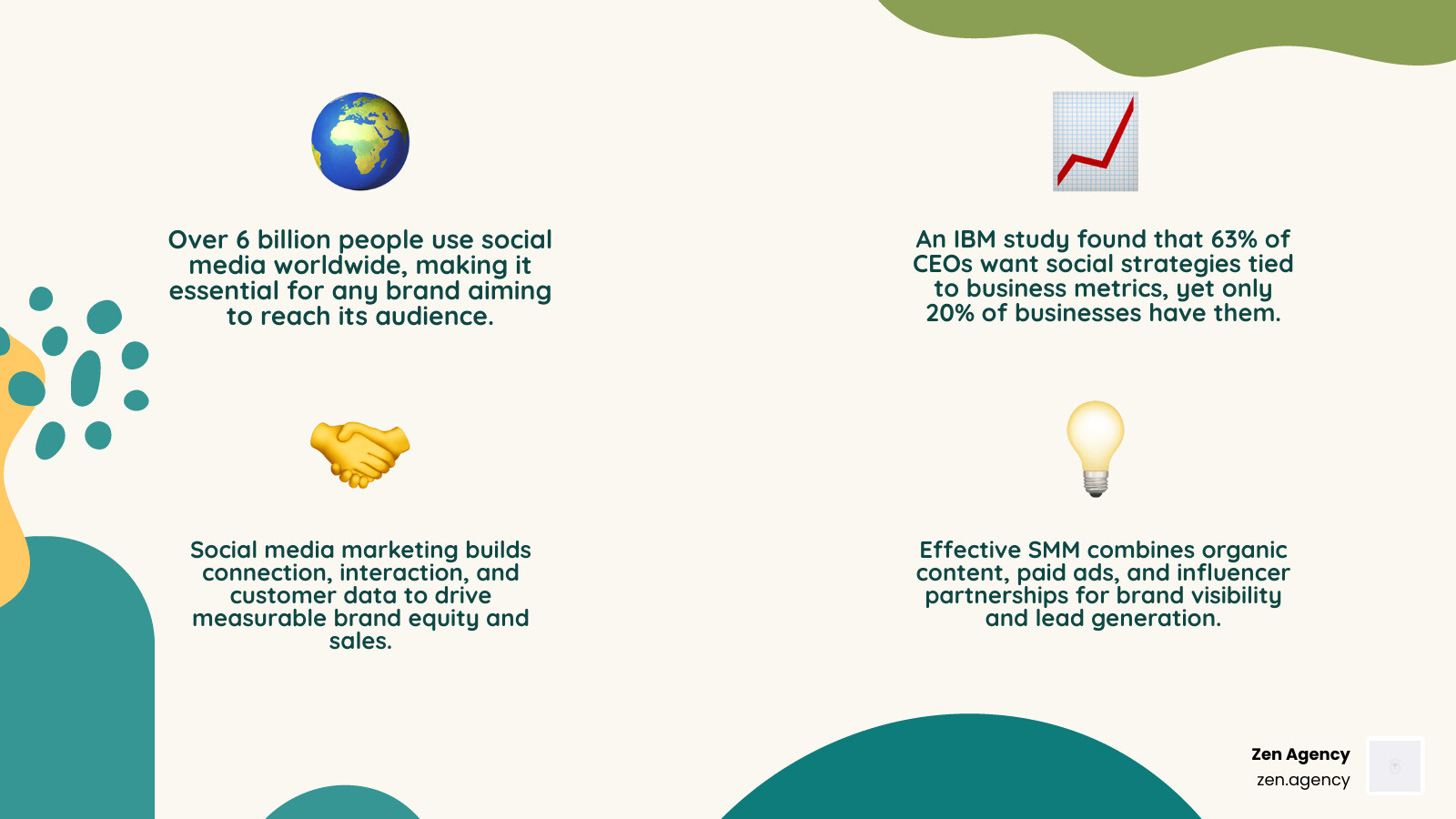
- Why it matters: Over 6 billion people use social media worldwide — your customers are already there
- How it works: Through a mix of organic content, paid ads, and influencer partnerships, guided by a clear strategy
- What it delivers: Brand awareness, lead generation, customer loyalty, and measurable ROI
- Who it’s for: Any business that wants to reach, engage, and convert its target audience online
If your business is struggling to stand out, generate leads, or prove marketing ROI, the problem often comes down to one thing: no clear social media strategy. Most businesses are active on social media, but very few are doing it in a way that actually moves the needle.
The numbers back this up. An IBM study found that 63% of CEOs and CMOs want social strategies tied to real business metrics — yet only 20% of businesses worldwide actually have them. That gap is where growth is lost.
This guide covers everything you need to close that gap — from how social media marketing works, to which platforms to use, to how to measure results that matter.
I’m Joseph Riviello, CEO and Founder of Zen Agency, and over my 22+ years in digital marketing I’ve helped companies across industries build social media marketing strategies that connect brand visibility directly to revenue growth. Let’s break it all down.
Defining Social Media Marketing and Its Core Power
At its simplest, Social media marketing (SMM) is the practice of using social networks to communicate with your audience, build your brand’s reputation, and promote your products or services. But in 2026, it is so much more than just “posting on Facebook.” It is a sophisticated engine for Social Media Marketing (SMM): What It Is, How It Works, Pros and Cons that utilizes three core pillars: connection, interaction, and customer data.
The power of SMM lies in its scale. As of October 2025, there were more than 6 billion social media users worldwide. This isn’t just a playground for teenagers; it is where over 80% of consumers go to research products and services before they ever reach out to a salesperson. For business retailers, the results are tangible—many have seen a 133% increase in revenue specifically attributed to their social media efforts.
The Shift from Traditional to Social Media Marketing
In the old days of traditional marketing (think billboards and TV ads), communication was a one-way street. We talked at the customer. Social media marketing changed the game by introducing two-way communication.
Instead of waiting for a monthly report, we now get real-time feedback. This shift offers several distinct advantages:
- Cost-effectiveness: You can reach a global audience at a fraction of the cost of a national TV spot.
- Electronic Word-of-Mouth (eWoM): A single viral share can act as a digital recommendation, which is far more powerful than a paid advertisement.
- Search Engine Correlation: Interestingly, seven of the top ten factors that correlate with strong Google organic search results are social media-dependent.
Why Connection and Interaction Drive Modern Business
Modern business is built on trust, and trust is built through interaction. By using customer segmentation, we can deliver “sticky content”—marketing-speak for content that grabs a user’s attention and doesn’t let go. This isn’t just about entertainment; it’s about brand accountability. 81% of people now believe that social media increases the accountability of brands, making it a vital tool for Social Media, Marketing and Public Relations Track .
How Social Media Marketing Works: Strategy and Action Plans

Success in this field doesn’t happen by accident. We often tell our clients that “random acts of content lead to random results.” To see a real return, you need a structured action plan. This starts with setting SMART goals—Specific, Measurable, Attainable, Relevant, and Time-bound.
The first step is always deep audience research. We need to know more than just their age; we need to know their “jobs to be done,” their pain points, and which platforms they prefer. Once we have a buyer persona, we can conduct a competitor analysis to see where other brands are failing and where we can win. Choosing the Right Social Media Marketing Service Provider for Your Goals is often the best way for businesses to navigate these complexities.
Leveraging AI and ChatGPT in Social Media Marketing
By May 2026, AI has become the backbone of efficient SMM. Tools like ChatGPT are no longer just for writing captions; they are used for generating strategic insights and scaling production.
At Zen Agency, we use AI to:
- Analyze Big Data: Turning the “3Vs” (volume, variety, and velocity) of data into actionable market analysis.
- Generate Multimedia: Creating ad creative and short-form video scripts that align with Social Media Strategies | About Our Programs .
- Personalize Messaging: Automating responses and tailoring content to specific user segments at scale.
Effective Tactics: Influencer, Viral, and Earned Media
One of the most powerful ways to grow is through “Earned Media”—the exposure you get when customers create content for you. This includes reviews, mentions, and reposts.
We also leverage:
- Influencer Marketing: A sector projected to reach $15 billion in spend, where opinion leaders provide the human touch and credibility that traditional ads lack.
- Viral Triggers: Creating content designed for rapid word-of-mouth spread.
- Community-Led Growth: Building spaces where your customers become your biggest advocates.
Navigating Platforms and Advanced Engagement
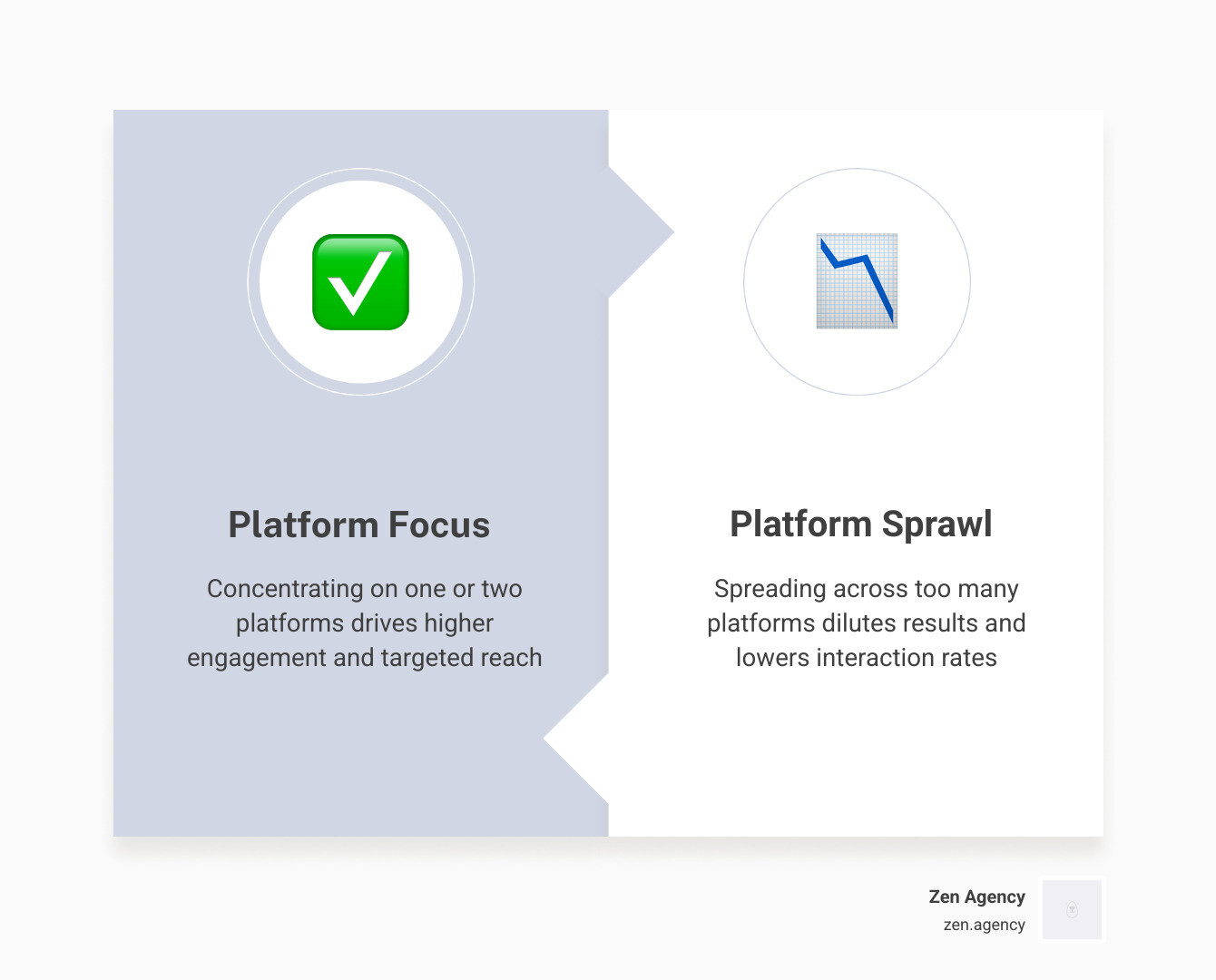
Choosing the right platform is critical. Brands that focus on one or two platforms often see higher engagement than those that spread themselves too thin.
| Platform | Monthly Users | Interaction Rate | Best For |
|---|---|---|---|
| 3.07 Billion | 0.07% | Community, Events, B2C | |
| 2.4 Billion | 1.46% | Visuals, Carousels, Influencers | |
| TikTok | 1.58 Billion | 2.65% | Short-form Video, Gen Z |
| 1.15 Billion | High (B2B) | Thought Leadership, B2B Leads | |
| YouTube | 2.5 Billion | High (Search) | Educational, Long-form Video |
Managing Customer Engagement and Potential Crises
On social media, you are always “on.” This requires a balance of proactive posting (planned content) and reactive conversations (engaging with comments). We always recommend a crisis escalation plan. Remember the case where brands faced backlash for insensitive posts? A single mistake can go viral for the wrong reasons. Having a clear approval process for “unplanned content” is essential to protecting your reputation.
Legal and Ethical Considerations in Social Media Marketing
As we move further into 2026, transparency is no longer optional. Marketers must adhere to strict privacy regulations like GDPR and CCPA. Ethically, this means:
- Disclosing Partnerships: All influencer collaborations must be clearly labeled.
- Data Protection: Being transparent about how customer data is collected and used.
- Intellectual Property: Ensuring all multimedia used is properly licensed.
Measuring Success: Metrics, ROI, and Analytics
If you can’t measure it, you can’t improve it. Despite the huge interest from CEOs, there is still a massive “implementation gap” in tracking social ROI. To bridge this, we focus on metrics that align with business outcomes, not just vanity numbers like follower counts.
Key metrics we track include:
- Engagement Rate: Are people actually interacting with the content?
- Share of Voice: How much of the online conversation in your industry do you own?
- Revenue Attribution: Using UTM parameters to see exactly which post led to a sale.
- Customer Lifetime Value (CLV): Tracking the long-term value of customers acquired through social channels.
Through Social Media Strategies | About Our Programs , we’ve learned that linking social metrics to sales systems is the only way to transform social marketing from an “untracked investment” into a core business driver.
Tracking Key Performance Indicators for Long-Term Growth
Beyond the immediate sale, we look at sentiment analysis to see how people feel about your brand. We also monitor response time; nearly 80% of customer service requests on social media now happen on platforms like X (formerly Twitter), and a slow response can kill brand loyalty instantly.
Frequently Asked Questions about SMM
What is the difference between social media marketing and management?
Social media marketing focuses on the strategy, advertising, and lead generation aspects—the “how do we grow?” part. Social media management is the day-to-day execution: scheduling posts, replying to comments, and maintaining the profile. You need both to succeed.
How often should a business post on social media in 2026?
Consistency beats volume every time. For most platforms like Facebook and Instagram, 3–5 high-quality posts per week is the “sweet spot.” TikTok often requires a higher frequency (1–4 times daily) to stay relevant in the fast-moving feed.
Which platform is best for B2B lead generation?
LinkedIn remains the undisputed king for B2B. It is 277% more effective at generating high-quality leads than Facebook or X. However, YouTube is a close second for B2B companies that use educational video content to build authority.
Conclusion
At Zen Agency, we understand that for a business to scale in 2026, it needs more than just a presence on social media; it needs a dominant strategy. Whether you are in Wilkes Barre, Scranton, or Billings, MT, the digital landscape is your primary battlefield for customer attention.
We specialize in taking businesses that are struggling to scale and providing them with enterprise-grade solutions. From custom website development that converts social traffic to innovative social media marketing strategies that drive ROI, we are here to help you increase visibility and profitability.
Ready to turn your social media into a revenue-generating machine? More info about digital marketing services can be found on our site. Let’s build something great together.