Google Paid Search Advertising: Because Organic Traffic is Taking Too Long
Google Paid Search Advertising: Because Organic Traffic is Taking Too Long
Why Google Paid Search Advertising is the Fastest Way to Get Found Online
Google paid search advertising is a model where businesses bid on keywords so their ads appear at the top of Google’s search results — and pay only when someone clicks.
Here’s a quick snapshot of what it is and how it works:
- What it is: Text-based ads that appear above organic results on Google, labeled “Ad”
- How you pay: Pay-per-click (PPC) — you’re only charged when someone clicks your ad
- What determines placement: Your bid amount, Quality Score, and ad relevance
- Who sees your ads: People actively searching for what you sell — right now
- How fast it works: Ads can go live within one business day of setup
Here’s the reality most business owners face in June 2026: organic search is slow. Building SEO authority takes months — sometimes years. Meanwhile, your competitors are showing up at the top of Google today, capturing the customers you need.
And those customers are ready to act. 65% of all high-intent searches result in an ad click. Paid visitors are also 2x more likely to make a purchase than organic visitors. The math is hard to ignore.
The top three Google search results capture 54% of all traffic, and paid ads own those top spots. If your business isn’t there, someone else is.
I’m Joseph Riviello, CEO and Founder of Zen Agency, and with over 22 years in digital marketing, I’ve helped businesses of all sizes use Google paid search advertising to generate real, measurable revenue — not just clicks. In this guide, I’ll walk you through everything you need to know to do the same.
What is Google Paid Search Advertising and How Does It Work?
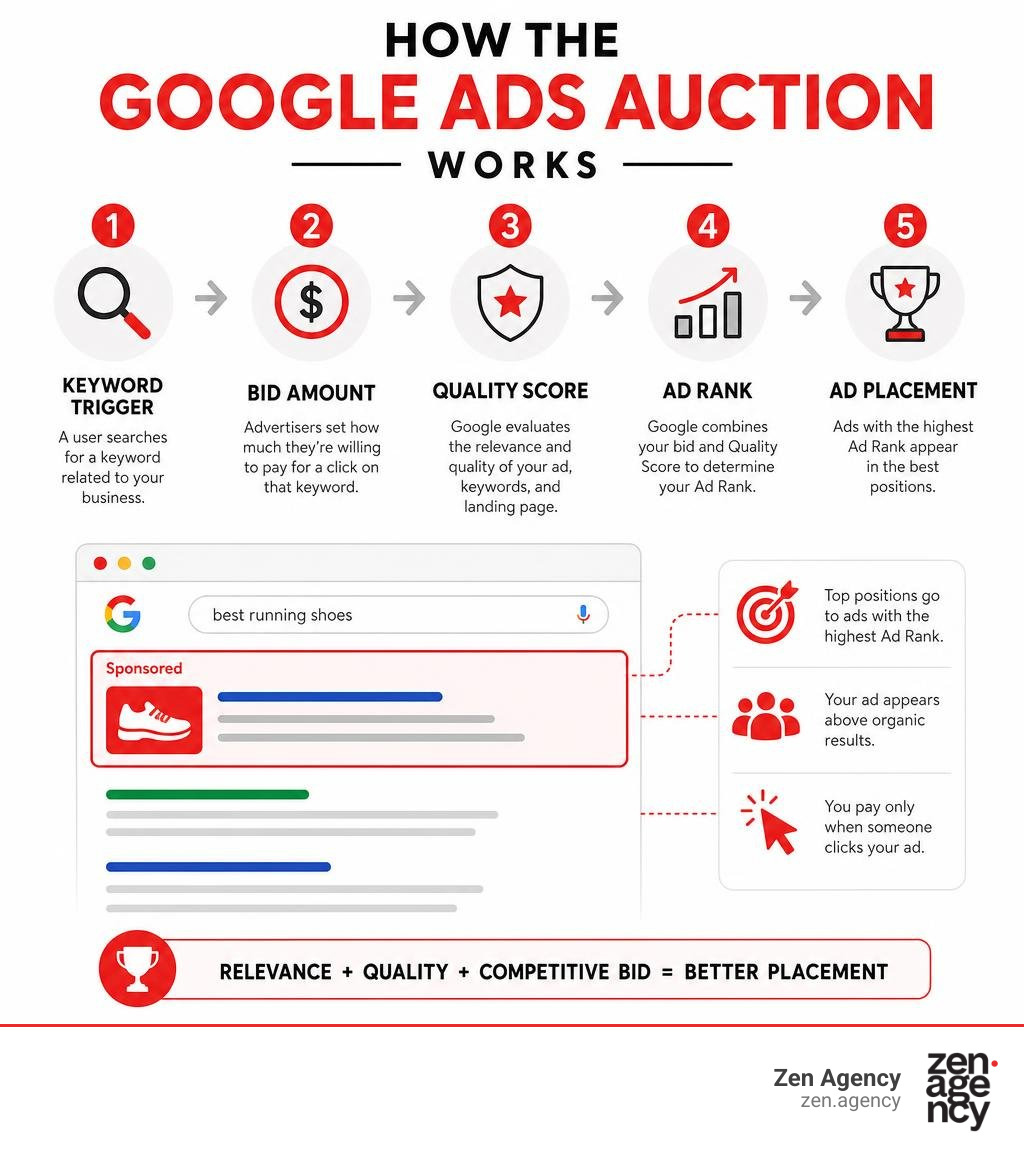
To understand how google paid search advertising works, we must first look at the anatomy of a search engine results page (SERP). When a user types a query into Google, the search engine has milliseconds to decide which results are most relevant. At the very top of these results, above the organic listings, you will find paid search ads.
This model operates on a pay-per-click (PPC) system. Instead of paying a flat fee to display your ad, you only pay when a user actively clicks on it. This makes it one of the most cost-effective and accountable forms of marketing available. You are not paying for passive impressions; you are paying for actual, interested traffic.
When you set up a campaign on the Google Ads Platform, you choose specific keywords that are highly relevant to your business. When a user’s search query matches those keywords, an instantaneous, automated auction takes place behind the scenes. Google evaluates your bid, your ad quality, and several other factors to determine your ad placement on the SERP.
Managing this process goes far beyond just picking a few keywords and setting a budget. To truly succeed, businesses need a holistic strategy that aligns their bidding, copy, and post-click experience. For a deeper dive into how to manage these moving parts, check out our comprehensive guide, Beyond the Click: A Guide to Comprehensive PPC Management.
The Benefits and ROI of Google Paid Search Advertising
The primary benefit of google paid search advertising is immediacy. While SEO is a vital strategy for long-term organic growth, it takes time. Paid search, on the other hand, allows you to show up on page one of Google almost instantly.
Furthermore, paid search targeting is incredibly precise. You can show your ads to users based on their exact geographic location, the device they are using, the time of day, and even their past interactions with your website. This is particularly valuable for businesses targeting high-intent searches. When someone searches for “emergency plumber in Scranton” or “commercial roofing in Billings MT,” they aren’t looking to read a blog post; they are looking to hire someone immediately.
Let’s look at how the two primary search acquisition channels compare:
| Feature | Search Engine Optimization (SEO) | Google Paid Search Advertising |
|---|---|---|
| Time to Results | Medium to Long-Term (3–12 months) | Near-Instant (Under 24 hours) |
| Payment Structure | Free organic clicks (but costs time/resources) | Pay-per-click (PPC) |
| Placement Control | Determined by Google’s organic algorithm | Highly controllable via bidding & targeting |
| Conversion Rate | Good, but varies by informational intent | Exceptionally high for commercial-intent keywords |
| Scalability | Harder to scale quickly | Easily scalable by adjusting daily budgets |
By leveraging Google Ads Search Solutions, businesses can capture this high-intent traffic at the exact moment of decision-making. Because paid visitors are twice as likely to make a purchase as organic visitors, the return on investment (ROI) can be substantial when campaigns are structured correctly.
Campaign Types and Ad Formats on Google
Google offers several campaign types and ad formats to help you reach your goals, whether you want to drive website traffic, generate leads, or increase online sales.
- Search Campaigns: These are the classic, text-based ads that appear on the main SERP. They rely heavily on keyword matching and compelling copy to attract clicks.
- Shopping Ads: Crucial for retail and e-commerce businesses, these ads display a product photo, title, price, and your store name directly in the search results. To learn more about how to set these up, refer to Google Ads Help on Shopping Ads.
- Performance Max Campaigns: This is Google’s AI-driven, all-in-one campaign type. Performance Max accesses all available Google networks—including Search, YouTube, Display, Discover, Gmail, and Maps—from a single campaign using your creative assets.
- Responsive Search Ads (RSAs): The default format for Search campaigns. RSAs allow you to enter up to 15 headlines and 4 descriptions. Google’s machine learning then automatically tests different combinations to find the best-performing message for each user. According to Google Ads Help on Responsive Search Ads, upgrading your Ad Strength from ‘Poor’ to ‘Excellent’ can drive an average of 15% more clicks and conversions. Additionally, adding a second RSA to your ad group can increase conversions by 6.6% at a similar cost.
While Search is the powerhouse for capturing direct intent, other formats like Display play a massive role in visual retargeting. If you are looking to expand your reach visually, read our guide on From Pixels to Profits: Optimizing Your Display Ad Campaigns.
The Mechanics of the Auction: Bidding, Quality Score, and Ad Rank
Many advertisers assume that the business with the deepest pockets and the highest bid always gets the top spot on Google. Fortunately, that is not how it works. Google’s primary goal is to provide a great user experience, which means they want to show the most relevant ads possible.
To balance relevance and revenue, Google uses a metric called Ad Rank to determine ad placement and your actual cost-per-click. The basic formula for Ad Rank is:
$$\text{Ad Rank} = \text{Max CPC Bid} \times \text{Quality Score}$$
Your Max CPC (Cost-Per-Click) is the absolute maximum amount you are willing to pay for a single click on your ad.
Your Quality Score is a rating from 1 to 10 that Google assigns to your keywords. It is calculated based on three core components:
- Expected Click-Through Rate (CTR): How likely Google thinks your ad is to be clicked.
- Ad Relevance: How closely your ad matches the intent behind the user’s search query.
- Landing Page Experience: How helpful, fast, and easy-to-navigate your landing page is once a user clicks through.
If your Quality Score is high, you can actually win a higher ad placement than a competitor who is bidding significantly more money but has a poor-quality ad and landing page. This levels the playing field, allowing smart local businesses in Pennsylvania and Montana to compete effectively against national brands.
Leveraging AI and Smart Bidding in Google Paid Search Advertising
In June 2026, manual bidding is largely a thing of the past. Modern google paid search advertising relies heavily on machine learning and Google’s AI-driven Smart Bidding.
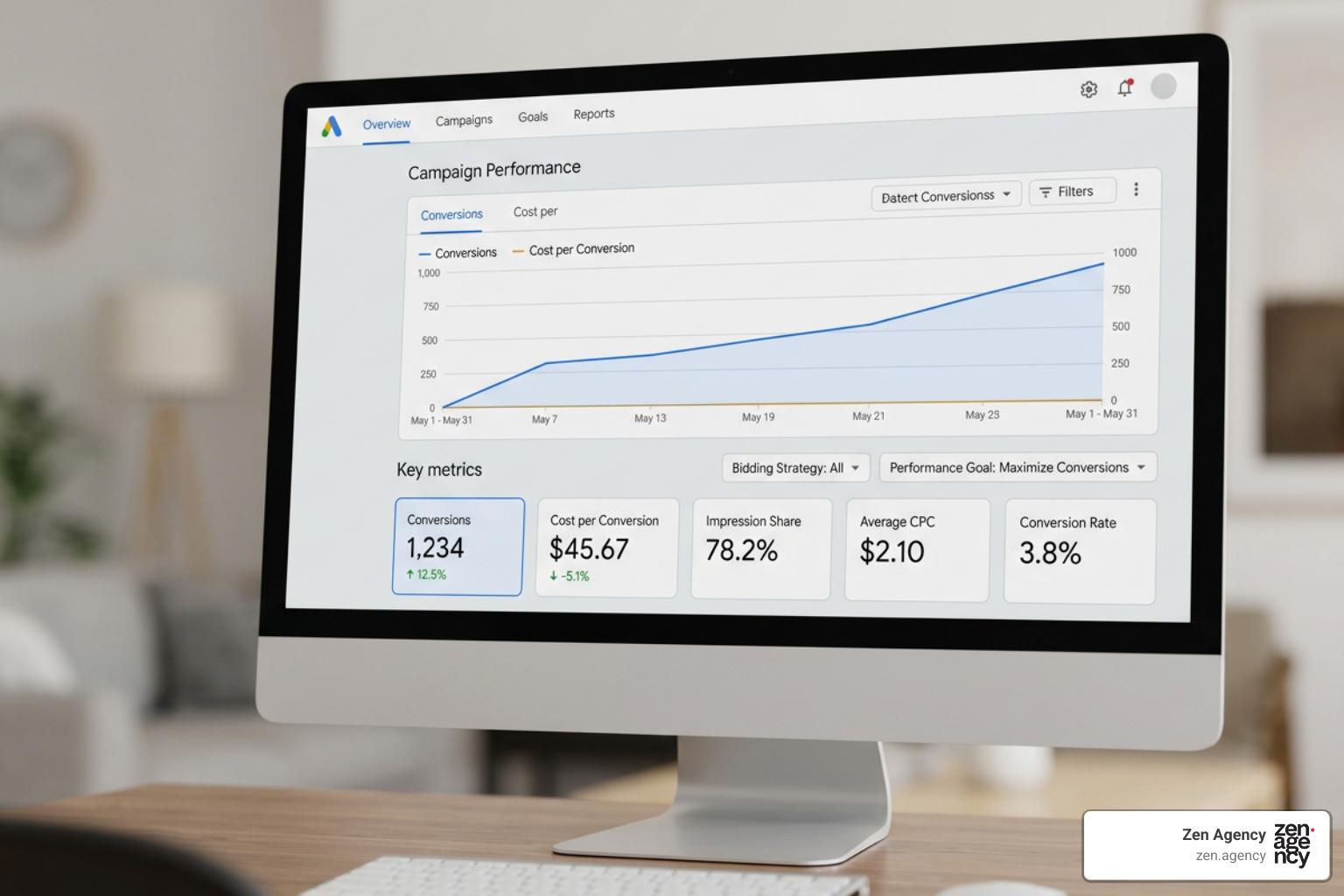
Smart Bidding uses advanced algorithms to optimize your bids in real time for every single auction. It analyzes millions of “auction-time signals”—including the user’s device, precise location, time of day, operating system, language, and remarketing list membership—to predict the likelihood of a conversion.
According to Google Ads Help on Automated Bidding, some of the most common Smart Bidding strategies include:
- Maximize Conversions: Automatically sets bids to get the most conversions for your daily budget.
- Maximize Conversion Value: Focuses on driving the highest revenue or value rather than just the volume of conversions.
- Target CPA (Cost-Per-Acquisition): Automatically sets bids to help you get as many conversions as possible at your target cost-per-acquisition.
- Target ROAS (Return on Ad Spend): Optimizes bids to hit a specific return on your advertising spend.
By allowing AI to handle bid fluctuations, you can spend more time focusing on high-level strategy, creative copy, and business growth. To learn more about utilizing these automated systems, read our article Ad-Vantage AI: How Smart Campaigns Win Big.
Setting Up for Success: Keywords, Match Types, and Campaign Structure
A successful Google Search campaign requires a logical, organized structure. At the top level, you have your campaign, which houses your budget, location targeting, and overall bidding strategy. Within that campaign, you create specialized ad groups.
Each ad group should focus on a single, tightly knit theme. For example, if you run a home services company in Wilkes-Barre, PA, you shouldn’t dump “heating repair,” “AC installation,” and “plumbing services” into one ad group. Instead, create separate ad groups for each service. This ensures that when someone searches for “heating repair,” they see an ad specifically about heating repair that leads to a landing page dedicated to heating repair.
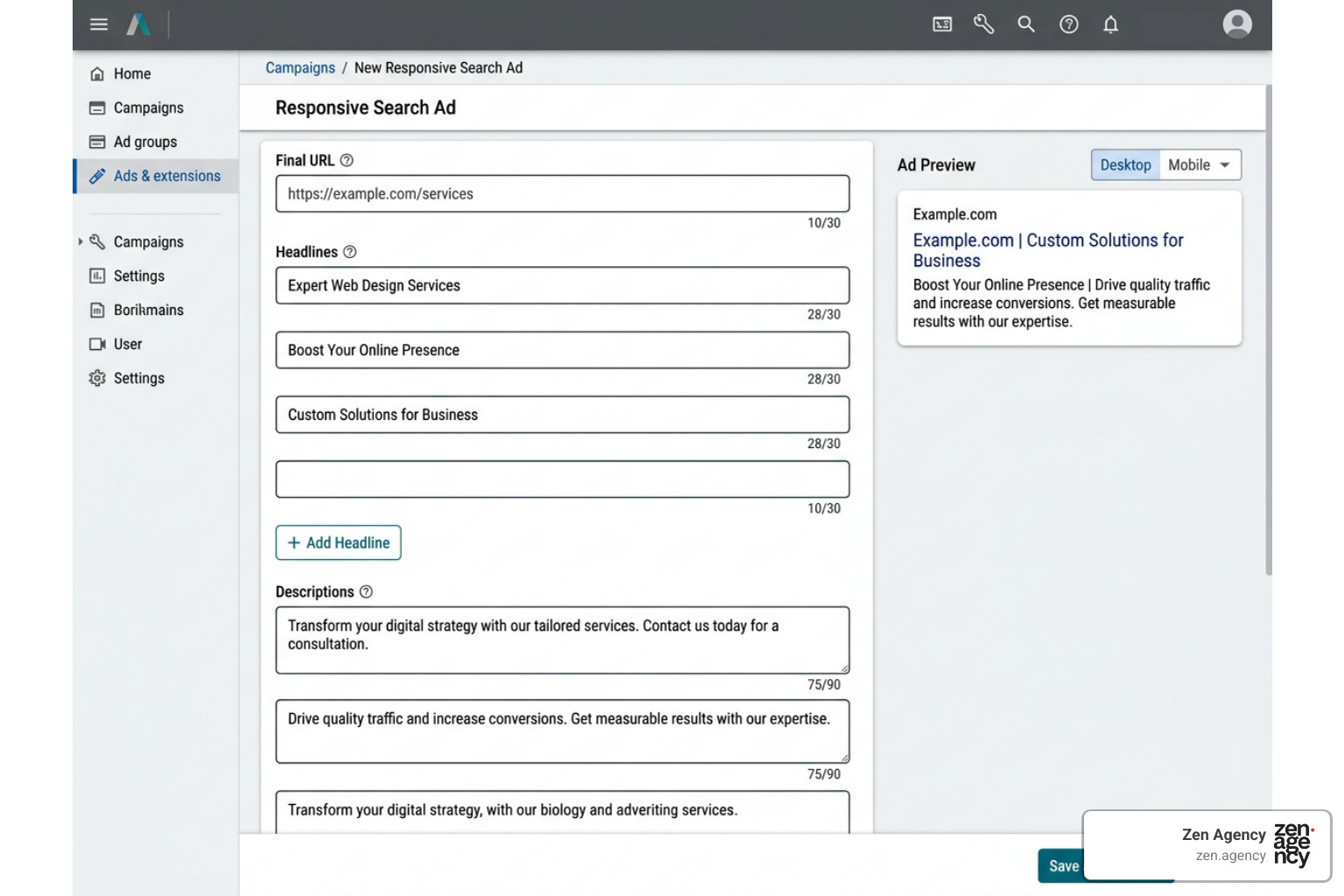
When configuring your campaign, you will also determine your budget allocation. It is best to start with a realistic daily budget that allows you to gather enough data to optimize. To learn the step-by-step process of setting up your campaigns properly, consult Google Ads Help on Creating a Search Campaign. For business-to-business campaigns, which require a distinct approach to lead generation, review The B2B PPC Playbook: How to Win at Paid Search.
Keyword Selection and Match Types
Keywords are the foundation of google paid search advertising. Before launching, you must perform deep keyword research to identify what your target audience is searching for.
Once you have your keywords, you must apply the correct keyword match types to control which searches trigger your ads:
- Broad Match: This is the default setting. Your ads can show on searches that relate to your keyword, even if the search terms don’t contain the exact words. For example, if your keyword is running shoes, your ad might show for athletic sneakers or marathon footwear. While broad match has the widest reach, it can lead to wasted spend if not paired with Smart Bidding.
- Phrase Match: Your ads will show on searches that include the meaning of your keyword. It is designated by quotation marks. For example,
"running shoes"might trigger ads for best running shoes or buy blue running shoes, but not shoes for running. - Exact Match: This offers the tightest control. Designated by brackets,
[running shoes]will only trigger ads when the search query has the exact same meaning or intent as your keyword.
To build a high-performing keyword list, check out our guide on Unlocking PPC Success: A Guide to Effective Keyword Research.
Mastering Negative Keywords to Prevent Wasted Spend
Choosing what you don’t want to show up for is just as important as choosing what you do. This is where negative keywords come in.
Negative keywords prevent your ads from showing for irrelevant search queries. For example, if you sell premium, high-end furniture in Scranton, PA, you should add “free,” “cheap,” and “discount” as negative keywords. If you are a commercial roofing contractor, you will want to add “residential,” “DIY,” and “jobs” to your negative keyword list.
By regularly checking your search terms report, you can see exactly what queries triggered your ads and identify new negative terms to add. This is one of the most effective ways to optimize your budget and ensure every dollar is spent on high-intent leads. To master this strategy, read our beginner’s guide: Mastering Negative Keywords: A Beginner’s Guide to Smarter PPC.
Frequently Asked Questions About Google Paid Search
How much does Google PPC advertising cost?
There is no set cost to run a campaign. Google Ads is highly scalable, allowing you to set a daily budget that fits your comfort level. Your actual cost-per-click (CPC) is determined by the competitiveness of your industry, your geographic location, and your Quality Score. In local markets like Scranton or Billings, CPCs are often highly manageable compared to major metro areas.
What is the difference between Google Ads and SEO?
SEO focuses on building organic traffic over the long term through content, technical site performance, and authority building. It is free in terms of ad spend but takes months to yield results. Google Ads provides immediate visibility at the top of the search results page, but you must pay for every click. A balanced digital marketing strategy utilizes both.
How long does it take to see results from a Google Search campaign?
Once your campaign is set up and your billing is active, ads typically go through a brief approval process that takes under 24 hours. As soon as they are approved, your ads can begin appearing on Google instantly, driving immediate traffic and conversions to your website.
Conclusion
When organic growth is moving too slowly, google paid search advertising is the ultimate accelerator. It bypasses the waiting game of SEO, placing your business directly in front of highly motivated customers at the exact moment they are looking to buy.
However, running a profitable PPC campaign requires ongoing optimization, technical expertise, and a deep understanding of the Google Ads ecosystem. At Zen Agency, we have been delivering enterprise-grade, custom digital marketing strategies since 2008. We help businesses in Pennsylvania, Montana, and across the nation maximize their ROI and scale efficiently.
If you are ready to stop waiting for organic traffic and start driving immediate, high-converting leads, reach out to our team today. Explore our expert PPC Management Services or Request a Quote to jumpstart your growth.