The Advanced Email Marketing Automation Strategy Guide for Overachievers
Why Your Email Marketing Automation Strategy Is the Most Scalable Growth System You’re Not Using Yet
An email marketing automation strategy is a systematic approach to sending the right message to the right person at the right time — automatically, based on behavior and data — without manual intervention for every send.
Here’s what a strong email marketing automation strategy covers:
- Define your goals — revenue, retention, re-engagement, or onboarding
- Map your customer journey — identify key touchpoints from signup to purchase to loyalty
- Choose your triggers — actions like cart abandonment, page visits, or purchases that fire automated emails
- Segment your audience — group subscribers by behavior, demographics, or lifecycle stage
- Personalize your content — tailor messaging beyond just a first name
- Measure and optimize — track clicks, conversions, and revenue per send, not just open rates
With approximately 4.5 billion email users worldwide and 99% of consumers checking their inbox every day, email is still the most direct line you have to your customers. No algorithm stands between you and your audience. No ad budget required to reach people who already know you.
Yet most businesses are leaving enormous value on the table. They send occasional blasts, maybe a welcome email, and call it a strategy. That’s not automation — that’s broadcasting.
The gap between manual email sends and a fully automated, behavior-driven system is where serious growth happens. Triggered emails generate 8 times more opens than standard bulk emails. Automated campaigns produce 320% more revenue than non-automated sends. These aren’t marginal gains — they’re structural advantages.
In 2026, the businesses winning with email aren’t just sending more. They’re sending smarter — using AI, first-party data, and journey orchestration to create experiences that feel personal even at massive scale.
I’m Joseph Riviello, CEO and Founder of Zen Agency, and over my 22+ years leading digital marketing strategy I’ve helped companies build and refine email marketing automation strategy systems that turn their subscriber lists into predictable revenue engines. In the sections ahead, I’ll walk you through exactly how to do the same.
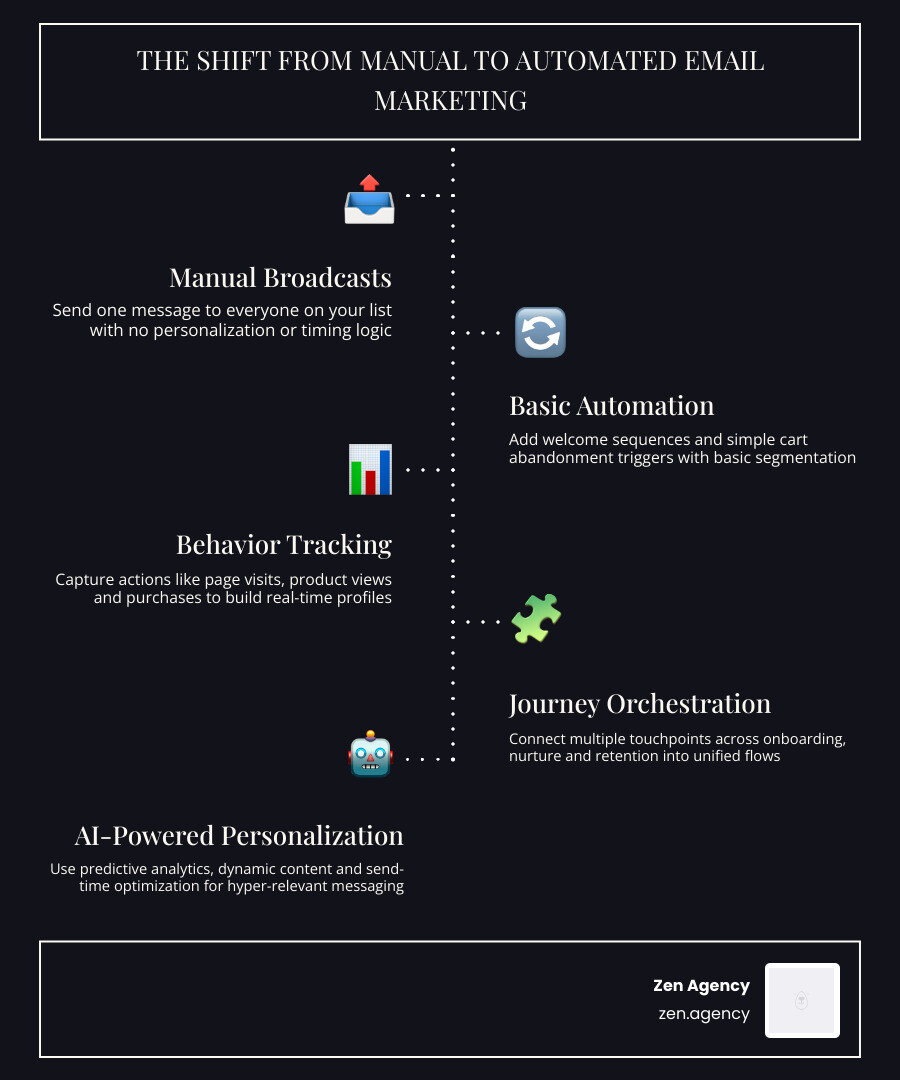
Defining Your Email Marketing Automation Strategy for 2026
To win in 2026, we have to stop thinking of email as a “sending” tool and start viewing it as a “responding” tool. A modern email marketing automation strategy is built on the foundation of behavior-triggered logic. Instead of us deciding when to hit “send,” our customers decide through their actions.
When a user interacts with your brand, they leave digital breadcrumbs. Automation allows us to follow those crumbs in real-time. This shift from manual to automated is the secret to improving marketing ROI and making your budget work harder. While traditional email marketing relies on the “blast” — one message for everyone — automation relies on the “flow.”
Manual Sends vs. Automated Workflows: The 2026 Comparison
| Feature | Traditional Manual Sends | Automated Workflows |
|---|---|---|
| Timing | Based on the marketer’s schedule | Based on the user’s real-time behavior |
| Relevance | Low (Generic promotions) | High (Contextually relevant) |
| Scalability | Limited by human hours | Infinite; works while you sleep |
| Open Rates | Industry average (Approx. 15-20%) | Up to 8x higher for triggered emails |
| Data Usage | Static lists | Dynamic, real-party data |
As noted in the Email Marketing Automation Guide: Strategies & Examples, the goal is to create a systematic approach that engages subscribers based on their specific position in the customer journey. It’s about building a relationship infrastructure that scales.
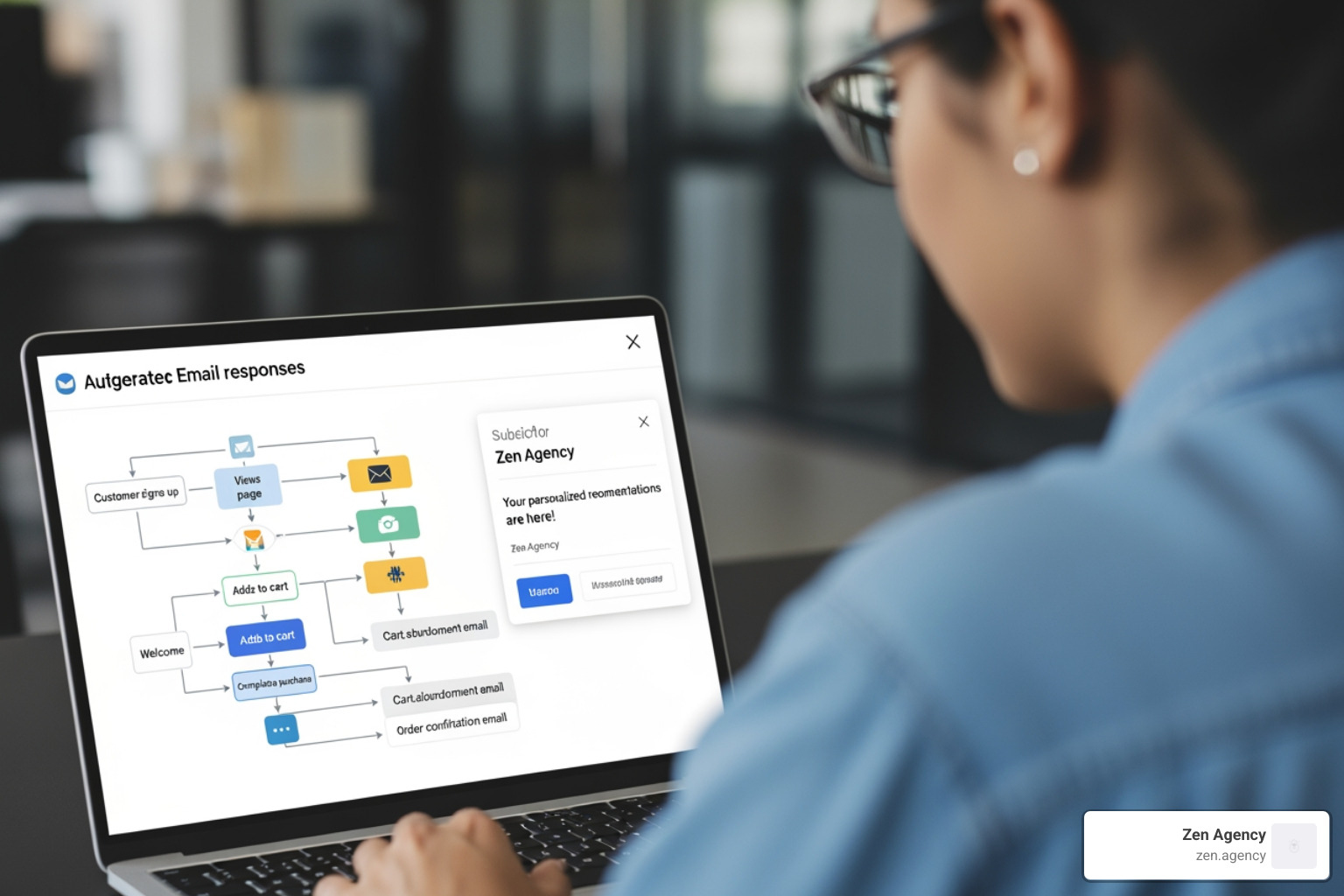
High-Impact Automated Campaigns and Behavioral Triggers
If you’re looking for the “low-hanging fruit” of automation, it starts with the campaigns that meet users at their highest point of intent.
The Welcome Series: Your Digital First Impression First impressions are everything. Statistics show that 91% of users will open a welcome email, resulting in significantly higher engagement than any standard promotional send. This is your chance to set expectations, deliver on your lead magnet promise, and introduce your brand voice. A multi-stage welcome series (sent at intervals like 1 hour, 3 days, and 7 days) can convert 3-5x more subscribers into customers than a single “thanks for signing up” note.
Abandoned Cart Recovery: Reclaiming Lost Revenue Over 70% of online shopping carts are abandoned. That is a staggering amount of “almost” revenue. However, over 40% of cart abandonment emails are opened, and 50% of users who click through end up completing their purchase. By setting up a three-part sequence (the 1-hour “did you forget something?”, the 24-hour “here’s a small incentive,” and the 72-hour “last chance”), you can unlock your e-commerce potential and increase online sales without lifting a finger.
For those of us in the Scranton or Wilkes-Barre areas running local e-commerce or service businesses, these triggers are the difference between a “slow month” and a record-breaking quarter. Following email marketing automation best practices ensures that these triggers are helpful, not hounding.
Scaling Personalization with an Email Marketing Automation Strategy
Personalization in 2026 goes far beyond the {first_name} tag. True personalization is about relevance.
- Birthday and Anniversary Emails: These drive nearly 3x higher open rates than standard campaigns. Whether it’s a discount or a free gift, it makes the subscriber feel seen.
- VIP Loyalty Programs: By identifying your top 5% of customers, you can trigger exclusive “VIP-only” automations. These can increase customer lifetime value (LTV) by up to 30% through early access to sales and personalized service.
According to the AI-powered Email Marketing Strategy For 2026 from Braze, high-impact programs use these milestones to move beyond transactional relationships and into brand advocacy.
Behavior-Based Triggers in Your Email Marketing Automation Strategy
The most sophisticated overachievers use “event-based” triggers. These are emails fired by specific website interactions:
- Browse Abandonment: A user looks at a specific category (like “Mountain Bikes”) three times but doesn’t add to cart. We trigger an email with a guide on “How to Choose the Right Mountain Bike.”
- Post-Purchase Follow-ups: Don’t just send a receipt. Send a “how-to” guide for the product they just bought.
- Replenishment Reminders: If you sell consumables (coffee, supplements, skincare), trigger an email 30 days after purchase asking if they’re ready for a refill.
- Review Requests: Automate the “How did we do?” email 7 days after delivery to build social proof.
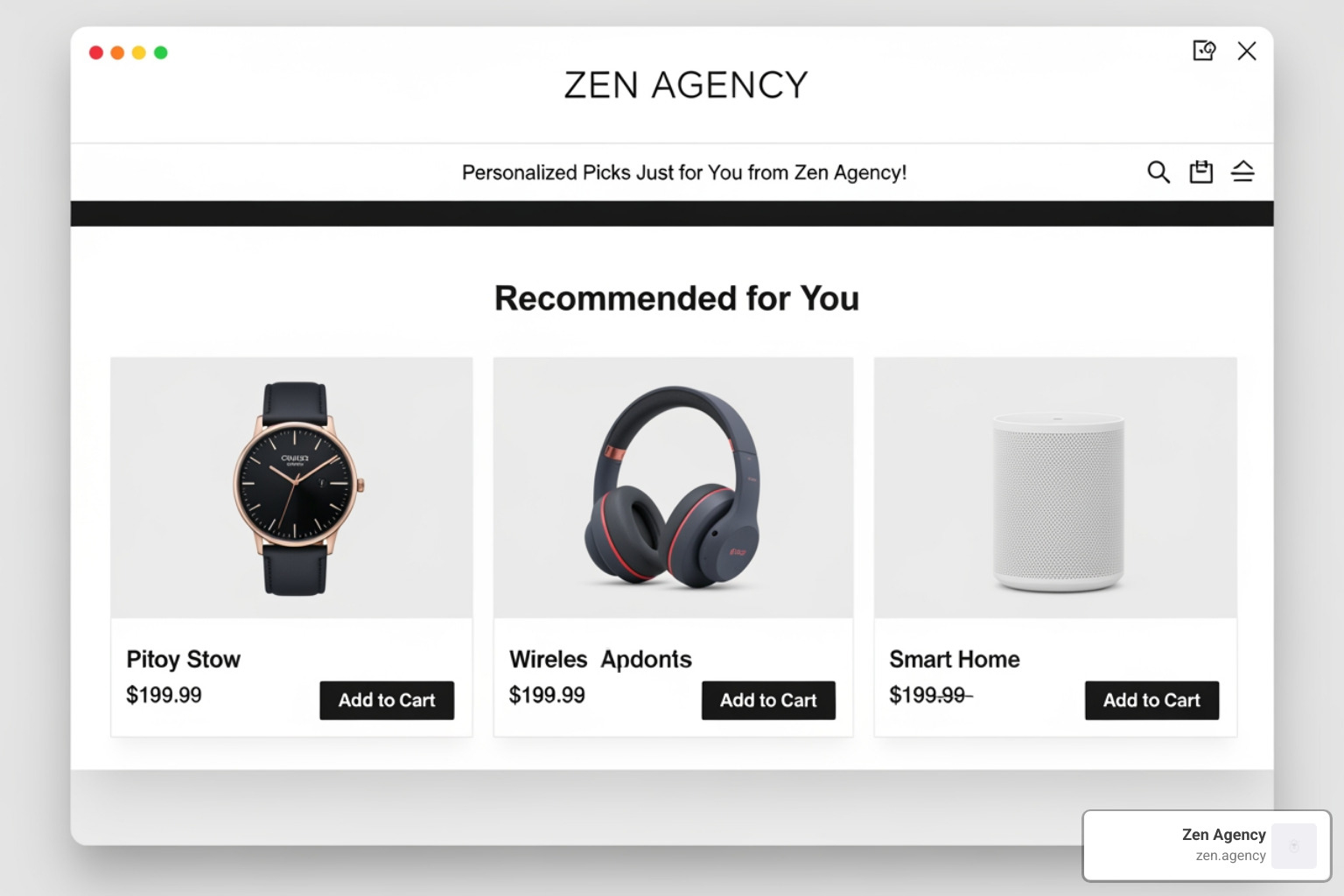
Advanced Segmentation and AI-Driven Optimization
In the past, we segmented lists by hand. In 2026, we use dynamic segments that update in real-time. If a customer in Montana suddenly starts browsing winter gear, they should move from the “General Interest” segment to the “Winter Sports” segment automatically.
This is where we move from hacking to hypergrowth using generative AI. By leveraging first-party data, we can predict what a user wants before they even know they want it. AI doesn’t just help us write better subject lines (though it does that well, outperforming humans in 60% of A/B tests); it helps us stop the churn with AI retention tactics by identifying “at-risk” subscribers who haven’t opened an email in 60 days.
Integrating AI into Your Email Marketing Automation Strategy
The “AI versus AI” battlefield is real. As mailbox providers like Gmail and Apple use AI to summarize your emails for the user, your content must be optimized for these “Intelligent Inboxes.”
- Predictive Analytics: AI can analyze millions of data points to determine a user’s “purchase propensity.”
- Send Time Optimization (STO): Instead of sending to everyone at 9 AM EST, the system sends to each individual at the specific time they are most likely to click, based on their historical behavior.
- AI Copywriting: Tools can now generate hundreds of variations of a subject line to find the one that resonates with a specific segment.
For businesses looking to implement these advanced layers, working with the best marketing automation agencies in Pennsylvania can provide the technical “lift” needed to integrate these complex tools with your existing CRM.
Measuring Success and Omnichannel Integration
If you’re still judging your email marketing automation strategy solely on open rates, you’re looking at the wrong map. With Apple’s Mail Privacy Protection (MPP) affecting roughly 50% of recipients, “opens” are often inflated or unreliable.
We focus on “downstream” metrics:
- Click-to-Conversion Rate: Of the people who clicked, how many actually performed the goal action?
- Revenue Per Send (RPS): The total revenue generated divided by the number of emails sent.
- Churn Rate: How quickly are people leaving your list?
- Average Time to Conversion: How long does it take an automated nurture sequence to turn a lead into a buyer?
Email doesn’t live in a vacuum. It should be the “connective tissue” of your marketing. As we explain in the only digital channel marketing guide you will ever need, your email strategy should talk to your SMS, social media, and paid ad strategies. For instance, if a user doesn’t open an abandoned cart email, you might trigger a retargeting ad on social media instead. This is the hallmark of email marketing services in and near Scranton, PA that prioritize a holistic customer experience.
Technical Deliverability and Compliance
You can have the most beautiful email in the world, but if it lands in the spam folder, it has zero value. In 2026, mailbox providers are stricter than ever.
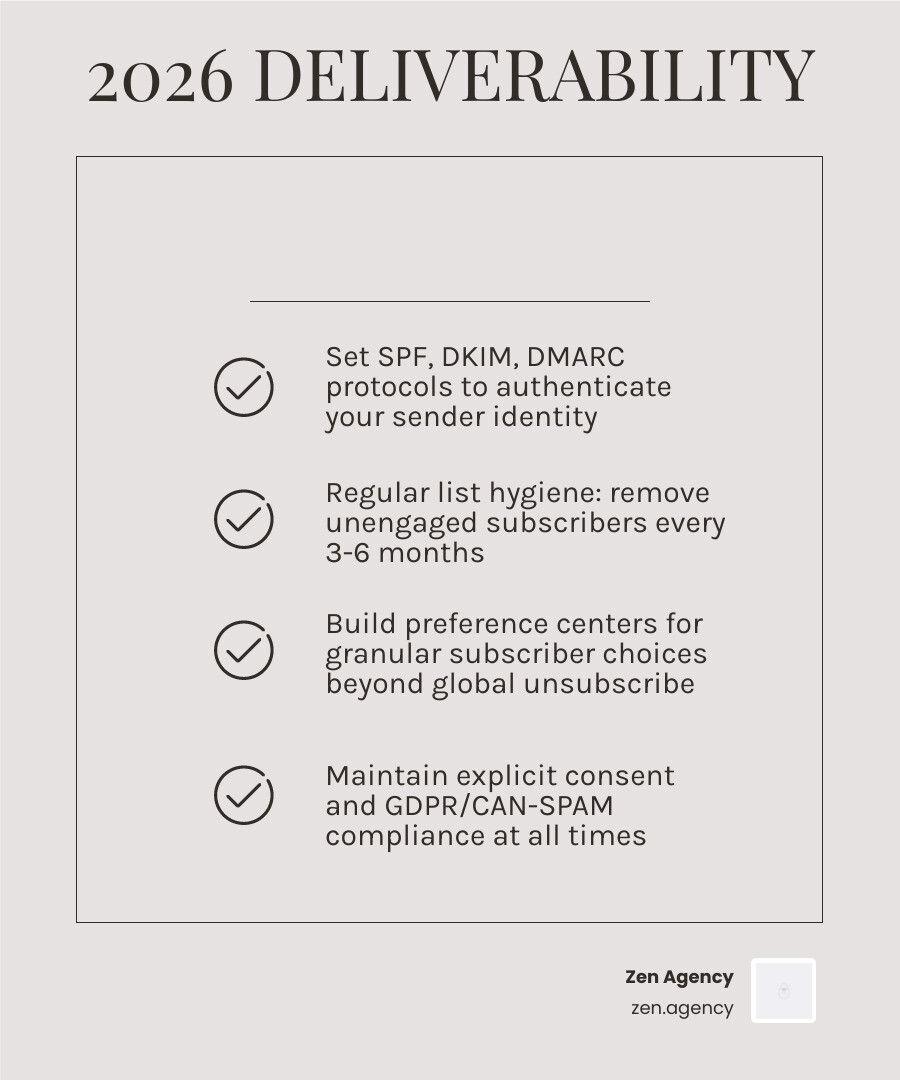
The 2026 Deliverability Checklist:
- SPF, DKIM, and DMARC: These technical protocols prove to the world that you are who you say you are. Without them, your deliverability will tank.
- List Hygiene: Regularly “sunset” (remove) subscribers who haven’t engaged in 3-6 months. Sending to unengaged users signals to Google and Yahoo that your content isn’t wanted.
- Preference Centers: Give users a choice. Instead of a “Global Unsubscribe,” let them choose to hear from you once a week instead of once a day.
- GDPR/CAN-SPAM Compliance: Always ensure you have explicit consent.
Frequently Asked Questions about Email Automation
What is the difference between email automation and traditional email marketing?
Traditional email marketing involves manual “blasts” — you write one email and send it to your entire list (or a large segment) at a specific time. It is a “one-to-many” approach. Email marketing automation strategy is “one-to-one.” It uses trigger-based workflows to send emails automatically based on an individual’s unique behavior. It is far more scalable and maintains real-time relevance that manual sends simply cannot match.
How does AI enhance email marketing automation results?
AI enhances results through predictive segmentation and hyper-personalization. It can identify patterns in data that humans miss, such as the exact moment a customer is likely to churn or which product recommendation will most likely lead to a cross-sell. AI-powered recommendation sequences typically generate an 18% higher revenue lift than generic promotional emails. It also automates A/B testing, meaning your campaigns are constantly “learning” and improving themselves.
What are the most common mistakes to avoid in automated campaigns?
The biggest mistake is the “set-it-and-forget-it” mentality. Even the best automations need a “check-up” every few months to ensure links aren’t broken and the messaging is still on-brand. Other common pitfalls include:
- Over-emailing: If a user triggers a welcome series, a browse abandonment flow, and a newsletter all in one day, they will hit “unsubscribe” fast. Use frequency capping.
- Poor Data Hygiene: If your database is messy, your “personalization” will be too (e.g., “Hello {first_name}!”).
- Ignoring Mobile: Over 60% of emails are opened on mobile devices. If your automated template isn’t responsive, you’re losing half your audience.
Conclusion
At Zen Agency, we believe that an email marketing automation strategy isn’t just a “nice-to-have” — it’s the revenue infrastructure of a modern business. Since 2008, we’ve focused on providing enterprise-grade solutions for businesses that are ready to scale but feel stuck in manual processes.
Whether you’re in Billings, MT, or right here in the Wyoming Valley of Pennsylvania, the goal remains the same: to stop guessing and start growing. By implementing the triggers, AI-driven segments, and deliverability standards we’ve discussed, you transform your marketing from a cost center into a predictable, scalable growth engine.
Ready to stop leaving revenue on the table and build a system that works as hard as you do? Request a Quote today, and let’s build your 2026 growth engine together.