Beyond Moodboards: Mastering the Brand Identity Design Process
Why the Brand Design Process Is Your Business’s Most Strategic Investment
The brand design process is a structured, strategic methodology that transforms businesses from forgettable to memorable. Here’s what you need to know:
Core Phases of the Brand Design Process:
- Research & Discovery – Client onboarding, market research, competitor analysis, and audience personas
- Brand Strategy Development – Defining positioning, personality, voice, values, mission, and vision
- Visual Identity Creation – Designing logos, color palettes, typography, imagery, and icons
- Brand Guidelines & Implementation – Creating style guides and applying the brand across all channels
- Launch & Consistency Management – Maintaining brand integrity through regular audits and refinements
Timeline: 8-12 weeks for a comprehensive brand identity project
Business Impact: 23% revenue increase from consistent branding, 3.5x stronger market visibility, and 46% of consumers willing to pay more for trusted brands
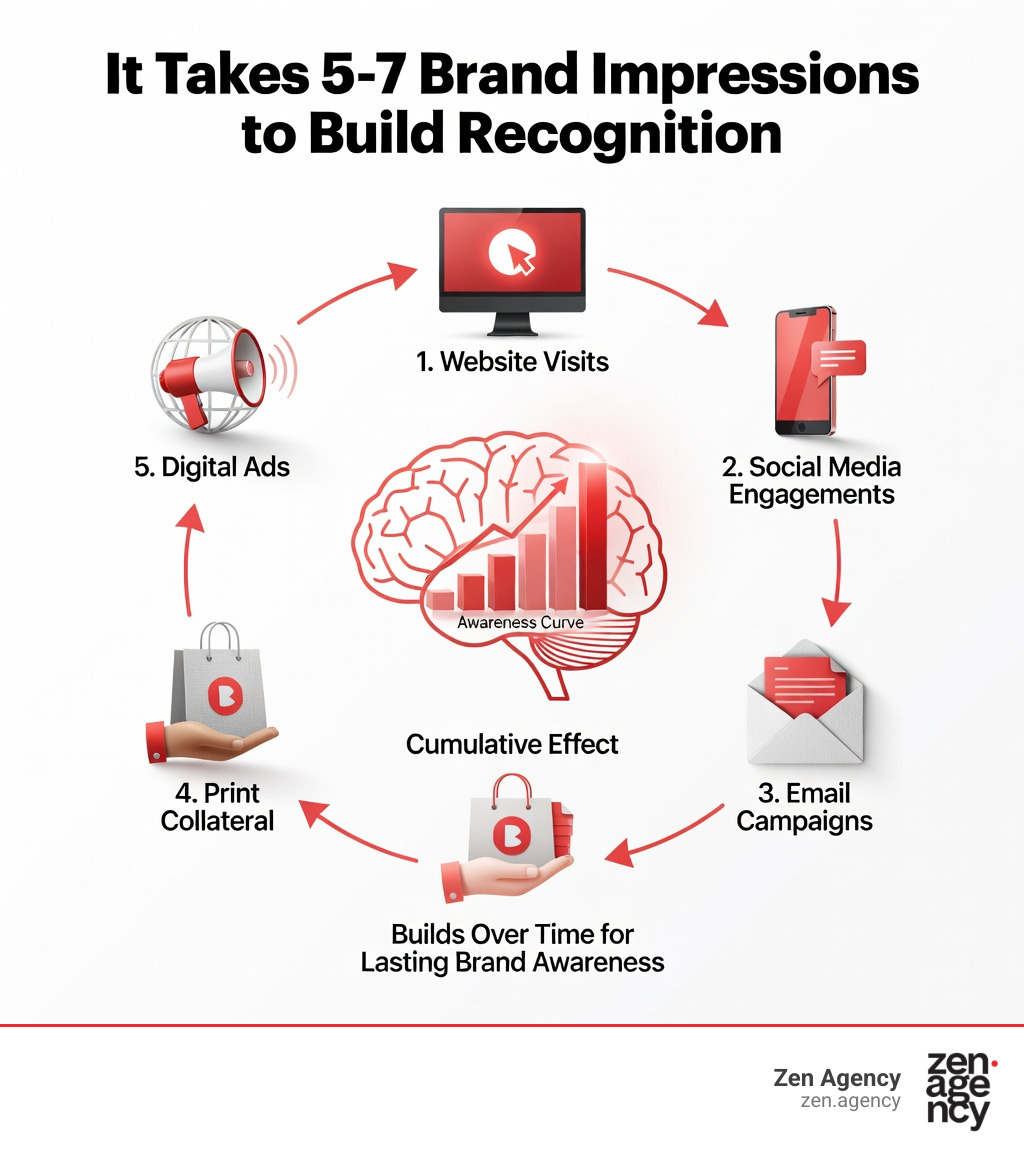
Your brand is more than visuals—it’s the foundation of how customers recognize, trust, and choose you. Research shows that 95% of purchasing decisions happen subconsciously, and it takes 5-7 impressions before potential clients even start recognizing your brand. Without a structured brand design process, businesses struggle with inconsistent messaging, weak market positioning, and lost revenue opportunities.
Many companies confuse quick logo creation with strategic branding. The difference is profound: a logo is one visual element, while a comprehensive brand design process creates a complete system that guides every customer interaction. This system includes research-backed strategy, psychologically-informed color and typography choices, and channel-specific applications that maintain consistency whether someone encounters your brand on social media, your website, or in print.
I’m Joseph Riviello, and over 22 years leading Zen Agency, I’ve helped companies transform their market presence through strategic brand design process implementation. My experience has shown that businesses investing in comprehensive brand design process frameworks consistently outperform competitors who treat branding as an afterthought.
The Strategic Importance of the Brand Design Process
In today’s hyper-competitive market, a pretty logo isn’t enough to keep the lights on. We often see businesses that have “good” products but struggle to scale because their identity lacks a strategic backbone. The brand design process is the cure for that stagnation.
Statistics show that 46% of Americans spend more on products from a brand they trust. Trust isn’t built by accident; it’s engineered through The Impact of Brand Trust and consistent delivery of a brand promise. Furthermore, according to research from Harvard professor Gerald Zaltman, 95% of purchasing decisions happen in the subconscious mind. This means your audience is making gut-level decisions based on how your brand “feels” before they even read your copy.
A well-executed brand design process leads to:
- Significant Revenue Growth: Consistency isn’t just about looks; it’s about the bottom line.
- Dominant Market Visibility: Standing out requires more than being “better”—it requires being different.
- Subconscious Connection: Using psychology to ensure your brand resonates on an emotional level.
Differentiating Strategy, Identity, and Implementation
To master this process, we must first understand that branding is a three-legged stool. If one leg is missing, the whole thing topples over.
- Brand Strategy (The DNA): This is the “why” and “how” of your business. It includes your positioning, mission, and the unique value you bring to the table.
- Brand Identity (The Visual Assets): These are the tangible elements—your logo, color palette, and typography.
- Brand Implementation (Channel Application): This is how the brand lives in the real world, from your website to your social media feeds.
Understanding Graphic Design vs Branding is crucial here. Graphic design provides the tools, but branding provides the blueprint.
Why Consistency Drives Business ROI
If you want to see a 23% revenue increase, you need to embrace Brand Consistency. Consumers are 3.5x more likely to have strong brand visibility in the market when branding is uniform across all channels.
When a customer sees your brand 5-7 times, they start to recognize you. If each of those impressions looks and feels different, you’re essentially starting back at zero every time. Consistency builds the familiarity that leads to trust, and trust is the ultimate driver of customer loyalty.
Phase 1: Research, Discovery, and Strategy
We never start a project by opening a design program. That would be like a doctor performing surgery without a diagnosis. The first phase of the brand design process is all about gathering the “data” that will fuel our creative decisions.
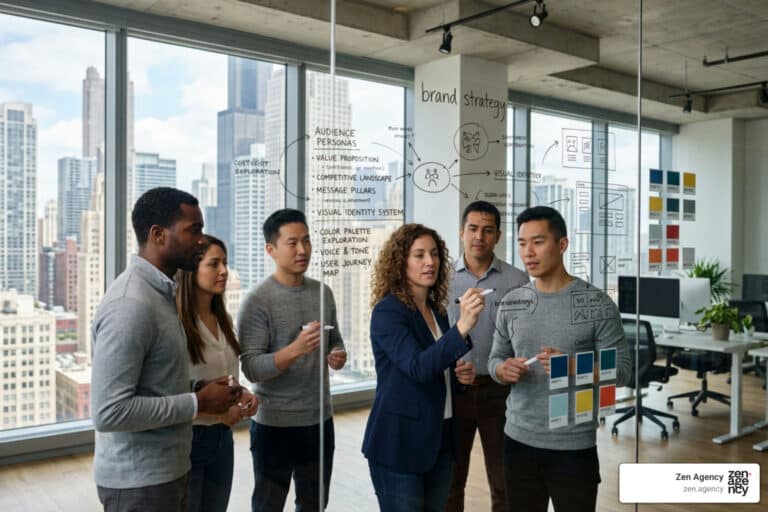
Defining the Brand Strategy Blueprint
During client onboarding, we dive deep into the business’s heart. We look for unique selling propositions (USPs) that set the brand apart. This phase involves:
- Mission & Vision: Why do you exist, and where are you going?
- Core Values: What principles guide your behavior?
- Brand Positioning: What is Brand Positioning and how do you occupy a unique space in the customer’s mind?
- Brand Voice: Is your brand professional and authoritative, or witty and conversational? Learning how to create a unique brand voice ensures you speak the same language as your customers.
The Role of User Research and Focus Groups
You are not your target audience. To build a brand that resonates, we must understand the people who will actually buy from you. This involves creating audience personas—detailed profiles of your ideal customers. If you’re unsure where to start, we have a guide on How to Create a Brand Persona.
We use customer feedback surveys, user interviews, and focus groups to identify pain points and sentiment. We want to know:
- What keeps your customers up at night?
- What are their frustrations with your competitors?
- What words do they use to describe their ideal solution?
Phase 2: Creative Direction and Visual Identity
Once we have the strategy, we move into the “fun” part-the visual expression of those ideas. This is where we bridge the gap between abstract strategy and concrete design.
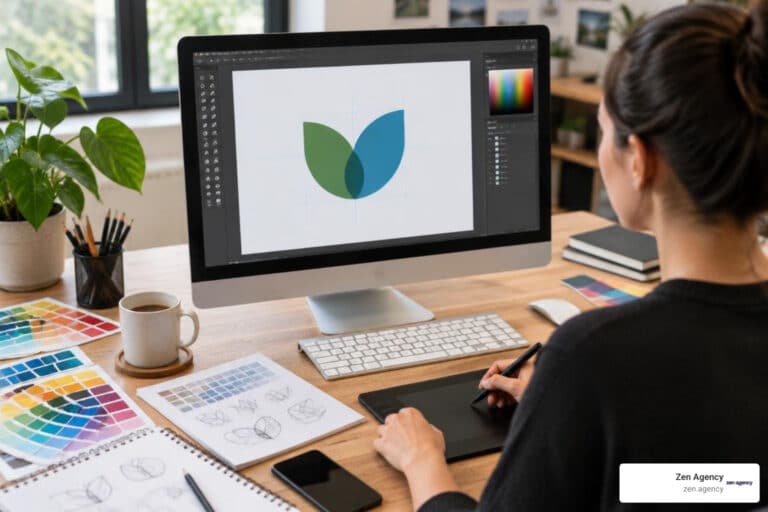
Crafting the Visual Elements of the Brand Design Process
Visual branding creates “memory anchors.” When people see your colors or your logo, they should instantly feel the personality of your brand.
- Logo Design: This is often the most recognizable part of your identity. The Power of Logo Design lies in its ability to symbolize everything your brand stands for in a single mark.
- Color Palette: Colors have a strong psychological impact on consumers. We help you navigate how to choose the right colors to evoke the specific emotions you want your audience to feel.
- Typography: Fonts speak a language of their own. The Role of Typography in Branding is to set the tone-whether it’s modern, classic, or playful.
- Imagery & Icons: How to Build a Cohesive Visual Identity involves ensuring your photography and icon styles match the overall “vibe” of the brand.
From Mood Boards to Design Concepts
Before we design a single logo, we create mood boards. Think of a mood board as a visual “sandbox.” It’s a collection of images, textures, and colors that represent the creative direction. Whether you’re a DIY enthusiast looking to create the perfect mood board for your small business or you want to learn how to create a mood board in Illustrator, the key is capturing the right visual direction early.
Using tools like SampleBoard, we present these directions to ensure aesthetic alignment. This step is vital because it prevents us from spending weeks on a design concept that doesn’t “feel” right to the client. It’s much easier to pivot a mood board than a finished logo.
Phase 3: Implementation and Consistency
A beautiful design is useless if it’s not used correctly. The final phase of the brand design process is about creating the rules for your brand’s future.
Essential Tools for a Modern Brand Design Process
Managing a rebrand or a new brand launch involves many moving parts. We rely on a professional stack of tools to keep things on track:
- Design: Adobe Creative Cloud (Illustrator, Photoshop, InDesign) remains the industry standard.
- Management: Creative project management software allows us to track deadlines and deliverables without losing our minds.
- Visualization: We use mockup and prototyping tools to show how your brand will look on a phone screen, a billboard, or a coffee mug.
- Collaboration: Tools like FigJam or Miro are great for brainstorming and workshops.
Managing Feedback and Revisions
The brand design process is a partnership. We don’t just “hand over” designs; we iterate on them. The Art of Interviewing Your Client is a skill we’ve honed to ensure we’re asking the right questions during the feedback loop.
When it comes to critique, we follow the principles in Discussing Design: The Art of Critique. We focus on whether the design meets the strategic goals set in Phase 1, rather than just personal “likes” or “dislikes.”
| Feature | Brand Refresh | Full Rebrand |
|---|---|---|
| Logo | Minor tweaks/modernization | Entirely new concept/name |
| Color Palette | Updated shades | New color strategy |
| Strategy | Stays the same | New mission/positioning |
| Timeline | 2-4 weeks | 8-12+ weeks |
| Best For | Modernizing an old look | Pivoting business direction |
Finally, we deliver a comprehensive brand style guide. This “brand bible” ensures that whether you’re hiring a new social media manager or a print shop, they know exactly how to create a brand style guide that maintains your hard-earned consistency.
Frequently Asked Questions about Brand Design
How long does a typical brand design project take?
A comprehensive brand design process typically takes 8-12 weeks. This timeline can be affected by the depth of research required, the number of stakeholders involved in the approval process, and the speed of revision cycles. While a “quick logo” can be done in days, a strategic brand identity that drives ROI needs time to breathe and develop.
What are common pitfalls to avoid in brand design?
- Skipping Research: Designing without data is like sailing without a compass.
- Generic Visuals: If you look like everyone else, you’re invisible.
- Overcomplication: Simplicity is key for instant recognition.
- Inconsistency: Using different fonts or colors on different platforms kills trust.
- Ignoring the Audience: Don’t design for yourself; design for the person who is writing the check.
How do you measure the success of a new brand identity?
Post-launch, we look at several metrics:
- Net Promoter Score (NPS): Are customers more likely to recommend you?
- Brand Audits: Are all touchpoints consistent?
- Conversion Rates: Has the new identity led to more sales or leads?
- Recognition Metrics: Can customers identify your brand without seeing the name?
Conclusion
At Zen Agency, we believe that a structured brand design process is the difference between a business that survives and one that thrives. From our locations in Wilkes Barre, Scranton, and beyond, we’ve provided enterprise-grade solutions to businesses across Pennsylvania and Montana since 2008.
We don’t just make things look pretty; we build innovative strategies that increase visibility, profitability, and ROI. If you’re a struggling-to-scale business looking for a brand that truly works, we’re here to help. Ready to transform your identity? Explore our Branding and Graphic Design Services and let’s start your journey toward a more powerful brand today.