How Local SEO Drives More Leads and Customers to Your Doorstep
How Local SEO Drives More Leads and Customers to Your Doorstep
Why Local SEO Leads Are the Growth Engine Your Business Is Missing
Local SEO leads are potential customers who find your business through location-based searches on Google — and they are among the highest-intent buyers you can attract online.
Here is a quick breakdown of how to generate them:
- Optimize your Google Business Profile — complete every field, add photos, and collect reviews consistently
- Build local citations — list your business on directories like Yelp, BBB, and Google Maps with consistent name, address, and phone (NAP)
- Create location-specific landing pages — target neighborhood and city-level keywords
- Earn local backlinks — get links from local chambers of commerce, directories, and community sites
- Manage your reviews — respond to every review and request new ones after each job
- Track and convert — use call tracking and conversion-focused design to turn visitors into paying customers
If your phone is not ringing the way it should, you are probably not showing up where your customers are looking. Consider this: 87% of consumers use Google to evaluate local businesses, and 42% of local searches result in a click on the Google Map Pack. That is a massive pool of ready-to-buy customers — most of whom never scroll past the first few results.
The problem most businesses face is not effort. It is strategy. They focus on rankings alone and ignore the conversion side of the equation. A business ranked number one with a weak profile and a slow website will lose leads to a competitor ranked number four who has nailed the fundamentals.
This guide walks you through exactly how to fix that — from showing up in local search to turning that visibility into booked appointments and signed contracts.
I’m Joseph Riviello, CEO and Founder of Zen Agency, and over my 22+ years in digital marketing I have helped businesses of all sizes build systems that generate consistent local SEO leads without wasting budget on tactics that do not compound. I will share the same framework we use with our clients to turn local rankings into real, measurable revenue.
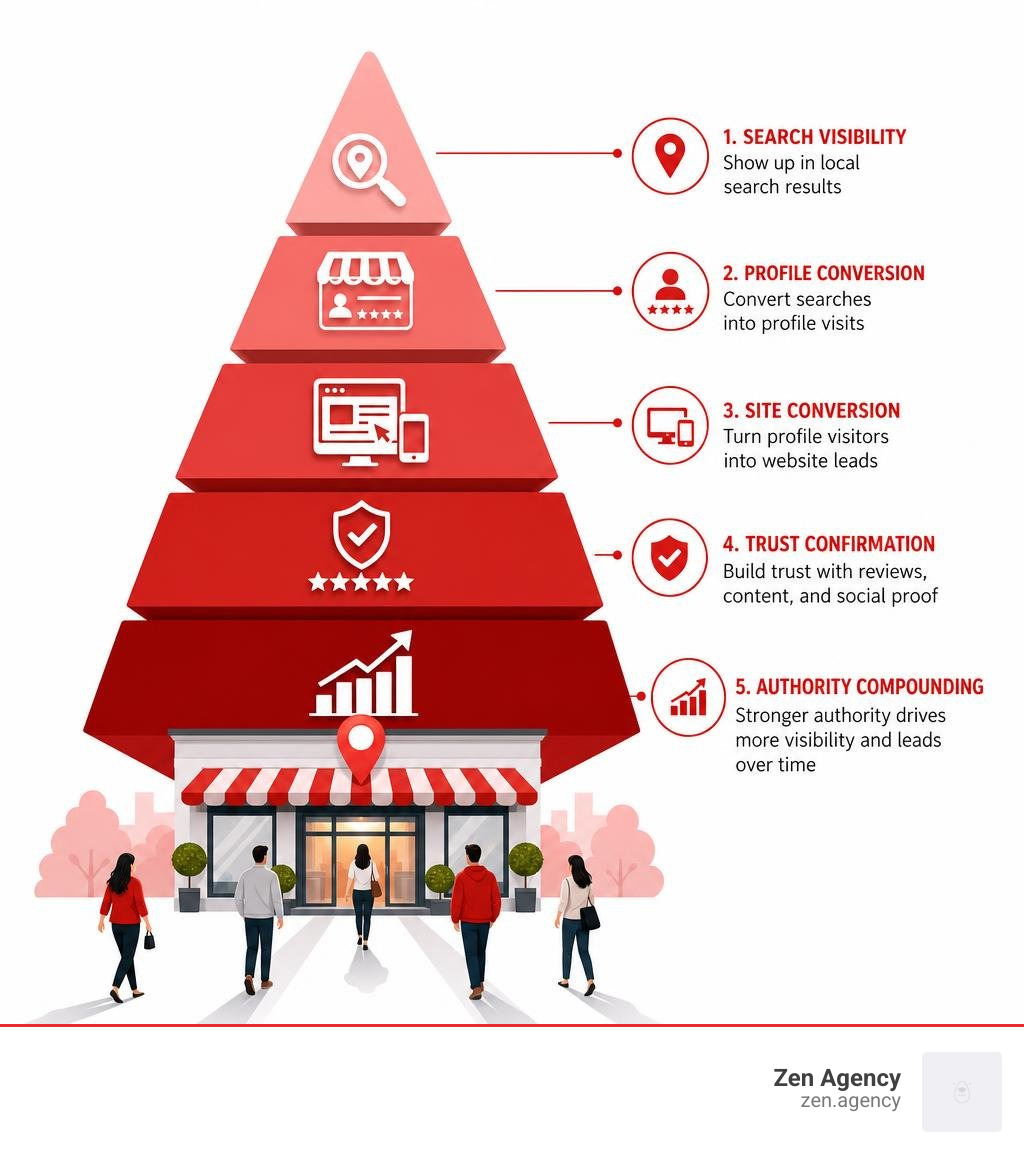
Handy Local SEO leads terms:
What is Local SEO Lead Generation?
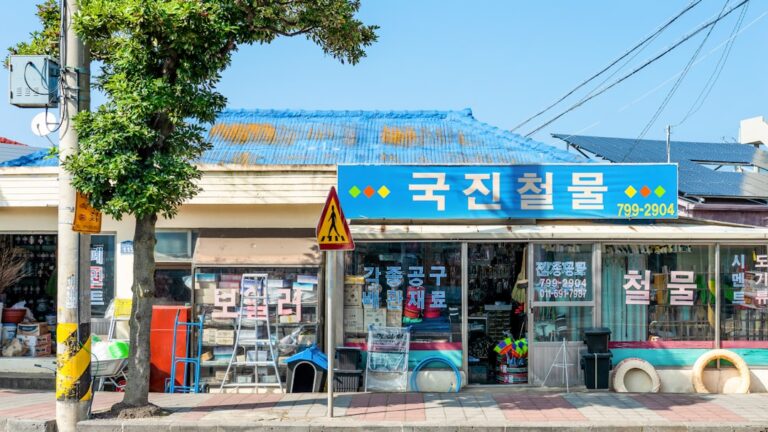
At its core, local search engine optimization (SEO) lead generation is the strategic process of optimizing your online presence to attract and convert prospects within your specific geographic service area. Unlike broad, national campaigns that cast a massive net across the internet, local lead generation is a neighborhood game.
Whether you are running an electrical company in Scranton, PA, or offering professional services in Billings, MT, you do not need traffic from a global audience. You need highly targeted, local traffic from people who can actually visit your storefront or hire you to come to their homes.
Google’s local search algorithm determines who shows up at the top of these searches based on three primary pillars:
- Proximity: How close is your business to the searcher’s physical location or the location specified in their query?
- Relevance: How well does your business profile and website match what the user is actively looking for?
- Prominence: How well-known or trusted is your business online? This is evaluated using reviews, local backlinks, directories, and overall digital footprint.
When these three pillars align, Google rewards your business by placing you in the coveted Google Map Pack. This prime real estate sits at the very top of search engine results pages (SERPs) and drives up to 70% of all service business phone calls. In fact, 98% of consumers turn to the internet when seeking information about local businesses, and local and organic searches together account for more than 69% of all digital traffic.
If you want to read more about how local search can help your business survive and thrive, you can learn why local search is critical for small businesses.
Local SEO vs. Traditional Lead Generation
Traditional outbound lead generation often relies on cold lists, direct mail, or generic digital ads that target broad demographics. This approach can be incredibly expensive and inefficient. On the other hand, local SEO is an inbound strategy. Instead of chasing down cold prospects, you position your business directly in front of people who are actively searching for your exact services at the precise moment they are ready to buy.
Consider the difference in search intent. A user searching for “how to fix a leaky pipe” has informational intent and might be located anywhere in the world. But a user in Wilkes-Barre searching for “emergency plumber near me” has immediate transactional intent. They are not looking to read a blog post; they are looking to click a button, make a call, and hire a professional.
This high-intent behavior translates directly into much higher conversion rates and a lower cost-per-acquisition (CPA) over time.
| Metric | Local Search (Local SEO) | National Search (Traditional/Broad SEO) |
|---|---|---|
| Targeting Radius | Hyper-local (specific cities, neighborhoods, zip codes) | Nationwide or global |
| Search Intent | High transactional intent (“near me”, “open now”) | Informational or broad transactional |
| Average Conversion Rate | High (often 20% to 50% for Map Pack actions) | Moderate (typically 2% to 5%) |
| Primary Ranking Factor | Proximity, reviews, and Google Business Profile | Domain authority, backlink volume, and content depth |
| Cost-Per-Lead (CPL) | Lower over time ($15 – $50 average, compounding) | Higher and static ($30 – $150+ via PPC) |
Step-by-Step Framework to Generate Local SEO Leads
Generating high-quality local SEO leads requires a balanced approach. You cannot simply focus on ranking first and hope the phone rings. You must pair search visibility with conversion rate optimization (CRO) to turn those impressions into actual clients.
If your website is hard to navigate on a smartphone, lacks clear call-to-action (CTA) buttons, or does not clearly display your service areas, your hard-earned traffic will simply bounce back to Google and click on a competitor.
To build a reliable local lead generation machine, you can follow Google’s official guide to local lead generation alongside our battle-tested five-part system:
- Claim and complete your digital profiles: Treat your Google Business Profile (GBP) as your secondary homepage.
- Optimize your on-page assets: Build dedicated, high-performing landing pages for every local market you serve, such as Scranton, Hazleton, or Wyoming, PA.
- Streamline your conversion paths: Ensure click-to-call buttons, short contact forms, and booking integrations are highly visible, especially on mobile devices where 84% of “near me” searches occur.
- Establish local trust signals: Systematically collect and display detailed customer reviews that mention specific services and local neighborhood names.
- Earn hyper-local authority: Build links and citations from trusted local organizations, chambers of commerce, and regional directories.
Leveraging Google Business Profile to Capture Local SEO Leads
Your Google Business Profile is the absolute cornerstone of your local search presence, accounting for roughly 32% of local pack ranking weight. It is often the first interaction a potential customer has with your brand. To maximize its lead generation potential, you must optimize every single feature it offers.
- Select the Correct Primary Category: This is the single most important ranking signal on your profile. If you run a web design agency, make sure your primary category is exactly what you do. For example, if you are offering website design and SEO services, your profile category must align perfectly with your core services.
- Maintain Absolute NAP Consistency: Your Name, Address, and Phone number (NAP) must be identical across your website, GBP, and every directory online. Even minor discrepancies (like “Street” vs. “St.”) can confuse search engines and harm your rankings.
- Drive Review Velocity and Recency: A business with 80 recent, detailed reviews will often outrank a competitor with 300 reviews from three years ago. Encourage your team to request reviews within two hours of completing a job. Make it easy by sending a direct link or a QR code.
- Utilize Booking and Service Links: Google allows you to integrate booking platforms directly into your profile. This lets high-intent users schedule an appointment instantly without even visiting your website, capturing the lead at the peak of their interest.
- Upload High-Quality Photos Weekly: Profiles with active, real-world photos of your team, equipment, and completed projects receive significantly more engagement than those relying on stock images.
Building Local Authority with Citations and Backlinks
Citations — online mentions of your business name, address, and phone number — act as digital votes of confidence for Google. They prove that your business is legitimate and active in your community. You should start by submitting your business to major directories like Yelp, Bing Places, and the Better Business Bureau.
To supercharge your visibility, you can also leverage location aggregate data services like Neustar, Data Axle, and Foursquare to distribute your data to hundreds of smaller directories simultaneously.
But citations are only part of the equation. To truly dominate competitive local markets, you need high-quality local backlinks. Link signals account for roughly 28% of the factors Google considers in its local search algorithm.
Instead of chasing generic, national backlinks, focus on building relationships in your immediate community. You can Explore Zen Agency’s Local SEO services to build your local authority and implement these advanced strategies:
- Sponsor Local Events and Charities: Donating to a youth sports league in Scranton or partnering with a non-profit in Billings often earns you a high-authority, local backlink from their website.
- Join Local Chambers of Commerce: Getting listed on your regional chamber directory provides an incredibly strong local relevance signal to search engines.
- Implement Local Business Schema Markup: Only 0.3% of websites use schema markup correctly. By adding JSON-LD structured data to your site, you give search engines precise, structured information about your physical location, coordinates, and services.
- Optimize Your Internal Linking: Pages with strategically positioned internal links have up to 40% higher ranking power. Ensure your blog posts and location pages link back to your primary service pages using descriptive anchor text.
For businesses located in Pennsylvania or Montana, establishing these localized signals is essential. You can consult regional business directories and local listings to see where your top-performing competitors are earning their local citations and backlinks.
Qualifying and Prioritizing Your Local Prospects
If you are an agency, freelancer, or B2B business looking to sell local services, finding leads is only half the battle. You must also know how to qualify and prioritize them so you do not waste time on businesses that are not a good fit or do not have the budget to scale.
To streamline this process, modern sales teams use advanced lead-generation and scraping platforms. Tools like LocalLeads allow you to search any niche and city to extract pre-scored local business leads.
Instead of giving you raw, unorganized spreadsheets, these platforms compute a deterministic Quality Score from 0 to 100 based on key signals (such as whether they have a live website, a listed phone number, active reviews, and claimed profiles).
Similarly, platforms like LocalProspects.ai use AI to automatically extract owner names and verified emails from Google Maps data, giving you an enriched, ready-to-outreach list in minutes.

When qualifying prospects manually or using these platforms, pay close attention to these key metrics:
- Missing or Outdated Websites: A local business with no website or a non-mobile-friendly site is a prime target for both web design and local SEO services.
- Low Review Count or Velocity: If a business has great offline services but very few online reviews, they have massive Growth Potential that you can easily unlock.
- Inconsistent NAP Data: Businesses with mixed-up addresses or phone numbers across the web are suffering from search visibility leaks and need immediate citation cleanup.
To learn more about optimizing your pipeline and converting these prospects, you can discover how to improve your overall lead quality.
Demonstrating Value with Visual Proof
When reaching out to potential local SEO clients, generic sales pitches do not work. In fact, 76% of consumers get annoyed when businesses fail to deliver personalized interactions. To capture their attention, you must show them exactly where they are losing market share to their competitors.
One of the most effective ways to do this is by generating a visual Position Map or a Visibility Scan. Instead of explaining complex search algorithms, you can send a color-coded grid map that shows their ranking position at different physical coordinates in their city.
Showing a business owner in Scranton PA that they rank #1 when standing in their own parking lot, but drop to #12 just three blocks away, is an incredibly powerful wake-up call.
By white-labeling these visual reports with your own branding, you present yourself as a highly professional, data-driven authority. When a prospect sees visual proof of their local invisibility, the sales conversation shifts from “Why do I need SEO?” to “How quickly can we fix this?”
Once they sign on, this visual data makes client onboarding seamless. You can activate their profile within your management platform with a single click, set a baseline, and begin tracking your optimization efforts against real-world rank improvements.
Frequently Asked Questions about Local SEO Leads
What is the difference between Local SEO and organic SEO?
While both strategies share the goal of improving search engine visibility, their ranking factors and target audiences are entirely different.
Organic SEO focuses on ranking for search queries that are not tied to a physical location. It prioritizes domain authority, broad content depth, and global backlink volume.
Local SEO, however, is heavily influenced by proximity, relevance, and prominence. It relies on localized signals like Google Business Profile optimization, local reviews, consistent citations, and proximity to the searcher.
If you are new to search-driven marketing, you can explore our beginner’s guide to lead generation to understand how these different channels fit into a broader business strategy.
How do you track and measure the success of Local SEO leads?
You should never measure the success of a local campaign based on vanity metrics like impressions or keyword rankings alone. Instead, focus on conversion-based metrics that directly impact your bottom line.
The best way to track local leads is by implementing dynamic number insertion (DNI) on your website and using a dedicated tracking phone number on your Google Business Profile. This ensures that every phone call, form submission, and driving direction request is explicitly tracked and attributed to your local SEO efforts.
By measuring your cost-per-lead (CPL) and conversion rates, you can easily calculate your exact return on investment (ROI).
How long does it take to see results from local lead generation?
Local SEO is an asset-building process, not an overnight switch. Because search engines must discover, crawl, and trust your new local signals, it takes time to build momentum.
Most businesses start seeing an increase in call volume and local search visibility within 60 to 90 days of starting an aggressive optimization campaign. However, achieving full Map Pack saturation and dominating highly competitive local terms typically requires 6 to 9 months of consistent, ongoing effort.
Conclusion
At Zen Agency, we believe that local search is not just about getting found — it is about growing your business. Since 2008, we have provided enterprise-grade digital marketing, custom web development, and innovative strategies to help businesses scale their visibility, profitability, and ROI.
Whether you are looking to dominate the search results in Wilkes-Barre, Scranton, Wyoming PA, or Billings MT, we build custom systems that turn searchers into paying customers.
Stop letting your competitors capture the high-intent leads in your backyard. Partner with Zen Agency for expert lead generation services and let us help you turn your local search presence into a compounding revenue engine.