The Ultimate Guide to Hiring a Branding Graphic Designer
The Ultimate Guide to Hiring a Branding Graphic Designer
What a Branding Graphic Designer Actually Does (And Why It Matters)
A branding graphic designer is a specialist who builds the complete visual identity of a business — not just a logo, but the full system of colors, typography, imagery, and guidelines that shape how customers see and remember you.
Quick answer: What does a branding graphic designer do?
- Designs your logo, color palette, and typography system
- Creates brand guidelines so your visuals stay consistent everywhere
- Develops assets for web, print, social media, and packaging
- Aligns your visual identity with your business strategy and target audience
- Guides or executes rebranding when your current look no longer fits
If your brand looks inconsistent, feels generic, or just isn’t converting — a professional branding designer is the most direct fix.
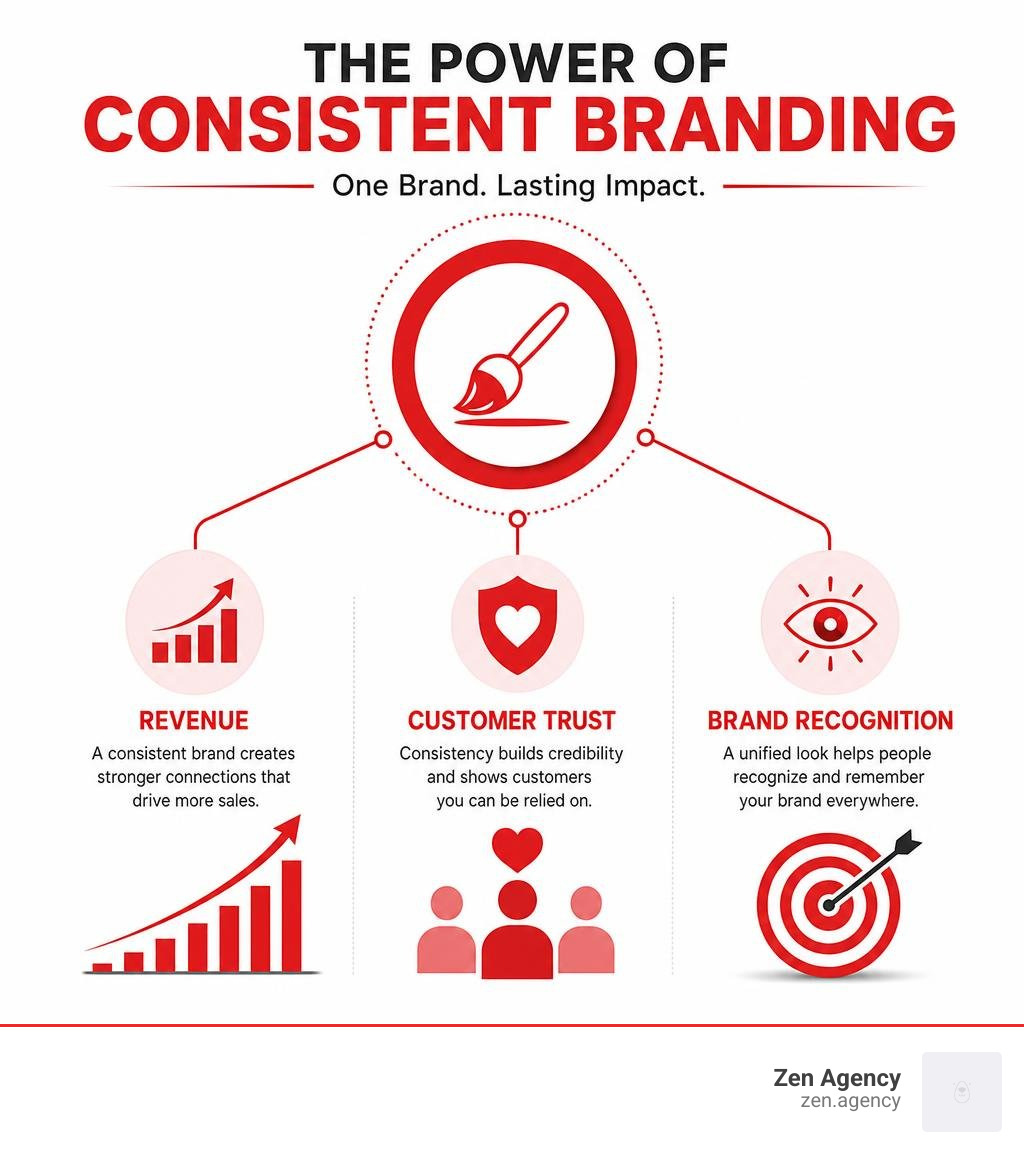
Here’s why this matters at a business level: consistent brand presentation across all platforms can increase revenue by up to 23%. That’s not a small number. And yet most growing businesses treat design as an afterthought — patching together visuals over time instead of building a coherent system from the start.
The result? A brand that confuses customers instead of winning them over.
Your visuals are often the first thing a potential customer encounters. Before they read a word of copy, before they talk to your sales team, they’ve already formed an impression. A strong branding graphic designer makes sure that impression works in your favor.
I’m Joseph Riviello, CEO and Founder of Zen Agency, and with over 22 years leading digital marketing strategy, I’ve seen how the right branding graphic designer can transform a struggling company’s market presence into a genuine competitive advantage. In this guide, I’ll walk you through everything you need to know to find, evaluate, and work with the right design partner for your business.
Branding graphic designer terms simplified:
Why Every Business Needs a Professional Branding Graphic Designer
Many business owners believe that “branding” is just a fancy word for a logo. They might hop onto a cheap freelance platform, spend $50 on a quick graphic, and call it a day. But a logo in isolation is not a brand. Without a cohesive visual strategy, a business lacks the foundation to build consumer trust, maintain visual consistency across channels, and drive long-term revenue growth.
When you hire a professional branding graphic designer, you are not just purchasing a set of files. You are investing in a strategic visual system designed to make your business instantly recognizable. To understand how this compares to other approaches, take a look at our breakdown of The 5 Best Company Branding Services Compared to see how different service models align with your business goals.
The Business Value of Strategic Visual Design
Design is not merely aesthetic; it is a critical driver of business success. According to research on The Business Value of Design | McKinsey, companies that excel in design grow their revenues and shareholder returns at nearly twice the rate of their industry peers.
Visuals are a powerful tool for building emotional connections and brand equity. When a potential customer visits your website or looks at your packaging, they make a split-second decision about your credibility. If your visual system is polished and strategic, it signals professionalism and reliability. If it looks piecemeal or outdated, it can drive customers straight to your competitors. A skilled branding graphic designer bridges the gap between your business values and your audience’s emotional response, turning first impressions into lasting relationships.
How Consistent Branding Drives Customer Loyalty
Consistency is the bedrock of customer loyalty. When your visual identity is unified across every touchpoint—from your website and social media channels to physical print materials and product packaging—it builds a sense of stability. Customers begin to feel familiar with your brand, and familiarity is the precursor to trust.
To achieve this level of consistency, professional designers establish comprehensive style guides. If you want to understand how these systems are structured, read The Ultimate Guide to Brand Guideline Creation. A robust set of guidelines ensures that whether a customer interacts with your brand in Scranton, PA, or Billings, MT, they experience the exact same visual narrative. This predictable, professional omni-channel presence removes friction from the buying journey and reinforces customer retention.
The Core Elements of a Memorable Brand Identity
A complete brand identity is a puzzle made of several interlocking pieces. A branding graphic designer carefully crafts each of these elements to ensure they speak the same visual language. To explore how to take control of your own visual narrative, check out Your Brand, Your Rules: A Guide to Custom Identity Design.
Crafting a Versatile and Memorable Logo
A memorable logo is the first thing consumers recall about a brand, directly linking logo design to brand awareness and trust. However, a great logo must be as functional as it is beautiful.
During the design phase, a professional designer will conduct monochrome testing. This ensures the logo remains legible and impactful when printed in a single color, whether on a tiny promotional pen or a giant billboard off the highway in Wilkes-Barre, PA. Scalability is key: the mark must look just as sharp as a 16×16 pixel favicon on a browser tab as it does on physical building signage. For practical tips on selecting a designer who understands these technical nuances, see How Logo Design Services Can Help You to Find Reliable Logo Designers.
Establishing Color Palettes and Typography Systems
Colors and fonts are not chosen at random. They are selected based on color psychology and visual hierarchy to express your unique brand voice.
According to The Psychology of Color in Marketing | HubSpot, different hues evoke distinct psychological responses. Blue can project security and trust, while bold reds can signal energy and passion. A branding graphic designer pairs these colors with a complementary typography system. They select primary and secondary fonts that ensure readability while reinforcing the brand’s personality—whether that is a modern, clean sans-serif for a tech startup or a classic, reliable serif for a historic Pennsylvania manufacturing firm.
The Step-by-Step Brand Identity Design Process
Building a brand is a structured journey. It requires moving from abstract ideas to concrete visual assets through a disciplined, collaborative process. To see this in action, explore our guide on Beyond Moodboards: Mastering the Brand Identity Design Process.
Phase 1: Research, Strategy, and Brand Naming
Before a designer touches a sketchpad or opens digital design software, they must understand the landscape. This phase involves deep competitor analysis, defining the target audience, and establishing the brand’s unique positioning.
If you are launching a new venture, this is also the stage where brand naming occurs. Developing a name that is memorable, legally available, and visually suggestive is an art form in itself. To learn how professionals approach this challenge, read Beyond Brainstorming: Mastering the Art of Brand Naming.
Phase 2: Design Concepts, Mockups, and Presentation
Once the strategic foundation is set, the visual exploration begins. The branding graphic designer translates the strategy into multiple design concepts.
To help you visualize how these designs will look in the real world, designers use 3D mockups and presentation templates. Seeing a logo concept applied to a realistic shopping bag, a mobile app screen, or a storefront sign makes the design tangible. It allows you to evaluate how the visual system performs in practical environments. For insights into how these concepts are professionally communicated, see How to Present Design Concepts to Clients | InVision.
Phase 3: Guidelines and Asset Delivery
The final phase of the project is packaging your new identity for long-term use. This involves generating all necessary file formats (such as vector files for print and optimized PNGs for web) and creating your brand style guide.
This guide serves as the instruction manual for your brand, ensuring that future employees, printers, and marketing teams know exactly how to apply your visuals without diluting their impact. For a complete roadmap on executing this strategy from start to finish, refer to How to Build a Brand That Lasts: A Step-by-Step Strategy Guide.
Choosing the Right Design Partner for Your Budget
Finding the right creative partner requires balancing your project scope, business goals, and budget. To explore local and national options across different price points, check out The Definitive List of Graphic Design Agencies Near Me for Every Budget.
Freelancer vs. Agency: Finding Your Ideal Branding Graphic Designer
To help you decide which path fits your current business stage, we have compared the primary design partner models below:
| Feature | Freelance Graphic Designer | Specialist Brand Designer | Full-Service Branding Agency |
|---|---|---|---|
| Average Cost | Low to Moderate | Moderate to High | High |
| Primary Focus | Execution of specific assets | Visual identity systems | Strategy, design, and marketing |
| Project Management | Client-managed | Collaborative | Dedicated Project Manager |
| Overhead Costs | Minimal | Low | Higher |
| Best For | Small tasks & tight budgets | Medium businesses seeking identity | Enterprise scale & launch strategy |
While freelance graphic design projects on platforms like Fiverr can start from as little as $5, complex, strategic branding work can reach thousands of dollars. Individual freelance designers are excellent for execution-focused tasks, but they may lack the broad marketing strategy required for a major business launch.
An agency, on the other hand, provides an integrated team of strategists, designers, and developers. For a deeper dive into making this decision, read Freelance vs. Agency: Which is Right for Your Project? | Forbes.
How to Evaluate a Branding Graphic Designer Portfolio
When reviewing a designer’s portfolio, look beyond beautiful images. You want to see case studies that explain the why behind the design.
A strong portfolio demonstrates design versatility—showing that the designer can adapt their style to fit different industries rather than forcing every client into a single aesthetic. Look for real-world examples that show how the designer solved specific business problems. For professional standards on evaluating creative work, refer to How to Evaluate a Graphic Design Portfolio | AIGA.
If you are looking for local design inspiration or directories in our core service areas, you can explore:
- THE BEST 10 GRAPHIC DESIGN IN WILKES-BARRE, PA – Yelp
- THE BEST 10 GRAPHIC DESIGN IN SCRANTON, PA – Yelp
- THE BEST 10 Graphic Design in BILLINGS, MT – Yelp
- Top Graphic Design Companies in Montana | 2026 – DesignRush
You can also examine the portfolios of independent specialists to see how they present their visual systems, such as:
- Brand Designer Jessica Jones | Logos & branding that sells
- Brand Designer Kaitlyn Crews • Visual Identity & Design
- Natalie Wixon | Graphic Designer
- Abel Ayalew | Visual Designer
- TIFFANY NEWMAN
- Dahlia Patricia M. Profile | Freelancer
- Rahul Bhadoriya
Rebranding: Balancing Tradition with Innovation
Markets change, audiences evolve, and sometimes the visual identity that got you to where you are today isn’t enough to take you to the next level. Rebranding allows you to realign your visuals with your modern business reality. To understand why a successful rebrand requires looking at the bigger picture, see Beyond Logos: Why Your Business Needs a Digital Branding Agency.
When is the Right Time to Rebrand?
Rebranding is a major undertaking, but it is highly effective when timed correctly. Common triggers include corporate mergers, outdated visual styles that no longer appeal to modern consumers, or an expansion into entirely new target markets.
If your current branding feels misaligned with your company’s actual values or scale, a visual refresh can re-energize your team and signal to the market that your business is evolving. To study how successful companies have navigated this transition, read Why These Branding and Logo Design Companies Are Killing It.
Evolving with Modern Trends: AI, Motion, and Digital-First Experiences
In June 2026, branding is no longer static. Modern visual systems must be designed for digital-first environments, where motion design and interactive experiences play a massive role in how a brand is perceived.
A forward-thinking branding graphic designer creates visual assets that are ready for movement—whether that is an animated logo for video intros, kinetic typography for social media campaigns, or responsive web layouts. Additionally, designers are increasingly leveraging advanced AI tools to streamline asset production, generate complex mockups, and test visual variations at scale. To learn more about where the industry is heading, explore The Future of Design: AI and Motion Graphics | Adobe.
Frequently Asked Questions about Branding Design
What is the difference between a logo and a brand identity?
A logo is a single graphic mark or icon that identifies your business in its simplest form. A brand identity, however, is the entire visual and strategic system. It includes your logo, color palette, typography, imagery styles, brand voice, and the rules governing how all of these elements work together to form a cohesive customer experience.
How much does it cost to hire a branding graphic designer?
The cost varies widely based on the designer’s experience, the project scope, and your business needs. Simple freelance projects can range from a few hundred dollars, while a comprehensive corporate visual identity system developed by an experienced brand designer or agency typically ranges from several thousand to tens of thousands of dollars.
How long does the brand design process typically take?
A thorough, strategy-first brand design project generally takes between 4 to 12 weeks. This timeline allows for deep market research, competitive analysis, initial conceptualization, collaborative feedback loops, and the final production of comprehensive style guidelines and formatted design assets.
Conclusion
Your visual identity is one of your business’s most valuable assets. It builds immediate trust, communicates your professionalism, and acts as the silent ambassador of your brand. Investing in a professional branding graphic designer is not an administrative expense—it is a strategic move that directly impacts your bottom line and long-term brand equity.

At Zen Agency, we have spent nearly two decades helping businesses scale through custom website development, digital marketing strategies, and enterprise-grade design. Whether you are looking to build a brand from the ground up or execute a strategic rebrand, we are here to help you stand out.
Ready to elevate your business? Explore our Professional Branding and Graphic Design Services and let’s build something remarkable together.