Evaluating eCommerce Website Design Firms: A Practical Strategy for Growth
How to Choose eCommerce Website Design Firms for Growth
The best ecommerce website design firms fit the way you sell. If you serve manufacturers or distributors, look for proven work with buyer portals, complex catalogs, customer-specific pricing, and ERP integration. If you sell directly to consumers, focus on mobile shopping, checkout, branding, and marketing. In either case, ask to see relevant projects and speak with past clients before you commit.
A strong shortlist is about more than a good-looking portfolio. Check platform credentials, review patterns, and how the firm plans to support your site after launch. The right choice should help customers buy more easily and give your business room to grow.
I’m Joseph Riviello, founder and CEO of Zen Agency, and I’ve spent more than 22 years connecting websites and marketing to business growth. That experience shapes how I evaluate ecommerce website design firms in the sections ahead.
Must-know ecommerce website design firms terms:
Weighted Criteria for Evaluating Digital Commerce Agencies
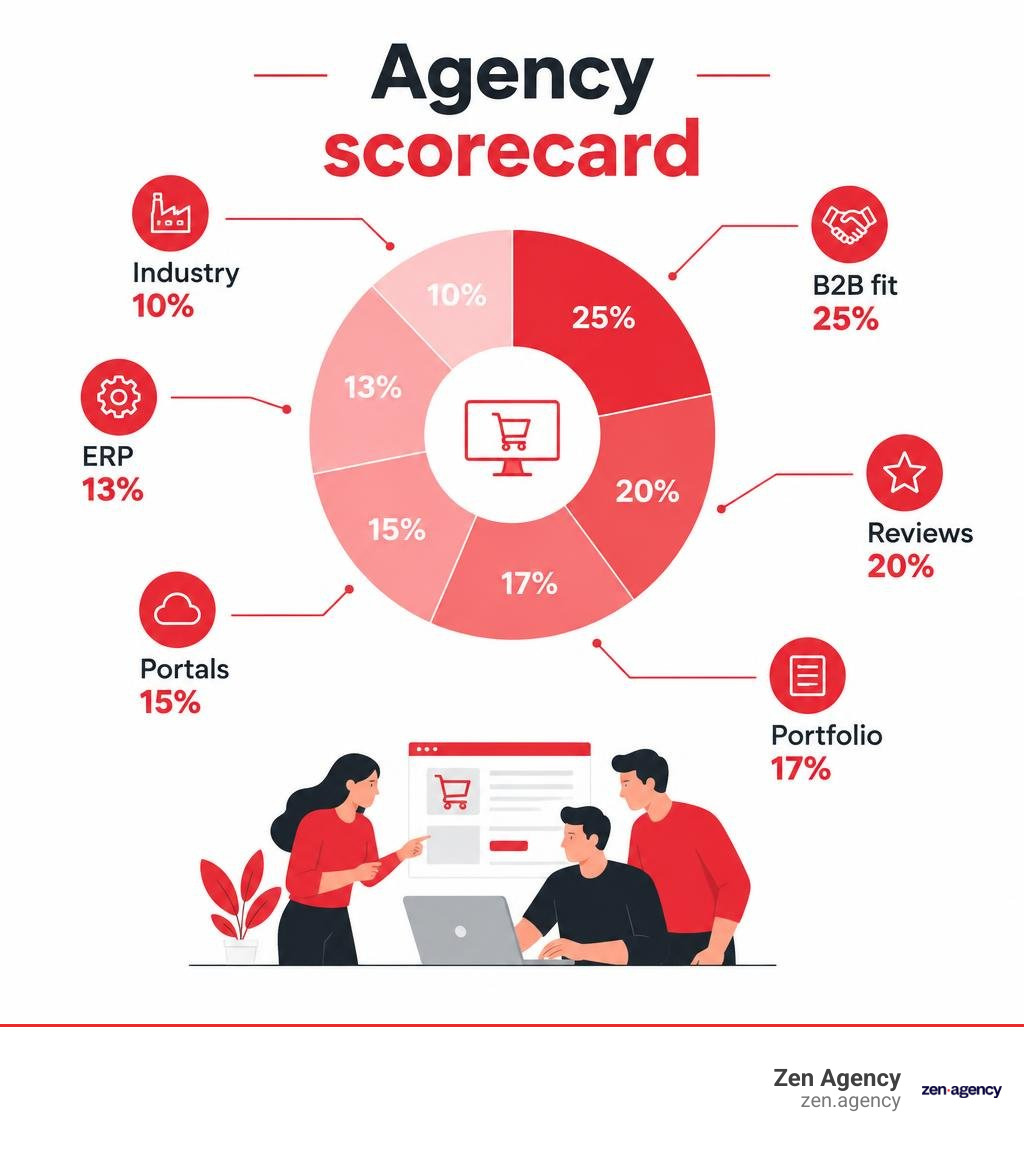
When you begin assessing agency partners, relying on subjective first impressions or aesthetic pitch decks can lead to expensive mistakes. A structured evaluation methodology removes guesswork. In our experience analyzing agency performance across 72 digital commerce companies, we found that six foundational criteria determine long-term project success:
| Evaluation Criterion | Weight | Strategic Focus |
|---|---|---|
| B2B Design Specialization & Certifications | 25% | Platform-specific credentials, custom architecture, compliance |
| Average Online Review Score | 20% | Verified client satisfaction, communication, reliability |
| Project Portfolio & Client Success | 17% | Documented case studies, measurable ROI, store performance |
| Buyer Portal & Self-Service UX | 15% | Customer account tiers, order management, intuitive workflows |
| ERP Integration & Operations | 13% | Real-time inventory sync, automated fulfillment, CRM connectivity |
| Industry Specialization | 10% | Vertical experience in wholesale, manufacturing, or retail |
Understanding the ins and outs of ecommerce website design means recognizing that visual appeal is only the tip of the iceberg. Behind every high-performing storefront sits technical architecture, data integrity, and strict adherence to modern accessibility standards like the Web Content Accessibility Guidelines (WCAG 2.2). Weighting these criteria allows you to evaluate whether a partner can build a site that not only attracts visitors but also streamlines your back-office operations.
Technical Credentials and Platform Specializations
Platform credentials serve as tangible proof of an agency’s technical depth. When an agency maintains verified partner status—whether as a Shopify Plus Partner, Adobe Commerce Certified Expert, or BigCommerce Elite Partner—it demonstrates direct collaboration with platform engineers and ongoing mastery of core updates.
These credentials become critical when your build requires headless architecture, API-first connectivity, and microservices. Instead of shoehorning standard templates into complex business requirements, certified teams build performant, modular stores. Investing in specialized e-commerce design services ensures your technical stack scales smoothly as order volumes increase, without buckling under heavy traffic or third-party plugin bloat.
B2B Systems Integration: Portals, ERP, and Catalog Management
B2B digital commerce brings unique operational demands that standard consumer storefronts rarely encounter. A qualified B2B agency must master bidirectional data synchronization between your eCommerce platform and back-end systems like NetSuite, SAP, Epicor, or Microsoft Dynamics.
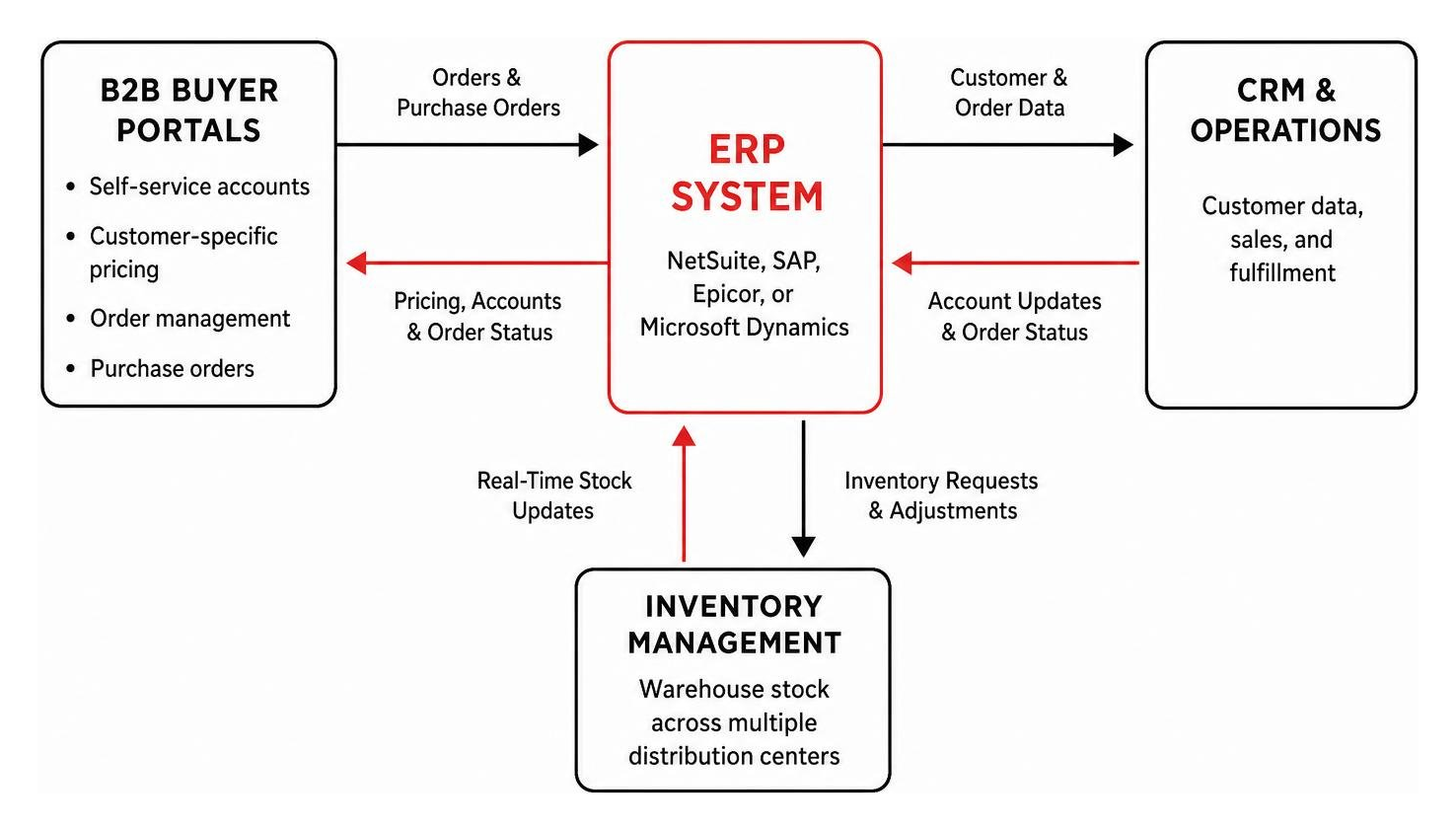
Key integration areas include:
- Real-Time Inventory Synchronization: Displaying accurate warehouse stock levels across multiple distribution centers to prevent overselling.
- Customer-Specific Pricing: Rendering negotiated contract pricing, tiered volume discounts, and custom catalog views instantly upon user login.
- Buyer Portal UX: Providing self-service account management, multi-role purchasing permissions, purchase order generation, and credit limit tracking.
- Bulk Ordering Workflows: Building rapid reorder pads, CSV upload tools, and quote-to-order conversions that respect responsive ecommerce site principles.
When these operational elements work in harmony, your digital platform transforms from a simple digital brochure into a 24/7 revenue-generating engine that cuts order processing overhead.
Category Breakdown: Generalist vs. Specialist eCommerce Website Design Firms
Choosing between a generalist agency and a specialized firm depends entirely on your business model, customer buying habits, and operational complexity. Generalist agencies often bring creative consumer branding and broad marketing capabilities, while specialist firms focus heavily on deep system architecture, custom middleware, and tailored buying journeys.
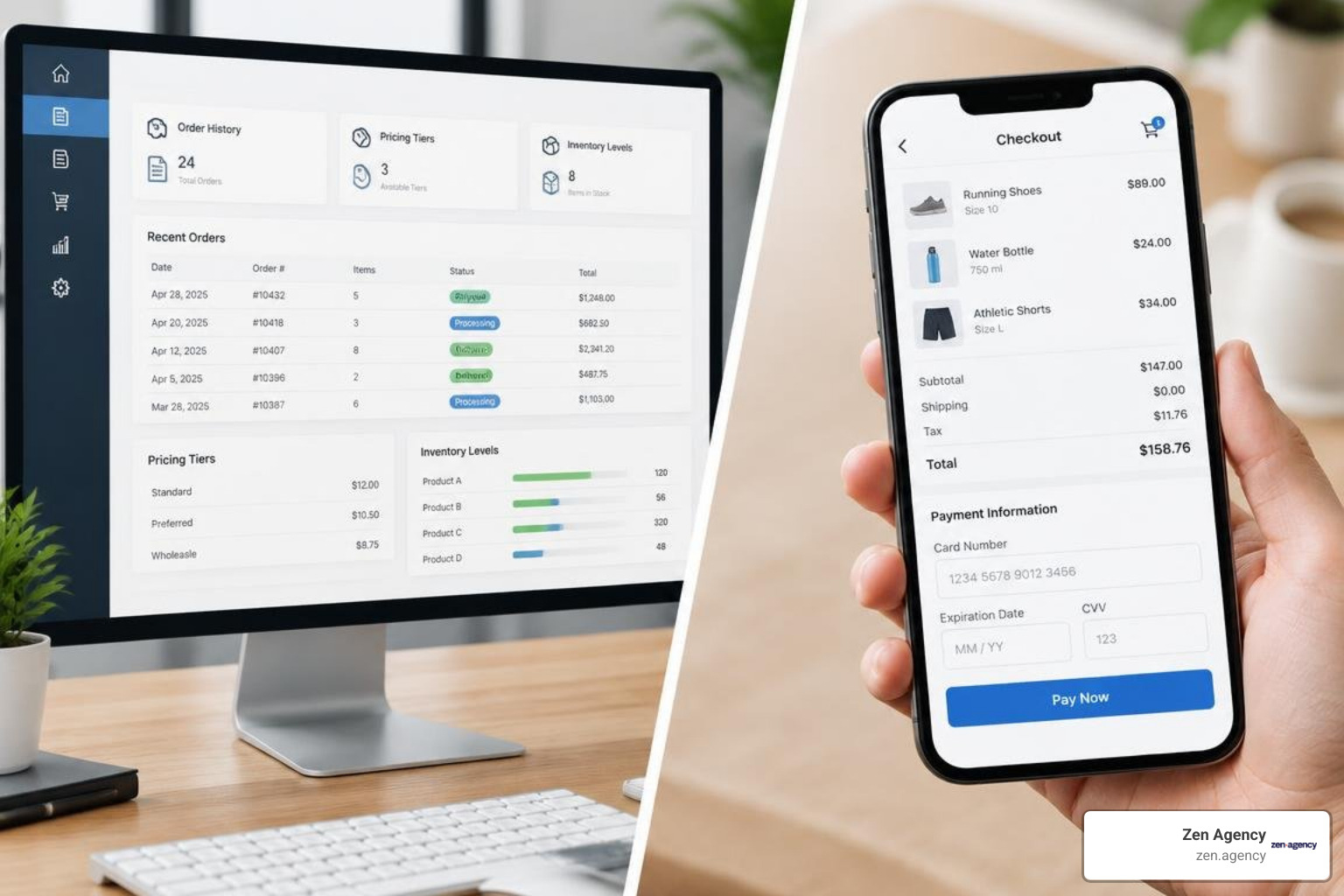
Why B2B Manufacturers Need Specialized eCommerce Website Design Firms
Industrial manufacturers, distributors, and wholesale suppliers operate on relationship-driven commerce. Selling heavy machinery parts or wholesale building materials requires different digital infrastructure than selling apparel or lifestyle goods.
Specialized B2B firms excel at implementing:
- Punchout Catalogs: Connecting directly with enterprise procurement systems via cXML/OCI protocols.
- Complex Attribute Filtering: Helping buyers navigate millions of SKUs with precise faceted search for technical specifications.
- Custom Quote Workflows: Allowing commercial buyers to submit custom requests for quote (RFQ) with dynamic discounting logic.
Using a strategic framework for vetting ecommerce website design experts helps B2B organizations avoid teams that try to solve industrial procurement problems with basic consumer plugins.
When to Choose Consumer and DTC Storefront Specialists
Direct-to-consumer (DTC) brands win on emotion, visual storytelling, frictionless mobile checkout, and rapid social conversion. If your primary goal is maximizing cart value and building customer loyalty for consumer products, a DTC specialist is ideal.
These specialists focus heavily on:
- Omnichannel Merchandising: Seamlessly connecting social shopping, marketplace feeds, and on-site experiences.
- Lifestyle Visual Branding: Crafting engaging product pages that highlight customer reviews, unboxing videos, and interactive sizing guides.
- Retention Marketing Workflows: Tight integration with automated email, SMS, and loyalty programs to drive repeat purchases.
For consumer brands, creating the best website design for selling products means eliminating friction across every step of the checkout funnel.
Integrating Visual Branding with SEO and Marketing Architecture
A visually stunning storefront is useless if your target audience cannot find it. Top-tier design firms build with search engine optimization, user experience, and conversion rate optimization integrated from day one.
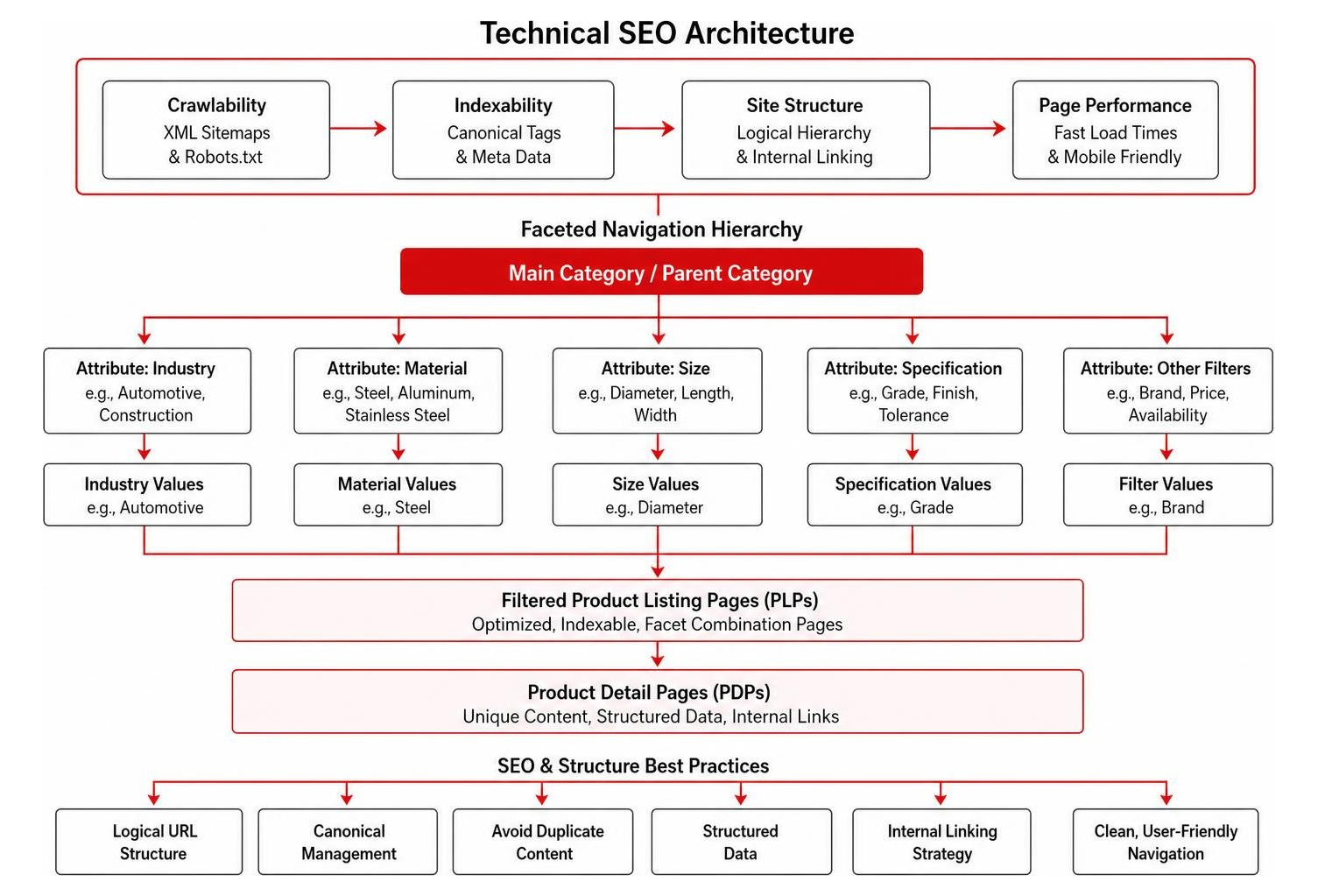
Understanding how poor design impacts marketing campaigns is critical for protecting your advertising return on ad spend (ROAS). If slow load times, broken layouts, or confusing navigation frustrate paid traffic, your ad spend is wasted. Conversely, boosting website conversions with better design turns more organic and paid visitors into paying customers.
Architectural Factors in eCommerce Website Design Firms Selection
When evaluating how an agency handles technical SEO and structure, look for expertise in:
- Crawl Budget Optimization: Ensuring clean category hierarchies so search engines index high-priority commercial pages without getting trapped in infinite URL loops.
- Faceted Navigation Indexing: Designing parameter handling that prevents duplicate content issues while capturing long-tail search intent.
- Core Web Vitals: Delivering fast loading speeds, rapid interaction readiness, and visual stability across mobile and desktop devices, following modern website design best practices.
- Structured Product Data: Implementing rich schema markup (Product, Offer, Review, Organization) to maximize visibility in rich search snippets and shopping carousels.
Step-by-Step Agency Vetting and Selection Framework
Selecting an agency partner requires a methodical procurement process. Following a step-by-step roadmap ensures you find an agency aligned with your technical requirements, culture, and growth goals:
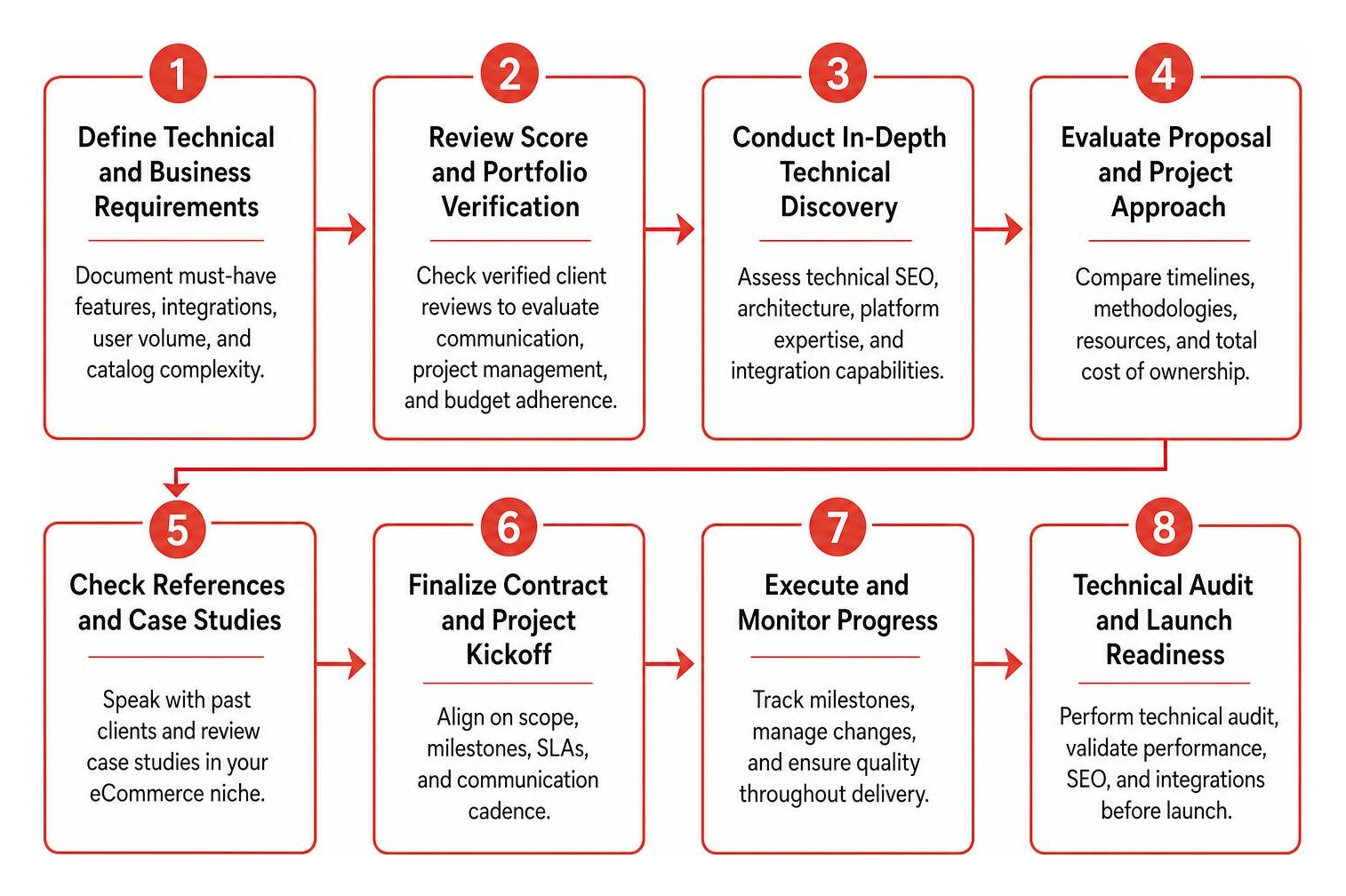
- Phase 1: Define Technical and Business Requirements
Document your must-have features, third-party software connections (ERP, CRM, WMS), user volume expectations, and catalog complexity before talking to vendors. - Phase 2: Review Score and Portfolio Verification
Look past curated portfolio snapshots. Check verified client reviews on independent platforms to evaluate communication, project management, and budget adherence. - Phase 3: Conduct In-Depth Technical Discovery
Ask shortlisted candidates how they plan to solve your specific technical challenges, such as custom data migrations or dynamic pricing rules. - Phase 4: Post-Launch Support and SLA Planning
A website launch is just the beginning. Ensure the agency offers ongoing maintenance, security updates, conversion optimization, and dedicated support.
Our guide on choosing the right website design company covers how to run structured agency interviews that reveal technical strengths and potential risks.
Frequently Asked Questions About eCommerce Web Design
How much weight should platform credentials carry when vetting an agency?
Platform credentials should account for roughly 25% of your overall evaluation. Certified partner status confirms that the agency’s developers follow recommended coding standards, understand platform-native APIs, and have direct access to partner support channels. However, credentials must be backed by documented client success and relevant case studies.
What self-service features are critical for modern B2B buyer portals?
A modern B2B self-service portal should include:
- Tiered, contract-specific pricing and custom catalog views.
- Self-service quote generation and approval workflows.
- Real-time order tracking, shipping notifications, and split-shipment management.
- Digital invoice access, payment processing, and credit term management.
- One-click reordering and bulk SKU CSV uploads.
- Multi-user permission levels (e.g., purchasing manager vs. field technician).
How do custom eCommerce design costs compare to template customization?
While off-the-shelf templates cost less upfront, they often carry hidden long-term expenses in the form of code bloat, plugin conflicts, rigid design constraints, and frequent security updates. Custom eCommerce design requires a larger initial investment, but it delivers cleaner code, faster page speeds, tailored workflows, and a lower total cost of ownership as your business scales. For a detailed breakdown of budget expectations, explore understanding website design cost and budgeting.
Conclusion
Selecting the right partner from available ecommerce website design firms is one of the most critical decisions your business will make. The right firm does more than build attractive pages—they engineer scalable digital ecosystems that automate operations, delight customers, and drive sustainable revenue growth.
Since 2008, Zen Agency has helped businesses overcome complex operational challenges through enterprise-grade development and data-driven marketing strategies. Serving clients across Pennsylvania—including Wilkes-Barre, Scranton, Wyoming PA, Kingston PA, and Hazleton PA—as well as Billings, Montana, and nationwide, our team focuses on measurable ROI.
If you are ready to modernize your online operations and accelerate your growth, explore our custom ecommerce website design services to build a platform designed to scale.