The Ultimate Guide to Improving Your Conversion Rate
The Ultimate Guide to Improving Your Conversion Rate
Why Your Conversion Rate Is the Most Important Number in Your Business
Increasing your conversion rate is the fastest way to grow revenue without spending more on traffic. Before diving into the full guide, here’s a quick-start list of the most impactful ways to do it:
Top ways to increase conversion rate:
- Speed up your site — even a one-second delay can significantly cut conversions
- Simplify your checkout — remove unnecessary steps, fees, and forced sign-ups
- Add social proof — reviews, testimonials, and trust badges build instant credibility
- Optimize your CTAs — use clear, action-oriented language above the fold
- Run A/B tests — test one element at a time to find what actually works
- Personalize the experience — match content to your visitor’s intent and behavior
- Reduce cart abandonment — use transparent pricing, guest checkout, and recovery emails
You’re already paying to get visitors to your site. Every click, every ad, every hour of SEO work — it all costs money. But if those visitors aren’t converting, you’re essentially leaving revenue on the table.
The average website converts just around 2–3% of visitors. That means 97 out of every 100 people leave without taking action. Even a modest improvement — say, going from 2% to 3% — can mean a 50% jump in revenue from the exact same traffic.
That’s the power of conversion rate optimization (CRO). It’s not about working harder to attract more visitors. It’s about making your existing traffic work harder for you.
I’m Joseph Riviello, CEO and Founder of Zen Agency, and with over 22 years of experience helping businesses scale through data-driven digital strategies, I’ve seen how small, targeted CRO improvements can dramatically increase conversion rate and transform a company’s bottom line. In this guide, I’ll walk you through exactly what works — no fluff, just proven tactics.
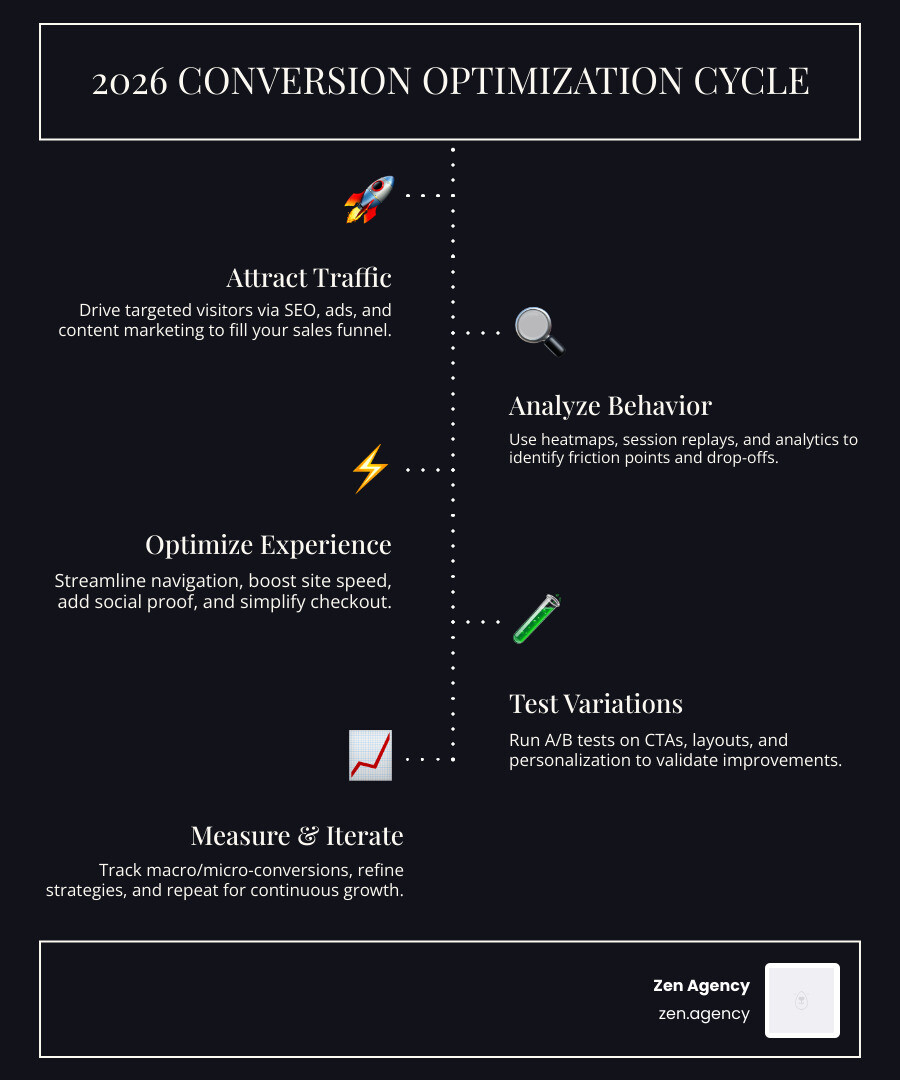
Understanding the Fundamentals to Increase Conversion Rate
Before we can fix a problem, we have to measure it. In the simplest terms, your conversion rate is the percentage of visitors who take a desired action on your website. Whether that’s buying a product, signing up for a newsletter, or requesting a quote, this metric tells you how effective your digital presence truly is.
How to Calculate Conversion Rate
The formula is straightforward: (Total Conversions ÷ Total Visitors) x 100 = Conversion Rate (%)
For example, if your site in Scranton, PA receives 10,000 visitors in April 2026 and generates 200 sales, your conversion rate is 2%. While that might sound low, it’s actually right in line with many global averages.
Macro vs. Micro-Conversions
Not every conversion is a sale. To increase conversion rate effectively, we must track the entire journey:
- Macro-conversions: The big “win,” like a completed purchase or a signed contract.
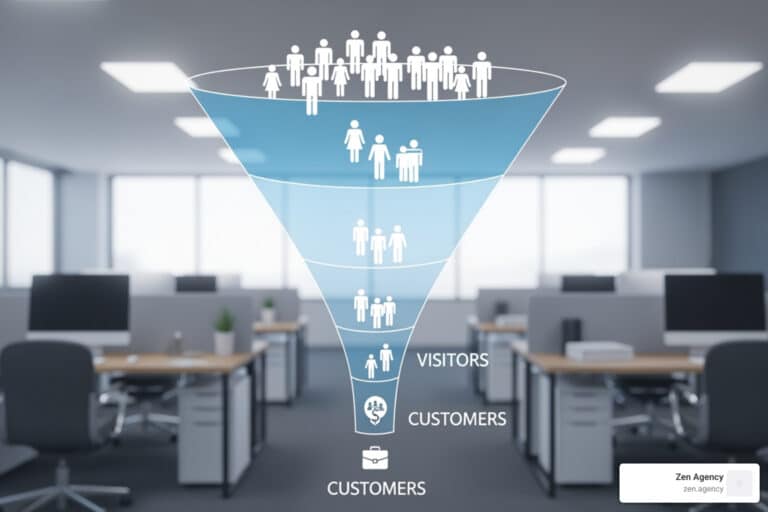
- Micro-conversions: Smaller steps that lead to the big win, such as adding an item to a cart, viewing a pricing page, or watching an explainer video.
By optimizing for micro-conversions, you nurture the user through the funnel, making the final “Yes” much more likely. According to Shopify’s 2025 tactics, understanding these touchpoints is key to long-term growth.
Industry Benchmarks
What is a “good” rate? It depends entirely on what you sell. Here is a look at the landscape in 2026:
| Industry Vertical | Average Conversion Rate |
|---|---|
| Gifts & Occasions | ~4.9% |
| Health & Beauty | ~3.4% |
| Arts & Crafts | ~4.0% |
| Consumer Electronics | <1.5% |
| Overall E-commerce Average | 2.5% – 3.0% |
Technical Performance and Speed Optimization
If your website feels like it’s running through molasses, your visitors will leave before they even see your offer. In 2026, user patience is at an all-time high—meaning it’s non-existent. Over half of mobile users will abandon a site if it takes more than three seconds to load.
The Cost of a Second
Research shows that even a single second of delay can slash conversion rates by 7% to 12%. On mobile, the impact is even more severe. We often tell our clients in Billings, MT and Wilkes-Barre, PA that speed isn’t just a technical metric; it’s a customer service metric.

Core Web Vitals and Mobile Responsiveness
Google prioritizes fast, stable, and responsive sites. With mobile devices accounting for nearly 50% of all web traffic (and over 40% of transactions), having a “mobile-friendly” site isn’t enough—it must be mobile-first. This means large buttons, readable fonts without zooming, and lightning-fast execution.
To stay competitive, consider these steps:
- Image Compression: High-res photos are great, but they kill speed. Use modern formats like WebP.
- CDN Usage: Content Delivery Networks store your site on servers closer to your users, reducing physical distance and lag.
- WordPress Optimization: If you’re on WP, specialized speed optimization services can help you reach sub-two-second load times.
Staying on top of these technicalities is why many businesses look for the best conversion optimization companies in Pennsylvania to handle the heavy lifting.
Streamlining the User Journey and Checkout Experience
Friction is the enemy of the conversion. Friction is anything that makes a user pause, think too hard, or feel frustrated. To increase conversion rate, we need to pave a smooth road from the landing page to the “Thank You” page.
Simplifying Navigation
If a user can’t find what they’re looking for within two clicks, you’ve likely lost them. 69% of shoppers head straight for the search bar, and if that search experience is poor, 80% will leave. Ensure your menus are logical and your internal search provides rich results (images and prices).
The “300 Million Dollar” Button: Guest Checkout
One of the biggest conversion killers is forced registration. 87% of consumers say a complicated checkout leads to abandonment. By allowing “Guest Checkout,” you remove a massive hurdle. You can always ask them to create a password after they’ve given you their money.
Transparent Pricing and Payments
50% of consumers abandon carts due to “hidden” costs like shipping and taxes revealed only at the final step. Be upfront. If you offer free shipping—which 80% of US consumers say motivates them—shout it from the rooftops.
Additionally, providing multiple payment options (Apple Pay, PayPal, Klarna) caters to user preference and builds trust. In areas like Scranton, businesses often utilize conversion tracking services to see exactly where users “drop off” in the checkout flow. Our UX design services focus specifically on removing these roadblocks to ensure a seamless path to purchase.
Psychological Triggers and Content Strategies
Humans are social creatures. We look to others to see if a decision is safe. This is why psychological triggers like social proof and urgency are so effective at helping increase conversion rate.
The Power of Social Proof
90% of buyers are more likely to convert after reading reviews. But don’t just hide them on a “Testimonials” page. Place them at “friction points”—right next to the “Add to Cart” button or on the final payment screen.
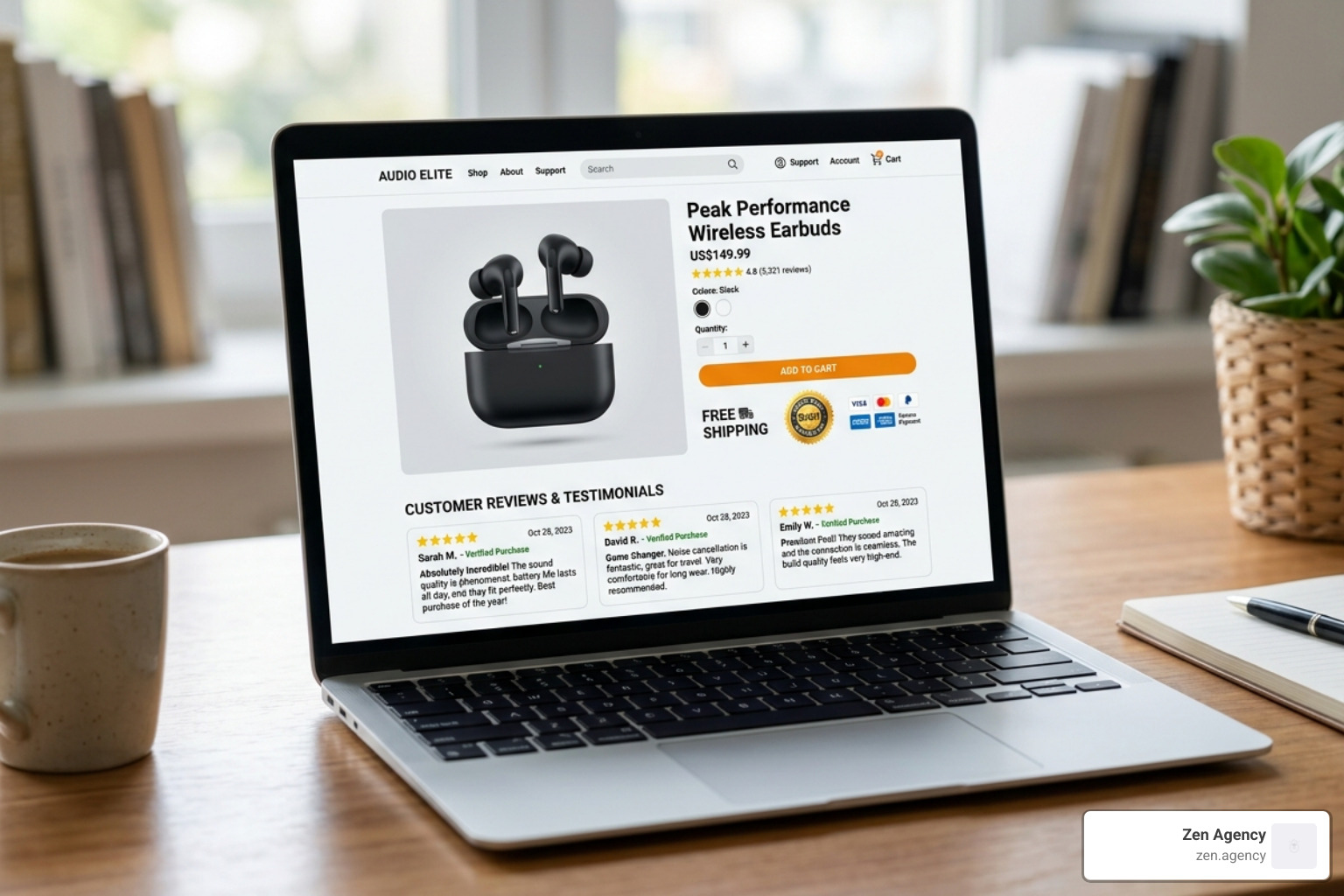
- User-Generated Content (UGC): Photos and videos from real customers can boost conversions by up to 200%. It feels authentic, unlike polished corporate photography.
- Trust Badges: Security seals and “Money Back Guarantee” badges reduce the perceived risk of the transaction. 18% of consumers abandon purchases because they don’t trust a site with their credit card info.
Urgency and Scarcity
“Only 2 left in stock” or “Sale ends in 4 hours” triggers the Fear Of Missing Out (FOMO). However, use this honestly. Fake urgency destroys brand trust. As highlighted by CXL’s 13 ways to increase conversions, clarity always trumps persuasion. Write your copy as if you’re explaining the value to a friend.
If you need high-quality visuals to support your value proposition, our content photography team specializes in creating assets that resonate with your specific audience.
Data-Driven Testing and Continuous Optimization
CRO is not a “one and done” project; it is a cycle of continuous improvement. You shouldn’t guess what your customers want—you should let their behavior tell you.
A/B Testing: The Gold Standard
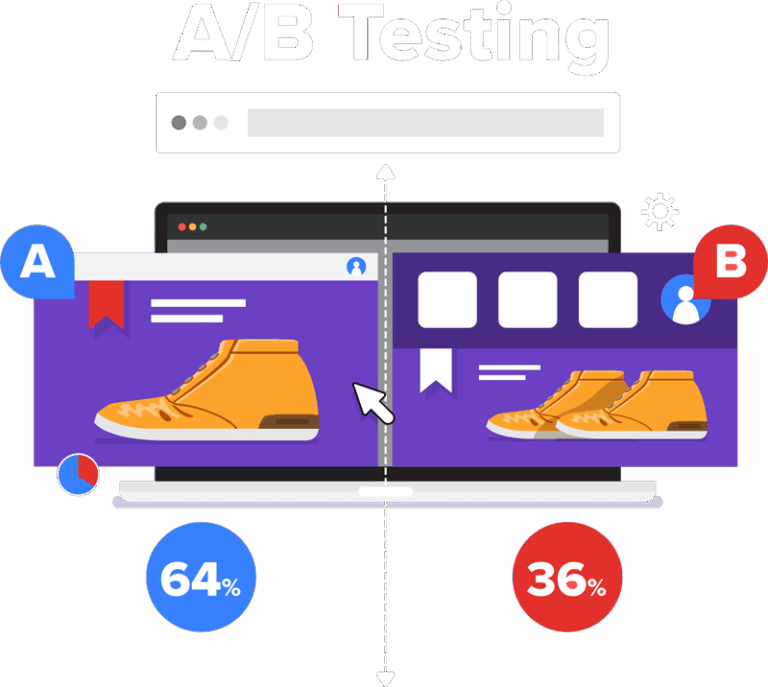
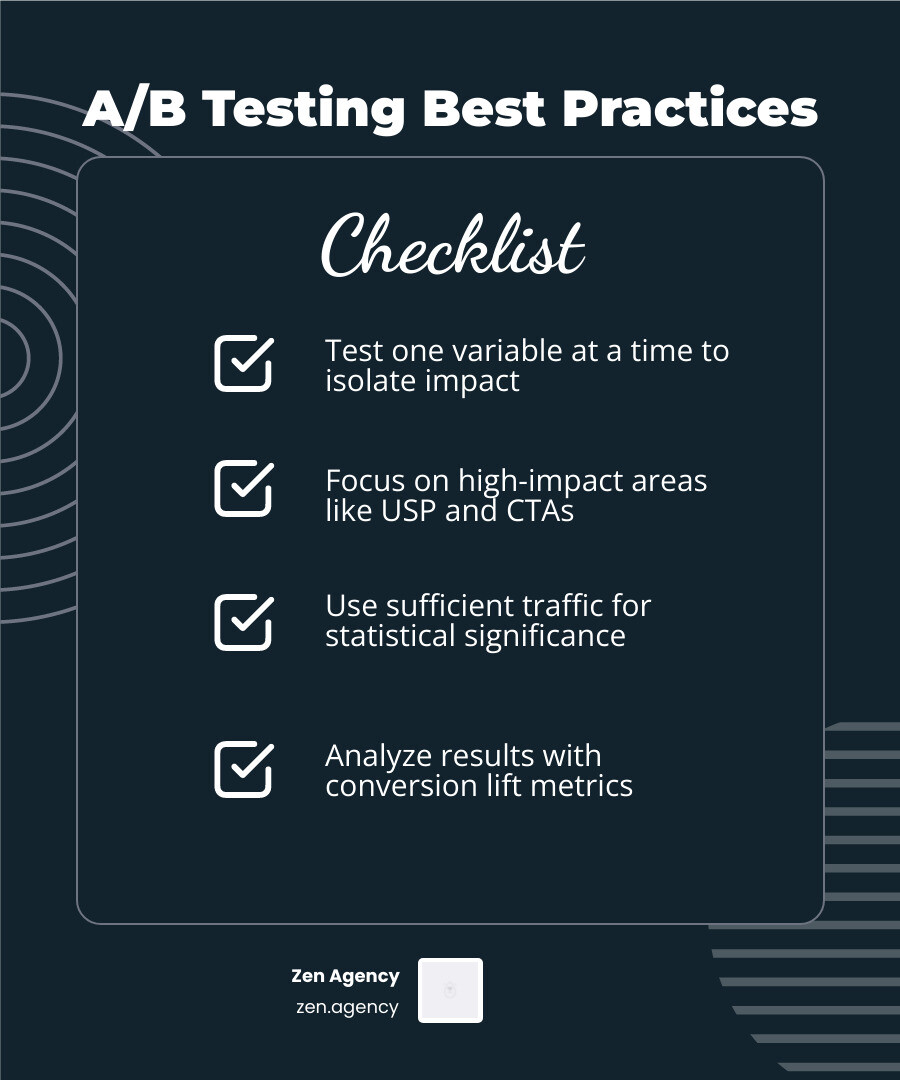
A/B testing involves showing two versions of a page to different segments of your traffic to see which performs better.
- Test one variable at a time: If you change the headline, the CTA color, and the image all at once, you won’t know which one caused the change.
- Focus on high-impact areas: Don’t waste time testing footer links. Test your main USP (Unique Selling Proposition) and your primary CTA buttons.
Heatmaps and Session Replays
Tools like heatmaps show you where people are clicking (and where they aren’t). Session replays allow you to watch a user’s journey. Are they “rage clicking” on an image that isn’t a link? Are they scrolling past your most important information? This qualitative data is gold for identifying friction.
Personalization
Personalized CTAs perform 202% better than generic ones. In 2026, we can use AI to show different content to a first-time visitor versus a returning loyal customer. 51% of brands using personalization report a significant increase in conversion rate.
Our comprehensive CRO services combine these data-driven methods to ensure your marketing spend delivers the highest possible ROI.
Frequently Asked Questions about Conversion Optimization
What is a good benchmark to increase conversion rate?
While the global e-commerce average is between 2.5% and 3%, “good” is relative to your past performance. A 3% rate is fantastic for high-ticket electronics but might be low for a professional services lead-gen site. In the US, the average is roughly 2.3%, while the UK enjoys a higher average of 4.1%. Desktop users generally convert at higher rates (3.64%) compared to mobile users (2.49%), largely due to the ease of completing complex forms on a larger screen.
How do I calculate my current conversion rate accurately?
To get an accurate number, you must define your time period (e.g., the last 30 days) and ensure you are counting unique conversions. If one person signs up for your newsletter three times, that shouldn’t count as three conversions. Use tools like Google Analytics 4 (GA4) to track “Events” and “Conversions” based on unique user sessions.
Which tools are best to increase conversion rate?
For 2026, we recommend a “stack” approach:
- Analytics: Google Analytics 4 for high-level traffic data.
- Behavioral Tracking: Hotjar or Crazy Egg for heatmaps and session replays.
- Testing: VWO or Optimizely for running A/B and multivariate tests.
- Speed: GTMetrix or Google PageSpeed Insights to monitor technical health.
Conclusion
At Zen Agency, we believe that attracting visitors is only half the battle. The real work—and the real profit—lies in what happens after they land on your site. Since 2008, we have helped businesses across Pennsylvania, Montana, and the rest of the USA transition from “struggling-to-scale” to “enterprise-grade” success.
By focusing on speed, streamlining the user journey, leveraging psychological triggers, and committing to a culture of testing, you can significantly increase conversion rate and maximize your ROI. You don’t necessarily need more traffic; you need a better experience for the traffic you already have.
Ready to turn your website into a high-performance sales engine? Request a quote for your project today, and let’s build something that scales.