Step-by-Step Guide to Website Conversion Optimization
Why Website Conversion Optimization Matters for Your Business Growth
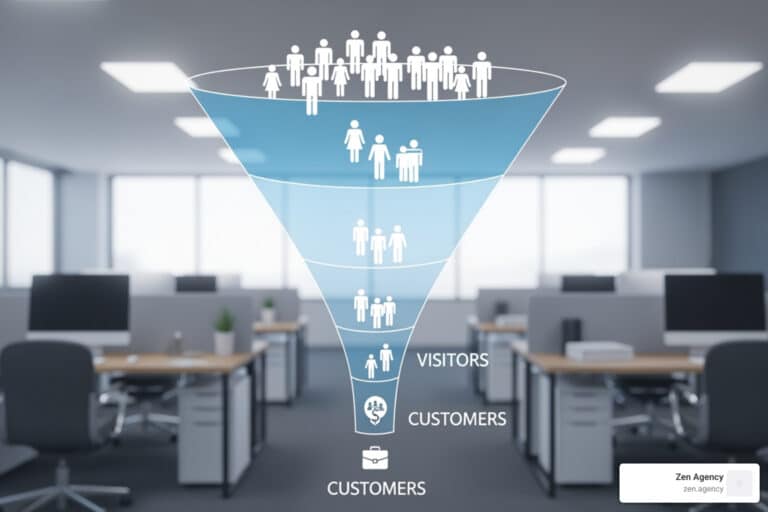
Website conversion optimization is the systematic process of increasing the percentage of website visitors who complete desired actions—whether that’s making a purchase, filling out a form, or subscribing to a newsletter. Rather than spending more money to drive additional traffic, CRO focuses on getting better results from the visitors you already have.
Quick Answer: Core Elements of Website Conversion Optimization
- Conversion Rate Formula: (Conversions ÷ Total Visitors) × 100%
- Average Benchmark: 2-4% across most industries
- Key Focus Areas: Page speed, mobile UX, checkout process, trust signals
- Primary Methods: A/B testing, user research, analytics analysis, iterative improvements
- ROI Impact: Improving from 2% to 5% can triple your leads without increasing traffic
Here’s the reality most business owners face: you’re driving traffic to your site, but that traffic isn’t converting into paying customers or qualified leads at the rate you need. The average eCommerce conversion rate hovers around just 2-4%, meaning 96-98 out of every 100 visitors leave without taking action. Even worse, research shows that over half of mobile users will abandon a site if it takes more than three seconds to load.
The good news? Small, strategic improvements can yield dramatic results. When Walmart improved their page load time by just one second, conversions increased by 2%. Studies consistently show that companies focusing on conversion optimization see better ROI from their existing marketing spend, lower customer acquisition costs, and higher revenue per visitor—all without needing to double their advertising budget.
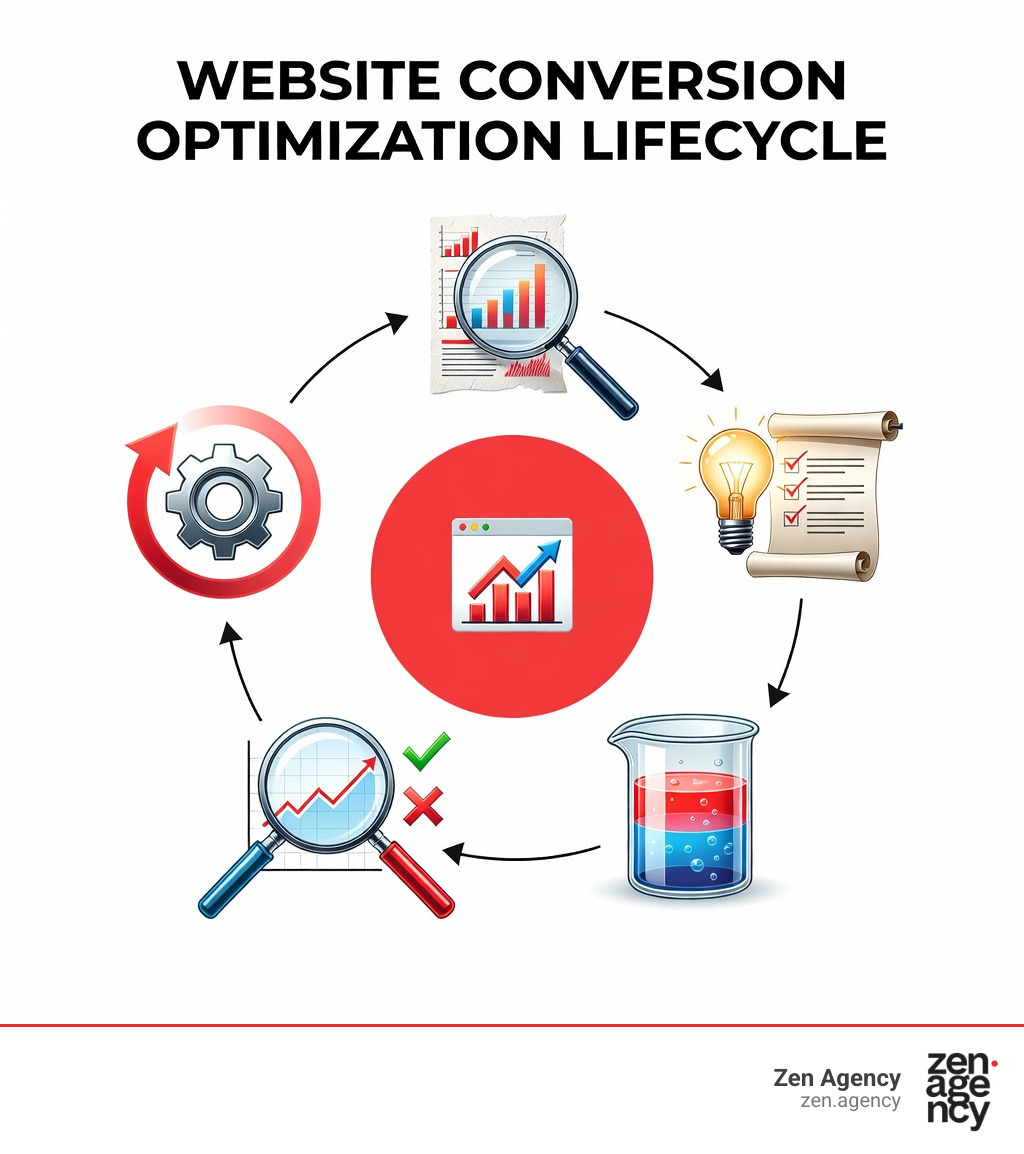
Website conversion optimization isn’t a one-time fix. It’s an ongoing process of understanding what stops users from converting, testing hypotheses about improvements, and implementing changes that remove barriers in the customer journey. This means combining quantitative data from analytics with qualitative insights from user feedback, then validating your assumptions through methodical testing.
The challenge is that only 12% of CRO experiments actually produce winning results, which is why having a structured framework matters. You need to prioritize the right tests, ensure statistical significance, and build a culture of continuous learning rather than chasing quick wins that may not hold up over time.
I’m Joseph Riviello, and over my 22+ years leading digital marketing initiatives, I’ve helped companies transform their website conversion optimization efforts from guesswork into systematic revenue growth. My approach combines technical performance optimization with user-centered design principles to create conversion experiences that feel seamless rather than pushy.
Website conversion optimization terms made easy:
Understanding Website Conversion Optimization and Its Impact
At Zen Agency, we’ve seen how website conversion optimization acts as the ultimate lever for business growth. Imagine you have a store in Scranton or Wilkes Barre. If 1,000 people walk through your doors but only 20 buy something, you have a 2% conversion rate. You could spend a fortune on more advertising to get 2,000 people in the door, or you could figure out why those 980 people left without buying.
The beauty of CRO is that it directly impacts your bottom line by increasing the revenue per visitor. According to industry data, gifts represent the higher end at nearly 5% eCommerce conversion rates, while other sectors like consumer electronics often struggle at under 1.5%. Generally, a strong conversion rate is anywhere from 2 to 5%, but these numbers vary wildly by industry and channel.
By focusing on our conversion rate optimization services, businesses can significantly lower their customer acquisition costs (CAC). When your site is optimized, every dollar you spend on SEO or PPC works harder for you. For B2B companies, this is especially critical; you can convert more leads with B2B CRO by aligning your site’s messaging with the specific pain points of your professional audience.
Key Factors Influencing Your Conversion Rate
It’s easy to get lost in the weeds of design, but several core factors consistently move the needle for website conversion optimization.
- Page Performance: Speed is no longer a luxury; it’s a requirement.
- Mobile Responsiveness: With mobile traffic hovering around 49.78% of web visits, a site that doesn’t work on a phone is a site that doesn’t sell.
- User Experience (UX): If your site is a maze, customers will leave. We emphasize UX for eCommerce stores to ensure the path from landing to checkout is friction-free.
- Trust Signals: 18% of consumers have abandoned a purchase because they did not trust the site with their credit card info.
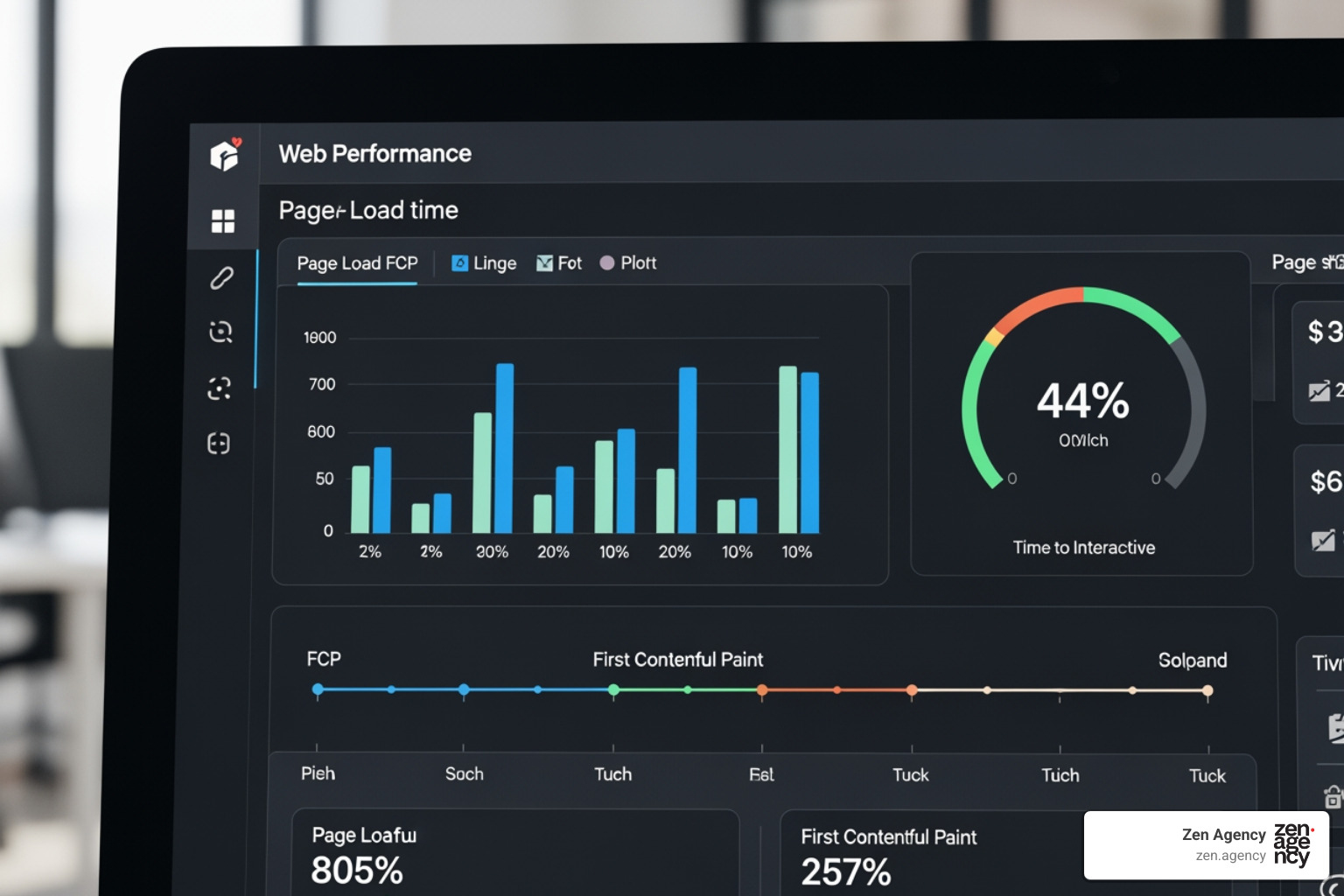
Performance is the foundation. According to Google, over half of mobile users will leave a site if it takes more than three seconds to load. This isn’t just about impatience; it’s about perceived professional quality. We help businesses achieve boosting your website conversions with better design by balancing aesthetics with the technical requirements of a fast-loading site.
The Role of Performance in Website Conversion Optimization
We often tell our clients in Billings and across Pennsylvania that a beautiful site that loads slowly is just an expensive digital paperweight. 47% of customers expect a webpage to load in 2 seconds or less. If you miss that window, your bounce rate skyrockets.
To master performance, we focus on:
- Core Web Vitals: These are Google’s metrics for measuring a user’s actual experience of a page’s loading speed, interactivity, and visual stability.
- Image Compression: High-quality product photos are essential, but they must be optimized so they don’t weigh down the page.
- CDN Usage: Content Delivery Networks help serve your site’s data from a server closest to the user, which is vital for maintaining speed across different regions.
Technical SEO and CRO go hand-in-hand. A fast site ranks better and converts better. It’s a win-win that ensures your marketing budget isn’t being “burned” by a slow server or unoptimized code.
Proven Strategies for eCommerce and Lead Generation
When it comes to eCommerce, the checkout process is where most sales are won or lost. Did you know that extra costs at checkout are the #1 reason for cart abandonment? Specifically, 50% of consumers who abandoned items did so because of unexpected costs like shipping and taxes.
| Strategy | Impact on Conversion | Why It Works |
|---|---|---|
| Guest Checkout | High | Reduces friction; 87% abandon for “complicated” processes. |
| Free Shipping | Very High | Customers will spend more per order with free shipping. |
| Trust Seals | Medium | Alleviates security concerns for 18% of shoppers. |
| Account Creation | Low (Initial) | Good for retention, but a major barrier for first-time buyers. |
Following CRO best practices means removing every possible “speed bump” from the buyer’s journey. This includes using minimalist design for more conversions to keep the user focused on the product rather than distracting sidebar ads or cluttered navigation.
Optimizing Product Pages for Website Conversion Optimization
The product page is your digital salesperson. If it’s lacking information or looks unprofessional, the sale is dead.
- High-Quality Images: 56% of users immediately explore product images upon landing.
- Social Proof: 70% of online shoppers read between one and six customer reviews before making a purchase.
- Clear Descriptions: Avoid jargon. Explain the benefits, not just the features.
For those using specific platforms, we offer specialized advice, such as the definitive guide to elevating conversions in WooCommerce. Strategies like scarcity tactics (“Only 2 left in stock!”) and strategic CTA placement can nudge a hesitant browser into becoming a buyer.
A Step-by-Step Framework for Continuous CRO
Website conversion optimization isn’t about “setting it and forgetting it.” It’s a cycle.
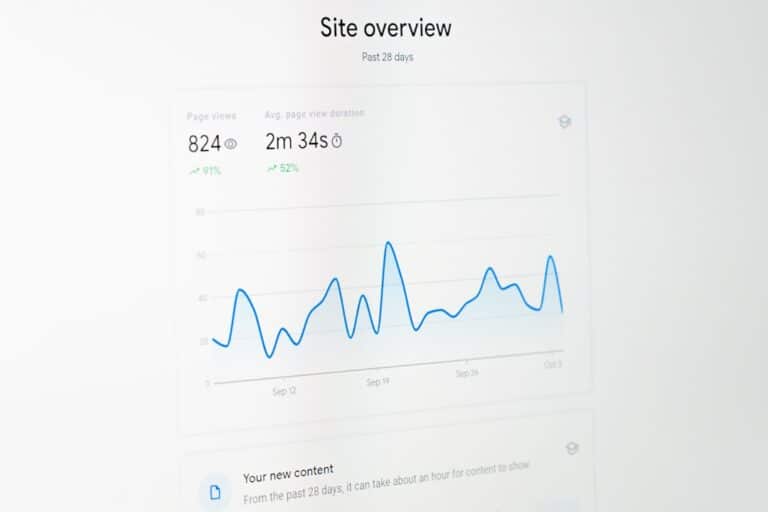
- Data Collection: Use GA4 to see where people are dropping off. Use heatmaps to see where they are clicking (and where they aren’t).
- Hypothesis Building: Instead of saying “I think the button should be red,” say “Based on heatmap data, users are missing the CTA; changing it to a high-contrast color will increase clicks by 10%.”
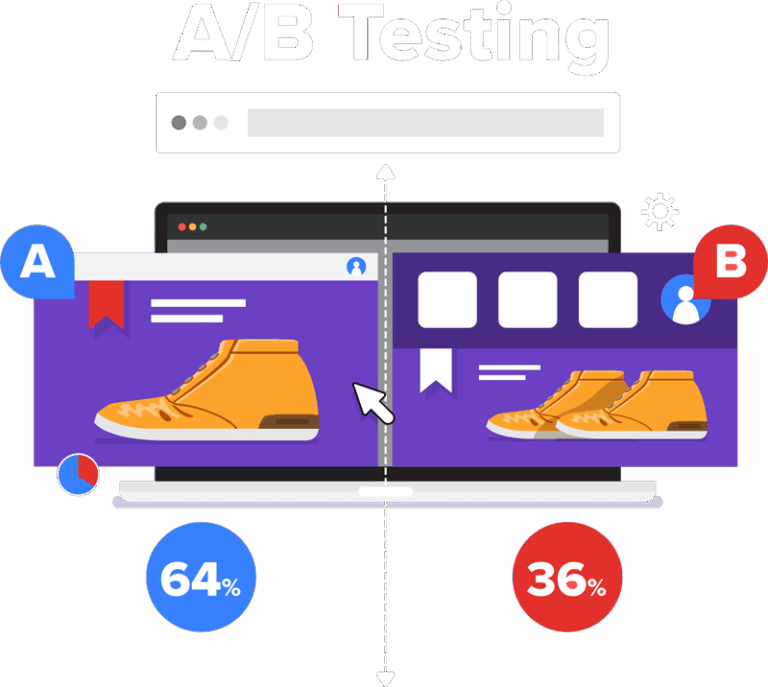
- A/B Testing: This is the heart of the process. You show Version A to half your visitors and Version B to the other half. We cannot overstate the importance of A/B testing for lead generation.
- Statistical Significance: Don’t call a winner too early. You need enough data to be sure the result wasn’t just a fluke.
- Iterative Learning: Even a “failed” test is a win because it tells you what your audience doesn’t like. only 12% of experiments run actually produce a winning result, so persistence is key.
When starting out, we suggest you pick five web design elements that you should split test first: your headline, your primary CTA button, your hero image, the number of form fields, and your social proof placement.
Frequently Asked Questions about Conversion Optimization
How do you calculate a website’s conversion rate?
The math is simple, but the context is what matters. According to Google, the conversion rate is the percentage of total users who take a desired action.
The Formula:
(Number of Conversions ÷ Total Number of Visitors) x 100 = Conversion Rate %
For example, if your Scranton-based service site gets 500 visitors a month and 25 of them fill out a contact form, your conversion rate is 5%. If you are selling a single-purchase item, you might want to use “Unique Visitors” instead of total sessions to get a more accurate picture of your success.
What is a good conversion rate for my industry?
“Good” is relative. In the last quarter of 2022, industry verticals showed a wide range of performance. While the average hovers around 2-3%, high-performing sectors like health and beauty often see higher rates than luxury furniture.
There are also massive regional differences. For instance, the UK had high rates of e-commerce conversion, hovering around 4.1%, whereas Italy sat at just 0.99%. This tells us that cultural buying habits and local trust in online systems play a huge role in your baseline numbers.
How can I reduce cart abandonment during checkout?
Friction is the enemy of the sale. 87% of consumers say that a ‘complicated’ checkout process will make them abandon their cart.
To fix this:
- Enable Guest Checkout: Don’t force people to create an account before they’ve even bought from you.
- Use Trust Seals: Certification labels (like Norton or SSL seals) can increase user trust, as 18% of consumers abandon purchases when they don’t feel their data is safe.
- Offer Multiple Payment Options: From credit cards to digital wallets and installment plans like Klarna, giving people their preferred way to pay is a proven way to increase website conversion optimization.
Conclusion
At Zen Agency, we specialize in providing enterprise-grade solutions for businesses that are ready to scale. Whether you are located in Wilkes Barre, Billings, or anywhere across the USA, our goal is to help you stop leaving money on the table. By implementing a systematic approach to website conversion optimization, we help our clients move past the “guessing game” and into a world of data-driven growth and improved ROI.
The path to a higher conversion rate isn’t found in a single “magic” button color or a trendy font. It’s found in the relentless pursuit of a better user experience, faster performance, and clearer communication.
Ready to transform your traffic into revenue? Start your website conversion optimization journey with us today.