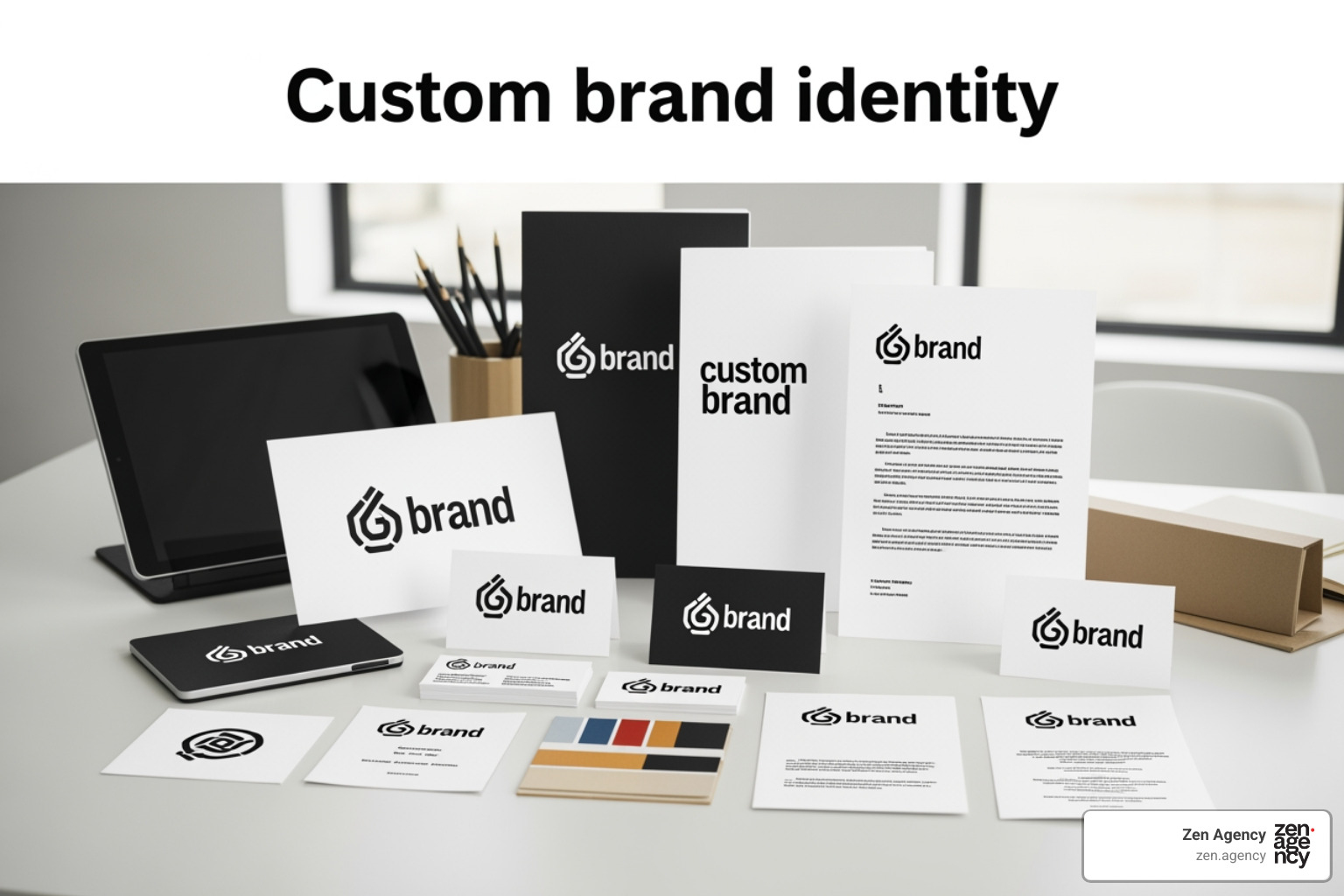
Your Brand, Your Rules: A Guide to Custom Identity Design
Why Your Business Needs a Custom Brand Identity
Custom brand identity is the collection of visual and symbolic elements that represent your business—including your logo, color palette, typography, and design elements—custom specifically to communicate your unique values and differentiate you from competitors. Here’s what you need to know:
Key Elements of Custom Brand Identity:
- Strategic Foundation – Mission, values, and brand personality that define who you are
- Visual System – Custom logo, colors, typography, and imagery designed exclusively for your business
- Brand Guidelines – Rules ensuring consistent application across all touchpoints
- Legal Protection – Proprietary ownership of trademarked assets
- Differentiation – Unique positioning that sets you apart from template-based solutions
Think of your brand identity like a person’s individual identity—it’s made up of your history, influences, values, beliefs, and personality. Everything your business embodies and stands for. The difference? Custom brand identity is intentionally designed to create the exact impression you want in your customers’ minds.
The stakes are high. 86% of small business owners report that visual branding is important to their overall business success, with 78% saying it significantly contributes to their revenue growth. Yet many businesses struggle with generic templates, inconsistent messaging, or outdated identities that fail to capture attention in saturated markets.
Custom branding isn’t just about looking professional—it’s about creating a proprietary asset that becomes increasingly valuable over time. When done right, 52% of consumers are willing to pay more for products that communicate their company’s brand values, with 82% willing to spend up to 30% more. That’s real money left on the table when your brand identity fails to connect.
I’m Joseph Riviello, and over my 22+ years leading digital marketing strategies, I’ve seen how custom brand identity serves as the foundation for companies struggling to scale and achieve strong market presence. At Zen Agency, we’ve helped countless businesses transform generic branding into distinctive, revenue-generating assets that drive real competitive advantage.
Glossary for Custom brand identity:
Defining Brand Identity: More Than Just a Logo
At its heart, brand identity is the deliberate collection of visual and symbolic elements that represent a brand, as defined by the American Marketing Association. This includes everything from your business’s name, logo, color scheme, and typography to its overall design elements. These are the tangible cues that help customers recognize, understand, and connect with your business.
Why is this so important? Because your brand identity communicates not just what your business offers, but why it exists in the first place. It’s the unique “special sauce” that sets you apart. As entrepreneur and best-selling author Seth Godin wisely puts it, “A brand is the set of expectations, memories, stories, and relationships that, taken together, account for a consumer’s decision to choose one product or service over another.” A strong custom brand identity creates those expectations and memories, fostering an emotional connection that transcends mere transactions.
Differentiating Custom Brand Identity from Image and Equity
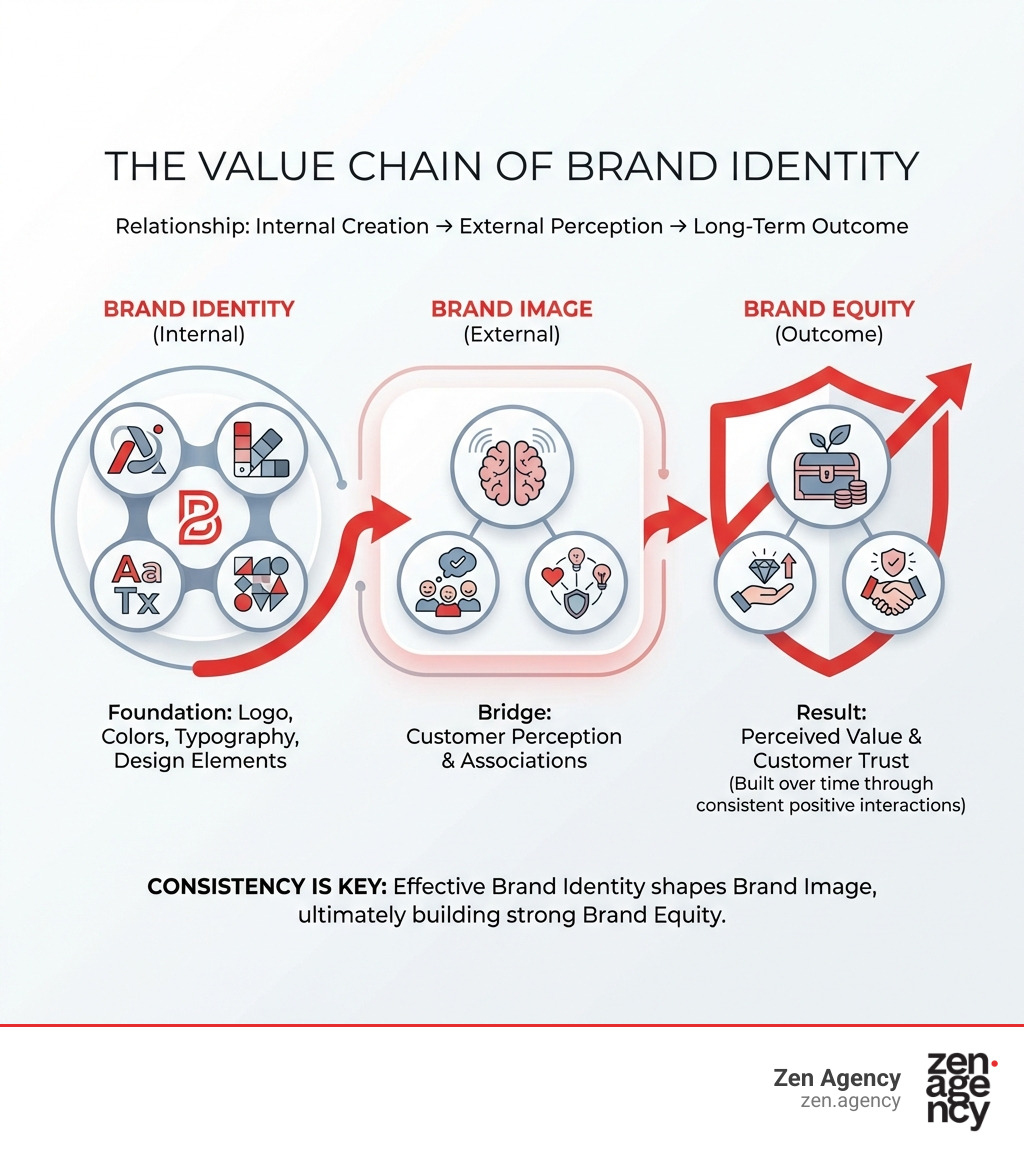
While often used interchangeably, brand identity, brand image, and brand equity are distinct concepts, each playing a crucial role in your business’s success.
- Brand Identity: This is what you create and how you want to be perceived. It’s the internal perspective—the strategic decisions we make about our logo, colors, messaging, and overall presentation. It’s fully within our control and is built deliberately to convey our mission, values, and personality.
- Brand Image: This is how your audience actually perceives you. It’s the external perspective, shaped by every interaction a customer has with your brand, their personal experiences, and what others say about you. It’s not directly controllable but is heavily influenced by your carefully crafted brand identity. A cohesive identity helps guide and shape a positive brand image.
- Brand Equity: This is the perceived value of your brand in the marketplace. It’s a result of both your brand identity and brand image. Positive brand equity means customers trust your brand, recognize its quality, and are willing to pay a premium for your products or services. Conversely, negative experiences can lead to negative brand equity. Building proprietary assets through a custom brand identity, like a unique logo or memorable tagline, contributes directly to this long-term value. An Akeneo study on consumer behavior showed that 52% of respondents were willing to pay more for products that communicate their company’s brand values, with 82% willing to spend up to 30% more. This directly reflects the power of strong brand equity rooted in a clear identity.
The Core Components of a Custom Brand Identity
Building a robust custom brand identity is like constructing a beautiful, functional building. Each component serves a purpose, working together to create a cohesive and impactful whole.
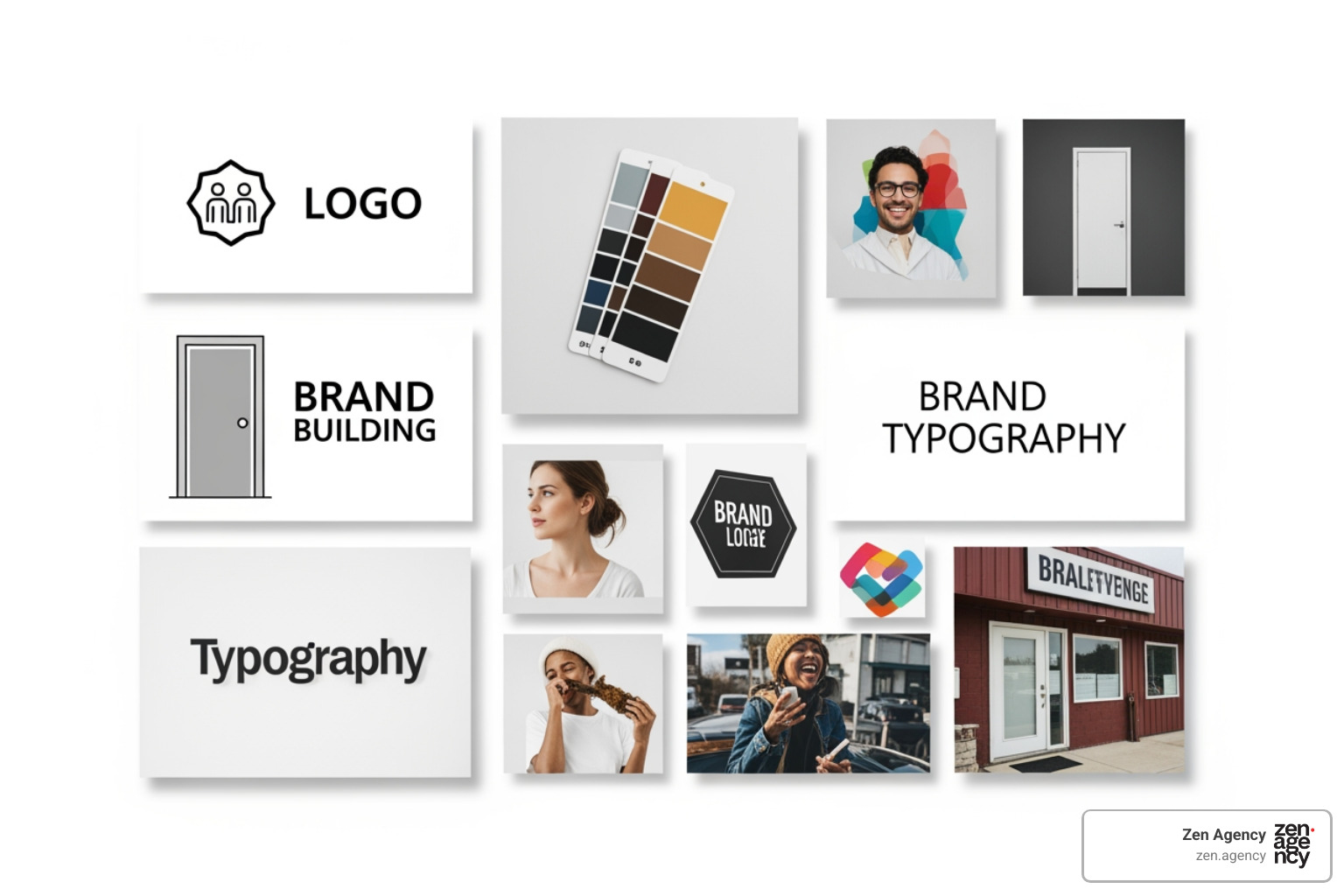
The foundational elements we focus on include:
- Logo Design: Your logo is often the first visual representation of your brand. It should be simple, memorable, versatile, and unique. A great logo isn’t just a pretty picture; it’s a symbol that encapsulates your brand’s essence. We believe a logo should clearly communicate who you are and what you value, making a lasting impression.
- Typography: The fonts you choose speak volumes. Typography sets the tone, conveying personality and professionalism. Serif fonts might suggest tradition and trustworthiness, while sans-serif fonts often lean towards modern and sleek. Script fonts can evoke luxury or a personal touch, and display fonts make bold statements. The right type choices create a visual hierarchy and ensure readability across all your communications.
- Color Palette: Colors have a profound psychological impact. Red can evoke passion, blue trust, green nature or growth, and purple luxury. Your brand’s color palette isn’t just about aesthetics; it’s a strategic choice to influence customer perception and emotional response. Consistent use of a thoughtful palette builds recognition and reinforces your brand’s message.
- Brand Imagery (Illustration, Photography, Shapes, Patterns): This encompasses all visual elements beyond your logo, typography, and colors.
- Illustration: Custom illustrations can tell your brand story in a unique, engaging way, especially useful for social media or infographics. They offer flexibility and can convey a specific mood or personality without needing professional models or elaborate sets.
- Photography: The style of your photography—whether professional product shots, lifestyle images, or authentic team photos—communicates quality, authenticity, and your brand’s values. Consistency in photographic style is key.
- Shapes, Patterns, and Lines: These subtle graphical elements reinforce your brand’s personality. Round shapes can convey community and unity, while straight-edged shapes suggest strength and efficiency. Patterns drawn from your logo or brand elements add visual interest and consistency across various touchpoints, from packaging to website backgrounds.
Psychology of Color, Shape, and Typography in Custom Brand Identity
Understanding the psychology behind these elements allows us to craft a custom brand identity that resonates deeply with your target audience.
- Color Associations: We strategically select colors based on their universal and cultural associations. For example, blue is often chosen for brands that want to convey stability and trustworthiness, while orange can suggest friendliness and playfulness. Purple is frequently used for luxury products, and green for brands tied to nature or sustainability.
- Geometric Shapes: The shapes we incorporate also carry meaning. Circles, for instance, often represent community, unity, and completeness. Squares and rectangles convey strength, stability, and professionalism. Triangles can imply direction, power, or dynamism. These choices, even in subtle patterns or graphic elements, contribute to the overall feeling your brand evokes.
- Font Personality: Just like people, fonts have personalities! A classic serif font might project authority, while a whimsical script font could suggest creativity and approachability. A sleek sans-serif can feel modern and minimalist. We consider not just individual fonts but how they interact within a visual hierarchy—which fonts are used for headlines, subheadings, and body text—to ensure clarity and reinforce your brand’s voice.
- Visual Hierarchy and Sensory Experience: All these elements work together to create a visual hierarchy, guiding the viewer’s eye and emphasizing key information. This cohesive visual language contributes to a holistic sensory experience that helps customers form lasting impressions. Aligning with industry standards, or thoughtfully deviating from them, is part of the strategic design.
Custom Branding vs. Templates: Why Custom Solutions Win
In today’s digital landscape, it’s tempting to opt for off-the-shelf solutions for your branding needs. Platforms offer “free logos in minutes” or pre-made templates for websites and marketing materials. While these might seem like quick fixes, they often come with significant hidden costs and limitations that a custom brand identity avoids.
Here’s a look at why custom solutions consistently outperform templates:
| Feature | Template-Based Solutions | Custom Branding Solutions |
| Brand Identity | The visual and symbolic elements that represent a brand, including its name, logo, color, typography, and specific design elements. It’s what the company wants to be perceived as. | Custom Branding Solutions |
|---|---|---|
| Unique identity |