Your Guide to Digital Visibility Solutions: From Solopreneur to Enterprise
Why Digital Visibility Solutions Matter More Than Ever
Digital visibility solutions are the strategies, tools, and technologies that help your business be finded by customers across search engines, AI platforms, social media, and other digital channels. Here’s what you need to know:
Quick Answer: What Are Digital Visibility Solutions?
- Traditional SEO: Optimizing content to rank in Google search results
- AI Optimization (AIO): Structuring content so AI platforms like ChatGPT can find and cite you
- Answer Engine Optimization (AEO): Getting featured in AI Overviews and featured snippets
- Generative Engine Optimization (GEO): Becoming a trusted source for AI-generated answers
- Conversion Rate Optimization (CRO): Turning visitors into customers once they find you
- AI Visibility Tools: Platforms that track how often AI systems mention or recommend your brand
The rules of being found online have fundamentally changed. With 68% of online experiences starting with a search engine and over 95% of consumers researching businesses online before making decisions, visibility matters more than ever. But here’s the challenge: more than half of all Google searches now end without a click because the answer appears directly on the results page. Add to that the fact that over 400 million people use AI chatbots weekly, and you’re facing a landscape where traditional SEO alone won’t cut it.
Even more striking: Gartner predicts that by 2026, 25% of organic search traffic will shift to AI chatbots and virtual assistants. If your business isn’t optimizing for these platforms, you’re already losing ground to competitors who are.
I’m Joseph Riviello, CEO and Founder of Zen Agency™, and over 22 years in digital marketing, I’ve helped companies steer every major shift in how customers find businesses online. Today’s challenge around digital visibility solutions requires a multi-faceted approach that goes far beyond traditional tactics—and that’s exactly what this guide will show you.
The Evolving Landscape: Why Digital Visibility is More Complex Than Ever
The digital world is a busy metropolis, constantly changing its skyline. What worked yesterday might not even register today. For businesses in areas like Wilkes Barre, Scranton, or Billings, Montana, keeping up with this rapid evolution isn’t just about staying competitive—it’s about staying relevant.
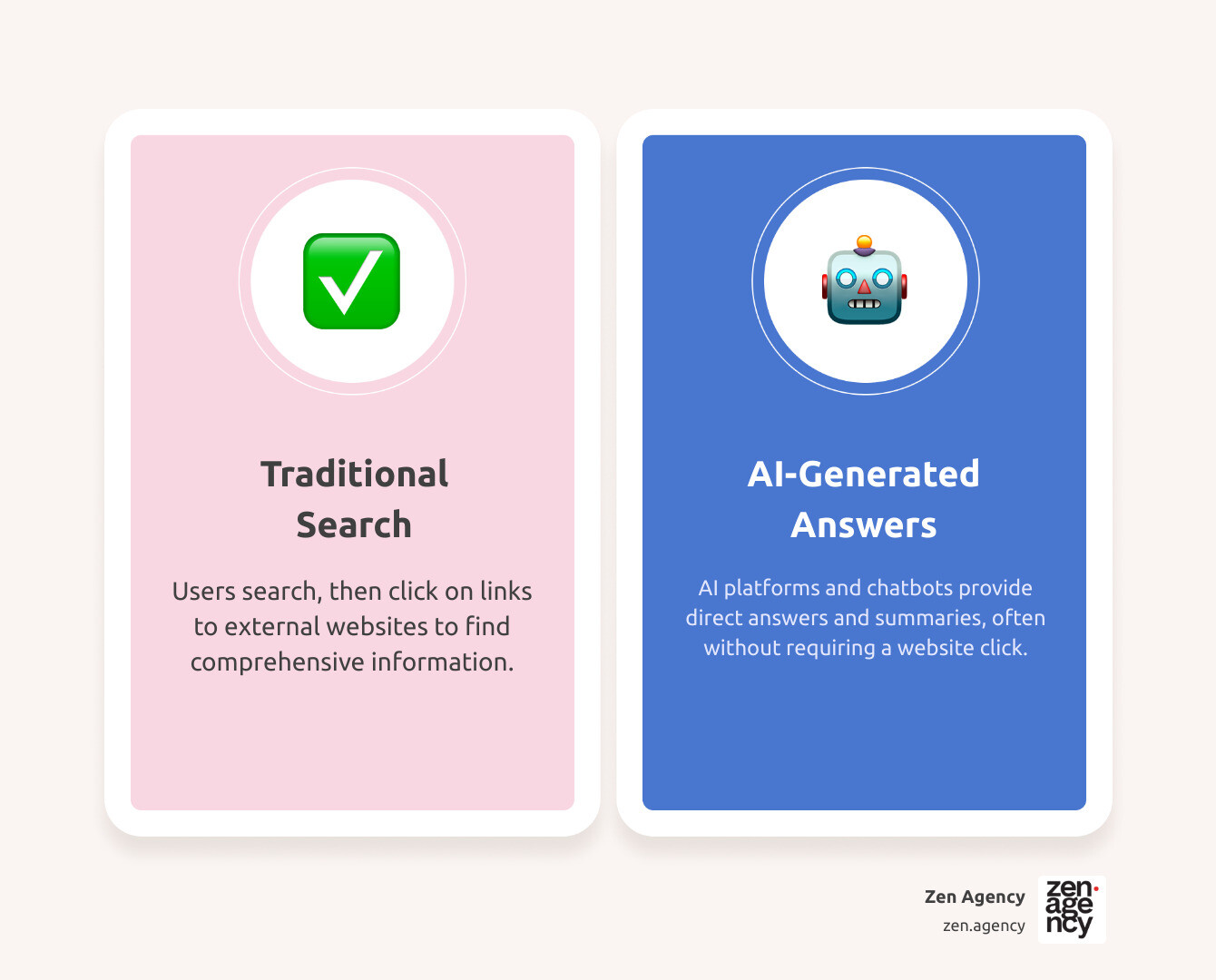
We’re seeing a fundamental shift from a “click-driven” internet to an “answer-driven” one. This means that users are increasingly getting immediate answers directly within search results or from AI chatbots, often without ever visiting a website. Consider these eye-opening facts:
- Over 15% of daily searches are new queries, many of them conversational questions looking for immediate answers.
- More than half of all Google searches now end without a click because the answer was provided directly on the results page. This “zero-click search” phenomenon is a game-changer.
- The rise of AI chatbots means that over 400 million people are using them weekly, fundamentally altering how information is sought and consumed.
- Furthermore, 89% of buyers use GenAI for vendor research, as highlighted by Forrester’s B2B buyer adoption of generative AI research. This means that if your structural visibility is weak, you’re being eliminated before evaluation even begins.
Adding to this complexity is the ongoing deprecation of third-party cookies, forcing businesses to rethink their data collection and personalization strategies. The landscape is indeed more intricate than ever, demanding sophisticated digital visibility solutions.
Primary Challenges for Modern Businesses
For businesses, whether a solopreneur in Hazleton, PA, or an enterprise in Wyoming, PA, these shifts present several daunting challenges:
- Information Overload: The sheer volume of content online makes it difficult to cut through the noise and capture attention.
- Decreased Organic Click-Through Rates: With more answers appearing directly in search results (like AI Overviews or featured snippets), traditional organic listings might see fewer clicks, even if they rank highly.
- Shifting Search Algorithms: Google’s algorithms are constantly evolving, incorporating AI advancements like BERT and MUM, making it harder to predict and adapt to ranking factors.
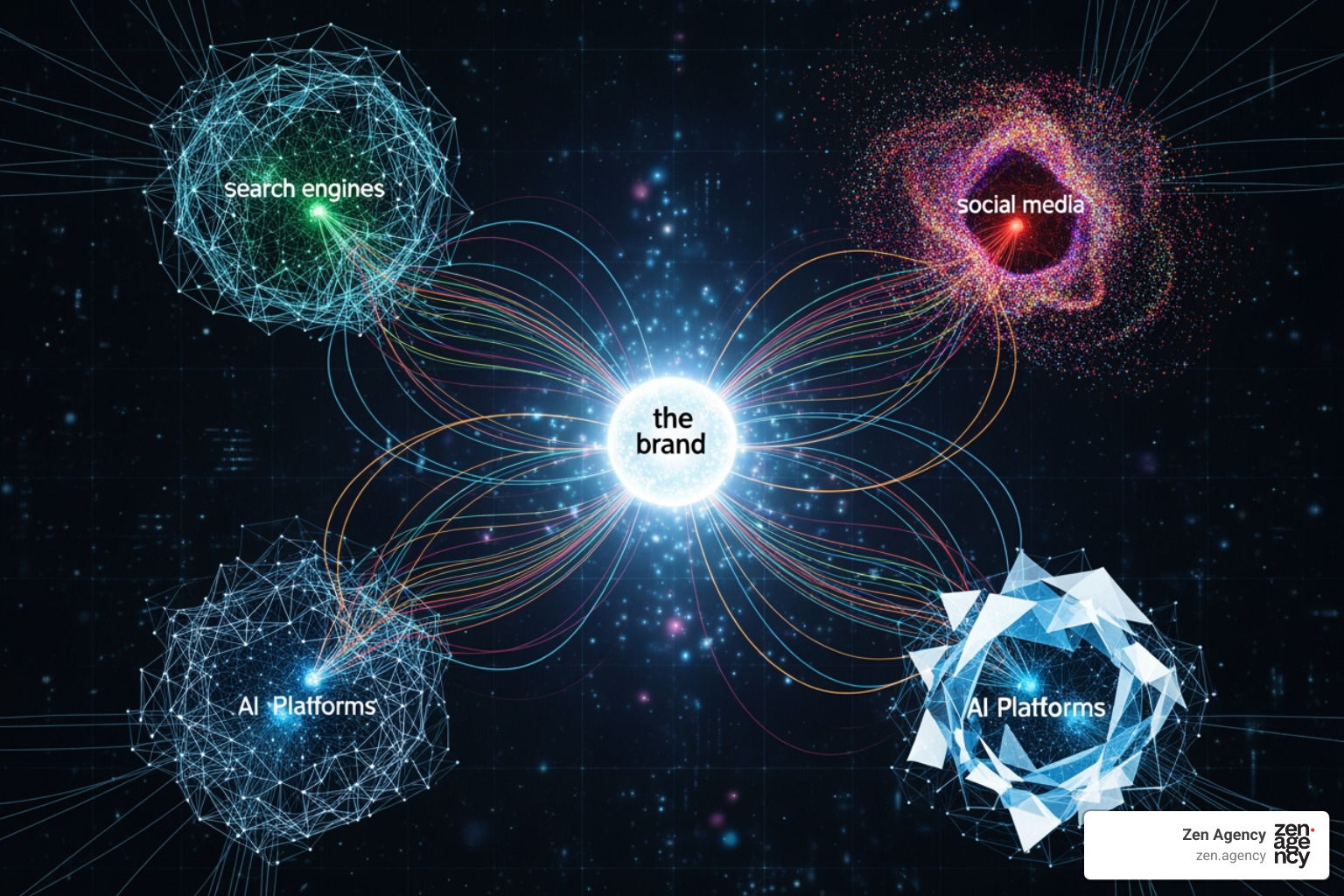
- Fragmented Customer Journeys: Customers interact with brands across countless touchpoints—search engines, social media, review sites, AI chatbots, voice assistants—making it a puzzle to track and influence their journey.
- Maintaining Brand Consistency: Ensuring your brand message is consistent and accurately represented across all these diverse platforms, especially in AI-generated responses, is a monumental task.
How AI is Reshaping Search and Visibility
AI isn’t just a new tool; it’s a fundamental shift in how we interact with information. “Search is getting smarter — perhaps too smart for traditional search engine optimization (SEO) strategies alone to keep up.” Here’s how:
- AI-Generated Answers: Platforms like Google’s AI Overviews (formerly Search Generative Experience, or SGE) and AI chatbots provide synthesized answers to complex queries, often citing sources. This means your content needs to be structured for AI comprehension, not just human readability.
- Conversational Search: Users are increasingly asking questions in natural language, expecting direct, conversational answers. This impacts keyword strategy, moving away from simple terms to more complex, long-tail queries.
- Rise of AI Chatbots: With millions using chatbots weekly, these tools are becoming a primary gateway for information and product research. Getting your brand recognized and recommended by these AI systems is a new frontier for digital visibility solutions.
- Reduced Website Traffic from Search: As AI provides direct answers, the need for users to click through to a website diminishes. This shifts the focus from purely driving clicks to establishing brand authority and ensuring your content is the source AI relies on.
- New Competition from Non-Traditional Sources: A study indicates that when an AI Overview is present, the average click-through rate for the top organic result can decrease by as much as 34.5%. Even more, approximately 62% of generative search links originate from domains not listed in the top 10 organic results, introducing a whole new level of competition.
The ‘Be Found Framework’: A 5-Pillar Strategy for Holistic Visibility
Navigating this complex landscape requires more than just a single tactic; it demands a holistic, interconnected strategy. We call this the ‘Be Found Framework’ (BFF), and it’s our comprehensive approach to digital visibility solutions in the age of AI. This framework integrates five crucial pillars, each vital for ensuring your business is not just seen, but truly finded and trusted.

The BFF recognizes that success is no longer about keyword rankings alone—it requires connecting the full findy stack. The brands that thrive will be the ones who see visibility as an interconnected ecosystem, not a set of disconnected tactics.
Pillar 1: SEO (Search Engine Optimization) – The Foundation
Even with the rise of AI, traditional SEO remains the bedrock of any robust digital strategy. It’s the foundational practice of optimizing web content to rank in organic search results, aiming to earn authority through quality content, backlinks, and technical health to drive high-intent traffic.
- Keyword Research: We dig deep to understand what your potential customers in Scranton, PA, or Kingston, PA, are searching for.
- Backlinks: Building high-quality backlinks from reputable websites in your industry signals authority to search engines.
- Technical Health: A fast, mobile-friendly, and secure website (meeting Core Web Vitals like loading speed, interactivity, and visual stability) is crucial for both users and search engines.
- E-E-A-T: Google’s algorithms, powered by advancements in AI like BERT and MUM, prioritize content that demonstrates Experience, Expertise, Authoritativeness, and Trustworthiness. This is about proving you’re the go-to source in your field.
Despite the shifts, 53% of all website traffic still comes from organic search, proving its continued importance. This figure shows that SEO is far from dead; it’s simply evolving.
Pillar 2: CRO (Conversion Rate Optimization) – The User Experience Layer
What good is visibility if visitors don’t convert into customers? CRO is the art and science of turning website visitors into leads or sales. It’s a holistic approach that combines traditional SEO with user experience (UX) design, focusing on the user’s journey after they click a link to ensure a positive experience that leads to conversion.
- User Experience (UX): We analyze how users interact with your site, ensuring it’s intuitive, easy to steer, and visually appealing.
- A/B Testing: Experimenting with different page layouts, calls-to-action, and content to see what resonates best with your audience.
- Engagement Metrics: Monitoring bounce rates, time on page, and conversion funnels to identify areas for improvement.
- Post-Click Journey: Optimizing everything from landing pages to checkout processes to reduce friction and encourage desired actions.
Pillar 3: AEO (Answer Engine Optimization) – The Zero-Click Game
As AI takes center stage, AEO becomes critical. This strategy focuses on getting your content featured in ‘zero-click’ results like featured snippets and AI Overviews, providing an immediate answer and shifting the focus from clicks to brand visibility and authority. “More than half of all Google searches now end without a click.”
- Featured Snippets: Optimizing content to directly answer common questions in a concise format that Google can easily extract and display at the top of search results.
- AI Overviews: Crafting content that is clear, factual, and authoritative enough to be synthesized and presented by Google’s generative AI, often with a link back to your site as a source.
- Direct Answers: Structuring your content to provide immediate, definitive answers to common queries, anticipating user intent.
- Voice Search Queries: Optimizing for conversational, question-based queries that align with how people speak to voice assistants. This is especially important given that voice queries are projected to reach around $80 billion in annual value.
AEO isn’t just about getting a click; it’s about being the trusted source for the answer.
Pillar 4: GEO (Generative Engine Optimization) – Becoming an AI Source
GEO is the cutting edge of digital visibility solutions. It focuses on becoming a trusted source for AI-powered generative tools like ChatGPT and Gemini, influencing the AI’s internal knowledge base so it references your brand when answering broad queries. If AI is doing the research for buyers, your business needs to be part of that AI’s knowledge.
- Influencing AI Knowledge Base: We work to ensure your content is authoritative and comprehensive enough to be incorporated into AI models’ understanding of a topic.
- Content Synthesis: AI models synthesize information from many sources. Our goal is to make your content so clear and well-structured that it’s easily digestible and cited by these systems.
- Original Research: Publishing unique data, studies, or frameworks makes your content a highly valuable and citable source for AI.
- Building Trust with AI: Just like with human users, AI prioritizes trustworthy sources. Demonstrating E-E-A-T is paramount here. A November 2023 study found that by making targeted adjustments, like including statistics and quotations, websites could boost their source visibility in generative engine responses by up to 40%. This highlights specific key factors for influencing an AI’s response.
Pillar 5: AIO (AI Optimization) – Building Digital Memory
AIO is about future-proofing your content and ensuring your brand is consistently and accurately represented in AI knowledge graphs. It’s about structuring your content and data so that AI models can easily read, understand, and store it for future use.
- Structured Data: Implementing schema markup (like JSON-LD) tells AI exactly what your content is about, such as products, services, events, or reviews.
- Schema Markup: This specialized code helps search engines and AI understand the context and meaning of your content, making it more likely to be accurately processed.
- Entity Recognition: Ensuring that your brand, products, and services are clearly defined as distinct entities that AI can recognize and associate with relevant information.
- Content for Machine Readability: Writing content that is not only engaging for humans but also easily parseable by AI, often involving clear headings, lists, and direct answers.
AIO ensures that your valuable information isn’t just found today but remembered and accurately represented by AI systems for years to come, building your brand’s digital memory.
The Rise of AI-Powered Digital Visibility Solutions
The complexity of the modern digital landscape, particularly with the advent of AI in search, has spurred the development of a new generation of digital visibility solutions: AI-powered tools. These tools are designed to help businesses, from local services in Billings, MT, to larger enterprises in Pennsylvania, track and optimize their presence across the emerging AI ecosystem.
Key Features and Benefits of AI Visibility Tools
AI visibility tools are becoming indispensable for marketing directors and commercial leaders. They provide measurement and tracking of how a brand appears in AI-generated responses. These tools help you monitor your brand’s visibility in AI platforms like ChatGPT, Google, and Perplexity.
Here are some key features and benefits:
- Tracking AI Citations: These tools measure how often your brand or content is cited by AI models when generating answers.
- Share of Voice in AI: They help you understand how frequently your brand is mentioned or recommended by AI compared to competitors.
- Identifying Misinformation: By monitoring AI responses, you can quickly spot if AI systems are providing outdated or incorrect information about your brand.
- Uncovering New Content Opportunities: Analyzing what questions AI answers (and where your brand is missing) can reveal content gaps to fill.
- Gaining Competitive Intelligence: You can see which competitors are being recommended by AI and for what queries, allowing you to benchmark your AI visibility.
- Sentiment Analysis: Some advanced tools can track the sentiment of AI brand descriptions, helping you understand how your brand is perceived by generative AI.
A growing number of platforms offer these features, providing crucial insights into your brand’s standing in the AI-driven information ecosystem.
How to Leverage AI for Smarter Digital Visibility Solutions
To truly harness the power of these tools, we recommend a strategic approach:
- Monitoring Brand Mentions in Chatbots: Regularly check how your brand is discussed and cited in popular AI chatbots like ChatGPT. Are you being recommended? Is the information accurate?
- Analyzing Competitor Citations: Benchmark your AI presence against your main competitors. If they’re being cited more often for key services, it’s a clear signal for where you need to improve your GEO and AIO efforts.
- Identifying Content Gaps for AI Queries: Use AI visibility tools to pinpoint questions or topics where AI struggles to find authoritative information, especially about your niche. This is your opportunity to create content that fills that void and becomes an AI-preferred source.
- Tracking Sentiment in AI-Generated Summaries: Understand if AI is presenting your brand positively, negatively, or neutrally. This can inform your content strategy to reinforce positive associations.
While these tools are excellent for measurement, “measurement is not diagnosis, and diagnosis is not optimization.” Tools show you symptoms; they cannot reveal structural causes. For complex B2B organizations, a structural AI visibility diagnostic is often needed to understand why your brand might be invisible to AI and what specific fixes will yield the fastest results.
Comparing Traditional SEO vs. AI-Driven Optimizations (GEO & AIO)
| Feature | Traditional SEO | GEO (Generative Engine Optimization) | AIO (AI Optimization) |
|---|---|---|---|
| Primary Goal | Drive clicks to your website | Become a cited source in AI-generated answers | Ensure AI accurately understands & stores your brand data |
| Main Focus | Keywords, backlinks, technical health | Content relevance, authority, machine readability | Structured data, entity recognition, data consistency |
| Content Type | Pages optimized for ranking in SERPs | Factual, authoritative, comprehensive answers | Structured information, data points, schema markup |
| Data Format | Primarily unstructured text, some structured data | Contextual meaning, statistical significance | Highly structured, semantic data |
| Value Metric | Organic traffic, keyword rankings | Citation frequency, brand mentions, sentiment in AI | Data accuracy, entity clarity, long-term AI presence |
Actionable Steps to Improve Your AI Visibility and GEO
Now that we understand the landscape and the framework, let’s dive into practical steps your business, whether in Hazleton, PA, or Billings, MT, can take to improve its digital visibility solutions for the AI era.
Optimizing Your Content for AI Consumption
Making your content AI-friendly is about clarity, structure, and directness.
- Improve Website Crawlability: AI models need to access and understand your site. We recommend:
- Organizing site architecture logically.
- Creating and regularly updating sitemaps.
- Fixing broken links.
- Reducing crawl depth so important content is accessible within 3-4 clicks from the homepage.
- Structured Data Implementation: Use schema markup (like JSON-LD) to explicitly tell AI what your content is about. This is especially crucial for products, services, FAQs, and local business information.
- Clear Headings and Lists: Break down complex topics with descriptive H1, H2, and H3 headings. Present information in bullet points, numbered lists, and tables, as AI finds these formats easy to extract.
- Conversational Phrasing: Write as if you’re answering a direct question. Include common questions as headings and provide clear, direct answers at the beginning of sections. This supports natural language queries.
- Direct Answers: When a user asks a question, provide the answer concisely and immediately. AI systems are looking for these “definitive” answers to synthesize.
Building Authority and Trust Signals for Generative Engines
AI, like humans, relies on trust. To be cited by generative engines, your content needs to demonstrate high levels of E-E-A-T.
- Create Original Research and Data: Publish unique studies, surveys, or proprietary insights. This positions you as a primary source, making your content highly citable by AI. a November 2023 study found that by making targeted adjustments, like including statistics and quotations, websites could boost their source visibility in generative engine responses by up to 40%.
- Authoritative Author Bios: Ensure all content is tied to a specific, qualified author with a detailed bio that showcases their expertise and credentials. This reinforces E-E-A-T.
- Leverage Reviews and Testimonials: Encourage customer feedback and prominently display positive testimonials. User-generated content and strong social proof are powerful trust signals for AI tools.
- Distribute Content Across Multiple Platforms: Don’t just publish on your website. Repurpose content for social media, videos, and industry forums. The more places your authoritative content appears, the more signals AI receives about its credibility.
- Build Authority Beyond Your Site: Get cited on reputable third-party sites. When other trusted sources link to or mention your content, it strengthens your authority in the eyes of AI.
Measuring the ROI of Your AI-focused Digital Visibility Solutions
Measuring the effectiveness of these new digital visibility solutions requires looking beyond traditional metrics.
- Tracking Citation Frequency: How often is your brand or content mentioned or linked to in AI-generated answers? AI visibility tools can help track this.
- Measuring Share of Voice in AI Answers: Compare your brand’s citation frequency against competitors to understand your relative presence in AI.
- Monitoring Sentiment Scores: Are AI responses about your brand generally positive, negative, or neutral? This qualitative data is crucial for reputation management in the AI era.
- Analyzing Referral Traffic from AI Sources: While direct clicks might decrease, AI can still drive highly qualified traffic if users seek more detailed information after an AI summary.
- Customer Lifetime Value (CLV): The goal is to attract and retain valuable customers. Track how AI-driven visibility contributes to lead generation and long-term customer relationships.
Tools provide measurement, but for complex B2B scenarios, a diagnosis is often needed to understand the structural reasons for low AI visibility, such as entity conflicts or technical expertise trapped in PDFs.
Conclusion: Future-Proofing Your Business in the Age of AI
The digital landscape is in perpetual motion, and the age of AI is accelerating this change like never before. Traditional SEO, while still vital, is no longer the sole pathway to digital success. Businesses, from solopreneurs to large enterprises across Wilkes Barre, Scranton, Hazleton, and Billings, must accept a more comprehensive approach to digital visibility solutions.
Our ‘Be Found Framework’ — encompassing SEO, CRO, AEO, GEO, and AIO — provides the roadmap. It’s about building a robust, adaptive strategy that ensures your business is findable, authoritative, and trustworthy across every emerging digital channel. The future of search points towards agentic search, where AI systems act as intelligent agents to fulfill user intent, and hyper-personalization, where experiences are custom down to the individual.
To thrive, we must continuously adapt, leverage first-party data, and prioritize content that is not only valuable to humans but also digestible and citable by AI. Industry research reveals that AI citations are becoming the new currency, and understanding how to earn them is paramount.
At Zen Agency, we pride ourselves on providing enterprise-grade solutions and innovative strategies that help businesses like yours increase visibility, profitability, and ROI. Don’t let the complexity of the AI era leave your business behind.
Explore our comprehensive search engine optimization services and let us help you steer this exciting new frontier of digital visibility.