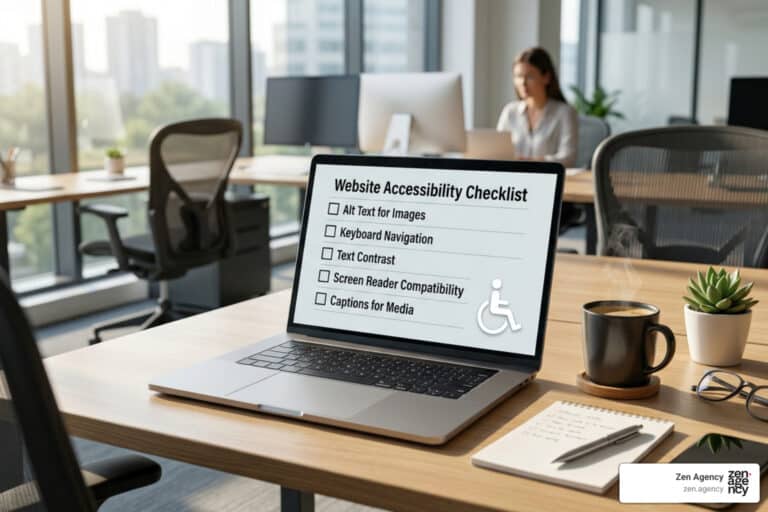
The Keystone State’s Guide to ADA Compliance: Avoiding Fines and Fostering Inclusion
Why Pennsylvania ADA Compliance Matters for Your Business
Pennsylvania ADA compliance refers to meeting the accessibility standards set by the Americans with Disabilities Act (ADA) and Pennsylvania-specific regulations to ensure people with disabilities can access your physical spaces, digital platforms, and services without discrimination.
Quick Answer: Pennsylvania ADA Compliance Essentials
- Who Must Comply: Employers with 15+ employees, all state and local governments, and public accommodations (restaurants, hotels, retail stores, websites)
- Key Laws: Federal ADA (Titles I-V) plus Pennsylvania Human Relations Act (PHRA) and Universal Accessibility Standards
- Physical Requirements: New construction must be fully accessible; existing buildings must remove barriers if “readily achievable”; remodeling triggers upgrades
- Digital Requirements: State agencies must meet WCAG 2.1 Level AA; private businesses face lawsuit risk if websites aren’t accessible
- Penalties: First violations up to $75,000; subsequent violations up to $150,000
- Pennsylvania’s Risk: Ranked 3rd in the nation with 189 ADA lawsuits filed
The stakes are real. Pennsylvania ranked third nationally for ADA-related lawsuits in recent years, with 189 cases filed against businesses across the state. These weren’t just large corporations—hotels, restaurants, retail stores, and even townships faced Department of Justice enforcement actions for violations ranging from inaccessible parking to beds too high for wheelchair users.
The increase in digital accessibility lawsuits has been even more dramatic. Between 2017 and 2022, ADA web accessibility lawsuits surged by 400%. In 2023 alone, 2,794 web accessibility cases were filed nationwide, with Pennsylvania accounting for a significant portion.
But compliance isn’t just about avoiding fines. It’s about opening your business to the 61 million Americans living with disabilities—a market segment with substantial purchasing power. It’s about fostering genuine inclusion and ensuring your organization reflects the values of accessibility that benefit everyone.
Whether you operate a brick-and-mortar location in Pittsburgh, run an e-commerce site serving Philadelphia customers, or manage a state agency website, understanding Pennsylvania’s specific ADA requirements is essential. The rules differ slightly depending on whether you’re dealing with new construction, remodeling existing facilities, or ensuring your digital platforms are accessible.
I’m Joseph Riviello, and with over 22 years in digital marketing leadership, I’ve helped countless businesses navigate Pennsylvania ADA compliance for their online presence while avoiding costly litigation. The intersection of accessibility, user experience, and legal compliance has become a critical focus area for companies seeking to scale responsibly.
Understanding Pennsylvania ADA Compliance and Legal Framework
To navigate Pennsylvania ADA compliance, we first need to look at the legal foundation. While the Americans with Disabilities Act (ADA) is a federal civil rights law passed in 1990, Pennsylvania layers its own protections on top of these federal mandates.
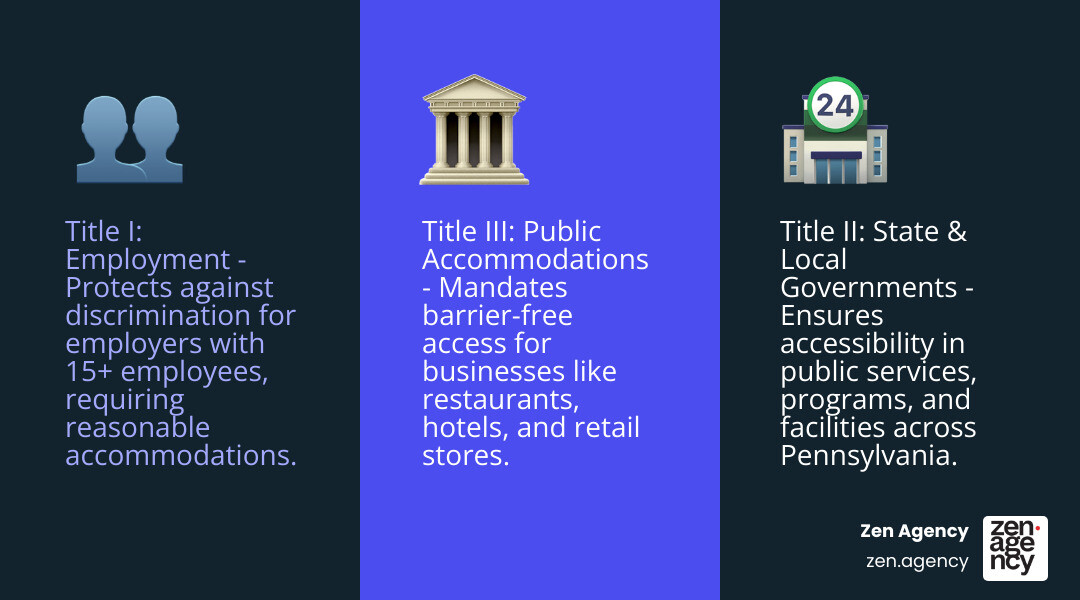
The two “heavy hitters” for most businesses are Title II and Title III. Title II applies to state and local government entities, ensuring that everything from the Scranton City Hall to the local library is accessible. Title III covers “public accommodations”—privately owned businesses that are open to the public. If you own a restaurant in Wilkes-Barre or a retail shop in Hazleton, you fall under Title III.
However, we also have the Pennsylvania Human Relations Act (PHRA). This state law mirrors much of the ADA but provides a local avenue for enforcement through the Pennsylvania Human Relations Commission (PHRC). Under the PHRA, it is illegal to discriminate in public accommodations based on disability or the use of support animals. You can find more detail on these protections through the Americans with Disabilities Act (ADA) Act Public Accommodation Protections.
For a deeper dive into the national standards that inform our local rules, check out our ADA Compliance Laws: Complete Guide.
Who Must Comply in Pennsylvania?
Compliance isn’t optional for most organizations in the Keystone State. We generally see four main groups that must adhere to Pennsylvania ADA compliance standards:
- Employers: Any business with 15 or more employees must provide equal opportunity in employment and offer reasonable accommodations.
- State and Local Government: Every agency, from PennDOT to your local township office, must ensure their programs and facilities are accessible.
- Public Accommodations: This is a broad category including hotels, restaurants, theaters, retail stores, banks, and even private schools.
- Non-profits: If a non-profit serves the public, they are generally held to the same Title III standards as for-profit businesses.
Pennsylvania also emphasizes that discrimination isn’t just about refusing entry; it’s about providing an unequal experience. You can review the state’s specific Policies and Nondiscrimination Guidelines to see how these rules are applied across different sectors.
How to Request Accommodations Under Pennsylvania ADA Compliance Rules
If you are an individual with a disability, the law provides a clear path to request “reasonable accommodations.” This is a change in the way things are customarily done that enables a person with a disability to enjoy equal opportunities.
In the Pennsylvania court system, for example, the Unified Judicial System (UJS) has a strict policy to ensure access. If you need to attend a hearing in Kingston or Scranton, you should contact the ADA coordinator for that specific court. This “interactive process” is a two-way street where the individual and the entity work together to find a solution that doesn’t cause “undue hardship” for the business but still provides access.
For those navigating state services or public spaces, the Pennsylvania Attorney General provides resources on Access and Accommodations for People with Disabilities to help you understand your rights and the proper channels for requests.
Physical Accessibility: From PennDOT Standards to Universal Design
When we talk about physical spaces, Pennsylvania ADA compliance is governed by the Universal Accessibility Standards. These regulations ensure that buildings are designed and constructed so that they can be used by everyone.
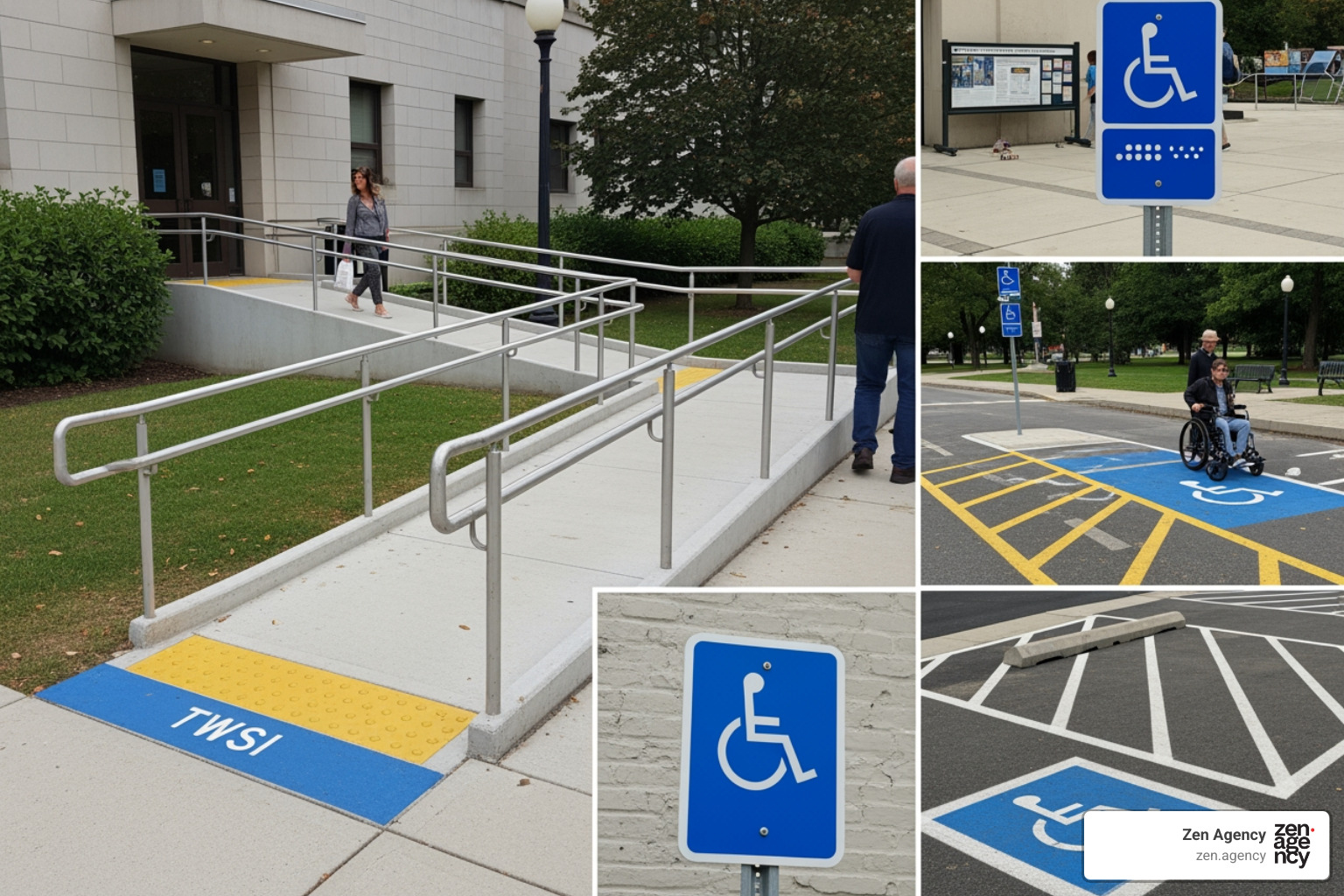
Pennsylvania’s standards often reference the ADA Accessibility Guidelines (ADAAG), but they include state-specific triggers. For instance, the “readily achievable” rule for existing buildings means you must remove barriers if it can be done without much difficulty or expense. This might include installing a ramp, widening a doorway, or rearranging furniture to create a clear path of travel.
New Construction vs. Remodeling Requirements
The rules change depending on the age and status of your building:
- New Construction: Any building built for first occupancy after January 26, 1993, must be fully accessible. There is very little wiggle room here, except in cases of “structural impracticability” (which is a very high bar to meet).
- Remodeling/Alterations: If you are renovating a “primary function area” (like the dining room of a restaurant), you must ensure the “path of travel” to that area is accessible. Pennsylvania follows the 20% rule: you are generally required to spend up to 20% of the total alteration cost on making the path of travel (including restrooms and drinking fountains) accessible.
- Elevator Exemptions: In Pennsylvania, elevators aren’t always required in buildings that are less than three stories or have less than 3,000 square feet per floor, unless the building is a shopping center, a health care provider’s office, or a public transit station.
PennDOT also plays a massive role in this, especially regarding sidewalks and street crossings. Their policies on ADA and Pedestrian Accommodations ensure that when roads are resurfaced or new sidewalks are laid in places like Wyoming PA, they meet the latest accessibility standards.
Service Animals vs. Emotional Support Animals
This is an area where we see a lot of confusion. Under Pennsylvania ADA compliance rules, there is a big difference between a service animal and an emotional support animal (ESA):
- Service Animals: These are almost exclusively dogs trained to perform specific tasks for a person with a disability (e.g., guiding someone who is blind or alerting someone to a seizure). They are allowed in all public accommodations. You can only ask two questions: 1. Is the animal required because of a disability? and 2. What work or task has the animal been trained to perform?
- Emotional Support Animals: These provide comfort through their presence. While they are often recognized in housing situations under the Fair Housing Act, they do not have the same automatic right of access to restaurants or retail stores as service animals.
For housing providers, HUD regulations state that internet-purchased certificates for ESAs are generally not sufficient documentation. For a deep dive into these nuances, the PHRC provides a guide on Service Animals and Public Accommodations.
Digital Accessibility and WCAG Standards for PA Businesses
Your website is often your “front door.” If a person with a disability can’t use your site, it’s legally similar to having a physical store with no ramp. This is why our ADA Compliance Services focus so heavily on the Web Content Accessibility Guidelines (WCAG).
Pennsylvania state agencies and their vendors are now held to a strict Digital Accessibility Policy. This policy mandates compliance with WCAG 2.1 Level AA. Vendors must often provide an Accessibility Conformance Report (ACR) using a Voluntary Product Accessibility Template (VPAT) to prove their software or sites are usable by everyone.
For private businesses, while the DOJ hasn’t codified a specific “web law” yet, they have repeatedly pointed to WCAG 2.1 AA as the gold standard. To learn how to protect your business, read our guide: Don’t Get Sued: The ADA Website Standards You Need to Know.
Common Causes of Pennsylvania ADA Compliance Violations Online
We see the same few errors popping up in almost every lawsuit. If you want to stay safe, focus on these five areas:
- Missing Alt Text: Screen readers need text descriptions to “read” images to visually impaired users.
- Poor Color Contrast: Text must stand out against the background (a 4.5:1 ratio is standard) so people with low vision can read it.
- Keyboard Navigation: Some users can’t use a mouse. Your site must be fully “tab-able.”
- Unlabeled Forms: If a “Contact Us” form doesn’t have clear labels, a screen reader user won’t know which box is for their name and which is for their email.
- Inaccessible PDFs: Many businesses upload PDFs that are essentially just “pictures of text,” which screen readers cannot interpret.
You can use the WAVE accessibility tool to run a quick check on your site, but automated tools only catch about 30-40% of errors—manual testing is always necessary.
Pregnancy and the Workplace: The PWFA
Accessibility isn’t just about mobility or vision; it also covers temporary conditions. The Pregnant Workers Fairness Act (PWFA), which went into effect in June 2023, requires employers to provide reasonable accommodations for limitations related to pregnancy, childbirth, or related medical conditions.
This might mean allowing more frequent breaks, providing a stool to sit on, or adjusting a uniform. Employers cannot force a worker to take leave if a reasonable accommodation would allow them to keep working. You can find more on this through the EEOC Pregnancy Discrimination Laws.
Risks of Non-Compliance: Lawsuits and Penalties
The financial risks of ignoring Pennsylvania ADA compliance are steep. Federal law allows for significant civil penalties, and Pennsylvania’s high ranking in ADA lawsuits makes it a “hot zone” for litigation.
Beyond government fines, businesses often face private lawsuits. In these cases, you may be required to pay the plaintiff’s legal fees, which can quickly exceed the cost of the actual accessibility fixes. If you believe you’ve been discriminated against or want to see the official complaint process, you can visit the Public Accommodation Discrimination Complaint page.
Real-World Pennsylvania ADA Lawsuits
Looking at past cases helps us understand how the law is applied:
- Rite Aid: The DOJ reached an agreement with Rite Aid to ensure their COVID-19 vaccine portal was accessible to people with disabilities.
- Hotel Bed Heights: Several hotels in Pennsylvania were targeted in lawsuits because their beds were too high for wheelchair users to transfer safely from their chairs.
- Township Stroke Survivor: A Pennsylvania township faced a lawsuit after failing to accommodate a stroke survivor’s needs during public meetings and employment.
These cases highlight that Pennsylvania ADA compliance is about more than just ramps—it’s about communication, digital access, and even furniture. For more examples, the U.S. Department of Justice ADA Resources provides a wealth of information on recent enforcement actions.
Frequently Asked Questions about Pennsylvania ADA Compliance
Which Pennsylvania businesses must have an accessible website?
Under Title III of the ADA, any business that is considered a “public accommodation” should have an accessible website. This includes retail, banks, hotels, and healthcare providers. If your business is open to the public, your digital presence is legally considered part of that public space.
How do I report an ADA violation in Pennsylvania?
You can file a complaint at the federal level through the DOJ at ADA.gov, or at the state level through the Pennsylvania Human Relations Commission (PHRC). For issues involving physical barriers in local government buildings, you can also contact the specific municipality’s ADA coordinator.
What is the difference between ADA and Section 508 in PA?
The ADA is a broad civil rights law that applies to both the public and private sectors. Section 508 specifically applies to federal agencies (and those receiving federal funding), requiring them to make their information and communication technology (ICT) accessible. In Pennsylvania, state agencies follow a similar path by mandating WCAG 2.1 standards for all digital content.
Conclusion
Achieving Pennsylvania ADA compliance doesn’t happen overnight, but it is one of the most important investments you can make for your business’s longevity and reputation. Whether you’re upgrading a physical storefront in Scranton or auditing a website for a company in Wilkes-Barre, the goal is the same: fostering an environment where everyone, regardless of ability, can participate.
At Zen Agency, we specialize in taking the “scary” out of digital compliance. We offer comprehensive accessibility audits and proactive remediation to ensure your website isn’t just a legal safeguard, but a welcoming experience for every user. Don’t wait for a demand letter to arrive in the mail—be proactive and build a more inclusive brand today.