A Realistic Guide to Planning Your Social Media Posting Strategy
Build a Social Media Posting Strategy You Can Keep
Start with one business goal and the audience you want to reach. Pick the platforms they use, choose a posting pace your team can sustain, and plan a month of posts that teach, invite conversation, build community, and promote your offer. Put each post in a calendar with an owner, publish date, format, and goal. Then check results each month and change what is not working.
A calendar makes posting easier, but it should not lock you into a plan that ignores your audience. Leave room to respond to questions, timely news, and what your results reveal.
I’m Joseph Riviello, founder and CEO of Zen Agency. My 22 years in digital marketing leadership shape how I approach a social media posting strategy: as part of a larger effort to turn visibility into leads and revenue.
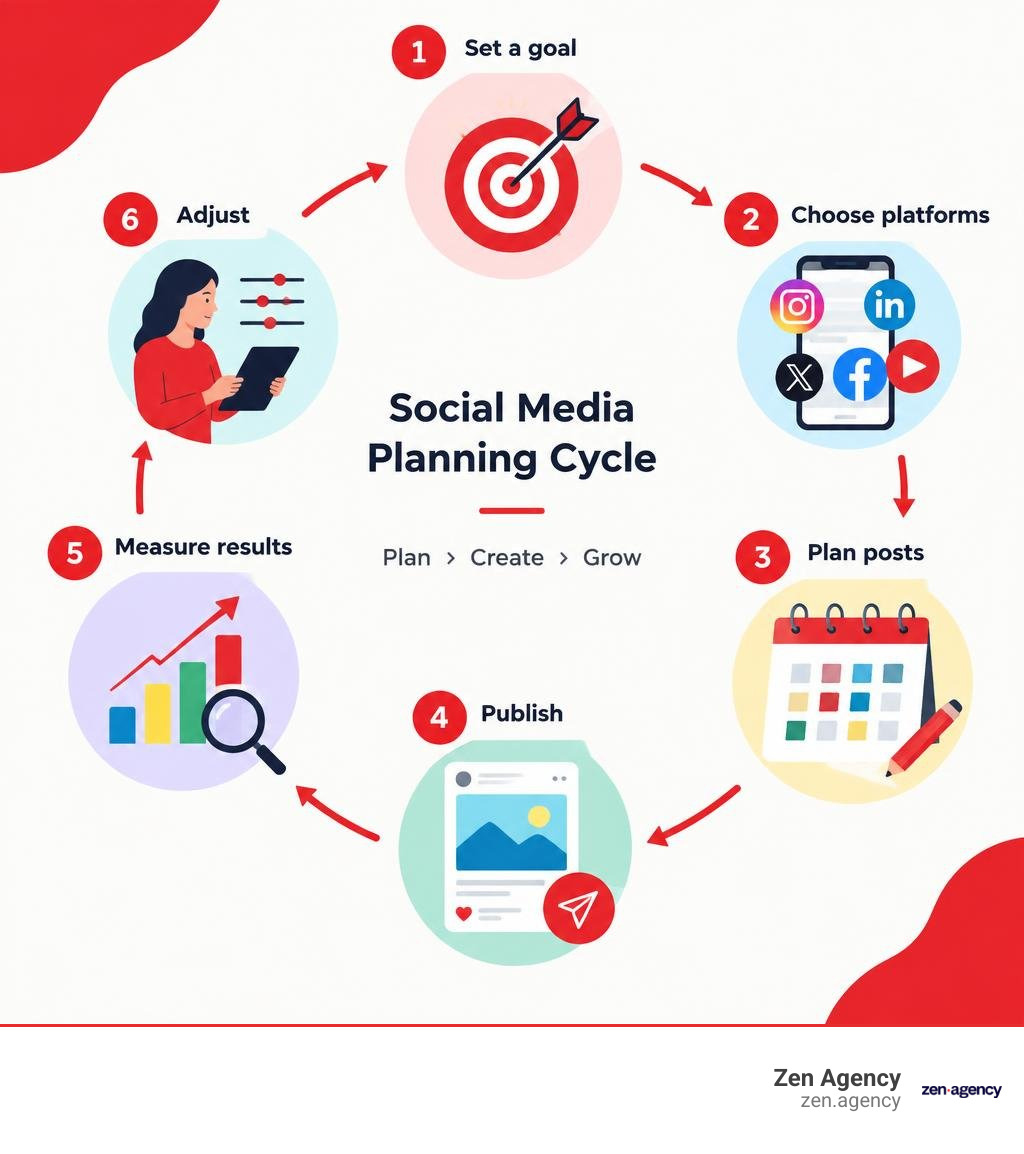
Social media posting strategy definitions:
Why a Documented Social Media Posting Strategy Is Essential in 2026
Publishing randomly without a structured plan is the marketing equivalent of throwing spaghetti at the wall. In 2026, 62.6% of the global population uses social media, spending an average of 2 hours and 23 minutes on platforms every day. Furthermore, social commerce continues to expand, with social network sales accounting for over 18.5% of total online transactions. Despite these massive audiences, standing out requires mathematical precision rather than sheer luck.
Algorithmic distribution across modern platforms heavily rewards operational consistency. Research shows that highly consistent accounts—publishing across at least 20 out of 26 weeks—generate 5x more engagement per post compared to irregular publishers. Sporadic posting signals to network discovery engines that your channel is inactive, suppressing organic distribution across feeds.
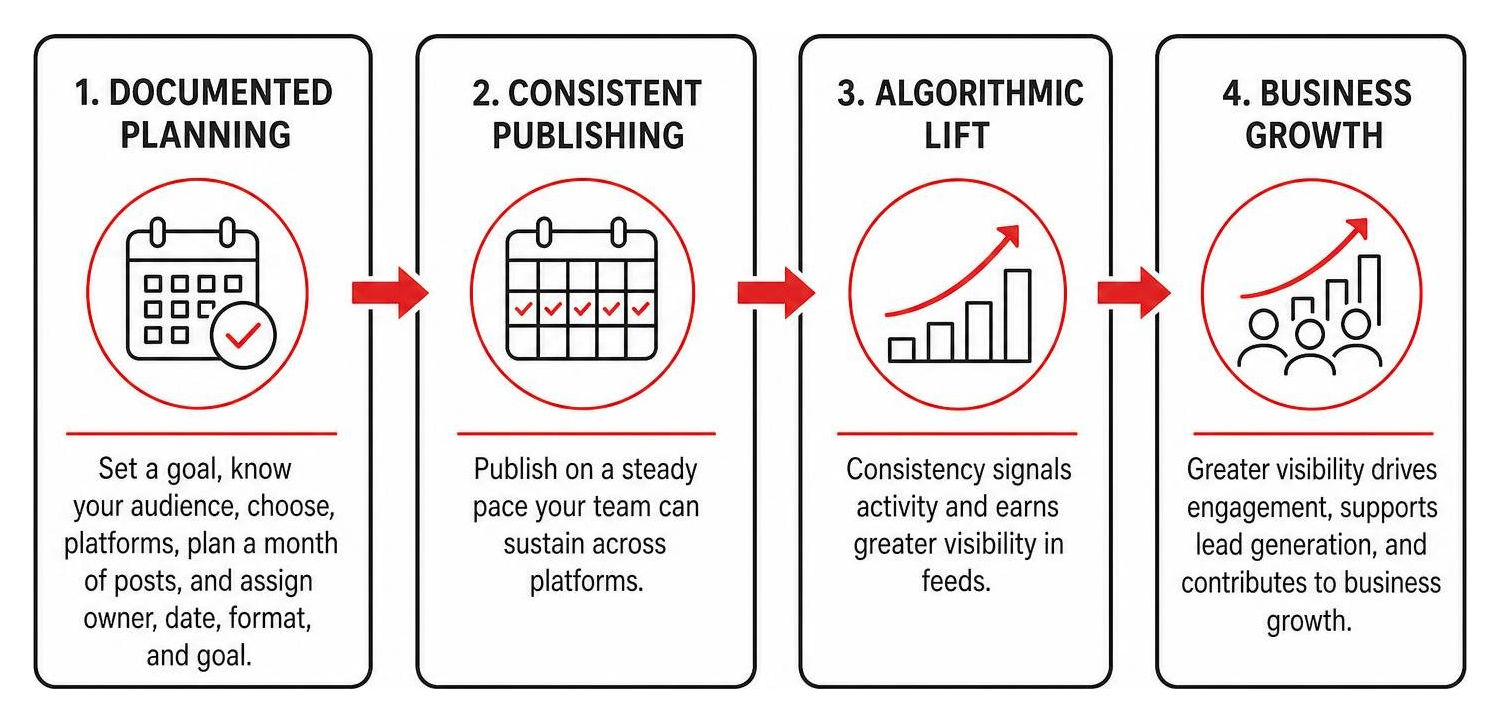
Beyond algorithmic signals, marketing teams that operate with a documented social media marketing strategy drive reliable business outcomes. Approximately 68% of marketers report that systematic social media campaigns directly support their lead-generation pipelines. Modern organizations also explore structured academic perspectives on strategic communications to bridge business messaging with real community needs.
Core Benefits of a Dedicated Content Calendar
A dedicated content calendar serves as both your tactical operational roadmap and a reliable historical record:
- Eliminates Decision Fatigue: Planning 30 days in advance removes the daily stress of wondering what to publish at 9:00 AM, saving teams an estimated 11 hours per month in administrative overhead.
- Identifies Narrative Gaps: A visual schedule highlights when messaging leans too heavily on sales promotions or neglects educational value.
- Provides Performance Logs: Historical documentation allows your team to map engagement spikes directly to specific themes, formats, and publishing windows.
- Unifies Cross-Functional Teams: Clear assignments for copywriters, graphic designers, and strategists ensure production bottlenecks are resolved before distribution dates.
Aligning Business Goals with Audience Demographics
Every piece of content must trace back to a specific SMART objective: Specific, Measurable, Achievable, Relevant, and Time-bound. Vague intentions like “increasing brand awareness” fail without clear metrics such as driving a 15% increase in website referral traffic or generating 40 qualified inbound inquiries per quarter.
Different audiences require distinct distribution angles:
- B2B Decision Makers: Focus on technical problem-solving, operational efficiency, case studies, and industry data primarily distributed on networks like LinkedIn.
- B2C Consumers: Gravitate toward visual storytelling, creator collaborations, entertaining short-form video, and frictionless shopping experiences on Instagram and TikTok.
Mapping your content directly to stages of the customer journey ensures your feed educates prospects at the top of the funnel, nurtures consideration in the middle, and closes conversions at the bottom.
Platform-by-Platform Posting Frequency and Peak Timing Benchmarks
Determining how often and when to publish prevents audience burnout while maximizing reach. Algorithms reward regular posting cadence up to a point of diminishing returns. Over-saturating feeds with low-value updates diminishes visibility and increases unfollow rates.

Publishing times vary by audience habits, but establishing data-backed baseline windows across your primary operating regions ensures assets launch when engagement signals peak. Reviewing 30-day content calendar benchmarks helps calibrate cadence against broader industry standards.
| Platform | Recommended Weekly Cadence | Core Post Formats | Optimal Publishing Windows (EST) | Primary Algorithm Metric |
|---|---|---|---|---|
| 3–5 posts/week + daily Stories | Reels, Carousels, High-res images | Mon & Wed: 11:00 AM – 2:00 PM, 7:00 PM | Saves, Shares, Reel Watch Time | |
| TikTok | 2–5 posts/week | Vertical short-form video (9:16) | Tue & Thu: 7:00 AM – 10:00 AM, 8:00 PM | Completion Rate, Total Watch Time |
| 2–5 posts/week | Document carousels (PDF), Text + Image | Tue through Thu: 8:00 AM – 11:00 AM | Dwell Time, Comments, Reposts | |
| 1–2 posts/day | Native video, Curated links, Images | Mon through Wed: 9:00 AM – 1:00 PM | Meaningful Comments, Shares | |
| X (Twitter) | 2–4 posts/day | Short text hooks, Media cards, Threads | Weekdays: 8:00 AM – 10:00 AM, 12:00 PM | Retweets, Quote Posts, URL Clicks |
| YouTube | 1 long-form/week + 2–4 Shorts | 16:9 Landscape Video, Vertical Shorts | Thu & Fri: 2:00 PM – 5:00 PM | Click-Through Rate (CTR), Retention |
Short-Form Video and Visual Feeds: Instagram and TikTok
Video content continues to dominate visual feeds, with posts featuring video generating 1,200% more shares than static updates. On Instagram, moving from 1–2 posts per week to 3–5 increases reach per post by approximately 12%. Carousels drive high save and share rates, which signal high utility to the recommendation engine.
On TikTok, increasing publishing from once per week to 2–5 times lifts views per post by roughly 17%. The platform’s discovery feed prioritizes viewer retention rates in the first 3 seconds and overall completion rates, making immediate visual hooks essential.
Professional and Text Networks: LinkedIn and X
LinkedIn rewards high-value, professional insights presented in digestible formats. Document carousels (uploaded as PDFs) consistently achieve the platform’s highest organic engagement. Moving from 1 post per week to an active cadence of 3–5 posts can nearly triple engagement per post over time.
On X, feed velocity requires higher frequency to maintain visibility. Breaking long-form analyses into multi-post threads allows complex ideas to circulate through retweets and direct replies while retaining concise readability.
Designing Your 30-Day Content Mix and Calendar Architecture
A balanced editorial mix protects your audience from promotional fatigue. If your feed consists entirely of sales pitches, follower retention will decline rapidly. Using proven formulas to select high-converting social media post formats keeps your feed engaging while supporting commercial goals.
Balancing Education, Storytelling, Community, and Promotion
Structuring your publishing pillars ensures sustainable variety:
- Educational Content (40%): Step-by-step guides, framework teardowns, and industry breakdowns that solve immediate audience challenges.
- Storytelling & Entertainment (25%): Behind-the-scenes perspectives, founder lessons, client milestones, and cultural commentary that humanize your brand.
- Promotional Messaging (20%): Service spotlights, case study outcomes, direct calls-to-action (CTAs), webinar registrations, and product features.
- Community Engagement (15%): Interactive polls, open Q&As, user-generated content highlights, and responses to industry debates.
Keeping direct promotional content at or below 20% preserves organic reach and builds long-term audience trust.
Framework for Structuring a 30-Day Social Media Posting Strategy
Executing a monthly calendar efficiently requires systematic planning. Adopting proven methods for streamlining content production workflows keeps asset quality high across all channels.
Organize your monthly production schedule into structured columns:
- Publish Date and Scheduled Time: Assigned according to platform-specific peak activity hours.
- Target Platform & Placement: Specific channel and placement type (e.g., LinkedIn Feed, Instagram Story, TikTok Video).
- Content Pillar: Labeling the core objective (Education, Storytelling, Promotion, Community).
- Post Copy & Hook: The written caption, opening headline, and body text.
- Creative Asset Link: URL linking to the finalized image, carousel PDF, or video file.
- Call-to-Action & Tracking URL: Direct CTA paired with custom UTM parameters to track analytics.
- Workflow Status: Operational stages such as Draft, In Review, Approved, or Scheduled.
Scaling Execution with AI Prompts and Management Tool Stacks
Managing cross-platform output without operational burnout requires modern software stacks and structured artificial intelligence workflows. Understanding best practices for leveraging AI in social media marketing helps teams generate drafts and repurpose assets rapidly while preserving human oversight.

High-Impact AI Prompts for Ideation, Captions, and Repurposing
Use these structured prompt frameworks within your generation workflow:
- Hook Generation Prompt: > “Act as a senior social media copywriter. Generate 5 attention-grabbing opening hooks for a [Platform] post about [Specific Topic]. The audience is [Target Demographic]. Focus on counter-intuitive insights, specific data points, and immediate problem identification. Avoid generic cliches.”
- Brand Voice Adaptation Prompt: > “Rewrite this technical concept into a concise, conversational caption suitable for [Platform]. Tone should be [Authoritative/Warm/Direct]. Include a 2-sentence breakdown, 3 bulleted takeaways, and a clear question at the end to encourage discussion. Concept: [Paste Notes].”
- Multi-Platform Repurposing Prompt: > “Take this high-performing [Blog Post/Video Script] transcript: [Insert Text]. Extract the core lesson and rewrite it into: 1) A 5-slide LinkedIn carousel outline, 2) A 60-second vertical video script with visual cues, and 3) A concise 4-part post thread for X.”
Always review AI-generated drafts to verify technical accuracy, refine tone, and insert real-world client examples.
Selecting the Right Scheduling and Analytics Software
Choosing the right management platform depends on team size, asset complexity, and approval requirements.
| Platform Tool | Best Use Case | Team Collaboration & Approval | Analytics & Reporting Depth |
|---|---|---|---|
| Buffer | Solopreneurs, small marketing teams | Basic role access on higher tiers | Clear post engagement metrics and scheduling recommendations |
| Hootsuite | Mid-market to enterprise marketing teams | Multi-tiered approval paths and assignments | Comprehensive cross-network reporting and trend listening |
| Later | Visual-first brands, Instagram/TikTok focus | Media library asset tagging and approvals | Visual grid planning and link-in-bio traffic tracking |
| Sprout Social | Enterprise teams requiring deep CRM hooks | Advanced governance, audit trails, SLAs | Deep competitive benchmarking and custom attribution reports |
Tracking Performance, Avoiding Pitfalls, and Ongoing Optimization
A strategy is only as effective as the data review process behind it. Regularly auditing channel performance allows marketing teams to double down on formats that convert while cutting underperforming tactics.
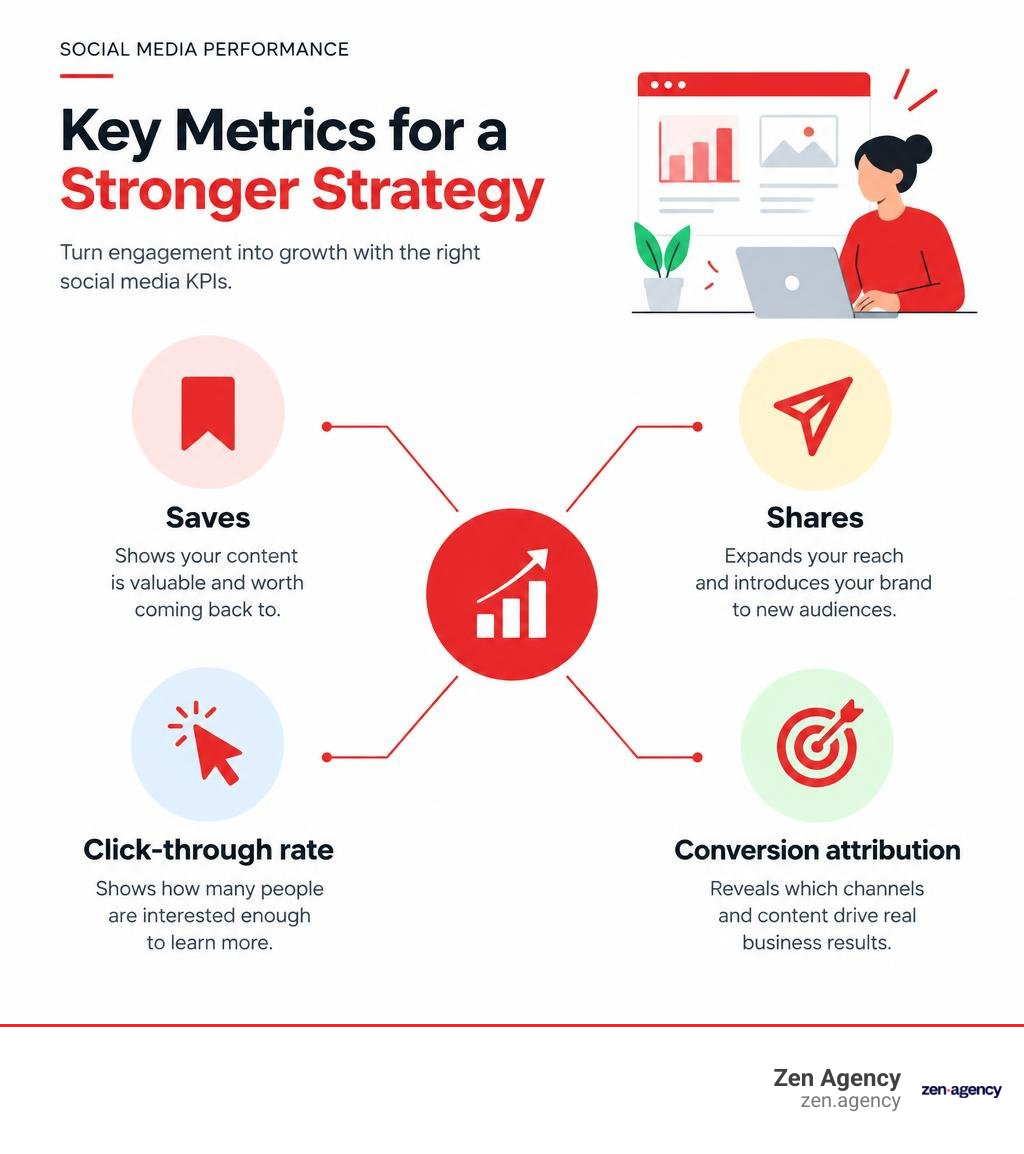
Following standard protocols for measuring social media campaign success ensures your resources directly support business growth.
Key Metrics to Measure Beyond Vanity Numbers
While likes and impressions provide surface feedback, strategic evaluation requires deeper engagement indicators:
- Saves and Bookmarks: High save rates indicate that your educational content provides long-term utility.
- Direct Shares and Reposts: Amplification signals that your messaging resonated strongly enough for users to share it with their own networks.
- Click-Through Rate (CTR): Measures the effectiveness of your hooks and captions in driving traffic to external landing pages.
- Conversion Attribution: Tracking form fills, demo requests, and direct sales through tagged UTM links.
Reviewing common social media marketing mistakes will help your team avoid issues like chasing vanity metrics, neglecting audience comments, or over-automating interactions.
Refining and Iterating Your Social Media Posting Strategy
Conduct a structured review every 30 days to optimize your calendar:
- Run Format A/B Tests: Compare static graphics against document carousels or short video clips to identify format preferences.
- Update Time Slots: Adjust scheduled posting windows based on updated platform analytics heatmaps.
- Recycle Evergreen Winners: Identify top-performing posts from the preceding 90 days. Refresh the visual design, update outdated data, and reintroduce the core insight into your upcoming calendar.
Frequently Asked Questions About Planning a Social Media Posting Schedule
How far in advance should a monthly posting schedule be prepared?
Most marketing teams work best by drafting content 2 to 4 weeks ahead of publication. This runway provides sufficient time for graphic design production, copywriting reviews, and client or stakeholder approvals. Maintain 15% to 20% buffer space in your weekly schedule to accommodate real-time industry announcements, company news, or trending conversations.
Does scheduling content via third-party tools hurt organic reach?
No. Modern social networks connect to publishing tools through approved, official Application Programming Interfaces (APIs). Platform algorithms evaluate post performance based on viewer retention, watch time, saves, comments, and shares—not whether the content was published manually via mobile or scheduled through third-party software.
What is the most critical mistake brands make with their content mix?
The most common failure is promotional oversaturation. When a brand uses social feeds exclusively as an advertising megaphone, organic reach declines and unfollows rise. Balancing your distribution with valuable education, practical insights, and community engagement builds the audience trust needed for promotional posts to convert.
Conclusion
Building a sustainable social media posting strategy requires clear business alignment, platform-specific formatting, consistent cadence, and routine data analysis. Moving away from reactive, last-minute publishing to a structured 30-day workflow allows your brand to compound authority, engage target audiences, and generate measurable pipeline revenue.
At Zen Agency, our team helps scaling businesses design enterprise-grade digital marketing systems that maximize return on investment. Explore our insights on investing in modern social media marketing vs traditional marketing to build a high-performing digital footprint for your brand.