The Modern Blueprint for Winning at Organic Social Media Marketing
How to Make Organic Social Media Marketing Work
Start with one or two platforms your customers use. Share posts that answer their questions, reply to comments, and track which topics bring shares, website visits, and leads. Use those results to improve your next posts. When a post performs well and you need wider reach, consider promoting it with paid social.
Organic social media marketing builds trust through unpaid content and real conversations. But it takes time, and an algorithm may show your posts to only a small part of your audience. The goal is not to post more for its own sake. It is to give people a reason to engage and share.
I’m Joseph Riviello, founder and CEO of Zen Agency. For more than 22 years, I’ve led digital marketing strategies that connect work such as organic social media marketing to traffic, leads, and revenue; this guide shows you how to build and measure that connection.
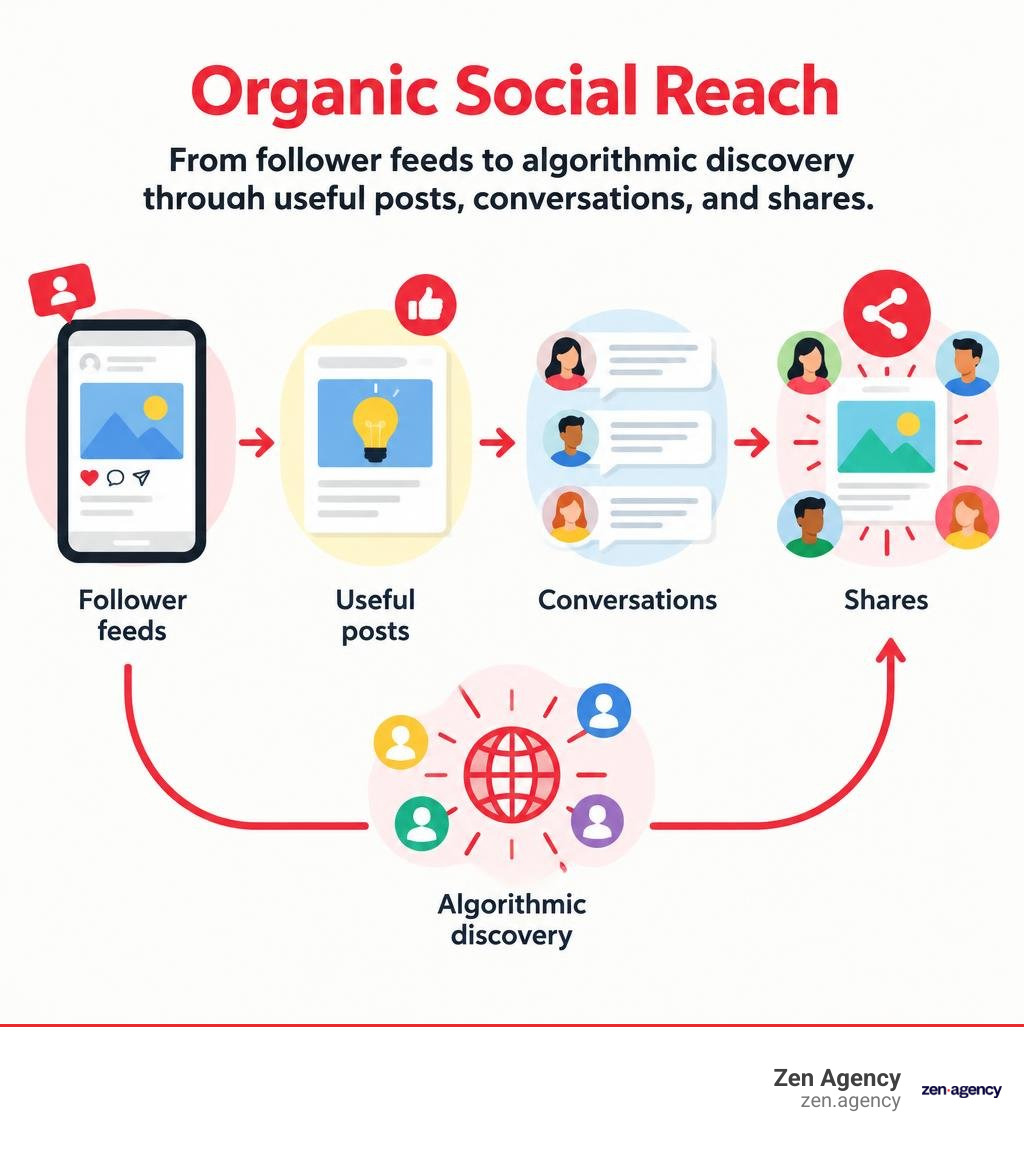
Simple organic social media marketing word guide:
What Is Organic Social Media Marketing and Why It Matters in 2026
Organic social media marketing encompasses everything a brand publishes, shares, and participates in across social platforms without direct advertising spend. It includes text posts, videos, carousels, customer interactions in comment sections, and community management.
In 2026, over 4.5 billion people actively use social networks worldwide. Meta platforms alone support roughly 2.8 billion active users each month, and TikTok hosts well over a billion users. Despite these massive audiences, organic visibility operates differently than it did a decade ago. It is no longer a free broadcast billboard; it functions as a digital storefront and relationship engine.
Understanding realistic expectations for organic reach helps set sustainable goals. Paid social acts as an accelerator, but organic social establishes credibility, authority, and emotional resonance.
| Feature / Dynamic | Organic Social Media | Paid Social Media |
|---|---|---|
| Primary Goal | Relationship building, trust, loyalty, social proof | Rapid reach, direct-response conversion, scale |
| Cost Structure | Investment in creative time, strategy, and community care | Direct ad spend plus creative and management costs |
| Pacing & Longevity | Slow initial growth; compounds over time with lasting equity | Immediate traffic spikes; ends when the budget runs out |
| Audience Relationship | Two-way dialogue, peer advocacy, interactive community | Transactional or promotional one-way messaging |
| Targeting Mechanism | Algorithmic alignment with user interest and engagement | Precise demographic, behavioral, and lookalike targeting |
Core Benefits of Organic Social Media Marketing for Sustainable Growth
Organic channels build compounding brand value that paid media cannot replicate alone. When buyers evaluate your brand, they search your social profiles to confirm you are active, reputable, and customer-focused. In fact, 89% of online shoppers consult reviews and peer sentiment before making a purchase.
Key advantages of an organic foundation include:
- Audience Trust and Authority: Valuable insights, problem-solving content, and genuine replies establish your authority. Discover how building brand authority turns casual visitors into brand advocates.
- Compounding ROI: Unlike paid ads that disappear the moment funding stops, high-value organic posts, videos, and guides generate discovery, backlinks, and brand affinity months after publication.
- Customer Retention and Loyalty: Engaging existing clients directly in comments and discussions keeps your brand top of mind and reduces churn.
- Unfiltered Market Feedback: Conversations, user questions, and direct messages serve as real-time feedback loops for product development and service refinement.
The Real Challenges: Algorithmic Saturation and Slow Velocity
Organic social media requires patience and strategic discipline. Because platforms prioritize paid ad inventory—with social ad spend projected to reach $124.88 billion in 2026—corporate pages face limited default distribution.
Publishing generic promotional graphics rarely yields meaningful results. Breaking through feed saturation demands focused positioning, compelling visual storytelling, and steady community engagement rather than raw post volume.
The Hybrid Growth Engine: Blending Organic and Paid Social Tactics
The most effective organizations do not treat organic and paid social as competing silos. Instead, they run an integrated, hybrid engine where organic content validates messaging and paid distribution scales what works.
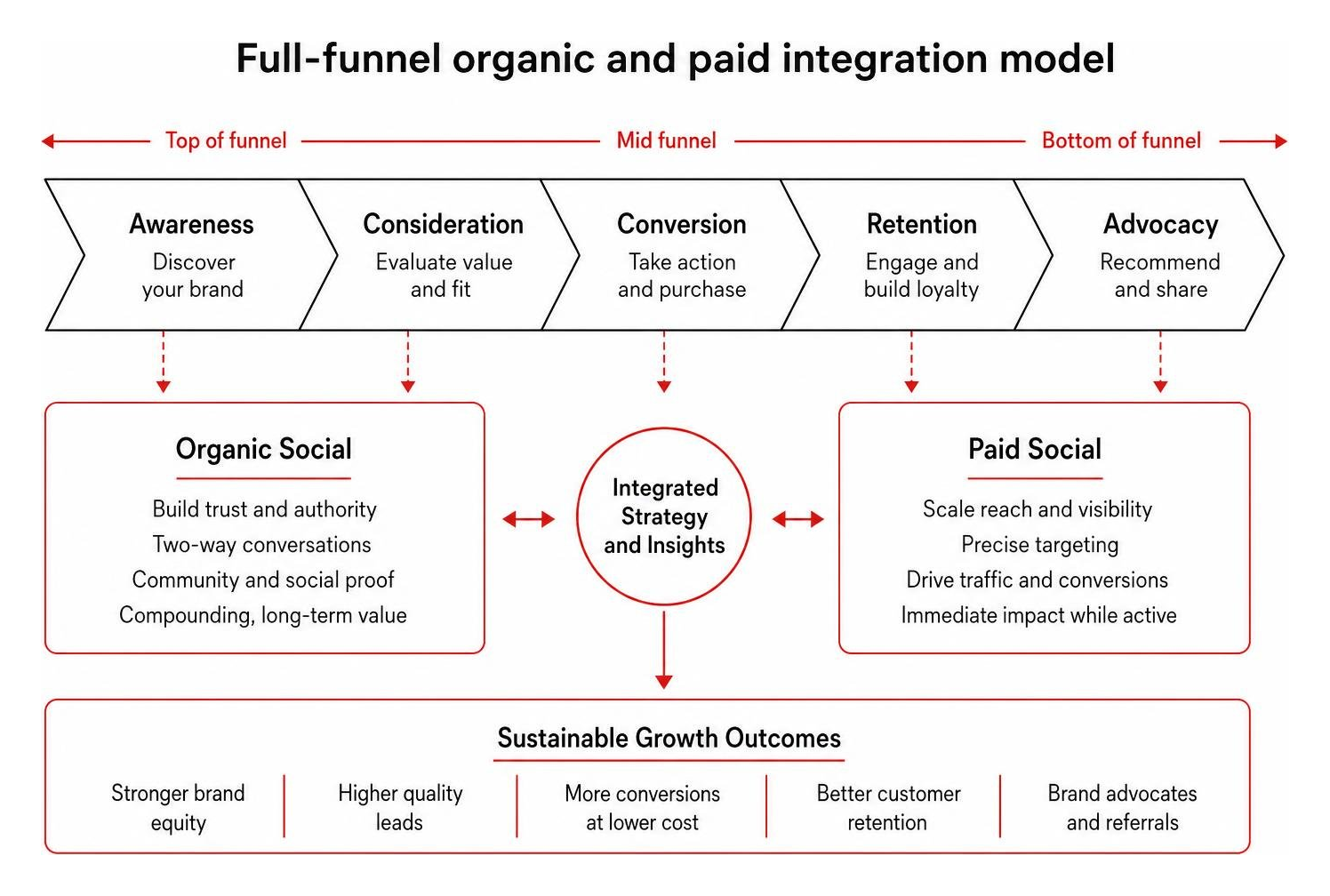
Aligning both disciplines requires building a cohesive social strategy that coordinates touchpoints from first discovery down to final purchase.
Organic Content as an R&D Testing Ground for Paid Amplification
Organic publishing provides a cost-effective environment to test creative concepts, hooks, and messaging angles.
- Publish Organic Variations: Share differing formats, perspectives, and media assets across your main channels.
- Monitor Engagement Signals: Track watch time, saves, shares, and in-depth comments to identify top-performing posts.
- Deploy Paid Spend on Proven Winners: Boost or repurpose high-performing organic assets into targeted ad campaigns to accelerate maximizing social lead generation.
- Mitigate Ad Fatigue: Refresh ad creative using organic audience feedback to maintain steady conversions at lower cost-per-click rates.
Coordinating Funnel Stages to Reduce Customer Acquisition Costs
A coordinated funnel ensures marketing spend works efficiently across every stage of the buyer journey:
- Top of Funnel (Discovery): Use broad organic educational posts and targeted paid awareness campaigns to introduce your brand to relevant prospects.
- Middle of Funnel (Evaluation): Retarget engaged viewers with organic case studies, employee insights, and community testimonials to reinforce credibility.
- Bottom of Funnel (Conversion): Run direct-response paid campaigns to warm audiences who have already interacted with your organic content, driving qualified inquiries at a lower acquisition cost.
Mastering Algorithms, Word-of-Mouth, and Viral Community Dynamics
Platform algorithms are designed to maximize user session time by serving content that sparks meaningful interactions.
Recent research on organic word-of-mouth dynamics highlights that unpaid social content acts as an organic catalyst for peer-to-peer sharing. Understanding the science of social engagement allows marketers to design content that triggers algorithmic distribution naturally.
Driving Organic Word-of-Mouth and Peer Advocacy
Word-of-mouth recommendations carry far more weight than corporate claims. Fostering organic conversations requires turning passive followers into active contributors by:
- Sparking Specific Debates: Ask open-ended questions about industry challenges and emerging trends.
- Highlighting Customer Success: Elevate client stories, milestone celebrations, and candid problem-solving experiences.
- Empowering User Content: Build a dedicated system for leveraging user-generated content that rewards customer participation.
Tactics to Overcome Feed Suppression and Win Algorithmic Favor
To maximize organic post visibility across major networks:
- Optimize Link Placements: An empirical study on post link placement demonstrated that placing external URLs in the first comment rather than the main post body generated up to 1.8 times more clicks by preventing in-feed algorithmic reach penalties.
- Prioritize Native Video: Host video content directly within each platform. Review our guide on short-form video tactics to capture fast-scrolling attention.
- Engage in the First Hour: Respond promptly to incoming comments during the first 60 minutes after posting to signal active dialogue to distribution algorithms.
People, Moments, and Advocacy: Modern Organic Execution
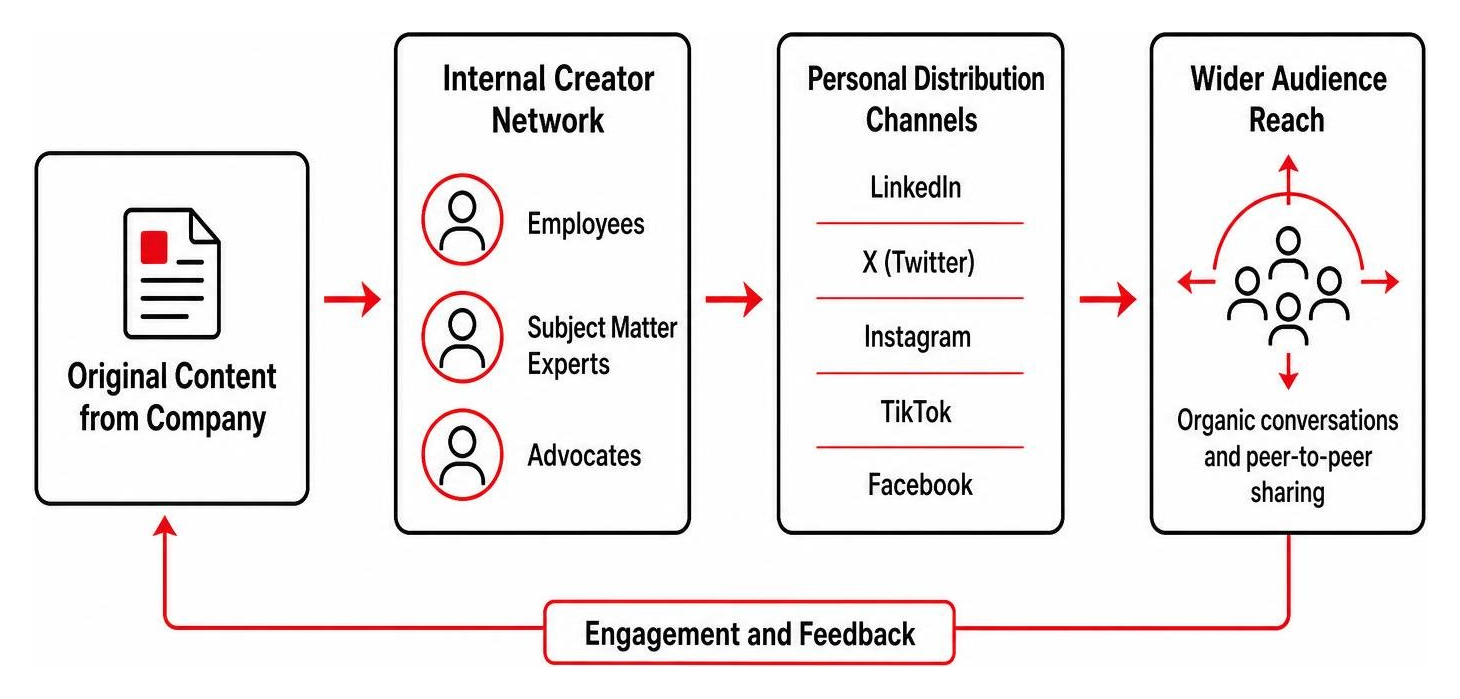
Modern organic reach relies heavily on personal distribution networks. Audiences relate to people more readily than logos.
For a complete framework on balancing team workflows with impactful creative campaigns, consult our comprehensive guide to modern social execution.
Activating Employees and Subject Matter Experts as Distribution Nodes
Company pages often see restricted feed distribution, but individual team profiles frequently generate significantly higher organic reach.
- Empower Internal Creators: Encourage your engineers, strategists, project leads, and executives to share their day-to-day expertise and insights.
- Streamline Internal Enablement: Provide ready-to-share summaries, data snippets, and creative assets across team communication channels.
- Highlight Real Experiences: Share authentic behind-the-scenes processes, technical challenges, and problem-solving methodologies.
Transforming Standard Campaigns into High-Impact Launch Moments
Rather than releasing scattered daily updates, organize major announcements into structured launch moments:
- Build Anticipation: Publish teaser questions, data snapshots, and behind-the-scenes previews ahead of the main release.
- Execute a Coordinated Launch: Align company page announcements with posts from internal leaders and partner networks on launch day.
- Maintain Momentum: Follow up with audience reactions, breakdown discussions, and interactive Q&A sessions to sustain engagement.
Optimization and Measurement: Proving Long-Term Value
Evaluating organic social success requires moving past basic vanity metrics and focusing on business outcomes.

Learn how to focus your tracking by measuring meaningful social metrics that demonstrate clear business impact.
Developing a Data-Driven Organic Social Framework
Establish a structured analytics process to guide content creation and audience development:
- Track High-Intent Actions: Monitor post saves, direct shares, profile link visits, and inbound message inquiries.
- Analyze Retention and Watch Time: Review audience drop-off points across native video content to refine pacing and hooks.
- Measure Downstream Impact: Apply consistent UTM parameters and CRM attribution tags to evaluate how organic touchpoints influence lead pipelines.
When building your tracking framework, prioritize metrics that reflect genuine engagement:
- Conversation Rate: Total comments and replies relative to total impressions.
- Amplification Rate: Ratio of shares, retweets, and reposts per published post.
- Audience Retention Rate: Average watch duration on native video content.
- Assisted Conversions: Number of inquiries, form fills, or sales influenced by organic touchpoints.
Refine your reporting cadence by learning how to implement tracking true campaign effectiveness across your marketing channels.
Avoiding Critical Pitfalls in Modern Organic Social Strategy
Avoid these common strategic traps that waste time and erode engagement:
- Over-Automating Customer Interactions: Using canned auto-replies frustrates users and diminishes trust.
- Chasing Mismatched Trends: Jumping on viral trends that do not align with your core brand confuses your target audience.
- Treating Feeds as Broadcast Channels: Publishing constant sales pitches without providing actionable value creates audience fatigue. Review our breakdown of common social marketing blunders to keep your brand’s reputation strong.
Frequently Asked Questions About Organic Social Strategy
How long does it take to see results from organic social channels?
Organic momentum typically builds over three to six months of consistent publishing and active community management. While individual posts can generate fast interaction, compounding benefits—such as inbound direct messages, search discovery, and brand loyalty—develop as your content archive and community grow.
What is the ideal posting frequency for organic reach?
Quality and engagement consistency matter far more than sheer volume. For most organizations, publishing three to four well-researched, high-value posts per week yields stronger algorithmic favor and audience retention than publishing lower-quality updates daily.
How can B2B brands achieve strong organic reach without large budgets?
B2B brands can drive meaningful organic distribution by turning executives and subject matter experts into active contributors, participating consistently in relevant industry discussions, and breaking down real-world client challenges into actionable educational content.
Conclusion
Winning at organic social media marketing requires moving beyond quick hacks and vanity metrics. By creating helpful content, empowering internal voices, and maintaining genuine community conversations, your brand builds durable credibility and compounding market reach.
Since 2008, Zen Agency has provided enterprise-grade custom web development, branding, and performance-focused digital strategies to help growing businesses increase visibility and ROI. Contact our team to scale your pipeline through our enterprise digital marketing services.