Why Modern Brands Cannot Afford to Ignore Social Influencer Marketing
Why Social Influencer Marketing Matters for Modern Brands
Social influencer marketing helps brands earn attention and trust through creators whose audiences already value their opinions. To make it work, choose creators based on audience fit and real engagement, match content to the platform, give clear goals without scripting every word, and measure outcomes with tracked links, codes, and sales data.
This is no longer a side experiment. In 2025, 86% of U.S. marketers worked with influencers, while 86% of consumers said an influencer inspired at least one purchase each year. The strongest campaigns do more than chase views: they combine credible product experiences, useful content, and paid amplification to move people from discovery to purchase.
For brands facing weak visibility or flat returns from traditional ads, creator partnerships can supply the social proof and platform-native content that audiences now expect. Honest reviews matter most: 67% of consumers say the best brand-creator collaborations are honest and unbiased.
I’m Joseph Riviello, CEO and Founder of Zen Agency, with more than 22 years of digital marketing leadership experience helping businesses improve traffic, leads, conversions, and revenue. In social influencer marketing, that means treating creators as a measurable part of a wider growth strategy, not a one-off posting channel.
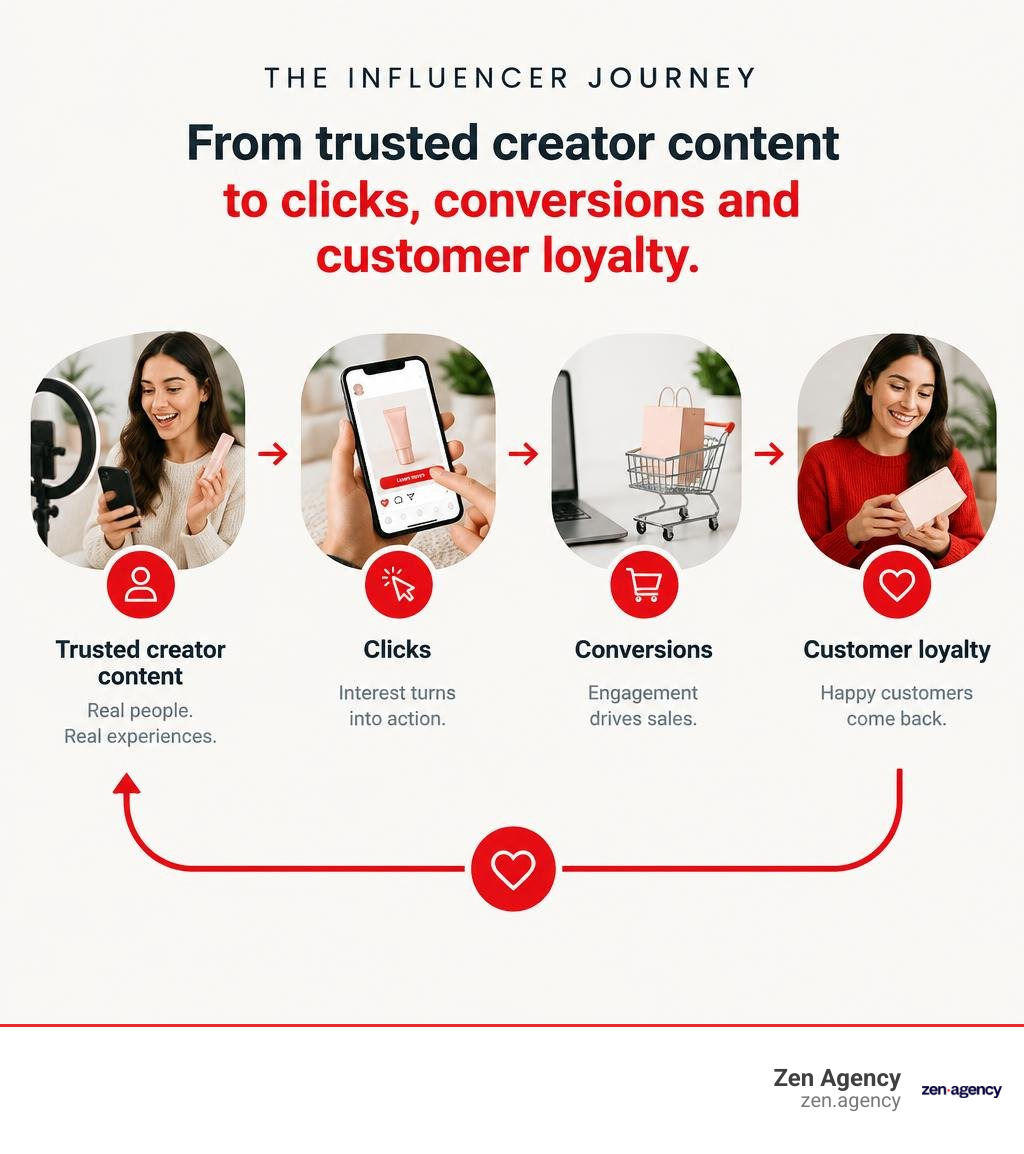
Social influencer marketing vocab explained:
The Strategic Value of Social Influencer Marketing in 2026
The creator economy has matured into a $32.6 billion global powerhouse. Brands are no longer asking if they should invest in creators, but how much. In fact, 26% of marketing agencies and brands now allocate more than 40% of their overall marketing budgets to creator partnerships.
Why this massive financial commitment? Because the return on investment speaks for itself. On average, influencer marketing generates $5.78 for every single dollar spent.
When applied strategically, creator partnerships bridge the gap between initial consumer awareness and tangible revenue. Consumers actively seek trusted recommendations rather than polished corporate slogans. According to Sprout Social’s 2026 research on influencer marketing statistics, 86% of consumers make a purchase inspired by an influencer at least once per year. By embedding your products into organic, everyday conversations, your brand taps directly into established digital communities.
To understand how this fits into broader brand building, review our comprehensive social media marketing guide for foundational strategies.
Why Influencer Collaborations Outperform Brand-Directed Ads
Traditional digital advertising faces steep hurdles: ad fatigue, banner blindness, and strict privacy controls. When a brand talks about itself, consumers remain naturally skeptical. When a creator they admire demonstrates a product in a real-world scenario, trust transfers directly to the brand.
Consider these realities from recent marketing data:
- Superior Content Quality: 69% of marketers state that influencer-generated content consistently outperforms brand-directed creative in both organic feeds and paid channels.
- Audience Demand for Transparency: 64% of consumers believe genuine, unbiased reviews are the single most effective format of creator content.
- Creative Co-Creation: 65% of influencers prefer collaborating during the initial strategy development rather than executing rigid, top-down corporate briefs.
When you grant creators the freedom to present your message in their unique voice, you unlock organic advocacy and powerful social proof that drives conversions. We explore this psychological shift further in our breakdown on increasing social media engagement.
Influencer Tiers by Audience Size and Engagement Rates
Influencers are categorized by audience scale, but bigger does not always mean better. In 2026, engagement depth consistently trumps raw follower counts.
| Influencer Tier | Follower Range | Average Engagement Rate | Primary Strengths | Ideal Campaign Goals |
|---|---|---|---|---|
| Nano | 1K – 10K | 3.69% – 5.0%+ | Ultra-high trust, hyper-local authority, cost-effective | Niche community activation, authentic UGC creation |
| Micro | 10K – 100K | ~8.7% | Dedicated niche followings, strong peer-level resonance | High conversion campaigns, localized retail events |
| Macro | 100K – 1M | 1.5% – 3.0% | Broad regional reach, professional production quality | Scaled brand awareness, major product launches |
| Mega / Celebrity | 1M+ | ~1.6% | Massive reach, pop-culture visibility | Mass-market awareness, prestige association |
Nano and micro-influencers continue to deliver exceptional efficiency. Micro-influencers routinely achieve engagement rates around 8.7%, vastly outperforming the 1.6% average seen with top-tier celebrity endorsements. Consequently, 53.8% of brands prioritize nano-influencers as their primary campaign partners, while 43% of marketers focus heavily on micro and nano tiers to maximize their budgets.

Platform Selection and High-Performing Content Formats
Choosing the right distribution channel dictates the success of your creative assets. Rather than attempting to maintain a thin presence across every network, modern brands concentrate on platforms that align directly with their target demographic and sales funnels.
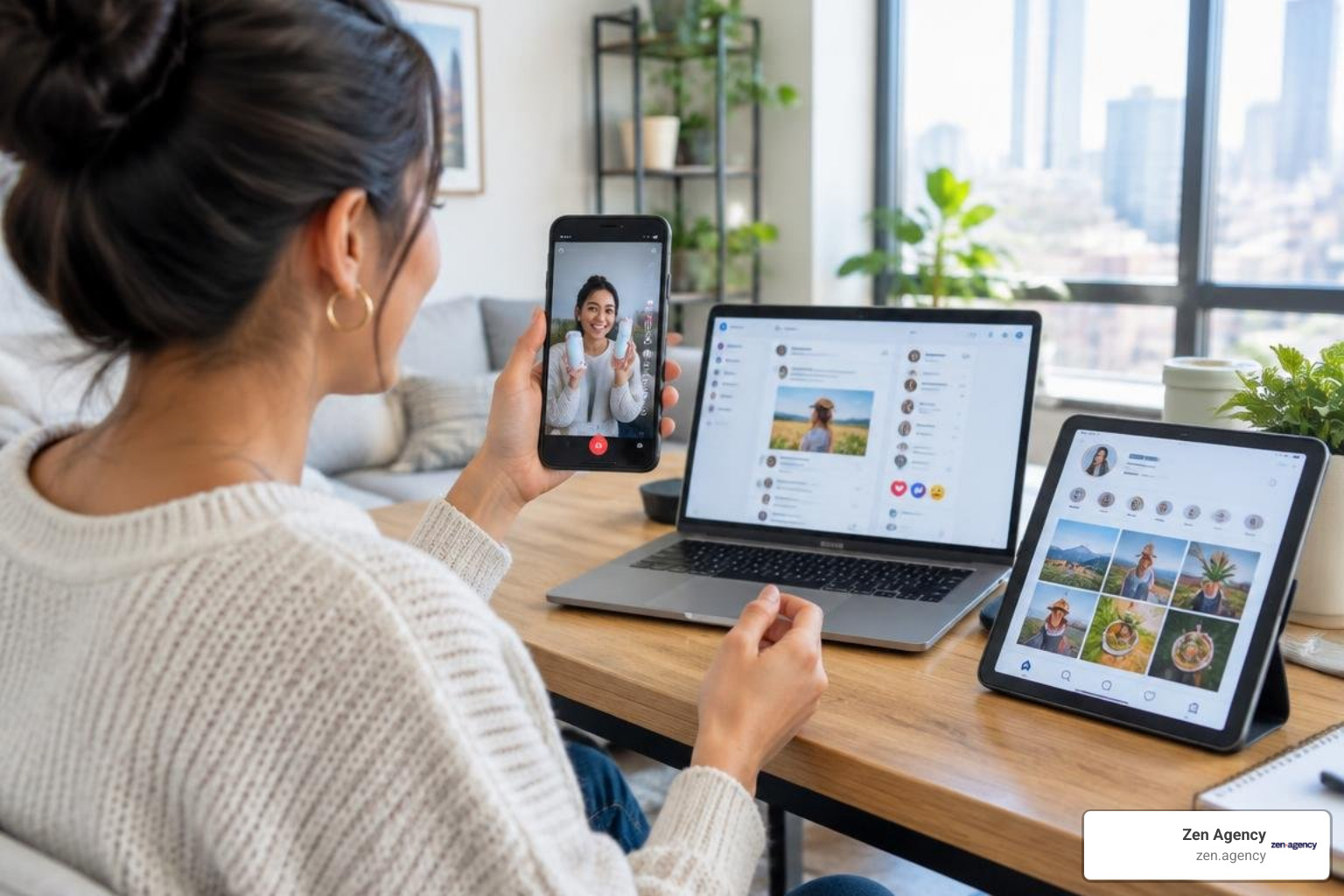
For a structured audit of where your organization should focus its resources, explore our effective social media marketing services.
Dominant Channels: TikTok, Instagram, YouTube, and LinkedIn
Each major channel serves distinct stages in the buyer’s journey:
- TikTok (Discovery & Social Commerce): 68.8% of brands actively run creator campaigns on TikTok, with 32% steadily increasing their budget allocation. With features like TikTok Shop utilized by 57% of brands, it has become a premier engine for rapid social search discovery and impulsive purchases, especially among Gen Z (where 27% engage directly with creator shopping links).
- Instagram (Visual Storytelling & Conversion): Instagram remains an indispensable channel, reaching 42% of active social users. Instagram Reels deliver phenomenal commercial intent: 79% of Reels viewers have completed a purchase after watching a video. High-performing niches like travel, gaming, and sports see engagement rates reaching up to 3.15%.
- YouTube (In-Depth Education & Long-Term Search): Reaching 71% of U.S. adults, YouTube dominates high-consideration purchases. Consumers prefer YouTube creators for comprehensive product breakdowns, deep-dive comparisons, and unboxings, with 52% of users also interacting heavily with YouTube Shorts.
- LinkedIn (B2B Authority & Thought Leadership): B2B creator marketing is expanding rapidly. Decision-makers look to trusted industry practitioners, founders, and executives on LinkedIn for software recommendations and service providers. 58% of B2B teams now maintain an “always-on” influencer strategy to maintain brand credibility.
Formats That Drive Engagement: Short-Form Video, UGC, and Live Commerce
Audiences respond to specific content frameworks:
- Short-Form Video (15–60 Seconds): 80% of brands rank short-form video as one of their most effective marketing vehicles. These quick, punchy assets hook attention immediately.
- Product Tutorials and How-Tos: 80% of social media users explicitly express a preference for how-to tutorials from creators, making instructional content vital for SaaS, consumer tech, and beauty brands.
- User-Generated Content (UGC): 56% of companies build creator campaigns strictly to acquire authentic UGC to enrich their own digital touchpoints. Learn how to scale this asset class by building a dedicated user-generated content strategy.
- Live Shopping & Social Commerce: 62% of brands rank interactive live shopping among their top three revenue drivers, fusing entertainment with instant checkout capabilities.
Step-by-Step Blueprint for Campaign Execution
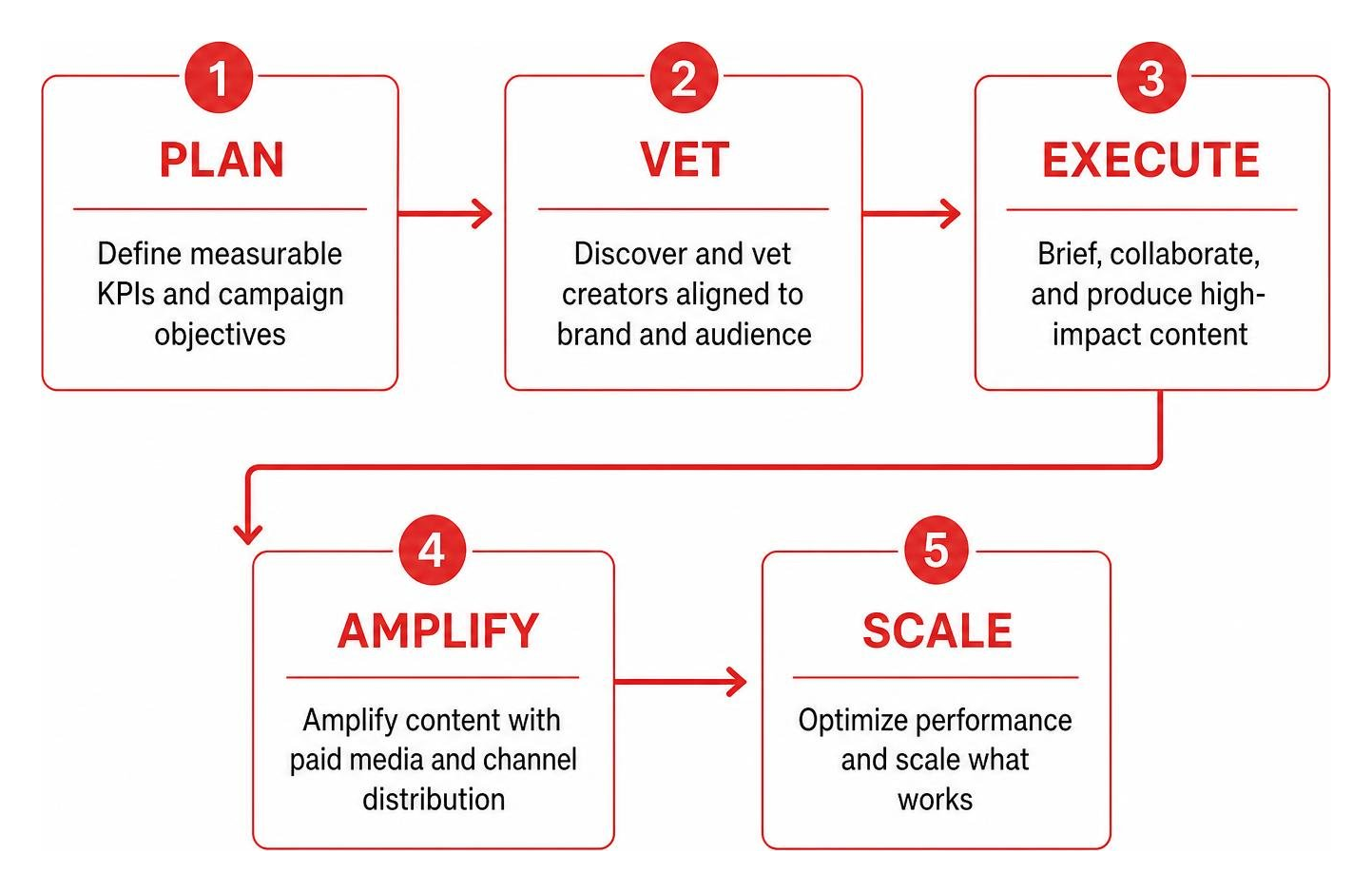
Executing a profitable influencer campaign requires rigorous structure. Moving from chaotic transactional outreach to predictable campaign systems is what separates market leaders from brands that waste marketing spend.
Core Pillars of a Social Influencer Marketing Strategy
Building an enterprise-ready creator program involves five foundational milestones:
- Define Measurable KPIs: Align each partnership with clear business outcomes—cost per acquisition (CPA), return on ad spend (ROAS), referral site traffic, or sheer brand lift.
- Discover and Qualify Creators: Leverage AI-powered contextual discovery tools to find creators discussing your industry topics rather than relying solely on surface-level demographics.
- Vet Rigorously for Quality:
- Verify follower growth history to eliminate unnatural spikes indicating purchased bots.
- Calculate genuine comment-to-view ratios.
- Examine historical brand sponsorships to prevent competitor saturation.
- Confirm audience geographic alignment (e.g., verifying U.S.-based audiences if targeting domestic markets).
- Develop Flexible Creative Briefs: Outline mandatory product details, compliance guidelines, and discount codes, but leave creative execution in the hands of the creator.
- Establish Always-On Workflows: 59% of marketers actively build long-term creator rosters, shifting away from disjointed, one-off posts toward continuous advocacy.
Integrating Creator Content with Paid Amplification
The true revenue multiplier in 2026 lies in creator licensing and paid amplification (also known as whitelisting or Partnership Ads). Instead of relying solely on organic creator reach, 77% of marketers actively repurpose creator content directly within their paid advertising funnels.
By running paid ads directly through the influencer’s social handle to custom audience segments, brands achieve significantly lower customer acquisition costs (CAC) and higher click-through rates. You can see how this transforms overall acquisition by reviewing our guide on integrating creator content into paid PPC ads.
Budgeting, Pricing Models, and Measuring ROI
Pricing in the creator economy is shaped by audience scale, exclusivity clauses, licensing rights, and content formats.

Common compensation frameworks include:
- Flat-Fee Per Deliverable: Fixed pricing for a defined asset package (e.g., 1 Reel + 2 Story frames). Standard baseline rates range from $10–$100 per post for nano-creators up to $1,000–$10,000+ for macro-creators.
- Performance-Based & Affiliate Commissions: Compensation tied directly to tracked sales volume, GMV, or qualified leads generated (typically 5%–20% commission rates).
- Hybrid Retainers: Combining a baseline creative production fee with performance bonuses for hitting conversion milestones. This is the preferred structure for ongoing brand ambassador programs.
- Long-Term Volume Agreements: 71% of influencers offer structured rate discounts (often 15%–25% off standard card rates) in exchange for secured 6- to 12-month retainer contracts.
Attribution Methods and Performance Measurement
To accurately evaluate performance and optimize future creator spend, brands deploy multi-touch attribution frameworks:
- Custom UTM Parameters: Dedicated tracking parameters attached to creator bio links, blog posts, or swipe-ups to monitor on-site behavior and conversion funnels.
- Exclusive Promo Codes: Distinct alphanumeric discount codes per influencer to track offline, desktop, or delayed purchases.
- Post-Purchase Surveys: Zero-party attribution surveys at checkout asking: “How did you first hear about us?”
- Brand Lift Studies: Measuring direct changes in organic search volume, brand mentions, and direct website traffic during active campaign flights.
Emerging Shifts Shaping Social Influencer Marketing in 2026
The influencer landscape in 2026 is defined by several notable evolutions:
- AI-Powered Discovery Over Static Filters: 21.11% of marketers use AI for content ideation and 13.89% for campaign brief development. AI tools now analyze creator video transcripts and visual context to match brands with hyper-relevant niche experts.
- The Human Authenticity Premium: As generative AI floods feeds with automated content, human personality and verified personal experiences command higher engagement and premium pricing.
- Creators as Strategic Brand Consultants: Forward-thinking brands engage top creators as cultural consultants to guide product development, packaging, and messaging, as highlighted in Vogue’s analysis on how creator marketing is evolving.
- Newsletter & Off-Platform Sponsorships: Influencer partnerships have expanded beyond social feeds into curated Substack publications, personalized email lists, and real-world experiential community activations.
Frequently Asked Questions about Influencer Marketing
How much should a brand typically budget for influencer marketing?
Most growing brands allocate between 15% and 30% of their total digital marketing budget toward creator collaborations, with aggressive direct-to-consumer brands often exceeding 40%. Start by piloting a targeted test budget across 5–10 nano and micro-influencers to establish baseline acquisition costs before scaling investment into macro-partnerships and paid licensing.
How can brands detect fake followers and prevent influencer fraud?
Modern vetting requires analyzing engagement authenticity. Look for suspicious red flags such as repetitive or generic one-word comments (e.g., “Great pic! “), sudden unnatural spikes in follower counts overnight, and mismatched audience locations. Modern marketing teams use specialized fraud detection tools (utilized by 7.22% of advanced data teams) to audit audience authenticity scores before signing contracts.
What is the difference between brand ambassadors and transactional influencers?
A transactional influencer relationship is a one-time paid post focused on immediate short-term reach. A brand ambassador enters an ongoing, long-term agreement (typically 6 to 12 months) to integrate your brand consistently into their lifestyle and content. Long-term ambassadorships build deeper consumer trust, provide sustained social proof, and secure predictable content pipelines at discounted bulk rates.
Conclusion: Accelerating Business Growth Through Strategic Collaborations
Social influencer marketing has evolved from an ad-hoc tactic into an indispensable, full-funnel growth engine. When you partner with authentic creators, respect their artistic voice, and amplify high-performing assets through structured paid campaigns, you cultivate lasting market authority and predictable revenue pipelines.
At Zen Agency, we engineer full-funnel digital marketing strategies and custom web solutions that transform audience attention into bottom-line profitability. If you are evaluating where to direct your growth budget for maximum impact, explore our strategic comparison on choosing between social media marketing and traditional marketing to make informed, data-backed investments.