Choosing the Best Conversion Optimization Platform for Your Marketing Team
Choose Conversion Optimization Tools That Match Your Team and Data
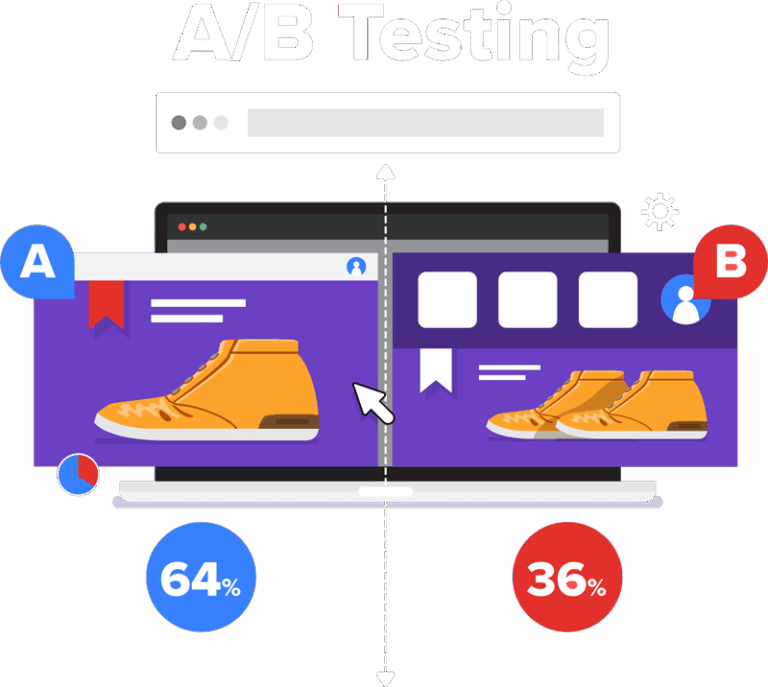
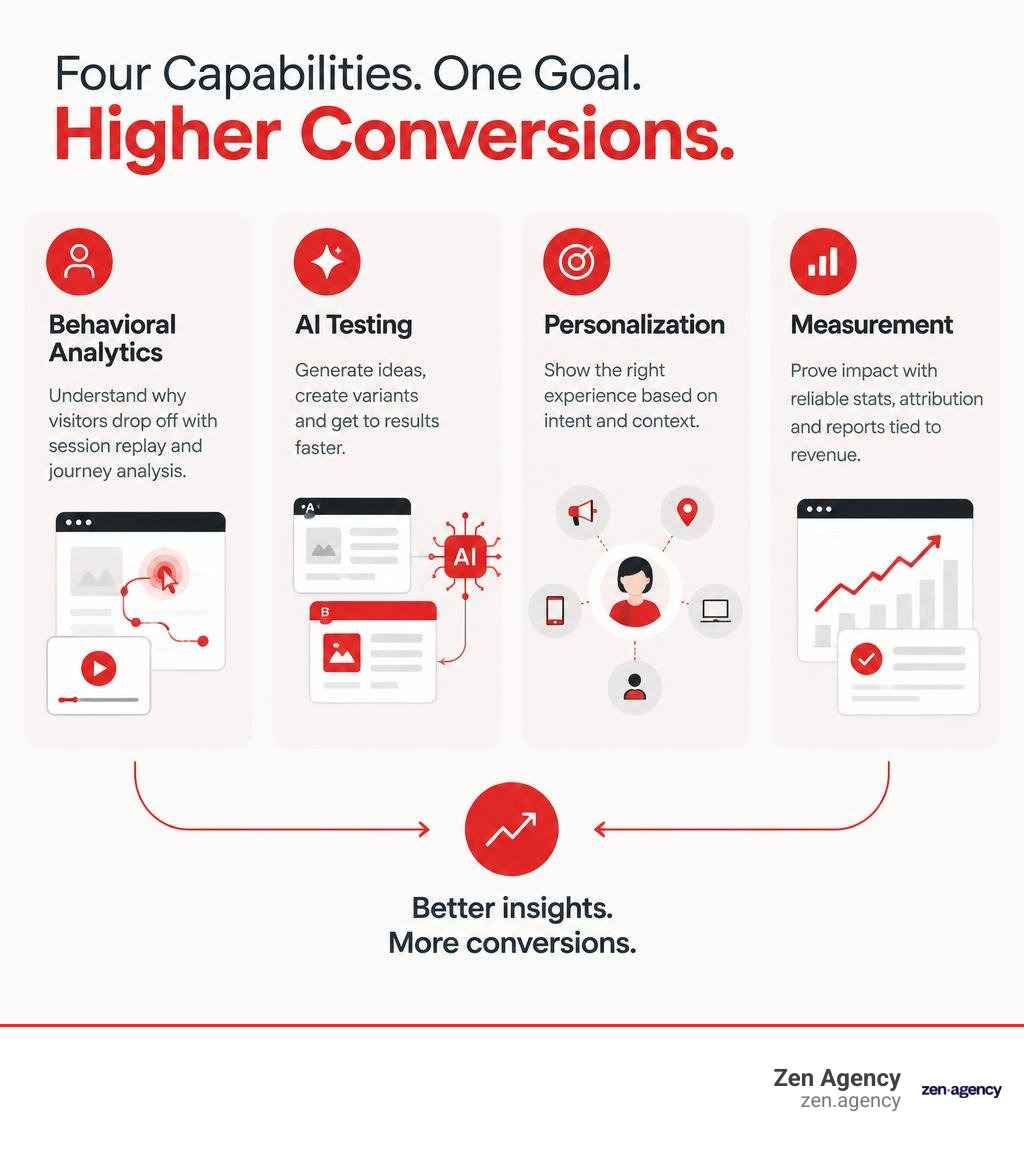
The best conversion optimization tools do more than run basic A/B tests. They help your team find friction, create page variations, target the right visitors, and measure whether changes improve leads, sales, or revenue.
When comparing CRO software, start with these four questions:
- Can it reveal why visitors drop off? Behavioral data, session replay, and journey analysis help uncover checkout, form, and onboarding friction.
- Can your marketers launch tests without waiting on developers? Look for visual editors, prompt-based workflows, and CMS-friendly deployment.
- Can it personalize by intent? Strong platforms use signals such as campaign source, keyword, location, device, and past behavior.
- Can it prove business impact? Prioritize reliable experiment statistics, attribution controls, and reporting tied to conversions, pipeline, or ROAS.
Traditional testing platforms are still useful for controlled experiments. But newer AI-driven options can speed up idea generation, variant creation, targeting, and analysis. The right choice depends on whether your biggest constraint is insight, engineering time, paid-traffic relevance, or statistical confidence.
I am Joseph Riviello, CEO and Founder of Zen Agency, with more than 22 years of digital marketing leadership experience helping companies improve traffic, leads, conversions, and revenue. In this guide, I will break down conversion optimization tools through the lens that matters most: which capabilities can help your marketing team scale profitably.
Handy conversion optimization tools terms:
Traditional A/B Testing vs. Next-Generation Experimentation Platforms
In the early days of digital marketing, testing was largely a manual numbers game. Marketers came up with a hypothesis, asked a developer to code alternative layouts, and waited weeks or months to reach statistical significance. As digital ecosystems evolve in September 2026, the gap between traditional testing suites and next-generation autonomous platforms has widened dramatically.
Traditional tools rely heavily on static split-testing models. They split traffic evenly between two or more static variations (Control vs. Variant A) and require strict sample sizes before declaring a winner. While this approach provides solid statistical rigor, it introduces velocity bottlenecks. Marketing teams often spend weeks waiting for developer availability just to adjust a headline or tweak a form field.
Furthermore, traditional setups run a constant risk of sample-ratio mismatch (SRM)—an anomaly where the actual split of traffic deviates from the planned allocation, rendering test conclusions invalid.
Next-generation experimentation platforms solve these operational bottlenecks by using machine learning, agentic workflows, and multi-armed bandit algorithms. Instead of locking traffic into a rigid 50/50 split, modern tools dynamically allocate more traffic to higher-performing variants in real time, protecting revenue while testing hypotheses.
Understanding the importance of A/B testing for lead generation means recognizing that velocity is a competitive advantage. Teams that test five variations a week learn exponentially faster than teams testing one variation a quarter.
| Evaluation Dimension | Traditional A/B Testing Tools | Next-Generation AI Optimization Platforms |
|---|---|---|
| Ideation & Hypotheses | Manual heuristic reviews and static analytics | Autonomous AI behavioral scans and predictive scoring |
| Variant Creation | Manual front-end HTML/CSS/JS development | Prompt-based generation, sketch-to-code, natural language |
| Traffic Allocation | Fixed split (e.g., rigid 50/50) | Dynamic multi-armed bandit and Bayesian allocation |
| Engineering Dependency | High (requires developer tickets and code reviews) | Low (marketers build, preview, and deploy safely) |
| Personalization | Basic rule-based segmentation (geo, device) | Real-time intent detection, dynamic copy, predictive matching |
| Statistical Engine | Frequentist models requiring fixed sample sizes | Bayesian continuous monitoring with automated guardrails |

How AI Agents Transform Conversion Optimization Tools
The rise of agentic AI within conversion optimization tools has changed how marketing teams operate. Rather than acting as passive dashboards, modern platforms deploy specialized AI agents to handle every phase of the experimentation lifecycle.
Leading platforms illustrate this shift:
- Insight Agents: AI-driven tools continuously monitor visitor journeys and behavioral drop-offs to pinpoint underperforming pages and high-friction segments automatically.
- Autonomous Coding Agents: Modern experimentation platforms turn natural-language prompts and wireframe concepts into fully functional, production-ready front-end code without requiring manual development.
- Continuous Monitoring Agents: Using Bayesian statistics, platforms automatically pause underperforming variants, alert teams to conversion drops, and scale winning elements across targeted segments.
The performance gains from this agent-driven model are substantial. Teams adopting autonomous workflows have documented a +29.7% increase in conversion rates, an 8% growth in returning visitors, 90 hours saved per month in manual testing overhead, and a 7.2x return on investment. Similarly, users of prompt-based testing platforms routinely achieve an average conversion uplift of 15% within 30 days, with e-commerce stores securing a +16% order conversion uplift and hospitality brands driving an +80% click-through rate boost.
Behavioral Intelligence and Real-Time Intent Mapping
High-converting experiences depend on understanding user intent. If you send paid traffic from specific, high-intent search queries to generic landing pages, visitors will quickly bounce. Modern platforms integrate deep behavioral intelligence to bridge this gap.
Platforms such as Fullstory capture privacy-first, session-level records of every user interaction. This behavioral intelligence provides the qualitative context—such as rage clicks, form field hesitation, and scrolling drop-offs—that AI algorithms need to diagnose user struggle.
At the same time, intent-driven platforms connect paid search signals directly to landing page variations. By mapping keywords, ad copy, geographic location, and referral sources to dynamic page variants, growth teams deliver relevant messaging instantly.
For instance, intent-mapping deployments have produced a +43% CTR lift on high-intent paid keywords, a +24% CTR increase on localized regional messaging, and a +10% downstream conversion lift on competitor-targeted campaigns. Aligning content with intent is essential; following the blueprint for capturing high-intent landing page leads helps ensure your paid ad investments turn into measurable pipeline and revenue.
Top Features to Look for in Conversion Optimization Tools
Selecting the right conversion optimization platform requires looking beyond marketing claims to assess technical capabilities. Enterprise growth teams need software that is agile for non-technical users while remaining secure and performant for developers.

To build a reliable evaluation checklist, look for these core capabilities:
- Predictive Impact Scoring: Advanced platforms analyze data across thousands of historical experiments to score proposed variations, helping teams prioritize high-impact tests before writing any code.
- Asynchronous, Flicker-Free Script Architecture: The testing script should load asynchronously with a minimal footprint (such as a 28.4KB cached snippet) to prevent layout shifts or page-load delays.
- Visual Element Validation: Intuitive element selectors give marketers full control to highlight, edit, or undo specific page components safely.
- Brand Asset Detection: Intelligent engines automatically detect your website’s typography, color schemes, and styling rules to keep every generated variant on-brand.
- Downstream Attribution Tracking: Native integrations with analytics suites, CRMs, and CDPs ensure you evaluate experiments based on pipeline and revenue, not just surface-level clicks.
For teams building their overall testing roadmap, our practical guide to conversion optimization offers a strong foundation for organizing hypotheses and measurement frameworks.
Prompt-Based Experimentation and Code-Free Workflows
A key evolution in conversion optimization software is the arrival of prompt-based experimentation (PBX). Enterprise platforms now allow marketers to design complex A/B tests through conversational AI interfaces.
With prompt-based experiment functionality, a marketer can describe a desired design change, upload an image or wireframe sketch, and let the AI generate the necessary HTML, CSS, and JavaScript. The system identifies targeted elements, maintains visual hierarchy, and lets users edit the code directly when needed.
This approach removes the engineering bottlenecks that traditionally stall experimentation programs. Teams using prompt-based workflows have moved from launching a handful of tests per quarter to deploying and validating ideas in real time.
Crucially, modern tools run on ultra-lightweight architectures—such as a 28.4KB cached asynchronous snippet—that run locally in the visitor’s browser without blocking page rendering or causing visible layout flicker.
Statistical Rigor, Data Privacy, and Tech Stack Integration
Fast variant creation means little without sound statistical foundations and enterprise-grade security. When comparing tools, evaluate how each vendor handles data accuracy, regulatory compliance, and stack compatibility:
- Statistical Engines (Bayesian vs. Frequentist): Frequentist engines require rigid sample sizes and fixed test durations to prevent false positives. Bayesian engines calculate the true probability of a variant outperforming the baseline, allowing for early stopping and continuous monitoring.
- Attribution Windows & SRM Alerts: Platforms must include custom attribution windows aligned with your sales cycle and automated sample-ratio mismatch (SRM) alerts to catch traffic distribution errors before they skew your data.
- Tracking Resilience: Safari’s Intelligent Tracking Prevention (ITP) and modern ad blockers can truncate cookies and distort conversion tracking. Top platforms use server-side tracking, DNS delegation, or first-party local storage to maintain complete data visibility.
- Compliance & Security: Look for SOC2 Type II and ISO 27001 certifications, as well as full compliance with GDPR, CCPA, and HIPAA regulations.
- E-Commerce Stack Compatibility: The platform should integrate cleanly with your core CMS and e-commerce infrastructure—such as Shopify, Magento, and WooCommerce. If you operate an online store, explore the ultimate playbook to skyrocket ecommerce conversion rates for tactical ways to pair these tools with your store layout.
Balancing Automation with Human Context Across Cross-Functional Workflows
While AI-driven automation significantly accelerates experimentation, conversion optimization is not an autopilot exercise. The most successful growth programs combine algorithmic speed with human strategic context.

AI algorithms excel at detecting statistical anomalies, uncovering high-friction form fields, and generating alternative copy. However, AI cannot replace a team’s deep understanding of brand positioning, customer psychology, and broader business economics.
For instance, an autonomous algorithm might discover that removing an informative product disclaimer increases immediate checkouts. A human strategist, however, recognizes that omitting that context leads to customer support complaints, returns, and lower lifetime value.
To protect brand integrity while maximizing testing velocity, enterprise organizations adopt a human-in-the-loop framework:
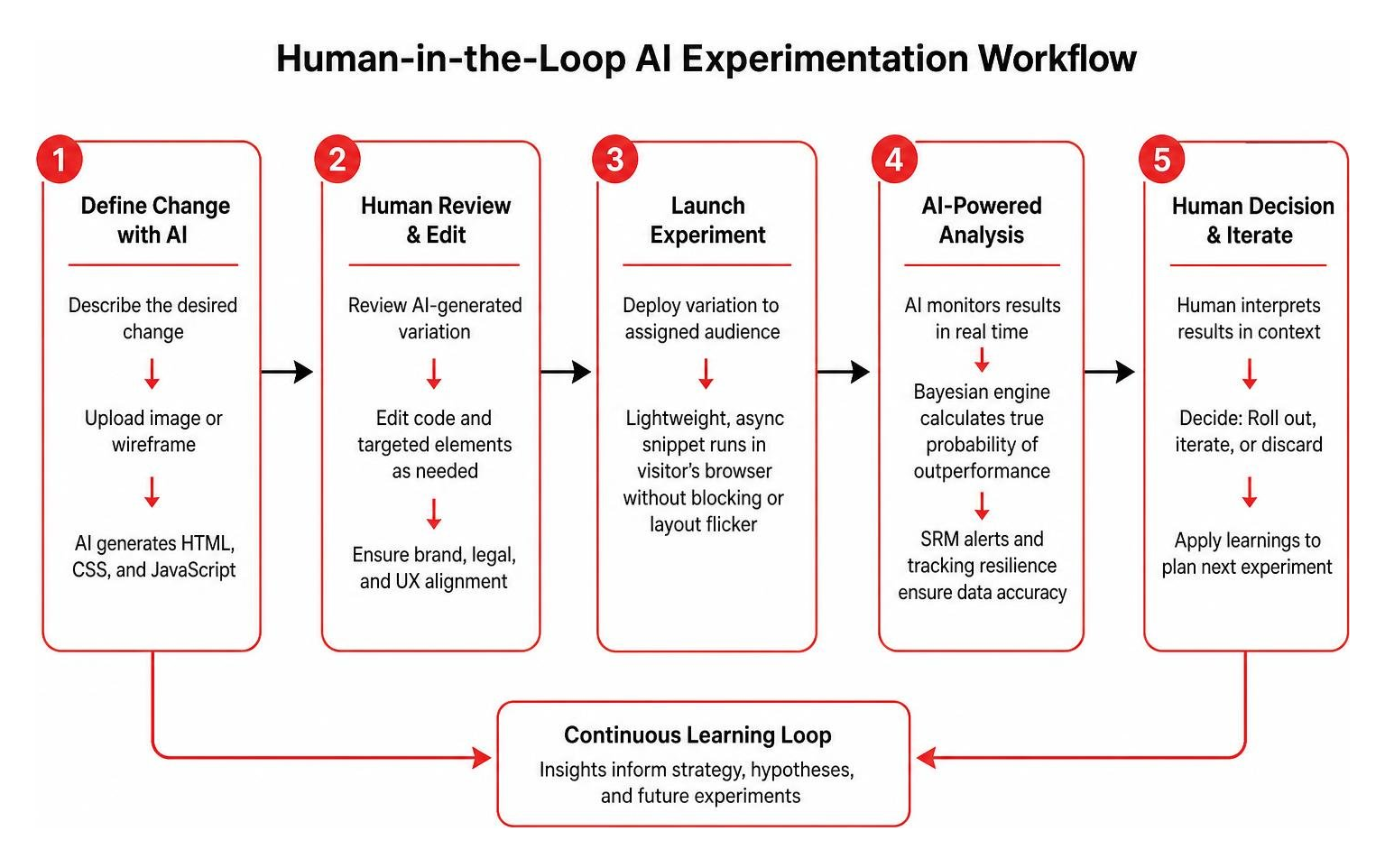
- Heuristic Analysis Meets AI Diagnostics: Pair machine-generated drop-off data with qualitative user feedback and expert design evaluations.
- Pre-Flight Brand Governance: Require human review for AI-generated variations to ensure messaging aligns with your brand voice and legal requirements.
- Automated Guardrails: Set real-time conversion drop alerts that automatically pause any variant causing a statistically significant decline in primary metrics.
Evaluating Conversion Optimization Tools for Marketing and Product Teams
Different departments require different capabilities from an optimization platform. Choosing a tool that serves only one group often creates operational friction:
- Marketing Teams: Require intuitive visual builders, prompt-based variant generation, flexible audience segmentation, and fast campaign-intent mapping without engineering tickets.
- Product Teams: Need deep behavioral analytics, feature flagging, multivariate testing capabilities, and funnel drop-off diagnostics to optimize in-app onboarding flows.
- Engineering Teams: Demand server-side SDKs, clean APIs, zero page-flicker architecture, high performance standards, and robust security certifications.
When cross-functional teams struggle to align their testing stacks, partnering with experienced professionals helps build an effective experimentation program. Reviewing why you need professional CRO implementation services can help you determine whether internal management or specialized agency support is the best fit for your growth goals.
Establishing Governance, Safety Guardrails, and Downstream Impact Tracking
To run hundreds of experiments each year without disrupting user experience or data hygiene, growth teams need clear operational guardrails:
- Role-Based Access Control (RBAC): Establish defined permissions for junior marketers, content creators, and senior leaders to review and approve live tests.
- Mutual Exclusion Groups: Prevent multiple simultaneous experiments from running on the same audience or page element, which can muddy attribution and distort results.
- Downstream Revenue Attribution: Connect experiment variations directly to CRM pipelines, closed-won deals, and customer lifetime value—ensuring you optimize for revenue rather than vanity clicks.
- Automated Rollback Controls: Deploy multi-armed bandit systems that automatically route traffic away from losing variations in real time, protecting your baseline revenue while experiments run.
Frequently Asked Questions About Conversion Optimization Software
How do AI-powered conversion optimization tools differ from traditional A/B testing software?
Traditional A/B testing tools require manual hypothesis creation, custom front-end development, and rigid, fixed-sample traffic splits. AI-powered conversion optimization tools automate this entire lifecycle.
They use behavioral intelligence to uncover friction points, generate test-ready front-end variants from natural-language prompts, dynamically allocate traffic using multi-armed bandit algorithms, and deliver real-time personalization based on user intent.
Can non-technical marketers run multivariate experiments without engineering resources?
Yes. Modern prompt-based experimentation (PBX) platforms allow non-technical team members to build, preview, and launch sophisticated experiments using conversational prompts and visual element selectors.
These platforms automatically generate the required CSS and JavaScript while preserving your site’s fonts, colors, and responsive layout—allowing marketers to deploy tests without submitting developer tickets.
What measurable conversion rate lift and ROI can growth teams expect?
While outcomes vary by baseline traffic, industry, and offer strength, teams adopting modern conversion optimization tools consistently report significant gains:
- Average conversion uplifts of 15% to 29.7% within 30 days.
- E-commerce brands frequently see order conversion improvements of +16%.
- Tailored paid-traffic landing pages have generated +43% CTR lifts on high-intent keywords.
- Operational efficiencies often save teams 90 hours per month, driving an average 7.2x ROI.
Conclusion
Choosing the right conversion optimization platform is a strategic decision that directly influences your growth velocity and bottom line. Whether your priority is removing developer bottlenecks with prompt-based AI testing, connecting paid ad intent to personalized landing pages, or establishing enterprise-grade statistical governance, the modern CRO landscape offers purpose-built tools for every operational need.
At Zen Agency, we have spent more than two decades developing custom, high-converting digital experiences. Based in Pennsylvania with locations across Wyoming PA, Scranton, Wilkes-Barre, and Hazleton—as well as Billings, MT—our team delivers enterprise solutions that help businesses scale traffic, improve profitability, and maximize ROI.
If you are looking to align your paid traffic strategies with high-converting landing page architectures, explore our insights on e-commerce vs service-based PPC campaign strategies to discover how targeted acquisition and modern experimentation drive sustainable revenue growth.