The Blueprint for Capturing High-Intent Landing Page Leads
Turn More Visitors Into High-Intent Landing Page Leads
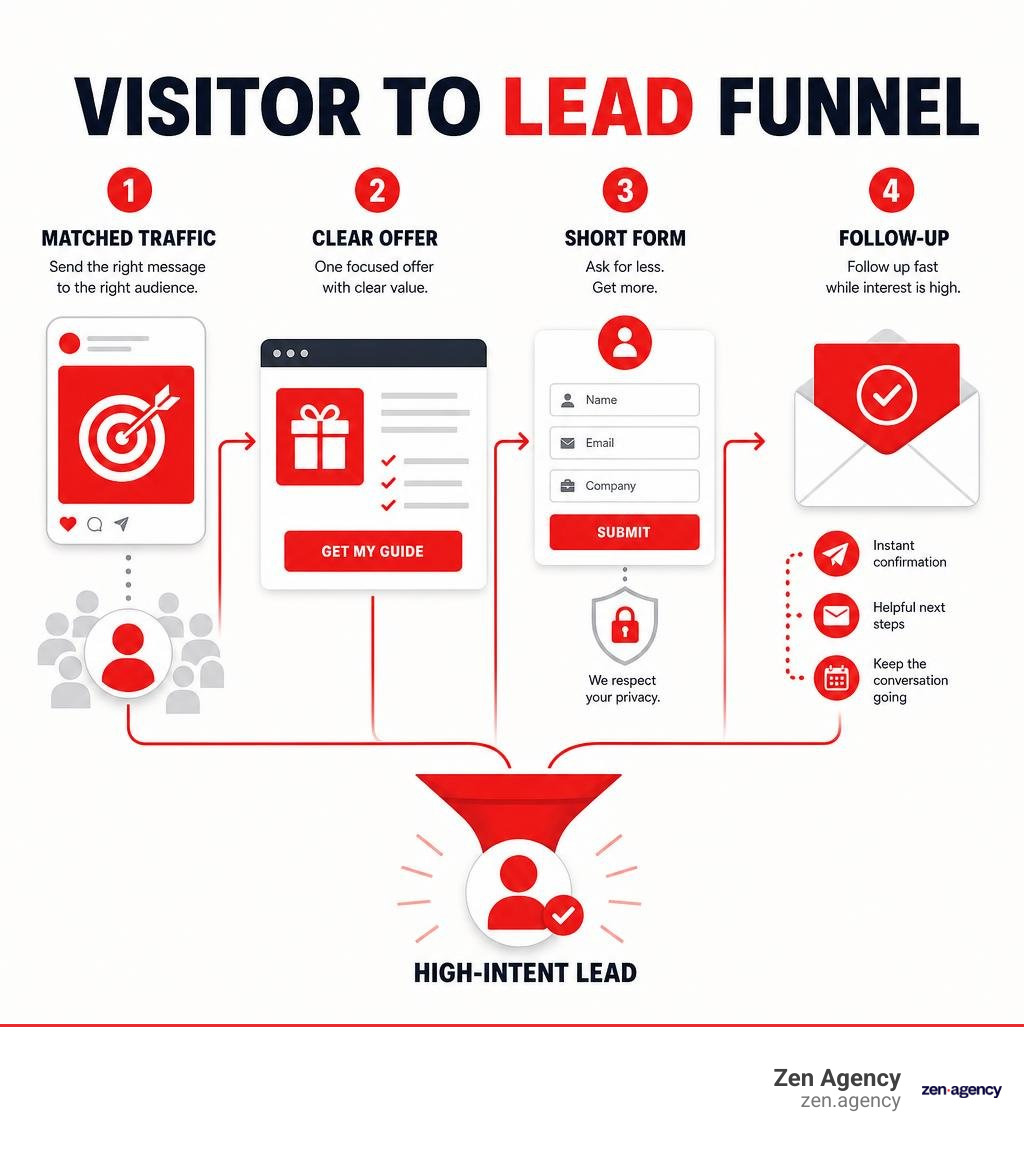
To generate more Landing page leads, send each campaign to a focused page with one offer, one clear call to action, and a short form. Match the page headline to the message that brought visitors there, show why the offer is worth their information, add proof that you can be trusted, and follow up immediately after they submit.
A homepage has to serve many audiences and goals. A lead capture landing page does not. It removes distractions and gives a visitor one simple next step: download the guide, request the quote, book the demo, or join the waitlist.
The details matter. Extra form fields create friction, while vague copy gives people little reason to act. Strong landing pages earn attention quickly, make the value clear, and connect the form submission to a useful next step.
I’m Joseph Riviello, CEO and Founder of Zen Agency, with more than 22 years of experience helping companies improve the systems that turn traffic into revenue. In this guide, I’ll break down how to create Landing page leads that are not just higher in volume, but stronger in intent and more likely to convert.
Quick Landing page leads terms:
Understanding Lead Capture Landing Pages vs. Standard Web Pages
When we audit marketing campaigns that struggle to scale, the root issue is often simple: businesses drive high-intent, paid traffic directly to their homepage.
A homepage acts as a digital storefront. It contains top-level navigation, links to various services, company history, blog archives, career openings, and general brand storytelling. While that works well for casual browsers discovering your brand for the first time, it introduces immense friction for someone who clicked on an ad looking for a specific solution.
A dedicated lead capture landing page operates on a completely different psychological premise. It isolates traffic to a single conversion pathway. By eliminating headers, footers, navigation menus, and unrelated outbound links, you remove cognitive distractions and keep visitor attention squarely on your offer. Understanding the role of landing pages in lead generation begins with recognizing that focused attention yields higher conversion rates. Studies consistently show that marketers capture substantially more leads by sending traffic to purpose-built landing pages rather than a general homepage.
For businesses targeting regional markets—whether near our offices across Pennsylvania in Wilkes-Barre, Scranton, Wyoming, Kingston, and Hazleton, or out in Billings, Montana—hyper-local alignment is equally vital. Understanding why dedicated landing pages can drive more leads to your local business ensures that your ad copy matches local intent, reinforcing relevance through customized geographic proof points.
| Strategic Dimension | Standard Homepage | Dedicated Lead Capture Landing Page |
|---|---|---|
| Primary Objective | Brand overview and broad navigation | Single specific conversion goal |
| Header Navigation | Comprehensive (5–10+ menu links) | Removed entirely or stripped down |
| Audience Focus | Broad (customers, recruits, investors) | Segmented, specific campaign audience |
| Message Matching | Generalized company messaging | Exact match to the upstream ad or link |
| Conversion Focus | Diffuse across multiple CTAs | Singular, friction-free call to action |
| Average Conversion Rate | Typically 1%–3% | Frequently 10%–25%+ depending on offer |
When you build pages using tools like LeadLanding — AI Landing Page Generator or Form Landing Page Builder for Lead Generation, the underlying advantage remains constant: simplicity beats clutter. A dedicated page preserves the momentum of the click, confirming to visitors that they have landed in precisely the right place to solve their problem.
Proven Frameworks for Generating High-Intent Landing Page Leads
Converting a cold visitor into an actionable lead requires an intentional psychological framework. High-converting pages do not assemble headlines, forms, and buttons at random; they follow structured blueprints designed to guide decision-making.

Problem-Solution and Value Stack Frameworks
The Problem-Solution Framework targets high-intent visitors who already know their pain point. The page immediately validates their frustration in the headline, demonstrates empathy in the subheadline, presents your offer as the direct resolution, and asks for minimal contact info to access that relief.
For example, if your target audience struggles with manual lead intake, the page might lead with: “Stop Losing Qualified Inquiries to Slow Follow-Up” followed by a breakdown of how an automated blueprint eliminates lost revenue.
The Value Stack Framework works exceptionally well for lead magnets, webinars, and toolkits. Instead of asking for a form submission in exchange for a single generic PDF, you bundle multiple complementary assets together to elevate the perceived value. Learn how to create a lead magnet that converts by packaging high-utility checklists, templates, and video walkthroughs together. When visitors see a structured bundle—such as a masterclass, an execution checklist, and an audit template—the perceived return easily outweighs the small effort of entering their email address.
Authority-Based Proof and Curiosity Hooks
The Authority-Based Framework relies on third-party credibility to neutralize skepticism. This approach works best for complex B2B services, technical consulting, and high-ticket offers where trust is the primary obstacle. It prominently features:
- Logos of recognizable client brands.
- Verified customer reviews with full names and professional headshots.
- Quantifiable results (e.g., “Helped scale 150+ B2B service brands to predictable profitability”).
- Industry recognitions, such as being featured among the best lead generation companies in Pennsylvania 2026 on Semrush.
The Curiosity Hook Framework, by contrast, leverages an information gap. It presents an intriguing premise or counterintuitive finding that visitors can only resolve by completing the form. For instance, an audit headline might read: “The 3 Hidden Tracking Errors Costing You 30% of Your Ad Budget (And How to Fix Them in 10 Minutes).” The curiosity must connect to a genuine, highly practical solution so that post-submission delivery satisfies the user rather than feeling like clickbait.
Key Elements of a High-Converting Lead Capture Page
To transform these frameworks into functional web assets, you need clean visual hierarchy and purposeful layout choices.

A conversion-ready landing page positions core value propositions and conversion elements above the digital fold, ensuring mobile visitors immediately understand what you provide and how to claim it.
Crafting Benefit-Driven Headlines and Persuasive Copy
Your headline is the single most important piece of copy on the page. If it fails to hook the reader within three seconds, supporting copy goes unread.
Follow these copy guidelines:
- Keep Headlines Concise and Direct: Aim for 10 words or fewer that speak directly to an end outcome. Focus on what the user gains, not your company’s product features.
- Use the Rule of Three: When writing supporting body copy, organize your key benefits into three scannable bullet points. The human brain naturally absorbs information grouped in triads.
- Lead with Action-Oriented Verbs: Replace passive descriptions with decisive language (“Accelerate,” “Eliminate,” “Secure,” “Automate”).
- Maintain Skimmability: Use bold text for key phrases, short paragraphs (2–3 lines maximum), and clear subheadings so visitors scanning on mobile devices absorb your pitch effortlessly.
For a thorough breakdown of how other platforms approach page design and templates, reviewing resources like this LeadPages Review on YouTube can give you useful perspective on standard layout conventions.
Designing Frictionless Forms to Capture Landing Page Leads
Form design can make or break conversion rates. Industry data shows that every additional form field you add costs you 10–15% of completions. If a field is not strictly necessary for initial qualification or routing, remove it.
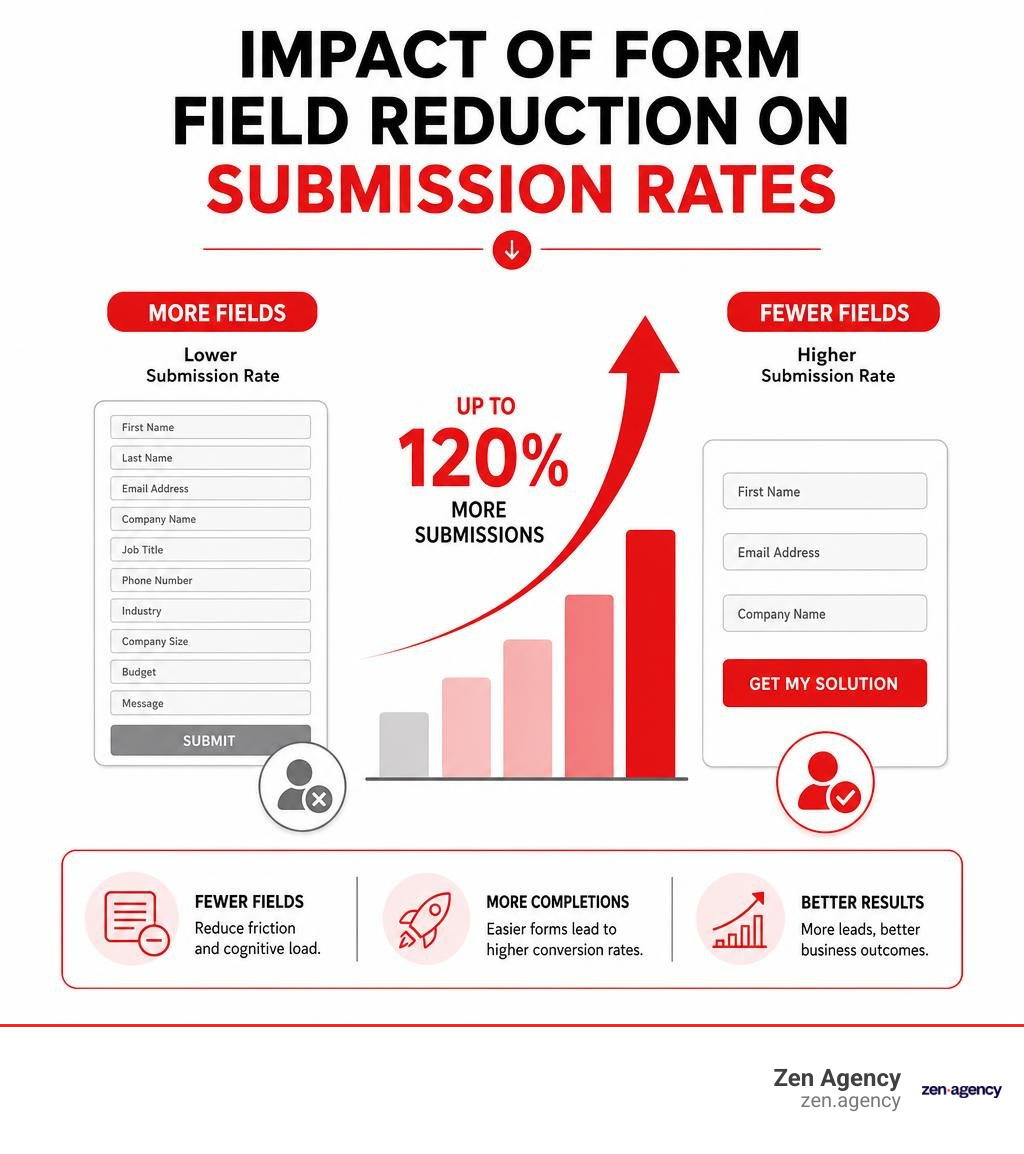
Review the ultimate guide to WordPress lead generation forms, funnels, and free plugins to see how streamlined form mechanics boost capture rates. If you need deeper qualification data, use a multi-step form instead of presenting ten fields at once. Multi-step forms leverage the psychological principle of momentum: asking one simple question on screen one makes visitors far more likely to finish the remaining fields on screen two.
High-Impact CTAs and Trust Signals
Your call-to-action button should never say “Submit.” That is friction-heavy and emphasizes the user’s effort rather than their reward. Instead, focus on creating compelling calls-to-action for lead generation that highlight the payoff:
- “Get Your Free Audit Instantly”
- “Claim Your Strategy Blueprint”
- “Start Your 14-Day Free Trial”
Pair your CTA with prominent trust signals. Place security seals, transparent privacy statements (“We respect your privacy; zero spam, ever”), and client endorsements right beneath or beside the form to minimize hesitation at the exact moment of conversion.
Advanced Traffic Alignment, Optimization, and Lead Nurturing
Building a high-converting page is only half the battle. To maximize ROI, you must align the page with upstream traffic channels and downstream sales workflows.
Aligning Paid Traffic Channels with Landing Page Leads
A high bounce rate often points to broken “ad scent”—a mismatch between the ad’s promise and the landing page’s content. If your Google or Meta ad advertises a “Free 2026 Commercial SEO Checklist,” the landing page hero headline must use identical terminology.
When you learn how to optimize landing pages for higher PPC conversion rates, matching visitor intent becomes second nature:
- High-Intent Search Traffic (Google Ads): Visitors actively searching for a specific service require direct problem-solution copy with immediate quotes, scheduler links, or clear pricing brackets.
- Interruption Social Traffic (Meta, LinkedIn): Visitors browsing social feeds require visual lead magnets, downloadable playbooks, or interactive tools that deliver quick wins before asking for an extended sales conversation.
Using dedicated platforms like The All-in-One Lead Capture Platform allows marketers to verify and enrich leads at ingestion, ensuring high-intent paid traffic yields clean, validated contact records.
Post-Conversion Lead Nurturing and Qualification
Capturing a lead is not the finish line; it is the beginning of the conversion dialogue. If a prospect downloads a resource and hears nothing for 48 hours, their buying intent rapidly decays.
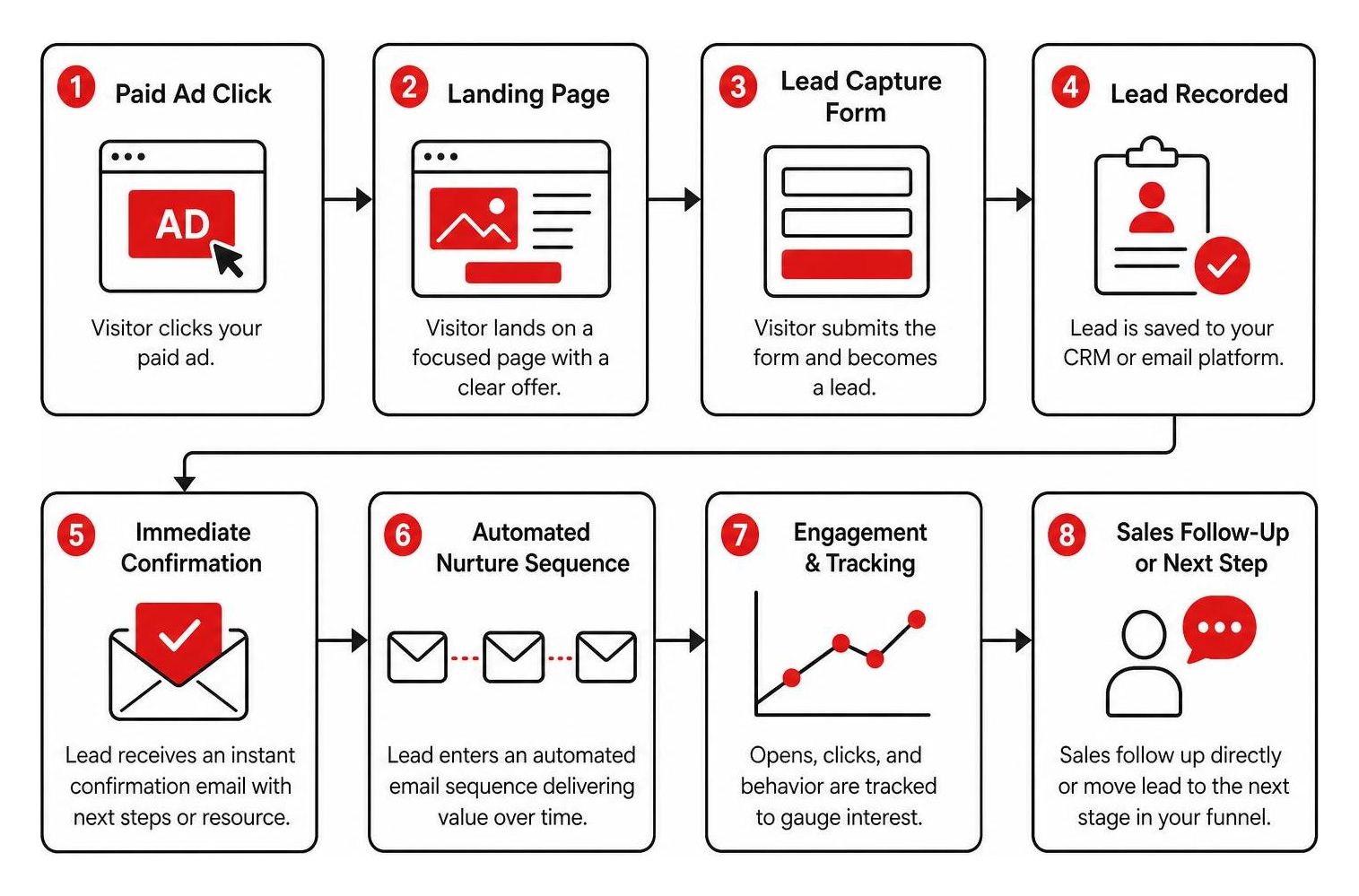
You need a systematic approach to building a lead generation funnel that converts. Immediately upon form submission:
- Deliver the Resource Instantly: Direct the user to a dedicated Thank-You page that provides direct access to the asset while offering a secondary micro-conversion (such as booking an exploratory call).
- Trigger an Automated Welcome Email: Send a confirmation email within 60 seconds with clear links to the promised asset.
- Deploy Behavioral Follow-Ups: Monitor how leads interact with initial emails. Understanding how to qualify leads for better conversion rates lets you segment hot prospects who open every email from casual researchers who need longer educational nurturing.
For teams looking to streamline this workflow, reading guides like how to collect leads with a landing page on LeadLanding can offer actionable tips on managing post-capture pipelines effectively.
CRO Testing and Performance Tracking
Landing page optimization is an ongoing discipline, not a one-time project. High-performing marketing teams use conversion rate optimization (CRO) protocols to continually lower cost per acquisition.
Understanding the importance of A/B testing for lead generation allows you to isolate variables systematically:
- Headlines: Test direct problem-oriented angles against curiosity or benefit-driven statements.
- Form Layouts: Test a single-field email capture against a 3-field enriched form or multi-step questionnaire.
- Visual Assets: Test a static hero wireframe against a short 60-second explainer video. (Adding a concise video above the fold can increase conversion rates significantly).
- CTA Color and Copy: Test contrasting button colors that stand out from your site’s primary palette to draw the eye.
Use server-side tracking, Google Analytics 4 event tags, and heatmap software to pinpoint where visitors drop off, ensuring every decision is backed by data.
Frequently Asked Questions About Landing Page Leads
How many form fields should a lead capture landing page include?
For top-of-funnel lead magnets, limit fields to name and email address. Every added field introduces friction and can reduce completion rates by 10–15%. If your sales team requires more qualification details (like company size or budget), use a multi-step form or progressive profiling in your follow-up email sequence rather than overwhelming cold visitors upfront.
Why do dedicated landing pages generate more leads than a homepage?
Dedicated landing pages eliminate navigation menus, footer links, and off-topic content, focusing the visitor’s attention entirely on one offer. This singular focus creates strong message match with upstream campaigns, leading to significantly higher conversion rates compared to general homepages.
What trust elements most effectively increase lead capture rates?
The most effective trust signals include third-party review badges, client logos, authentic customer testimonials with headshots, and clear privacy statements. Reassuring visitors that their data will not be sold or spammed removes hesitation at the point of submission.
Scaling Your Conversion Engine
Generating consistent, high-intent leads is not about guesswork—it comes down to disciplined execution across message matching, layout clarity, frictionless form design, and rapid post-conversion follow-up. By removing unnecessary navigation, structuring copy around proven frameworks, and continuously testing your key elements, you can turn passive web traffic into predictable business revenue.
Since 2008, Zen Agency has partnered with businesses across the United States to build custom website solutions, execute data-driven branding, and engineer conversion systems that maximize ROI. If you are ready to scale your pipeline with enterprise-grade strategies, explore our dedicated lead generation services to see how our team can transform your campaigns into predictable revenue engines.