
Distinctive Branding Secrets That Turn Casual Observers Into Loyalists
Brand Differentiation Strategies That Create Loyal Customers
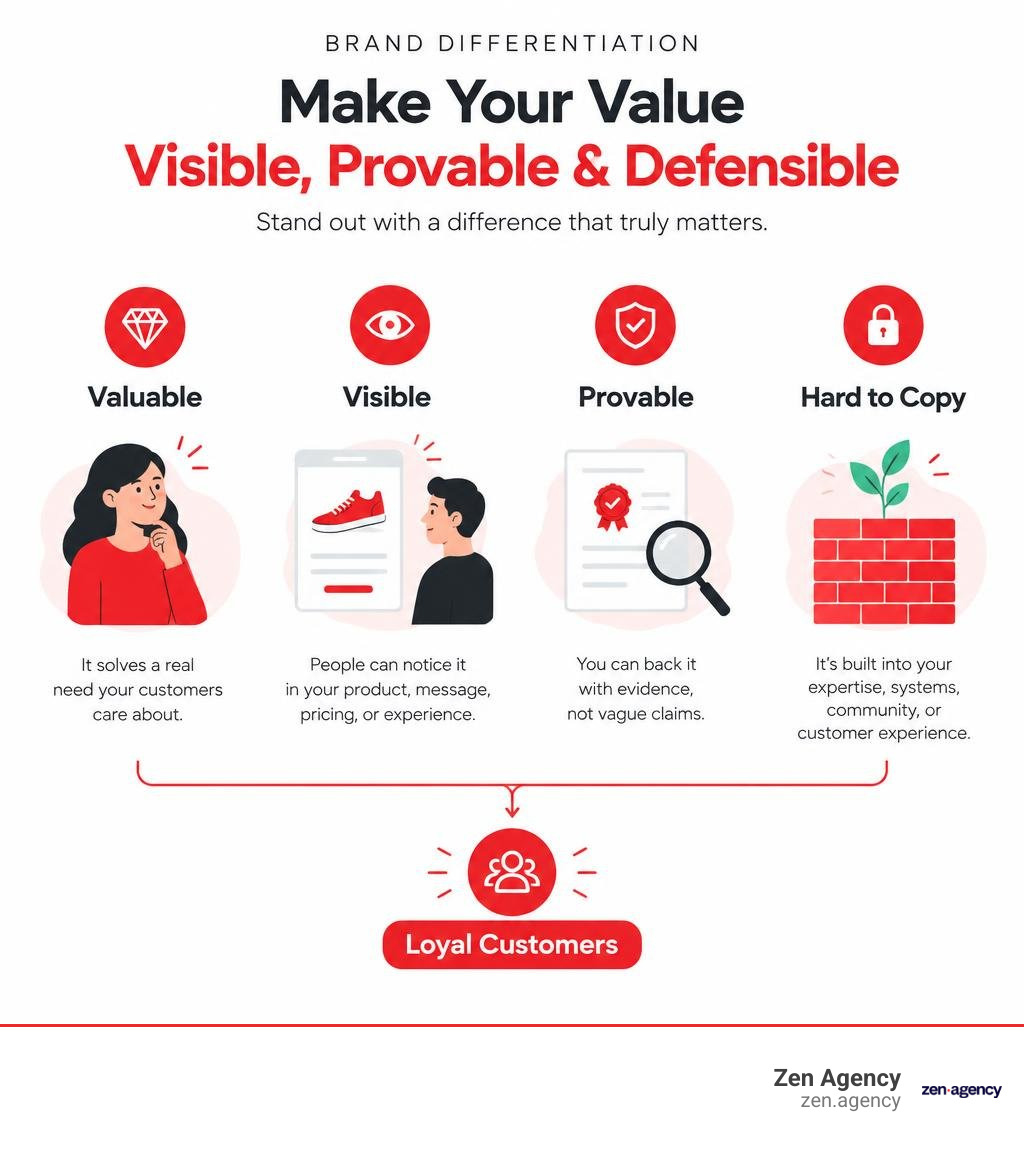
Effective brand differentiation strategies give buyers a clear, credible reason to choose you instead of a similar-looking alternative. Start by finding a customer need competitors serve poorly, then build a difference that is:
- Valuable – your target customer genuinely cares about it.
- Visible – people can notice it in your product, message, pricing, or experience.
- Provable – you can back it with evidence, not vague claims.
- Hard to copy – it is built into your expertise, systems, community, or customer experience.
When customers see every option as interchangeable, price becomes the deciding factor. That shrinks margins and makes growth expensive. A strong differentiator can change that by making your value easier to understand, and recommend.
The best brands do not rely on a clever tagline alone. They connect a focused promise to what they actually deliver at every touchpoint, from the first ad someone sees to onboarding, support, and repeat purchase. This is how casual observers become loyal customers.
I’m Joseph Riviello, CEO and Founder of Zen Agency, with more than 22 years of experience helping companies grow through holistic digital marketing. I use brand differentiation strategies to connect brand visibility, customer experience, conversion, and revenue into a stronger path to market share.
Basic brand differentiation strategies glossary:
Core Foundations: Brand Differentiation vs. Positioning and Distinctiveness
To stand out in any crowded marketplace, we first need to clear up common industry jargon. Leaders frequently mix up brand differentiation, brand positioning, and brand distinctiveness, yet each serves an entirely distinct operational and psychological purpose:
- Brand Distinctiveness: How recognizable you are. Distinctiveness relies on sensory assets—logos, color schemes, audio cues, and mascots—that build mental availability so buyers recall your brand when a buying situation arises.
- Brand Positioning: The conceptual territory you intend to occupy in the prospect’s mind relative to alternatives. Understanding how brand positioning differs from differentiation allows you to define your ideal market category and frame of reference.
- Brand Differentiation: The provable, substantive reason why your offering is superior, uniquely suited, or fundamentally unlike competing options. It provides the compelling rationale to buy.
As outlined in The Art Of Brand Differentiation: Strategies For Lasting Impact, differentiation without distinctiveness means buyers cannot pick you out of a lineup, while distinctiveness without differentiation leaves you looking recognizable yet completely interchangeable.

When differentiation works, it shifts your relationship with margins. A study by Google and Kantar revealed that differentiation accounts for 57% of retailers’ future brand growth. Furthermore, high-growth firms are almost three times more likely to possess a clear, defensible differentiator. This connection explains why a strong brand drives business growth: it reduces customer acquisition costs (CAC) and grants real pricing power.
Defining the Strategic Frame
Differentiation rarely happens in a vacuum; it occurs inside a mental context called a strategic frame. Customers evaluate products by comparing them against the baseline associations of their category.
If you introduce a novel product without anchoring it to a familiar consumer frame, buyers become confused. However, when you anchor your brand to an established frame and add a unique twist—like Graza packaging premium olive oil in an everyday squeeze bottle—you create an instant cognitive shortcut.
Framing requires disciplined trade-offs. To stand firmly for one compelling idea, you must deliberately decide what you will not offer, aligning your internal operations around that promise.
Durable vs Temporary Differentiation
Not all differentiators hold up over time. If your primary advantage is a minor software feature or an extra accessory, competitors can replicate it within months.
| Differentiation Dimension | Temporary / Fragile Differentiation | Durable / Defensible Differentiation |
|---|---|---|
| Primary Lever | Isolated feature or surface novelty | Proprietary systems, culture, network effects |
| Competitive Horizon | Replicated in 3 to 12 months | Defensible over multi-year cycles |
| Pricing Impact | Short-lived margin bump, then discounting | Enduring pricing power and customer retention |
| Operational Depth | Marketing-layer messaging only | Embedded into workflows, hiring, and supply chain |
As detailed in Differentiation Strategy: Build a Position Rivals Can’t Copy, building true defensibility requires structural moats. When your operational capabilities, design philosophies, and customer relationships reinforce one another, you break free from the perpetual imitation cycle.
6 High-Impact Brand Differentiation Strategies for Saturated Markets

Escaping the commoditization trap requires choosing a strategic lever that aligns with your core strengths. Here are six proven strategies used by industry leaders. Discover actionable tactics on how to make your brand stand out in a crowded market as you evaluate these levers:
| Strategy | Primary Mechanism | Best Suited For | Real-World Example |
|---|---|---|---|
| 1. Aesthetic Ownership | Visual semiotics & design cohesion | D2C, CPG, visual services | Oatly, Apple |
| 2. Radical Experience | Friction removal & service rituals | B2B Services, Hospitality | Zappos, Trader Joe’s |
| 3. Values & Purpose | Shared cultural beliefs & ethics | Lifestyle, Apparel | Patagonia, Ben & Jerry’s |
| 4. Category Creation | Anti-positioning & framing | Tech, Disruptive B2C | Liquid Death, Drift |
| 5. Niche Specialization | Tailored models & domain focus | Agencies, SaaS | LBMC (Healthcare IT) |
| 6. Narrative Engine | Founder story & thought leadership | High-trust B2B, Boutique firms | Basecamp, Nike |
1. Aesthetic Ownership and Visual Identity Systems
Visual identity is far more than an attractive logo; it is an unboxing of your company’s core philosophy. In visually crowded categories, owning a recognizable aesthetic gives you an immediate competitive edge.
Investing in building a memorable brand identity means creating custom visual semiotics. When Oatly entered the crowded plant milk market, they broke category conventions by using rough-hewn typography, irreverent packaging copy, and unvarnished editorial layouts. They turned their cartons into editorial billboards.
Strategically choosing colors for brand identity helps signal your positioning before a prospect reads a single word. When visual cues are proprietary and applied consistently across packaging, digital products, and presentation decks, your brand identity becomes an enduring moat.
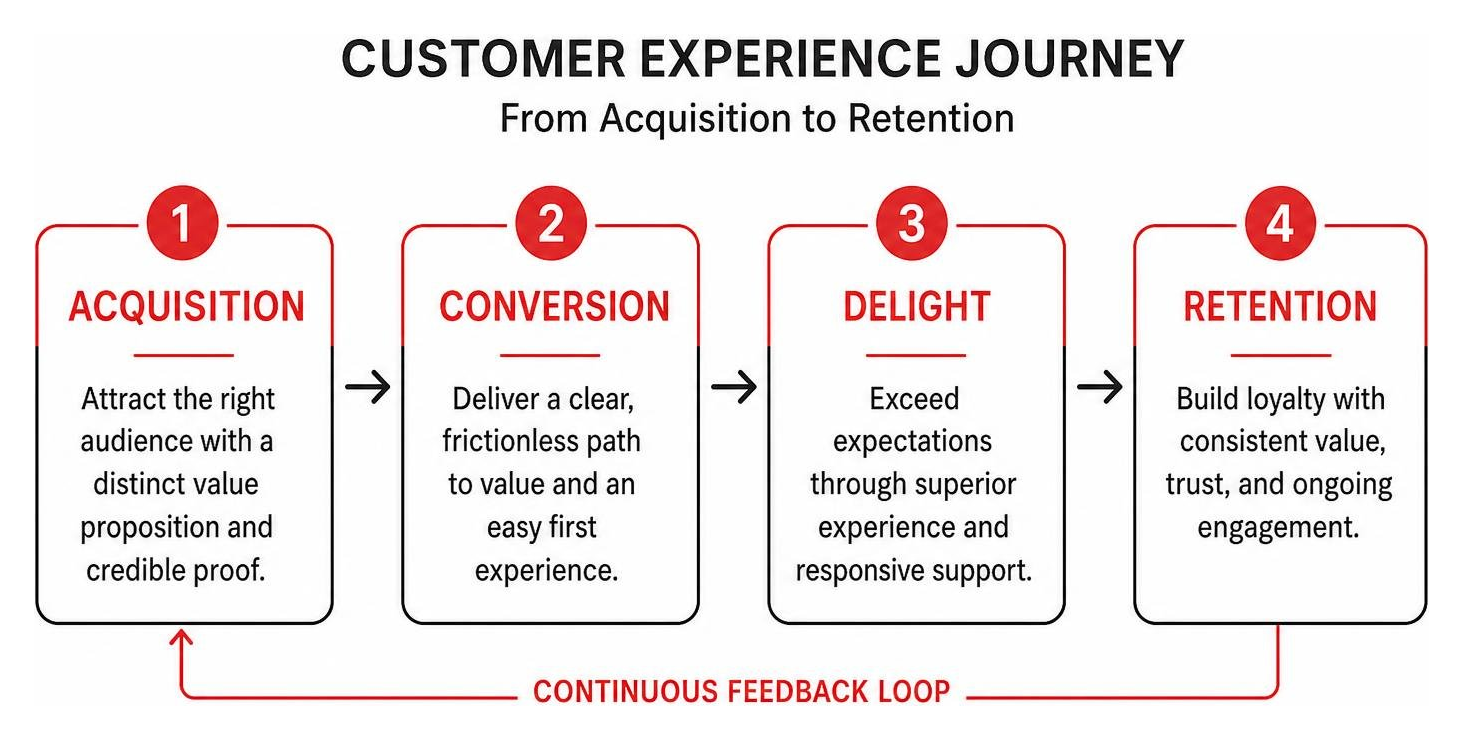
2. Radical Customer Experience and Service Design
In an era where Gartner reports that 46% of customers cannot tell the difference between most brands’ digital experiences, customer experience (CX) represents a massive blue ocean. Furthermore, Zendesk data indicates that 61% of buyers defect to a competitor after just one poor service encounter.
Evaluating how user experience affects brand perception reveals that customer perception is shaped at every micro-interaction. Zappos achieved category leadership not by inventing new shoes, but by elevating 24/7 customer service into their primary marketing vehicle.
Consider Trader Joe’s: while conventional supermarkets carry 30,000 to 50,000 SKUs, Trader Joe’s carries roughly 4,000. This deliberate constraint turns grocery shopping into an engaging treasure hunt, allowing them to generate approximately $2,000 in revenue per square foot compared to the industry average of $1,200.
3. Purpose, Values, and Emotional Resonance
Consumers increasingly gravitate toward brands that reflect their personal worldviews. 5W PR reports that 73% of consumers prefer purchasing from brands aligned with their values, while Harvard Business Review found that 64% cite shared values as the primary reason for maintaining a brand relationship.
Diving into the psychology of emotional brand connection demonstrates that purpose-driven differentiation works only when backed by genuine operational commitments.
Patagonia’s environmental activism is not a superficial marketing campaign; it is a foundational business model. From donating 1% of total sales to grassroots environmental groups to running the iconic “Don’t Buy This Jacket” campaign, their commitment validates their premium pricing. If values are merely advertised rather than lived, consumers quickly spot the inconsistency.
4. Category Creation and Anti-Positioning
Instead of engaging in direct feature wars within an existing category, some of the most resilient brands construct an entirely new category or deploy anti-positioning—leveraging the market leader’s momentum against them.
Liquid Death built a $1.4 billion enterprise not by formulating a new beverage, but by packaging mountain water in 16.9 oz tallboy aluminum cans adorned with heavy-metal artwork. They reframed drinking water as an edgy alternative to energy drinks and alcohol.
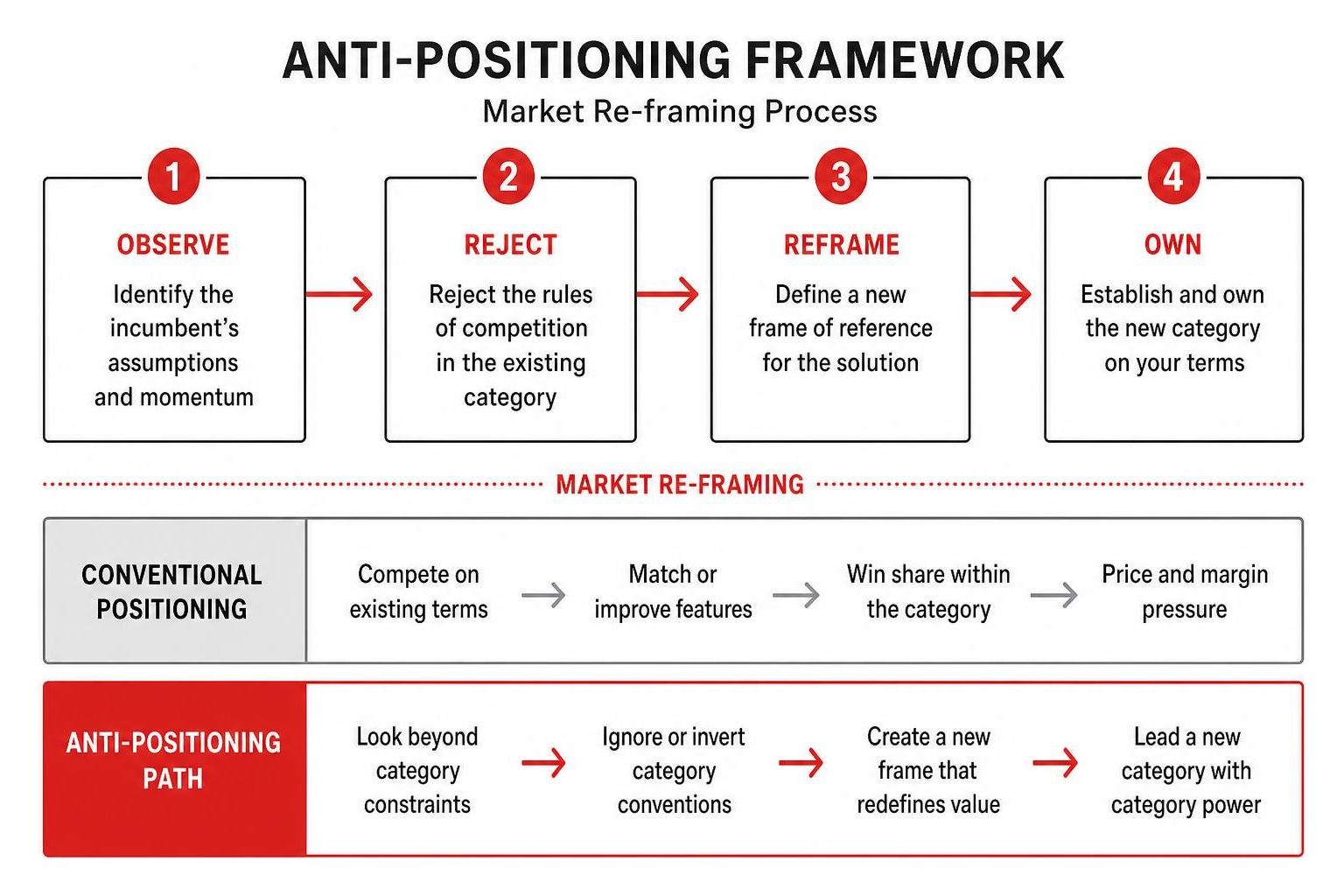
Similarly, Drift coined and owned the “Conversational Marketing” category, rendering traditional lead forms obsolete. Establishing this strategic frame shows how to build authority as an industry leader by authoring the rules of engagement.
5. Specialized Niche Dominance and Business Models
Attempting to appeal to everyone usually means connecting deeply with no one. Niche specialization allows you to deliver tailored value that generalist competitors cannot match.
In professional services, for instance, specializing by vertical—such as an IT firm focusing exclusively on healthcare compliance—builds deep operational expertise. In digital commerce, firmly positioning an ecommerce brand often involves re-engineering business models. Dollar Shave Club disrupted Gillette not through superior steel, but by introducing a frictionless direct-to-consumer subscription model that simplified replenishment.
6. Narrative Engine and Founder Thought Leadership
A compelling brand narrative provides the emotional resonance that helps buyers rationalize premium purchases. Exploring the science of compelling brand storytelling confirms that stories trigger neural coupling, making your value proposition significantly more memorable.
Basecamp built a loyal following by using founder thought leadership to challenge corporate bloat and overwork. By publishing bestselling books and maintaining an outspoken point of view, they built a sustainable software company without relying on massive advertising budgets.
Pairing an authentic founder perspective with crafting a unique brand voice ensures your communication cuts through industry jargon and creates genuine human connections.
Strategic Playbook: Finding, Testing, and Blending Your Differentiators

Systematic differentiation requires research, operational audits, and rigorous validation. Our step-by-step methodology helps you discover and embed your unique advantages:

When developing a brand strategy that drives success, you can use the strategic framework outlined in Differentiation Strategy: A 6-Step Playbook To Win to systematically find market white space:
- Map Category Conventions: Audit direct and indirect competitors across messaging, pricing, customer experience, and visual aesthetics.
- Conduct Voice-of-Customer Research: Interview recent buyers to uncover their underlying functional and emotional drivers.
- Apply the 3-Part Differentiation Filter: Ensure every candidate differentiator is:
- True: Grounded in authentic operational capabilities.
- Relevant: Solves a priority problem for high-value customers.
- Provable: Supported by hard evidence, case studies, or proprietary IP.
- Embed Across Operations: Translate your chosen differentiator into hiring standards, service protocols, product roadmaps, and style guides.
- Establish Defensibility Loops: Continually reinvest in your proprietary assets to widen your competitive moat.
Selecting and Blending Brand Differentiation Strategies
Relying on a single point of differentiation can leave your business exposed if category trends shift. The most resilient brands layer multiple, complementary differentiators.
For instance, Apple blends industrial design excellence with vertical ecosystem integration and a premium retail experience. Layering an operational differentiator (such as specialized logistics) with a brand differentiator (such as an unmistakable visual style) builds a moat that competitors struggle to dismantle.
How Emerging Challengers Compete with Established Giants
Emerging brands often assume they cannot out-differentiate legacy market leaders with deep marketing budgets. In practice, enterprise incumbents are frequently constrained by legacy systems, broad shareholder expectations, and bureaucratic approval processes.
Challenger brands can turn these constraints into opportunities by using agility to outmaneuver industry giants. By narrowing their focus to an underserved audience segment, adopting an unconventional brand voice, and building brand community marketing for cult brands, smaller players build passionate loyalty that broad-market competitors cannot replicate.
Execution Pitfalls and Measuring Differentiation Success
Even well-conceived differentiation strategies can fail during day-to-day execution. Understanding the hidden costs of bad branding mistakes helps you avoid the common pitfalls that dilute brand equity.
Common Traps in Brand Differentiation Strategies
- Relying on Generic Claims: Proclaiming that “our people make the difference” or “we offer top quality” are table stakes, not differentiators. If a competitor can claim the exact opposite without sounding absurd, your claim lacks strategic substance.
- Confusing Novelty with Differentiation: Gimmicks capture brief attention, but durable differentiation solves real problems in memorable ways.
- Execution Gaps: Promising a seamless digital experience while delivering confusing onboarding erodes credibility. Maintaining a clear style guide for consistency ensures your team delivers a cohesive experience across every channel.
- Differentiation Decay: Failing to reinvest in your core advantages allows competitors to catch up as former differentiators become basic baseline expectations.
Quantitative and Qualitative Metrics to Track Impact
To evaluate whether your differentiation strategy is driving commercial success, track these key performance indicators:
By consistently measuring the impact of brand trust alongside hard commercial metrics, you can verify that your positioning directly powers enterprise growth.
Frequently Asked Questions About Brand Differentiation
What is the difference between brand differentiation, positioning, and distinctiveness?
Brand distinctiveness is about cognitive salience—using memorable assets (colors, logos, slogans) so buyers readily recall your brand. Brand positioning defines the mental category and competitive frame you occupy. Brand differentiation is the provable, substantive value that gives customers a compelling reason to choose your offering over available alternatives.
How can a business determine if its brand differentiation is durable?
A differentiator is durable if it passes three primary criteria:
- Replication Timeline: It would take a well-funded competitor at least 12 to 18 months to copy your advantage.
- Operational Embedding: It is woven into your company’s workflows, proprietary data, culture, or supply chains rather than existing merely as marketing messaging.
- Pricing Elasticity: Customers demonstrate a clear willingness to pay a premium because alternatives fail to deliver equivalent value.
What are the most common mistakes companies make when differentiating?
The most frequent errors include relying on generic claims (e.g., “we care about our customers”), confusing short-lived novelty with genuine customer value, and marketing promises that internal operations cannot consistently fulfill.
Conclusion
Sustainable market growth is rarely won through marginal product improvements or price discounting. Lasting commercial success belongs to companies that identify what their customers genuinely value, build operational strengths around those needs, and communicate their identity with absolute clarity across every touchpoint.
At Zen Agency, we have helped businesses scale profitably since 2008 by designing enterprise-grade websites, executing holistic digital marketing strategies, and building defensible brand positioning. If you are ready to stop competing on price and build an enduring competitive moat, explore our bespoke branding and graphic design services to turn casual observers into lifetime brand loyalists.