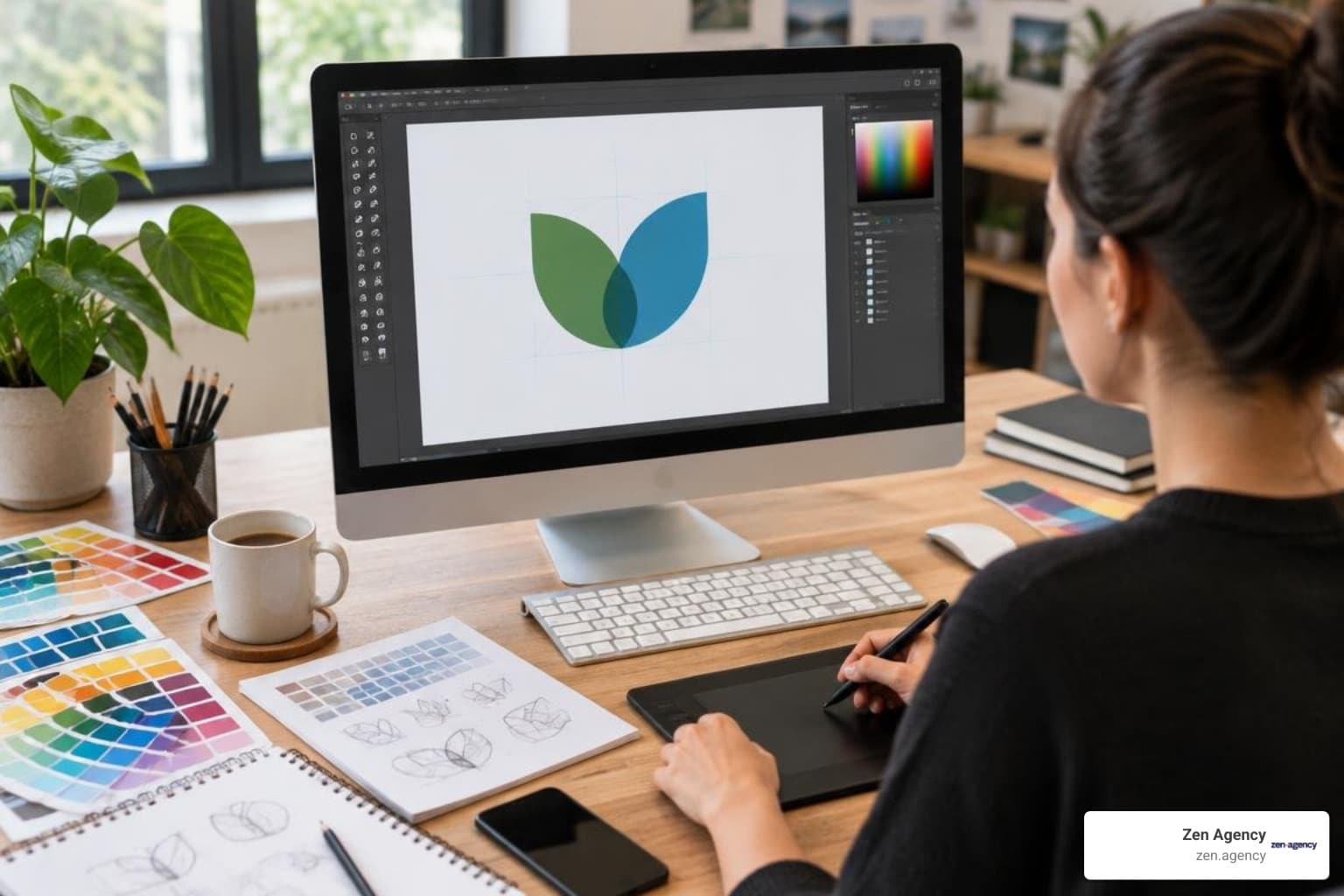
Everything Behind Powerful Logo and Graphic Design in the Modern Market
Why Logo and Graphic Design Drive Brand Growth
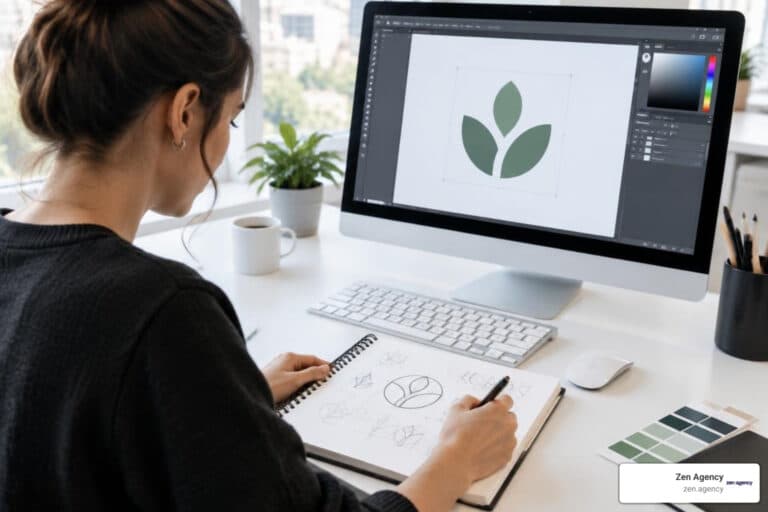
Logo and graphic design turn your business strategy into visual signals people can recognize, trust, and remember. A strong logo gives customers a simple, scalable brand marker. The graphic design system around it applies the same colors, type, imagery, and layout across your website, ads, sales materials, social media, packaging, and print.
For a company trying to grow, the goal is not simply to make something attractive. It is to create a clear visual identity that:
- Makes your brand easier to recognize in crowded markets
- Builds trust through consistent presentation
- Works at every size, from a mobile icon to a trade-show banner
- Supports marketing assets that guide people toward action
The best outcomes balance creative distinction with practical standards: simple forms, readable typography, intentional color choices, original artwork, and vector-based files that can scale without losing quality. Whether you begin with an AI tool for ideas or work with a professional designer for a custom system, the visual work must connect to your positioning and business goals.
I am Joseph Riviello, CEO and Founder of Zen Agency, with more than 22 years of digital marketing leadership experience helping companies connect brand strategy to traffic, leads, conversions, and revenue. In logo and graphic design, I focus on the larger system: visual choices that strengthen market visibility and support measurable growth.
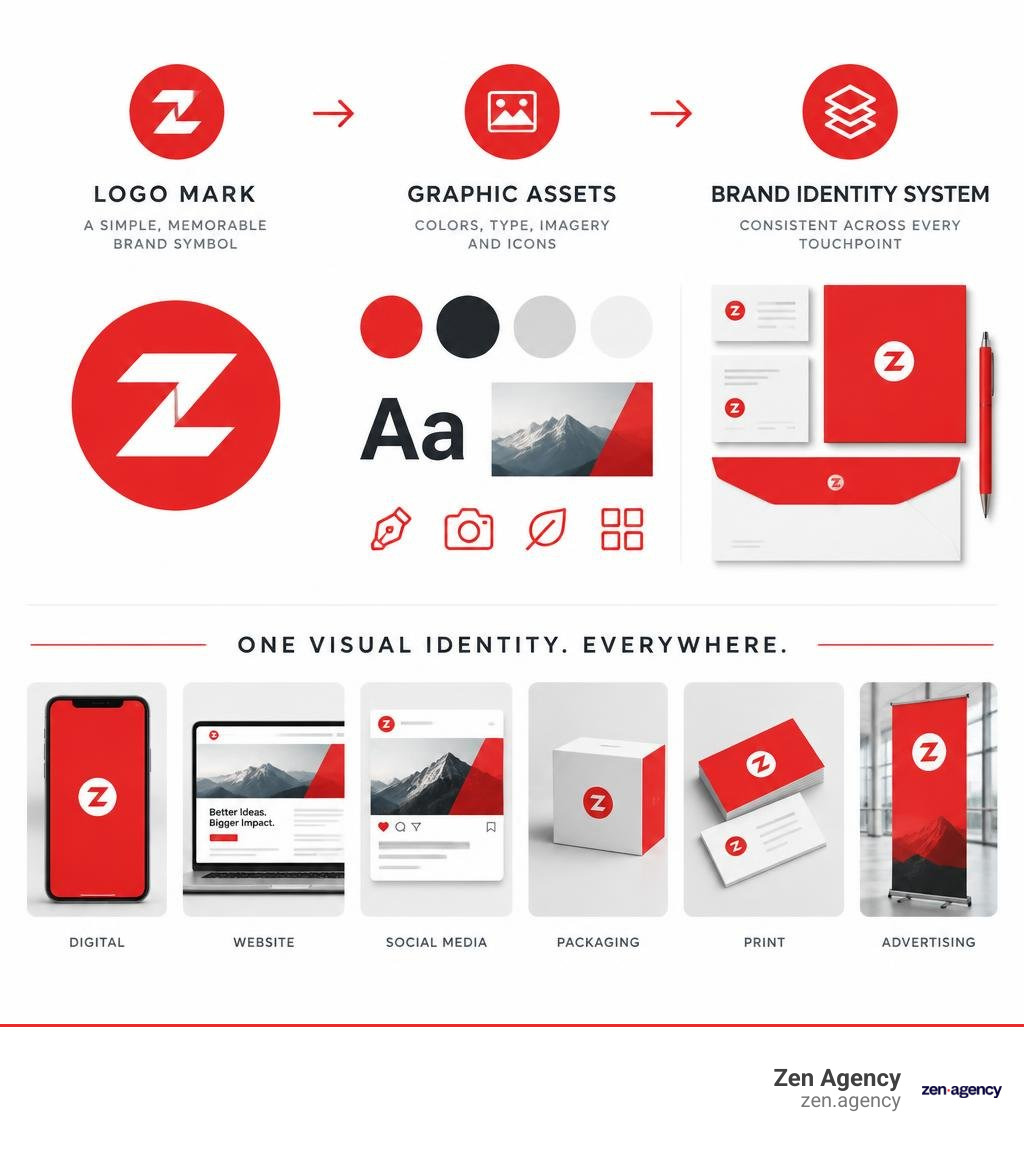
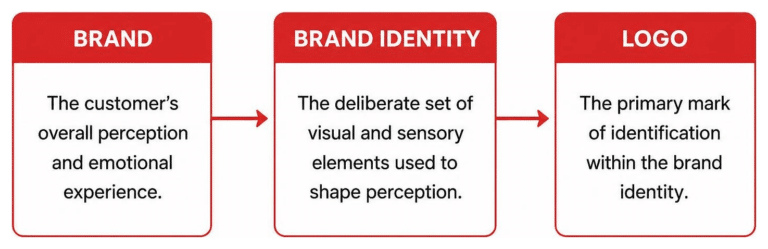
Basic logo and graphic design vocab:
The Strategic Impact of Logo and Graphic Design on Modern Brands
Every commercial interaction begins with visual communication. Before a potential client reads your service offerings, evaluates your pricing, or speaks with your sales team, they absorb your brand’s visual presence. When companies invest in their visual infrastructure, they are not simply buying artwork—they are engineering market recognition, consumer confidence, and commercial equity. Understanding why great graphic design is essential for business growth helps business leaders view design assets as foundational revenue drivers rather than optional overhead costs.
How Visual Assets Influence Consumer Perception and First Impressions
Human beings process visual stimuli in milliseconds. In digital environments, a prospective buyer determines whether a company is credible, established, or amateur almost instantaneously. Discovering how graphic design shapes first impressions of your business reveals how visual hierarchy, balance, and polish directly impact bounce rates and user engagement.
When your logo and supporting graphic assets convey professionalism, you remove friction from the sales cycle. Research into how graphic design influences consumer buying behavior proves that buyers associate refined aesthetics with product quality, operational competence, and reliability. Conversely, fragmented visuals trigger hesitation. Understanding why consistency in graphic design builds trust allows growing businesses to turn visual uniformity across ads, landing pages, and pitch decks into tangible conversion improvements.
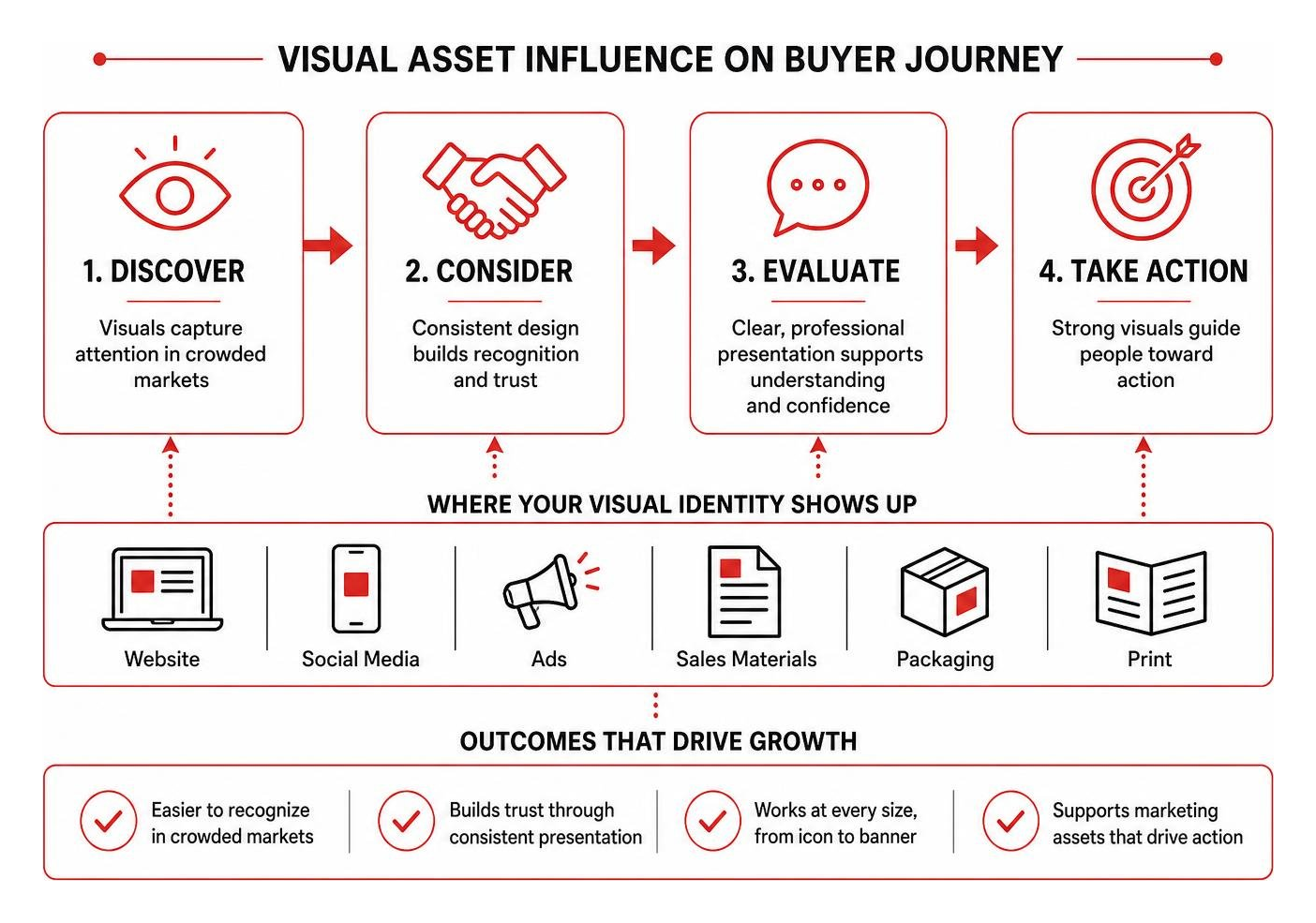
Integrating Logo and Graphic Design into Multi-Channel Marketing
A standalone logo mark cannot carry the weight of an entire marketing strategy. Modern multi-channel campaigns require a unified graphic design engine that translates your brand assets across diverse formats—from mobile app banners and programmatic display ads to vehicle wraps, trade show displays, and premium print collateral.
Understanding how graphic design supports your sales and marketing strategy ensures that your design choices directly serve acquisition funnels. Publications like Graphic Design News (GDUSA) consistently emphasize that high-performing organizations align their visual assets across every touchpoint to amplify brand recall. When every asset works together seamlessly, you harness the power of visual branding why first impressions matter to build enduring market dominance.
DIY Generators vs. Custom Professional Design: Strategic Comparison
Choosing between an automated DIY logo generator, a pre-made template library, and a bespoke design team is a critical decision that impacts your brand’s scalability, trademark viability, and budget.
| Feature / Consideration | Automated AI Logo Makers | Pre-Made Template Libraries | Bespoke Professional Design |
|---|---|---|---|
| Initial Turnaround Time | 5 to 15 minutes | Instant to 1 hour | 48-hour sprints to 4 weeks |
| Upfront Financial Cost | Free to $100 | $15 to $80 | $280 to $7,500+ |
| Visual Exclusivity | Low (Shared algorithmic elements) | None (Publicly licensed templates) | 100% Unique custom artwork |
| Trademark Eligibility | High risk / Often legally ineligible | Ineligible (Shared asset licenses) | Fully trademarkable and protectable |
| Asset Scalability | Basic exports (PNG, standard SVG) | Variable (Often raster or basic vector) | Full production master files (AI, EPS, SVG, PDF) |
| Systemic Brand Architecture | Basic mockups and automated palettes | Isolated static graphics | Comprehensive multi-channel guidelines |
The Trade-offs of Automated Tools, Templates, and Rapid Ideation
Platforms like Looka and Canva have democratized initial visual exploration. Over 20 million small businesses have used Looka’s tools, while over 75 million creators worldwide rely on Canva’s platform. For bootstrapped startups or early-stage testing, exploring the lazy entrepreneurs guide to custom logo making provides a fast, low-barrier way to visualize concepts.
However, business leaders must weigh these automated tools against their functional limitations. Evaluating diy graphic design tools vs hiring a professional designer highlights clear trade-offs:
- Template saturation: Generic icons lead to visually interchangeable competitors in your industry.
- Licensing and trademark restrictions: Shared library elements and stock icons cannot be registered as exclusive intellectual property under USPTO guidelines.
- Technical gaps: Automated generators often fail to provide production-ready print separation or nuanced vector control needed for specialized manufacturing.
Why Bespoke Creative Execution Supports Brand Distinctiveness
When your business transitions from initial survival to sustainable scale, generic visuals become a liability. Understanding why your business logo needs a professional touch is essential for safeguarding your market valuation. Embracing the art of bespoke logo design for modern businesses guarantees that your visual mark is handcrafted from original geometry, custom typographic styling, and deeply researched industry positioning.
Opting for shortcuts often introduces the hidden costs of poor graphic design, which include expensive emergency rebranding, customer confusion, fragmented digital marketing assets, and potential legal disputes over unprotectable stock elements.
Core Visual Principles: Color Psychology, Typography, and Space

High-impact commercial design relies on deliberate creative theory. The interplay between color, typography, and spatial dynamics dictates how prospects interpret your brand’s authority, value proposition, and emotional tone.
Selecting Brand Palettes and Typography That Communicate Core Values
Color is one of the most immediate visual signals in commerce. Reviewing the business impact of color psychology in graphic design demonstrates how specific wavelengths trigger unconscious emotional reactions—blue inspires corporate security and reliability, green reflects vitality and financial wellness, while vibrant red stimulates energy and urgency.
Executing a structured framework on how to choose the right colors for your brand identity helps you curate a balanced, high-contrast palette. When combined with intentional type pairing, your brand voice becomes unmistakable. Recognizing the role of typography in branding fonts that speak your brands language ensures that your font choices—whether sleek geometric sans-serifs, authoritative modern serifs, or precision monospaced typefaces—amplify your positioning rather than distracting from your message.
Utilizing Negative Space, Balance, and Minimalism for Memorability
The most iconic brand marks throughout history avoid unnecessary clutter. Mastering spatial dynamics—such as seeing double with brilliant examples of positive and negative space—enables designers to embed dual-meaning concepts, subtle symbolism, and clever visual puns into a single, compact mark.
Applying minimalist design principles ensures that your visual identity remains instantly legible across every screen resolution and print format. Stripping away decorative noise improves conversion rates by directing consumer focus toward your core value proposition.
Technical Production Standards and Asset System Architecture
A stunning visual concept is useless if it fails technical production standards. Enterprise-grade branding requires comprehensive file systems that support seamless deployment across digital software, physical print presses, architectural signage, and apparel manufacturing.
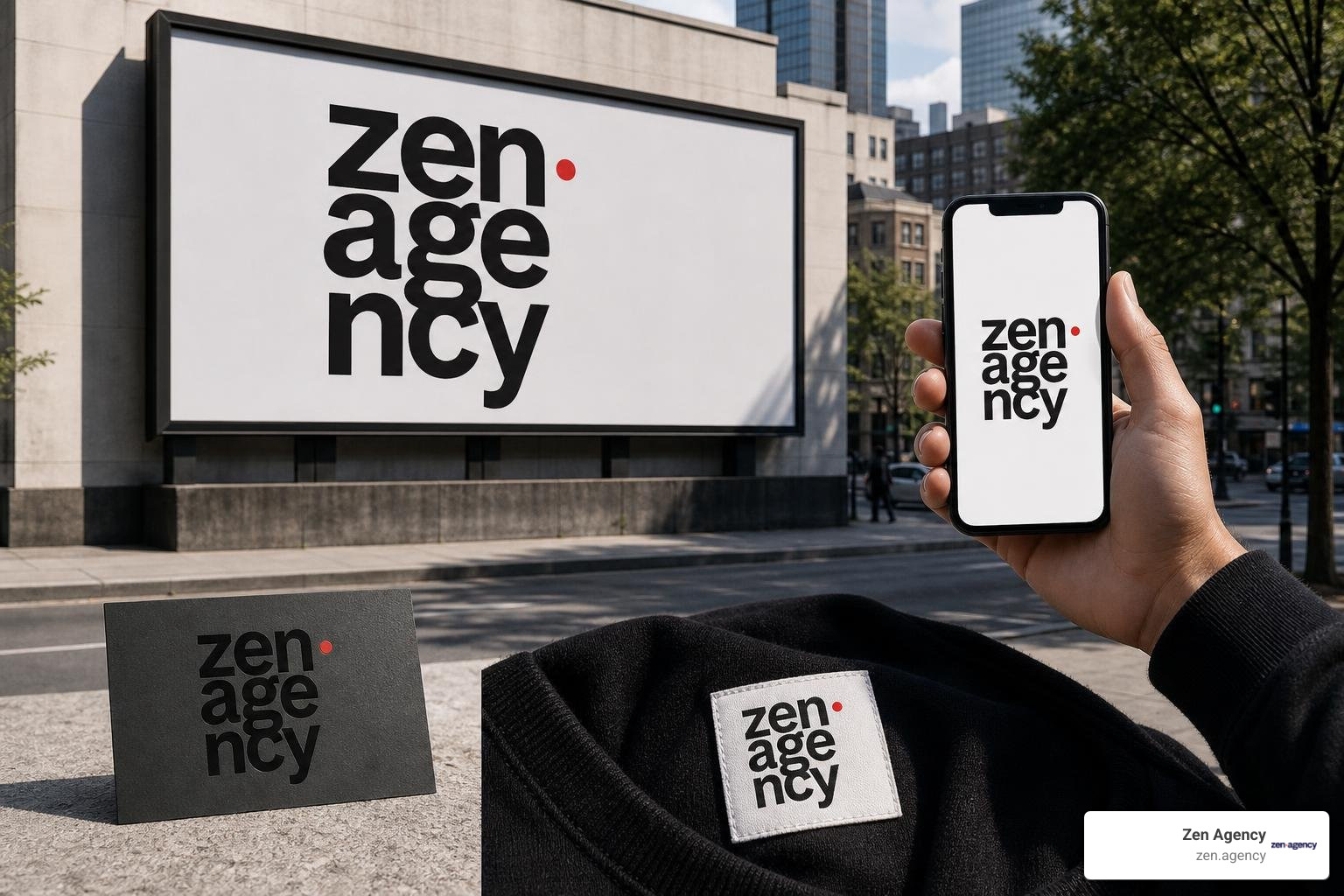
Technical File Formats: Vectors, Rasters, and Print Standards
Master brand assets must be constructed using industry-standard tools like Vector Graphics Software | Adobe Illustrator. Unlike raster graphics (such as JPEGs or standard PNGs) that pixelate when scaled, vector graphics rely on mathematical vectors, ensuring infinitely crisp resolution at any dimension.
When managing digital and physical production, understanding graphic design for print vs digital whats the difference is vital:
- Vector Formats (SVG, EPS, AI, Vector PDF): The foundational files required for responsive web code, embroidery, large-format sign fabrication, and promotional merchandise.
- Raster Exports (High-Res PNG, JPG, WebP): Optimized for fast-loading web applications, social media headers, email signatures, and presentation slides. Transparent PNGs preserve clean background integration.
- Color Space Separation: Full digital execution demands precise RGB and HEX specifications, while high-end physical collateral requires CMYK and standardized Pantone (PMS) spot-color conversions.
Managing the Complete Logo and Graphic Design Lifecycle
Building an enduring brand requires a structured, milestone-driven design process. Knowing what to expect when you hire a graphic designer ensures seamless collaboration, actionable feedback loops, and on-time delivery.
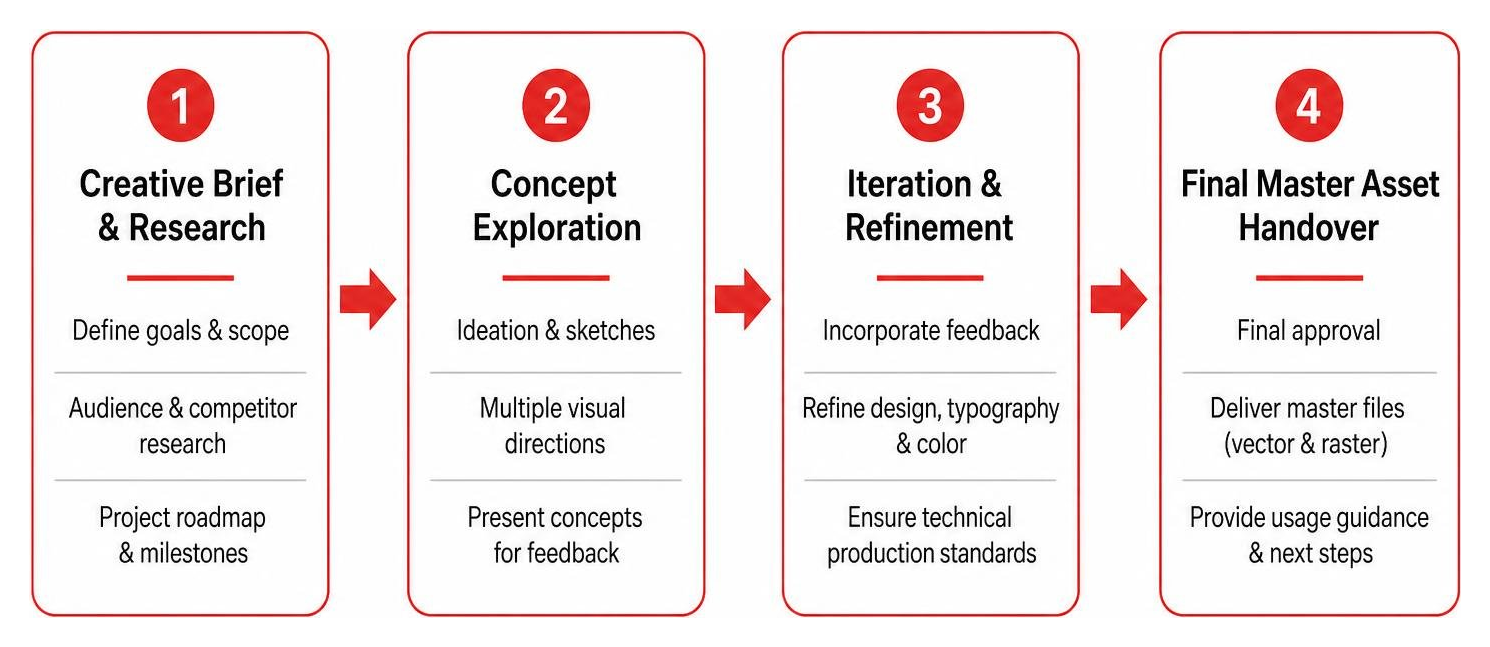
When partnering with an external team, discovering how to choose the right graphic design agency for your business empowers business owners to vet portfolios for strategic depth, production rigor, and multi-channel capability rather than mere surface styling.
Building Comprehensive Brand Guidelines and Collateral Assets
Your logo is the anchor of a wider visual ecosystem. Documenting clear rules through the ultimate guide to brand guideline creation ensures internal staff, marketing partners, and external vendors maintain brand consistency across all future campaigns.
A complete identity deployment incorporates 5 must have design assets every business needs:
- Master Logo Suite: Primary, horizontal, stacked, monochrome, and inverted variations.
- Standardized Brand Guidelines: Precise clear-space parameters, minimum sizing thresholds, and improper-use rules.
- Typography Hierarchy: Primary display headers, subheadings, and body copy rules.
- Digital & Social Media Kit: Optimized avatar profiles, channel banners, ad templates, and video title cards.
- Corporate Stationery & Print Collateral: Letterheads, executive business cards, packaging layouts, and presentation decks.
Frequently Asked Questions About Logo and Brand Asset Creation
What essential file formats do I need for professional logo deployment?
A complete professional delivery must include vector source files (.AI, .EPS, .SVG, .PDF) and high-resolution raster exports (.PNG, .JPG, .WebP). Vectors provide infinite scalability for print, manufacturing, and embroidery without pixelation. High-resolution raster files (rendered at 300 DPI or native screen pixel dimensions such as 500×500px square defaults) with transparent backgrounds are necessary for digital marketing, web development, and office applications.
Can I legally trademark a logo created using an online generator or template?
In most jurisdictions, including the United States (USPTO), you cannot secure exclusive trademark registration for a logo that incorporates shared stock elements, non-exclusive clip art, or pre-made generator templates. Trademark law requires original, exclusive creative ownership. While online tools are excellent for ideation, formal trademark protection requires bespoke, 100% original vector design.
How long does the professional logo design process take from brief to final delivery?
Timelines vary based on project scope and operational structure. Rapid digital design sprints can deliver refined concepts within 48 hours to one week. Comprehensive enterprise brand identity projects—incorporating market research, competitor audits, stakeholder interviews, multi-concept development, iterative revisions, and full brand guideline documentation—typically span 2 to 6 weeks.
Conclusion
A modern business cannot afford fragmented, generic visuals. Your visual identity is the public anchor of your commercial reputation, operational excellence, and customer trust. By combining strategic visual hierarchy, intentional color psychology, master vector production standards, and multi-channel design systems, you build a brand that captures attention and drives long-term market valuation.
At Zen Agency, we engineer high-performance digital ecosystems, enterprise web development, and comprehensive brand identity systems designed to help growing businesses scale with confidence and authority. Explore the power of logo design what makes a great logo to see how our team crafts visual identities that turn market presence into measurable business growth.