
Top Brand Strategy Agencies That Drive Measurable Market Impact
Choose Brand Strategy Agencies That Connect Strategy to Growth
The best brand strategy agencies do more than refresh a logo or launch ads. They help you define a clear market position, understand the customers you need to win, build messaging that differentiates you, and create a practical system for growth.
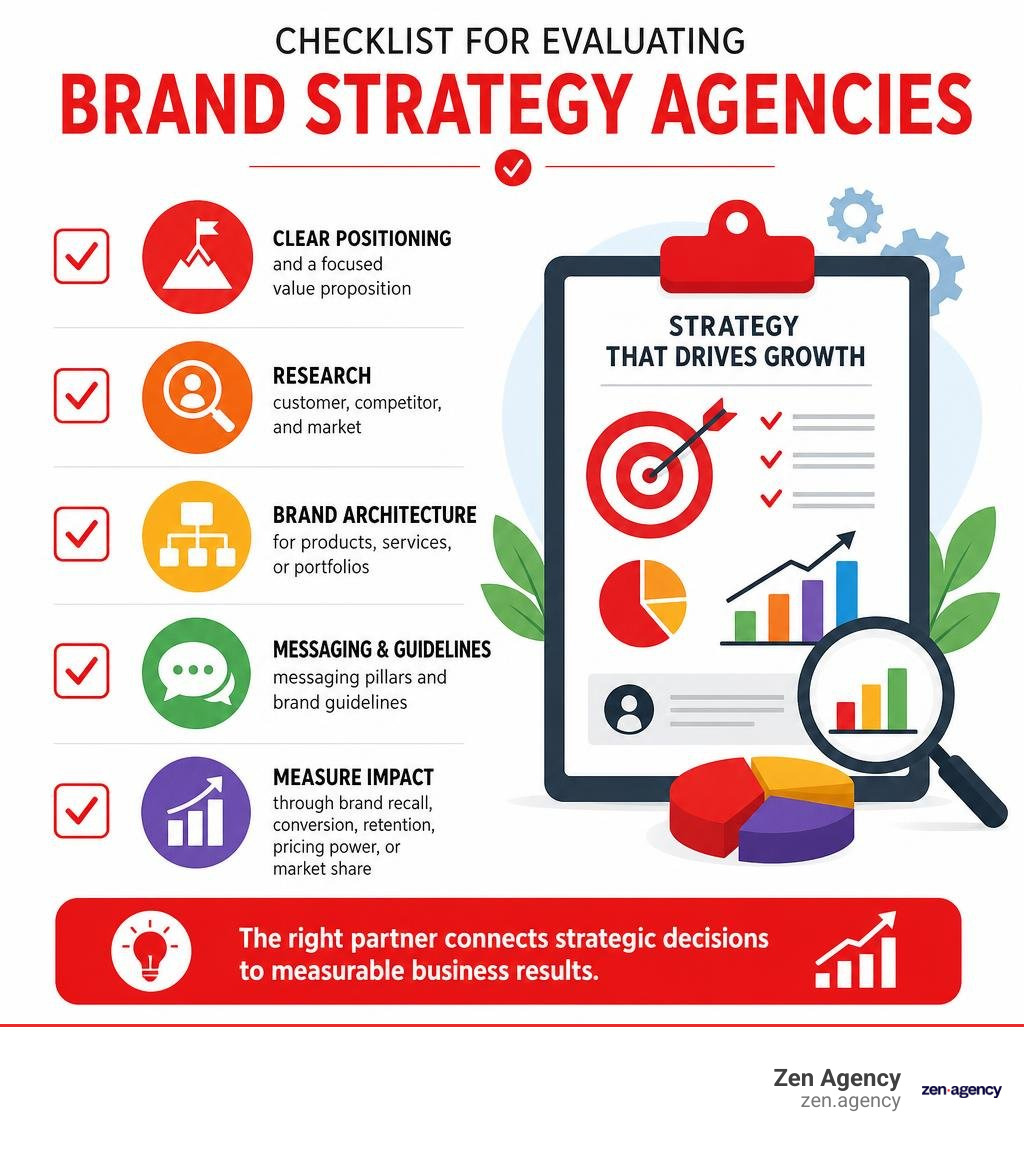
When comparing agencies, look for proof that they can deliver:
- Clear positioning and a focused value proposition
- Customer, competitor, and market research
- Brand architecture for products, services, or portfolios
- Messaging pillars and brand guidelines
- A plan to measure impact through brand recall, conversion, retention, pricing power, or market share
The right partner should connect these strategic decisions to business results. That matters when marketing is generating activity but not enough visibility, leads, or revenue.
I am Joseph Riviello, CEO and Founder of Zen Agency, with more than 22 years of experience helping companies grow through integrated digital marketing and brand strategy. In this guide, I will break down how to evaluate brand strategy agencies based on the work that can create durable market impact.
Brand strategy agencies terms you need:
What Defines Modern Brand Strategy Agencies and Their Core Deliverables
A brand strategy agency operates at the intersection of business intelligence, psychology, and creative execution. While a traditional design shop focuses on how a company looks, a strategic firm determines who the company is, why it matters, and how it will win market share over the next decade.
At its foundation, a brand strategy engagement is about aligning your internal business model with external customer perception. Many growing organizations suffer from an identity gap: the product or service is exceptional, but the market views it as a commodity. Strategic agencies bridge this divide by synthesizing market data, customer sentiment, and competitive white space into an actionable blueprint.
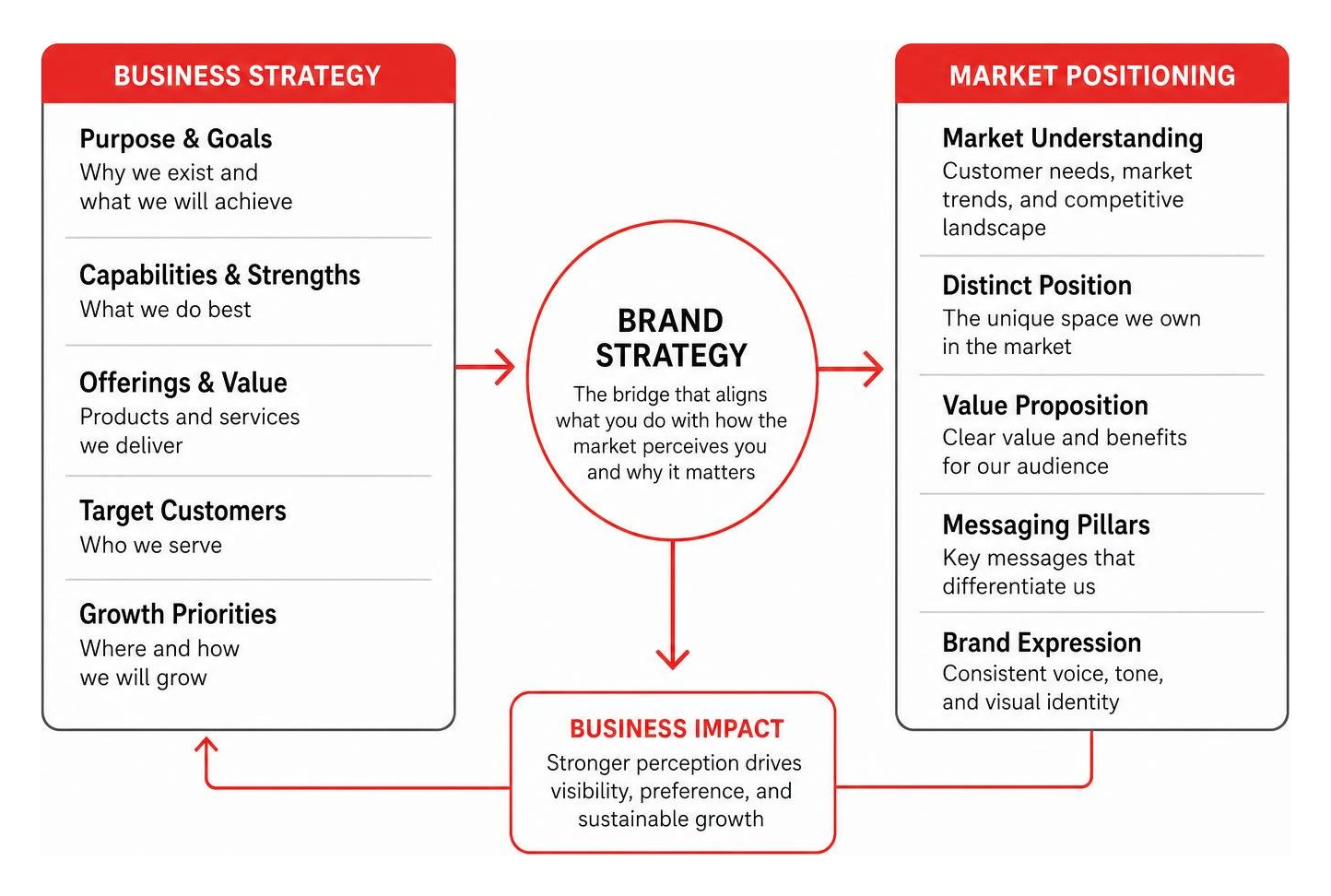
Understanding how to develop a brand strategy that drives business success requires looking beyond visual assets. When enterprise leaders seek external guidance, partnering with an experienced digital branding agency ensures that high-level positioning translates directly into measurable digital performance, omni-channel engagement, and revenue expansion.
Strategic Deliverables of Full-Service Brand Strategy Agencies
When you hire a brand consultancy, you receive concrete strategic assets that inform marketing, product development, sales enablement, and corporate culture. Industry evaluation platforms like Gartner Peer Insights show that top-rated consultancies build their reputations on structured, repeatable frameworks.
The core deliverables of a strategic engagement typically include:
- Brand Architecture: Defining the structural relationship between your corporate brand, sub-brands, product lines, and service tiers (e.g., Branded House vs. House of Brands).
- Messaging Pillars & Verbal Identity: Crafting core value propositions, elevator pitches, tone-of-voice rules, and audience-specific narrative frameworks.
- Customer & Category Research: Qualitative interviews, quantitative surveys, category trend analysis, and buyer persona journey maps.
- Brand Platform & Positioning Statement: The unifying “big idea” that anchors your market stance and sets your company apart from legacy alternatives.
- Implementation & Brand Guidelines: Operational manuals that dictate how internal teams, external partners, and digital channels express the brand.
To clarify how these firms differ from execution-focused marketing vendors, consider this structural comparison:
| Strategic Dimension | Brand Strategy Agencies | Traditional Advertising Agencies |
|---|---|---|
| Primary Focus | Market positioning, architecture, and long-term brand equity | Short-to-medium-term awareness campaigns and lead generation |
| Core Deliverables | Messaging pillars, market research, brand platforms, identity systems | Creative ad concepts, media buys, TV/print/digital ad collateral |
| Business Horizon | 3 to 10+ years of sustainable market advantage | Monthly or quarterly campaign cycles |
| Foundational Input | Deep customer intelligence, industry shifts, business model alignment | Creative briefs, tactical channel requirements, seasonal promotions |
| Success Metrics | Brand recall, pricing power, customer lifetime value, market share | Impressions, clicks, reach, immediate cost-per-acquisition (CPA) |
Mastering these deliverables is crucial for building a memorable brand identity that resonates with your target audience across every digital touchpoint.
Hybrid Intelligence and Data-Driven Brand Foundations
Modern strategy has moved far beyond gut feelings in a conference room. Today, the most effective agencies utilize hybrid intelligence—the deliberate combination of advanced data analytics, artificial intelligence, and seasoned human intuition.

By pairing predictive AI models with ethnographic consumer interviews, strategic consultancies can uncover behavioral patterns that traditional focus groups miss. This analytical depth allows businesses to ground their narrative in authentic consumer truths while staying agile enough to capitalize on emerging cultural shifts. Reviewing a quick start guide to branding strategy basics can help internal teams establish the foundational baseline needed before deploying advanced hybrid intelligence frameworks.
Core Methodologies: Positioning, Category Creation, and Brand Evolution
Every consultancy approaches strategic development through a distinct methodological lens. Some prioritize category disruption, while others focus on revitalizing legacy systems. Selecting the right agency requires understanding these fundamental philosophies.
Market Dominance Through Positioning and Strategic Differentiation
The modern discipline of positioning was established on the principle that marketing is a battle for a distinct place in the prospect’s mind. Pioneered by figures like Al Ries and expanded globally by Laura Ries, this philosophy emphasizes extreme focus, category ownership, and memorable contrast.
Key concepts within this strategic methodology include:
- The Strategic Enemy: Defining a clear alternative, outdated industry practice, or competitor model that your brand rallies against, instantly clarifying your unique value proposition.
- Category Creation: Instead of fighting for fractional market share in a crowded vertical, establishing an entirely new category where your company sets the standard.
- The Visual Hammer and Verbal Identity: Marrying a sharp verbal concept (the word or phrase you own in the mind) with an unforgettable visual element that triggers instant recognition.
When executed properly through custom identity design, positioning transforms a brand from a standard vendor into the default choice within its specialized niche.
Balancing Brand Evolution With Long-Term Equity Protection
For established enterprises, the central challenge is modernizing without alienating the existing customer base or eroding historical equity. A heritage brand cannot simply reinvent itself overnight without risking serious market backlash.
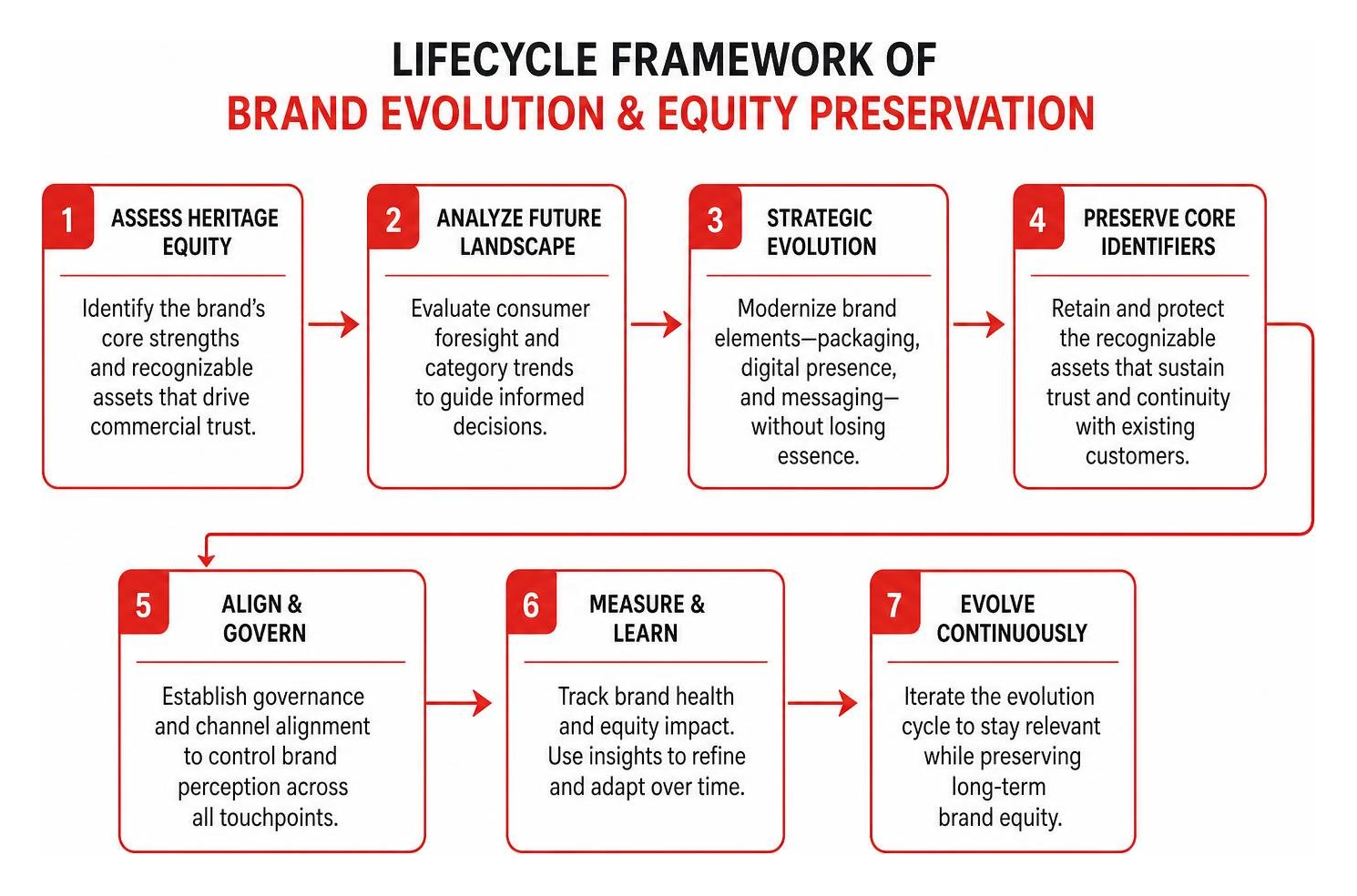
Experienced consultancies manage this balance through careful portfolio and brand architecture planning. By evaluating consumer foresight and category trends, agencies help legacy brands modernize their packaging, digital presence, and messaging while preserving the recognizable assets that drive commercial trust. Leveraging professional brand alignment consulting gives enterprises the governance structures necessary to control brand perception across complex distribution channels.
How to Evaluate and Select the Ideal Partner for Your Business
Selecting a strategy partner is one of the highest-stakes decisions an executive team will make. The wrong choice results in expensive slide decks that gather dust, while the right partner provides a commercial engine that drives growth for years.
To identify top performers, businesses often turn to verified industry directories such as the top regional agency listings on Semrush to assess market presence, service capabilities, and verified track records. Understanding why elite brand consulting services are worth every penny helps leadership justify the investment by connecting strategic rigor directly to top-line performance. For practical steps on agency vetting, exploring how to pick brand strategy companies provides a reliable blueprint for finding an agency aligned with your organizational culture.
Key Criteria for Vetting Top-Tier Brand Strategy Agencies
When evaluating prospective firms, look beyond glossy pitch decks and focus on these practical vetting criteria:
- Verified Client Feedback: Look at third-party verification, such as Gartner Peer Insights ratings, to see how client peers rate the agency’s collaboration, strategic depth, and delivery timelines.
- Senior-Level Engagement: Ensure that the experienced strategists pitching your business are the ones who will actively conduct your research and run your workshops, rather than handing the account off to junior staff.
- Methodological Rigor: Ask prospective agencies to explain their research framework. Do they utilize hybrid intelligence, primary market research, and validated consumer insights, or do they rely solely on subjective opinions?
- Cross-Disciplinary Integration: The best strategists understand how positioning impacts digital web development, SEO, content architecture, and omni-channel customer journeys.
Reviewing our breakdown of the 5 best company branding services compared can help you contrast different operational models and pricing structures before issuing an RFP.
Measuring Strategy ROI and Commercial Impact
A common critique of branding engagements is that results can feel abstract. Elite strategy firms counter this by tying their strategic deliverables directly to quantifiable commercial metrics:
- Aided and Unaided Brand Recall: Tracking market awareness shifts across target demographics following a repositioning rollout.
- Pricing Power and Margin Expansion: Assessing whether the new brand positioning enables your business to command premium pricing without sacrificing conversion rates.
- Customer Acquisition Cost (CAC) Efficiency: Measuring how much faster inbound leads convert when messaging pillars clearly address their pain points.
- Customer Lifetime Value (LTV): Evaluating long-term retention and expansion as brand loyalty solidifies.
- Internal Stakeholder Alignment: Measuring employee engagement and message consistency across sales, support, and marketing teams.
For growing businesses seeking accelerated market traction, examining the top branding companies for small business success illustrates how strategic clarity directly impacts bottom-line revenue.
Frequently Asked Questions about Brand Strategy
How do brand strategy firms differ from traditional advertising agencies?
Brand strategy firms focus on the foundational positioning, competitive differentiation, market research, and architectural systems of a business. They establish the core identity and market stance that lasts 3 to 10+ years. Traditional advertising agencies focus on tactical execution, short-term promotional campaigns, creative production (such as TV spots or social ads), and media buying to drive immediate quarterly demand.
What are the mandatory deliverables included in a brand strategy engagement?
A comprehensive engagement should deliver:
- A documented brand platform and core positioning statement
- Market, competitor, and customer research findings
- Brand architecture models (for multi-product or multi-service companies)
- Messaging pillars, value propositions, and tone-of-voice guidelines
- Visual and verbal identity rules for internal and external execution
How long does a comprehensive brand strategy engagement take to show ROI?
A strategic engagement typically takes 8 to 16 weeks to complete, with implementation rolling out across digital and physical touchpoints over the following 3 to 6 months. Measurable commercial impact—such as higher sales close rates, reduced customer acquisition costs, and improved brand recall—typically becomes evident within 6 to 12 months post-launch as the market digests the new positioning.
Conclusion: Accelerate Your Brand Growth
A successful brand strategy gives your business focus, differentiates your offerings from competitors, and provides a clear framework for long-term growth. By pairing deep customer research with disciplined positioning, your organization can command premium pricing, build customer loyalty, and scale with confidence.
At Zen Agency, we leverage over two decades of enterprise-grade web development, branding, and digital marketing expertise to help growing companies turn strategic positioning into commercial momentum. Whether you need a complete market repositioning, unified brand architecture, or high-converting digital assets, explore our custom branding and graphic design services to build a brand that leads your industry.