Turn Open House Window Shoppers into Closed Deals with Smart Buyer Lead Generation
Turn Open House Interest Into Active Buyer Leads
To find active homebuyers, focus on people who show clear intent, then make it easy for them to take the next step. Smart buyer lead generation combines local search, social ads, open houses, and a fast website experience to capture prospects while they are researching homes.
Start with three basics:
- Attract local demand with neighborhood pages, listing videos, search ads, and social campaigns.
- Capture contact details with useful offers, such as market reports, saved searches, home-buying guides, or open-house registration.
- Prioritize and follow up fast when someone revisits listings, saves properties, uses a mortgage calculator, or asks for a showing.
This matters because buyers start online long before they call an agent. Research cited in this guide indicates that 51% of people use the internet to research listings and contact real estate agents. In a crowded market with more than 2 million licensed Realtors in the United States, a steady flow of qualified buyers is not a nice-to-have. It is how an agent avoids depending on one slow channel, one portal, or the occasional walk-in.
Open houses can still create valuable opportunities, but names on a sign-in sheet are not a pipeline. The goal is to connect each interaction to a system that records source, measures intent, qualifies readiness, and keeps the conversation useful until the buyer is ready to act.
I am Joseph Riviello, CEO and Founder of Zen Agency, with more than 22 years of digital marketing leadership experience helping companies improve traffic, leads, conversion, and revenue. In this guide, I will show how buyer lead generation can turn scattered buyer interest into a more measurable, profitable real estate pipeline.
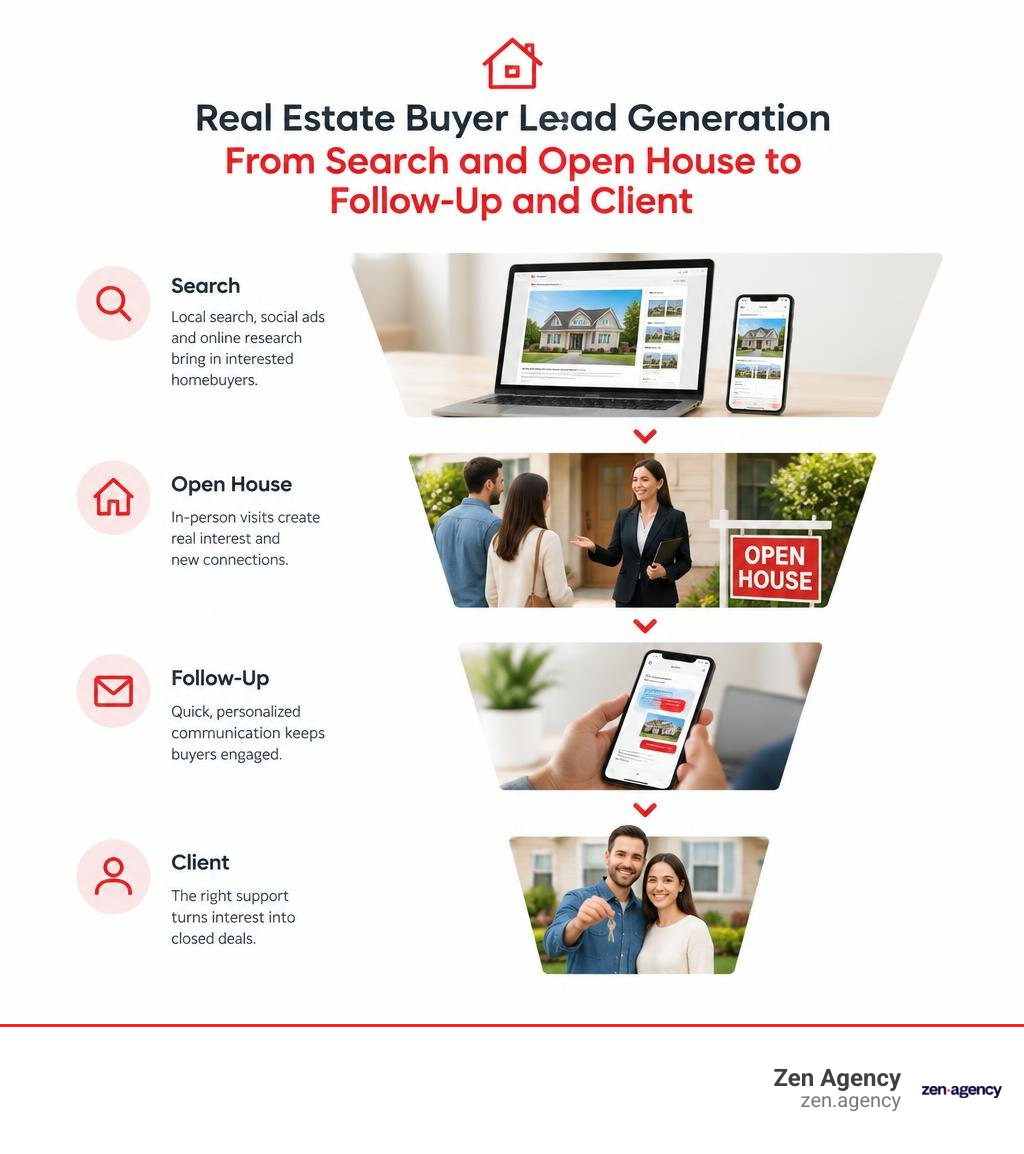
Simple guide to buyer lead generation:
The Modern Blueprint for Real Estate Buyer Lead Generation
The days of relying solely on cold calls, park-bench billboards, and casual Sunday open-house visitors are in the rearview mirror. According to industry data from the National Association of Realtors, 51% of buyers find the home they purchase on the internet before ever speaking with an agent. Furthermore, roughly 87% of real estate agents fail within their first five years—often because they lack a dependable, structured system for customer acquisition.
With over two million licensed agents operating across the United States, standing out in regional hubs like Scranton, Wilkes-Barre, and Kingston, PA, or competitive markets like Billings, MT, requires a shift. Agents must move from passive waiting to proactive discovery. Success requires generating leads in new ways and deploying automated lead generation for real estate to ensure that every marketing dollar spent creates a predictable, measurable pipeline.
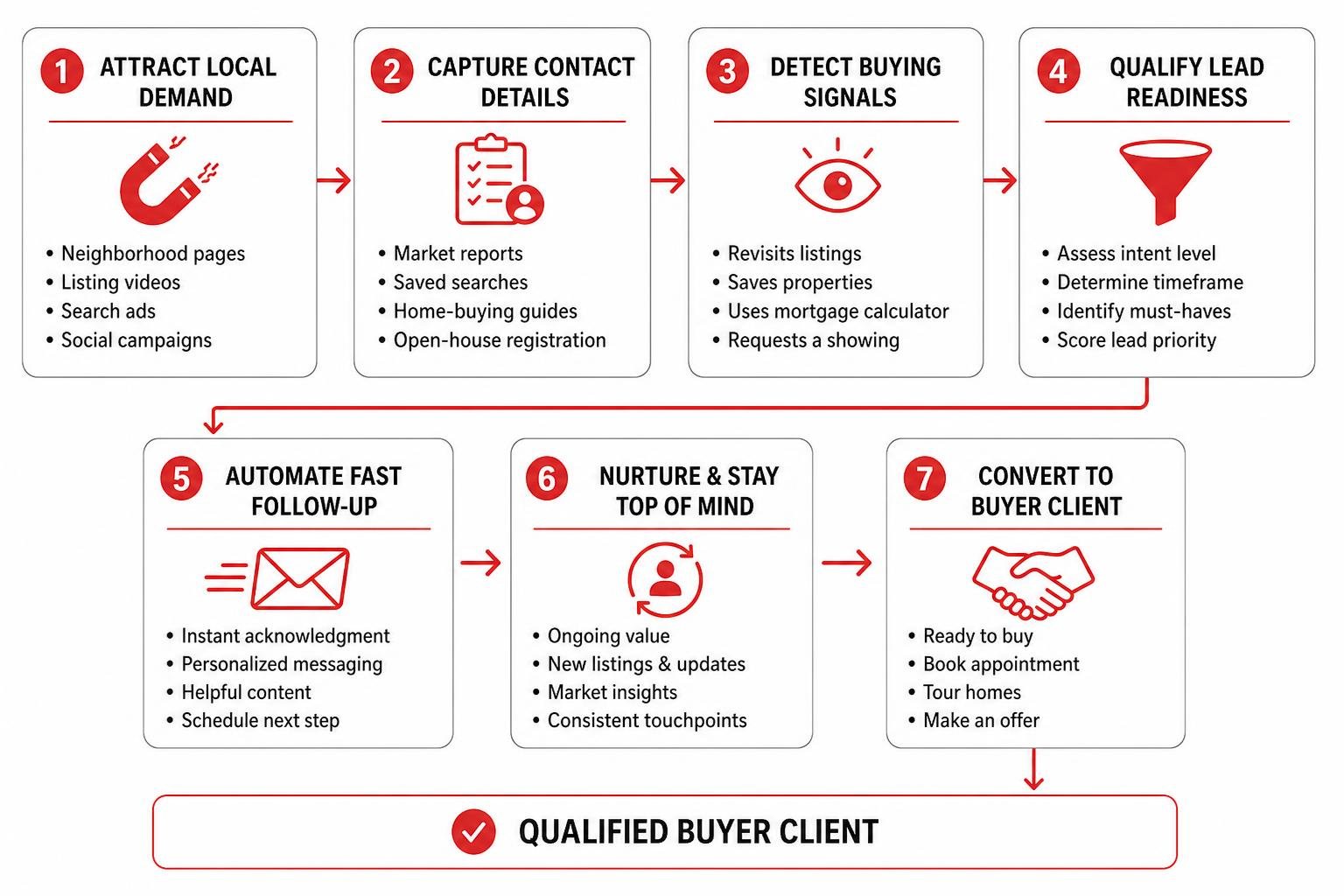
Detecting Real-Time Buying Signals and Intent Data
Not all website visitors or open-house attendees are created equal. A true lead generation system separates idle browsers from active buyers by tracking behavioral intent signals. Modern digital infrastructure allows us to monitor specific activity triggers that reveal when someone is moving into a purchasing mindset:
- Property View Frequency: A prospect who views eight homes in a single neighborhood within 48 hours is demonstrating active consideration.
- Mortgage Calculator Utilization: Running numbers on taxes, interest rates, and down payments signals financial preparation.
- Saved Searches and Price Alert Opt-Ins: Custom criteria configuration shows deep transactional intent.
- Return Visits to Specific Listing Pages: Re-checking floor plans or school district boundaries highlights shortlist evaluation.
By embracing sourcing better data-driven leads, real estate professionals can allocate outbound calling and direct outreach to high-propensity prospects, ensuring high-value hours are spent closing rather than guessing.
Mapping the Homebuyer Journey from Discovery to Close
Navigating the path to homeownership is rarely linear. Homebuyers conduct extensive preliminary research before booking an in-person showing. Understanding this progression is essential for creating conversion points that convert.
- Top-of-Funnel (TOFU) Discovery: The homebuyer is exploring local neighborhoods, average price per square foot, and community amenities. Content like regional market guides and neighborhood overviews capture interest early.
- Middle-of-Funnel (MOFU) Consideration: The prospect is narrowing down school districts, commute times, and specific architectural styles. Interactive tools, automated listing alerts, and virtual video walkthroughs build trust here.
- Bottom-of-Funnel (BOFU) Decision: The buyer is pre-approved, attending open houses, scheduling private tours, and ready to write offers.
Applying a structured approach through understanding the role of customer journey mapping allows real estate teams to deliver the right value proposition at every phase, turning casual interest into closed business.
High-Converting Digital Channels for Buyer Lead Generation

A resilient lead generation strategy balances quick-turnaround paid acquisition channels with compounding organic assets. Relying on a single third-party source leaves an agent vulnerable to sudden price spikes or platform algorithm updates.
| Acquisition Channel | Average Cost per Lead (CPL) | Lead Intent Level | Conversion Velocity | Best Use Case |
|---|---|---|---|---|
| Paid Google Search (PPC) | $20 – $60 | High (Active Searchers) | Fast (30–90 Days) | Capturing active searchers looking for local listings |
| Hyper-Local Social Ads | $8 – $25 | Moderate (Passive Intent) | Medium (60–180 Days) | Geo-fenced open house promotions & buyer guides |
| Organic Local SEO & IDX | Long-term asset ($0/lead) | High (Research-Driven) | Compounding (Long-term) | Dominating local neighborhood and school district searches |
| In-Person Open Houses | Variable (Event Cost) | High (Direct Engagement) | Immediate (14–60 Days) | Face-to-face rapport building and live qualification |
Paid Search and Hyper-Local Social Advertising
Paid digital advertising provides direct control over your lead pipeline. Through Google Ads and Local Services Ads (LSAs), agents can capture bottom-of-funnel searchers querying phrases such as “homes for sale in Hazleton PA” or “luxury properties Billings MT.” These users have clear search intent and require immediate, frictionless landing pages with synchronized IDX feeds.
On social channels such as Facebook and Instagram, visual storytelling excels. Running targeted campaigns that promote open houses, new construction developments, or first-time homebuyer seminars allows agents to tap into specific demographic bands. By utilizing how to use paid ads for lead generation, teams can deploy custom geo-fencing around desirable neighborhoods to intercept local renters planning their next move.
Local SEO and Video Listing Marketing
Paid advertising generates immediate volume, but organic search delivers sustained ROI over time. A properly architected real estate website targets hyper-local long-tail search queries—such as “single-story homes near Wyoming Area School District”—to capture high-intent organic visitors.
Integrating video walkthroughs on listing and neighborhood pages delivers substantial advantages. Real estate websites featuring integrated video tours receive up to 403% more inquiries than static, text-only listings. Video captures emotional attention, keeps visitors on-site longer, and establishes immediate rapport. Incorporating dedicated local landing pages alongside video content using proven methods from how to leverage SEO for better lead generation ensures a consistent stream of inbound buyer traffic without ongoing ad spend.
Website Conversion Systems: Capturing and Qualifying Buyer Leads
Driving traffic to a website is only half the battle. If a platform fails to capture contact details and determine buyer readiness, marketing budgets are wasted.
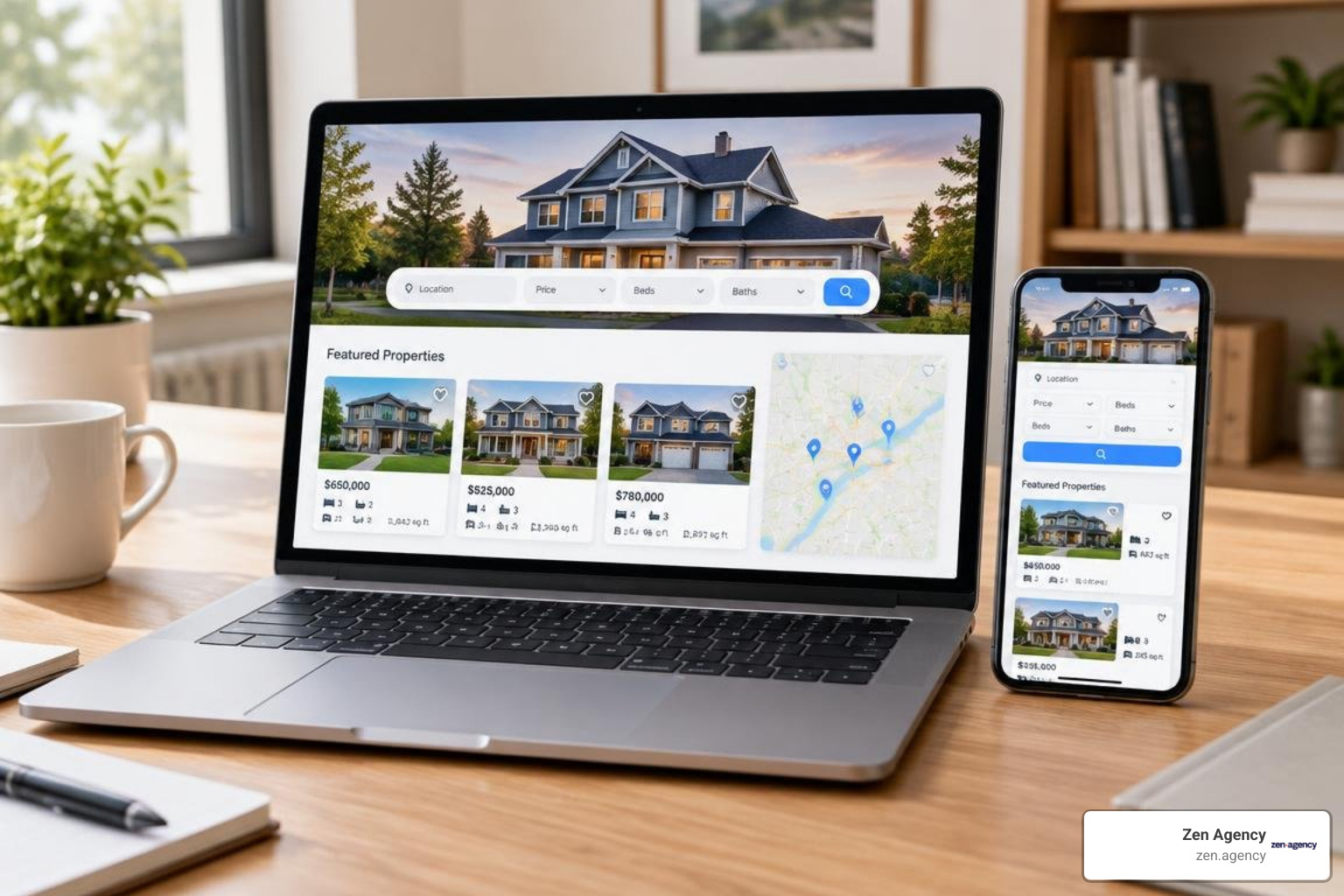
High-converting real estate landing pages utilize clear value exchanges. Rather than gating every property behind an immediate forced-registration wall—which spikes bounce rates—implement progressive capture strategies:
- Interactive Saved Searches: Allow visitors to browse two or three listings before prompting an email registration to save favorites and receive instant price-drop alerts.
- Neighborhood Market Snapshots: Offer downloadable reports containing recent comps, tax rates, and development zoning updates using techniques from capturing high-intent landing page leads.
- Off-Market & Coming-Soon VIP Lists: Capture motivated buyers by offering early access to properties before they hit major portals.
Lead Capture Architecture and CRM Synchronization
The technical architecture of your web presence dictates capture rates. Websites built on flexible platforms like WordPress require lightweight, mobile-optimized lead capture forms connected directly to your core relationship manager.
When an open-house attendee scans a QR code or an online visitor requests a property tour, that data must flow instantly into a central CRM. Integrating automation sequences eliminates manual data entry, prevents lost records, and initiates prompt follow-up. For seamless operational workflow, review the technical blueprint for integrating WordPress with your CRM.
Frameworks to Qualify Real Estate Prospects Fast
Lead generation without lead qualification wastes valuable time on unqualified prospects. Implementing structured frameworks ensures that buyer agents prioritize motivated clients while automating follow-up for longer-term buyers.
Assigning values to these criteria enables automated lead scoring. High-scoring leads (pre-approved buyers needing to close in 30 days) receive an immediate phone call, while top-of-funnel research leads enter an automated nurture drip. Exploring how to qualify leads for better conversion rates and understanding why lead scoring is essential will streamline everyday operations.
Lead Nurturing, Conversion Economics, and ROI Tracking
The standard industry conversion rate for online real estate buyer leads ranges between 0.4% and 1.2%. This reality underlines an essential truth: success in real estate lead generation is determined during the follow-up process.
A lead captured at an open house or via a digital campaign may take 90 to 180 days to complete a purchase. Without a consistent, multi-channel nurturing strategy, prospects inevitably gravitate toward whichever agent answers the phone when they are ready to make an offer.
Deploying structured email workflows combined with localized SMS touchpoints bridges this timeline gap. Discover effective nurture strategies by exploring the importance of lead nurturing in generating conversions.
Sourcing Sustainable Buyer Lead Generation Without Overspending
Managing customer acquisition costs (CAC) requires balancing short-term paid leads with sustainable, organic assets. While third-party aggregators often charge between $20 and $60 per lead (with metropolitan areas commanding significantly higher figures), building your own inbound assets secures proprietary data that you own permanently.
To calculate lead generation return on investment:
$$text{ROI} = frac{(text{Total Commission Generated} – text{Total Acquisition Cost})}{text{Total Acquisition Cost}} times 100$$
If you invest $1,200 monthly in local ad spend and organic optimization to generate 40 qualified leads, and you convert one lead into a closed deal with a $9,000 commission payout, your net return is $7,800—an ROI of 650%. Implementing smart budget management using principles from capturing leads without breaking the bank protects your profit margins as you scale.
Avoiding Common Mistakes in Lead Pipeline Management
Even sophisticated marketing campaigns can falter due to simple operational mistakes. Analyzing conversion metrics regularly helps identify and fix leaks in your sales funnel.
- Slow Response Times (Speed-to-Lead Failure): Reaching out to an online inquiry within five minutes increases qualification probability significantly. Waiting even an hour decreases connection rates.
- Abandoning Follow-Ups Too Early: Most conversions occur after the fifth touchpoint, yet many agents stop reaching out after one or two unanswered attempts.
- Over-Reliance on Third-Party Marketplaces: Buying shared leads from major portals creates race-to-the-bottom pricing battles. Direct inbound leads yield higher closing ratios.
- Failing to Maintain Database Hygiene: Inactive email addresses, invalid phone numbers, and unsegmented lists reduce deliverability and lower productivity.
Regularly auditing your acquisition channels and improving overall lead quality ensures that time and resources are concentrated on active, qualified buyers.
Frequently Asked Questions About Real Estate Lead Generation
What is the average conversion rate for online real estate buyer leads?
The industry average conversion rate for online real estate buyer leads typically ranges between 0.4% and 1.2%. Conversion rates depend heavily on lead origin, speed-to-lead, and long-term nurturing workflows. High-intent search leads and direct referrals convert at significantly higher percentages than unverified top-of-funnel social media form fills.
How much should a real estate agent spend per buyer lead?
Lead costs vary by channel and geography. Digital search ads (Google PPC) average between $20 and $60 per lead in suburban and mid-sized markets, while dense metropolitan regions often see higher figures. Social media acquisition channels generally range from $8 to $25 per lead. Agents should evaluate their Cost Per Acquisition (CPA) relative to average commission checks rather than focusing solely on initial lead cost.
How do buying signals help prioritize buyer leads?
Buying signals—such as viewing the same listing multiple times, using on-site mortgage calculators, or requesting a private tour—provide behavioral evidence of purchase intent. Tracking these triggers through CRM and analytics platforms enables agents to prioritize immediate outreach to high-intent buyers while automated campaigns nurture earlier-stage shoppers.
Conclusion
Converting open-house visitors and digital window shoppers into closed transactions requires an integrated approach. By combining hyper-local paid advertising, organic search authority, optimized website capture systems, and automated nurturing workflows, real estate professionals can establish a predictable, high-performing lead pipeline.
Sustainable growth means owning your marketing infrastructure rather than renting access to shared leads. At Zen Agency, we help forward-thinking real estate teams and scaling businesses design, deploy, and manage enterprise-grade digital systems that drive measurable ROI. Ready to transform your buyer acquisition strategy? Partner with enterprise lead generation services from Zen Agency today to build a lead generation engine that fuels long-term growth.