A Founder Blueprint to Vetting E Commerce Website Design Experts
How to Choose E-Commerce Website Design Experts
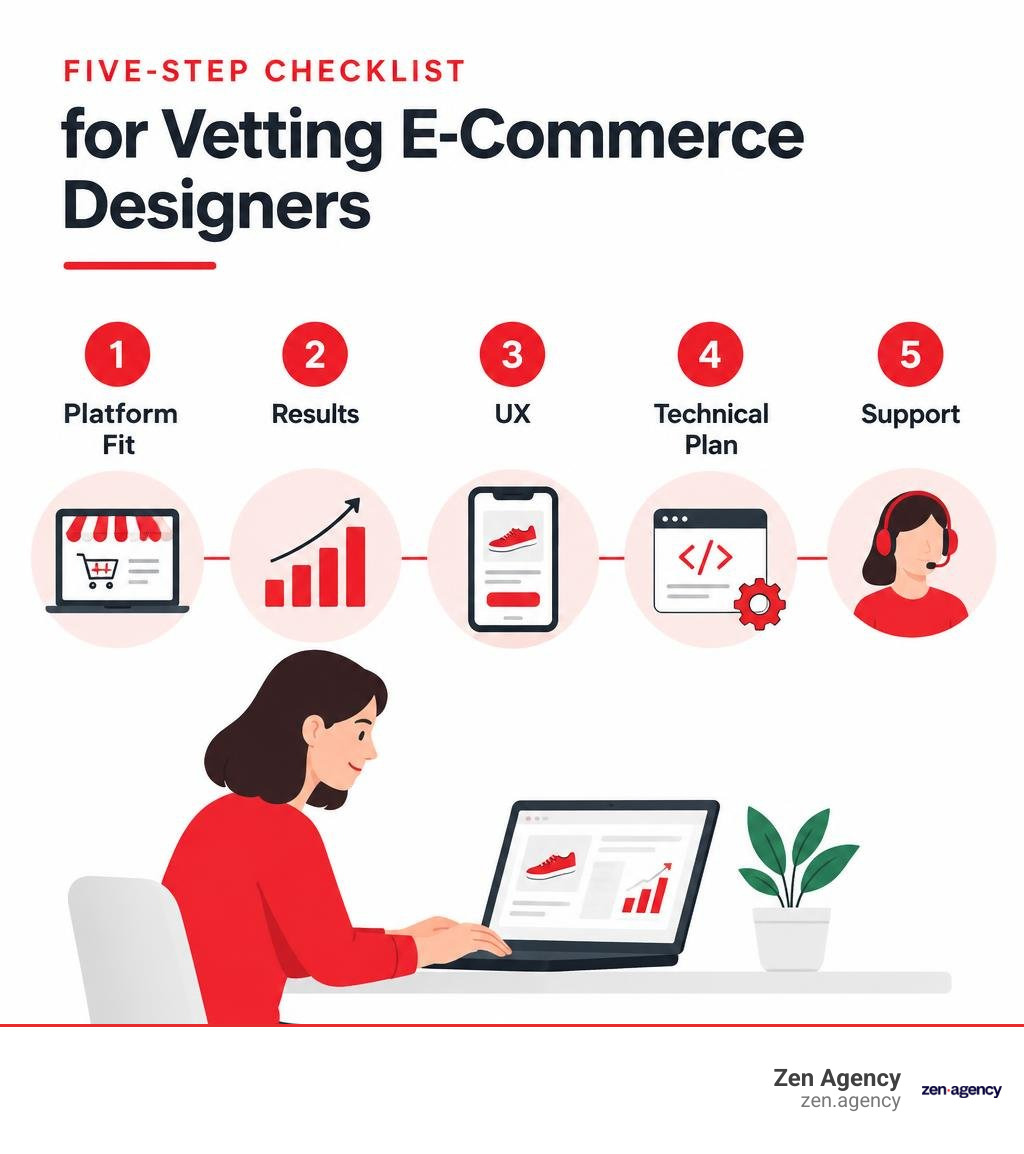
Start with proof, not a portfolio’s looks. Shortlist designers or agencies that have built stores on your platform and can show measurable results. Ask each one for:
- Live stores and client references you can check
- Before-and-after data on sales, conversion, and site speed
- A plan for mobile UX, SEO, checkout, and third-party apps
- A clear scope, price, timeline, and post-launch support plan
A polished storefront matters. But the right partner should also know how to help shoppers find products, trust your brand, and complete a purchase without friction. For broader context on what high-performing storefronts require, Google’s Web Vitals guidance is a useful reference for the technical benchmarks your design partner should meet.
I’m Joseph Riviello, founder and CEO of Zen Agency. For more than 22 years, I’ve helped businesses connect marketing, traffic, conversions, and revenue; this guide brings that growth lens to choosing e commerce website design experts.
Quick e commerce website design experts definitions:
Core Criteria for Vetting E Commerce Website Design Experts
When brands struggle to scale, founders often think they have a traffic problem. In reality, most direct-to-consumer (DTC) brands suffer from a conversion leakage problem caused by superficial design. Pretty mockups don’t automatically ring the cash register. True specialists evaluate store architecture through behavioral economics, technical performance, and brand resonance.

To separate genuine conversion architects from graphic designers who happen to install themes, we look closely at three pillars during the vetting process:
- Engineering-Backed Technical Capability: A top-tier team builds on scalable architecture. They understand how Liquid, headless frameworks, and modular templates interact with third-party databases. When you explore the ins and outs of ecommerce website design, you quickly realize that clean underlying markup is just as important as visual polish.
- Behavioral UX/UI Design Systems: Great teams don’t design isolated pages; they craft reusable design systems in Figma. This includes fluid typography, WCAG 2.1 accessibility compliance, accessible touch targets, and atomic component libraries that maintain visual consistency across every customer touchpoint.
- Brand Identity and Commercial Alignment: Design must serve your commercial positioning. If your storefront sells luxury home furnishings, your layout requires white space, high-resolution media rendering without latency, and refined micro-interactions that build trust from the first second.
Assessing Portfolio Performance Metrics of E Commerce Website Design Experts
Never evaluate a portfolio solely on static desktop screenshots. Live stores reveal the truth about technical discipline. When auditing past client builds, demand verifiable metrics that prove commercial impact.
First, test their live client URLs using Google PageSpeed Insights. Modern high-converting stores must hit sub-2.5-second Largest Contentful Paint (LCP) benchmarks on mobile networks. Elite technical teams demonstrate how custom Liquid architecture and optimized asset loading directly protect search visibility and user retention.
Second, ask candidate agencies for revenue-focused case studies. You want to see concrete proof of commercial growth, such as:
- Conversion Rate (CVR) Uplift: Look for case studies demonstrating measurable baseline conversion jumps (e.g., redesigns delivering 14% to 34% lifts in transaction volume).
- Average Order Value (AOV) Growth: Review how strategic UX tweaks—such as dynamic bundling modules, tiered progress bars, and custom cart drawers—systematically raised order values.
- Organic Traffic Retention: Verify that historical migrations preserved organic keyword footprints without steep revenue drop-offs.
Implementing smart e-commerce UX tips to make customers want to buy transforms your storefront from a passive brochure into an active sales engine.
Certified Platform Specialists vs. Generalist Agencies
A common dilemma for scaling businesses is whether to hire a full-service marketing agency or a dedicated platform specialist. While generalist web shops might understand visual aesthetics, they often lack deep familiarity with native platform capabilities like Shopify OS 2.0 architecture or complex WooCommerce database optimizations.
Platform specialists build themes using native section-rendering engines, custom Metafields, and clean Metaobjects rather than stuffing your store with unneeded third-party plugins. For WordPress and WooCommerce ecosystems, knowing how to choose the right WooCommerce website developer ensures your product catalog handles high-concurrency checkout volume without crashing database queries.
When you invest in custom design, you bypass the performance penalties of bloated off-the-shelf themes. Understanding why custom website design matters gives your brand full control over its checkout funnels, data pipelines, and technical agility.
Technical Architecture and Modern UX Standards for 2026
Modern shoppers interact with brands rapidly across mobile screens. If your product pages take more than three seconds to load or force users to pinch and zoom, your ad budget goes to waste.

High-performance digital storefronts now rely on a mobile-first interface designed around the physical “thumb zone.” Key interactive elements—such as sticky “Add to Cart” CTAs, size variant selectors, and product image carousels—must sit comfortably within natural finger reach at the bottom of the viewport. Reviewing thumb-friendly mobile ecommerce design principles helps you build interfaces that reduce physical friction for on-the-go shoppers.
To ensure long-term stability, we adhere to fundamental engineering best practices. Implementing these 5 principles for designing responsive ecommerce sites protects your user experience across dynamic desktop monitors, tablets, and smartphones alike.
Designing for Generative Engine Optimization (GEO) and AI Search
By late 2026, search behavior has shifted dramatically toward generative AI engines and conversational answer assistants. Shoppers frequently ask large language models to evaluate product catalogs, compare brand ethics, and recommend personalized solutions.
Forward-thinking designers build storefronts for Generative Engine Optimization (GEO). This requires:
- Answer-First Page Architecture: Structuring product detail pages (PDPs) and category content with direct answers regarding materials, dimensions, warranty, and sizing.
- Deep JSON-LD Structured Schema: Embedding machine-readable metadata covering exact product availability, customer review aggregations, merchant return policies, and shipping tiers.
- High-Clarity Copy Hierarchy: Ensuring automated AI crawlers can index exact product specifications without getting blocked by heavy client-side JavaScript.
Award-winning design strategists demonstrate how pairing distinct visual identity with clean semantic data makes your brand instantly discoverable across emerging search engines. This holistic integration is essential when positioning your ecommerce brand above the competition.
Frictionless Checkout and AOV Optimization Mechanics
Conversion rate optimization is not about adding aggressive countdown timers or intrusive popups. True conversion engineering focuses on eliminating micro-frictions along the path to purchase while subtly incentivizing larger basket sizes.
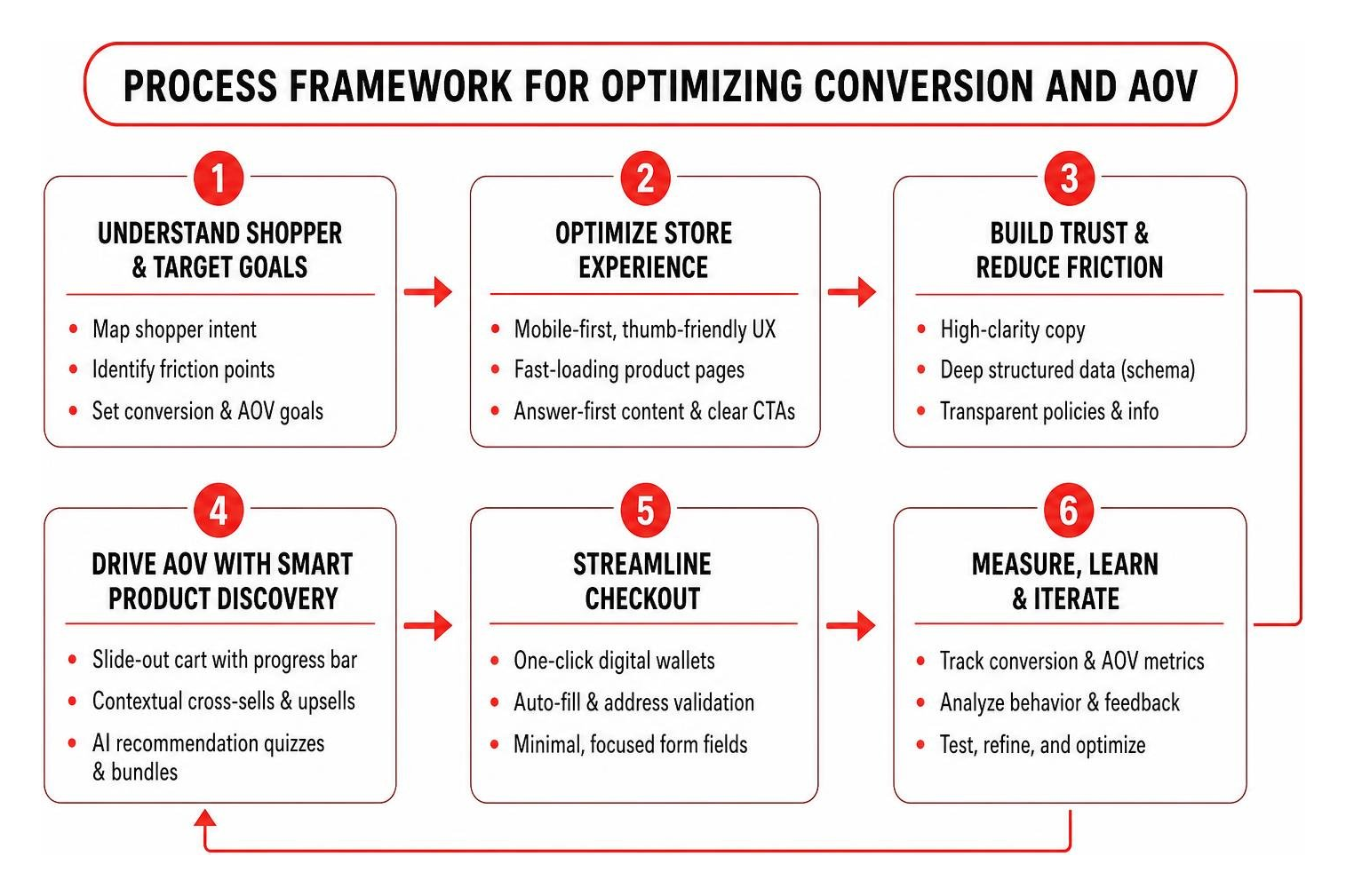
Experienced ecommerce specialists use proven on-page mechanics to maximize transaction efficiency:
- Slide-Out AJAX Cart Drawers: Keep users within their browsing flow by replacing full-page cart redirects with slide-out side drawers that feature free shipping progress bars and contextual one-click cross-sells.
- Interactive AI Recommendation Quizzes: Guide uncertain buyers through diagnostic quizzes (matching skin types, sizing preferences, or lifestyle needs) to recommend tailored product bundles that increase customer confidence.
- Streamlined Checkout Flows: Modern checkout layouts prioritize one-click digital wallets (Apple Pay, Shop Pay, Google Pay), auto-fill address validation, and minimal form fields.
Studying the best checkout page designs for frictionless shopping will highlight how even small reductions in checkout form friction yield major revenue gains. Pairing this frictionless path with long-term UX strategies that keep ecommerce customers coming back creates predictable customer lifetime value.
Managing Migrations, App Stacks, and Cost Expectations
Building an enterprise ecommerce ecosystem requires integrating third-party marketing, retention, and subscription tools without turning your site speed into a sluggish crawl.
Every third-party script you add—whether for email automation via Klaviyo, social review widgets through Yotpo, or subscription management on Recharge—can introduce external render-blocking JavaScript. Design specialists manage this through asynchronous script loading, API webhooks, and native Shopify Theme App Extensions, keeping third-party code isolated and performant. Avoiding these technical pitfalls prevents the 5 common mistakes that hinder ecommerce success.
Budget Breakdown and Service Tiers for E Commerce Website Design Experts
Ecommerce design and engineering pricing varies based on project complexity, custom backend integrations, and catalog scale. Below is a realistic market breakdown for professional engagements:
| Service Tier | Typical Budget Range | Project Scope & Deliverables | Expected Turnaround | Ideal Business Stage |
|---|---|---|---|---|
| Freelance Specialist | $2,500 – $7,500 | Core theme setup, light UI customization, standard app configuration, basic mobile QA | 3 – 6 Weeks | Early-stage startups, boutique catalogs (<50 SKUs) |
| Boutique Agency | $8,000 – $25,000 | Custom UX design systems, bespoke Liquid/WooCommerce coding, conversion funnel audits, migration support | 6 – 12 Weeks | Scaling DTC brands ($500k–$3M annual revenue) |
| Enterprise Agency | $30,000 – $100,000+ | Full custom architecture, ERP/CRM integrations, internationalization, multi-currency routing, enterprise QA | 12 – 20+ Weeks | High-volume merchants, global omnichannel retailers |
When planning your project budget, consulting a complete website design and development guide helps you align technical requirements with your expected commercial return.
Avoiding Common Pitfalls During Platform Migration and Redesigns
Migrating platforms or launching a full storefront redesign is like performing engine maintenance while driving down the highway. One wrong turn can damage years of earned SEO rankings or break ongoing ad campaigns.
The most catastrophic migration mistake is failing to build a complete 1:1 URL 301 redirect map. When older URLs return 404 errors, your search rankings collapse overnight. Top design agencies run pre-launch staging audits to verify that canonical tags, image alt text, JSON schema arrays, and Metafield data transfer cleanly to the new production environment. Overlooking these steps is one of the most common reasons ecommerce stores fail during major digital transitions.
Frequently Asked Questions About E Commerce Website Design
What is the average timeline for an enterprise ecommerce redesign?
A comprehensive custom redesign typically takes between 8 and 16 weeks from discovery to deployment. The engagement begins with a 2-week discovery and user-journey sprint, followed by 3 to 4 weeks of high-fidelity wireframing and prototyping in Figma.
Once approved, front-end Liquid or custom template engineering requires 4 to 6 weeks. The final 2 to 3 weeks are dedicated to third-party data migration, 301 redirect mapping, user acceptance testing (UAT), and multi-device browser QA before final DNS switchover.
How do custom bespoke themes compare to pre-built marketplace templates?
Marketplace themes are designed to cater to thousands of different businesses at once. Because of this, they come loaded with hundreds of conditional styling sheets, unused layout scripts, and bloated feature toggles that slow down page load times.
A custom bespoke theme contains only the clean HTML, CSS, and modular Liquid templates required for your exact product catalog. This lightweight build eliminates script bloat, improves Core Web Vitals, and allows your team to build conversion paths tailored directly to your customer base.
How do design experts integrate third-party apps without slowing down page speed?
Experienced engineers use modern Theme App Extensions to inject app code directly into specific page blocks without modifying core theme files. They load non-critical marketing pixels and review widgets asynchronously or defer their execution until after initial user interaction.
For complex features like customer reviews, loyalty tiers, or dynamic subscriptions, developers fetch data using lightweight REST or GraphQL APIs, ensuring third-party app servers never delay your primary content paint.
Conclusion
Choosing the right design partner directly shapes your brand’s growth trajectory. A visually appealing storefront will not drive business growth if it rests on unstable code, loads slowly on mobile networks, or introduces friction at checkout.
By vetting design partners on technical rigor, mobile-first design systems, Core Web Vitals performance, and conversion-focused UX, you protect your capital and build a durable foundation for long-term growth. At Zen Agency, we have spent more than two decades crafting enterprise-grade digital solutions that help scaling businesses maximize their market visibility and revenue. When you are ready to build a high-performance storefront, partner with our team for enterprise e-commerce website design services.