Top 6 Platforms to Scout a Quality Logo Design Freelancer Fast
Top 6 Platforms to Scout Freelance Logo Designers Fast
To scout a quality logo design freelancer fast, the top platforms include established marketplaces like Upwork and Fiverr for escrow-protected hiring, visual showcase networks like Behance and Dribbble for portfolio exploration, and curated talent hubs like Contra and 99designs. Navigating verified channels ensures you connect with vetted professionals who understand modern digital branding and visual identity standards.
When sourcing specialized talent, exploring how logo design services structure their deliverables can give you a baseline for what a professional engagement entails. Across global networks and curated job hubs, clients consistently rate top logo designers 4.9 out of 5 across tens of thousands of verified reviews.
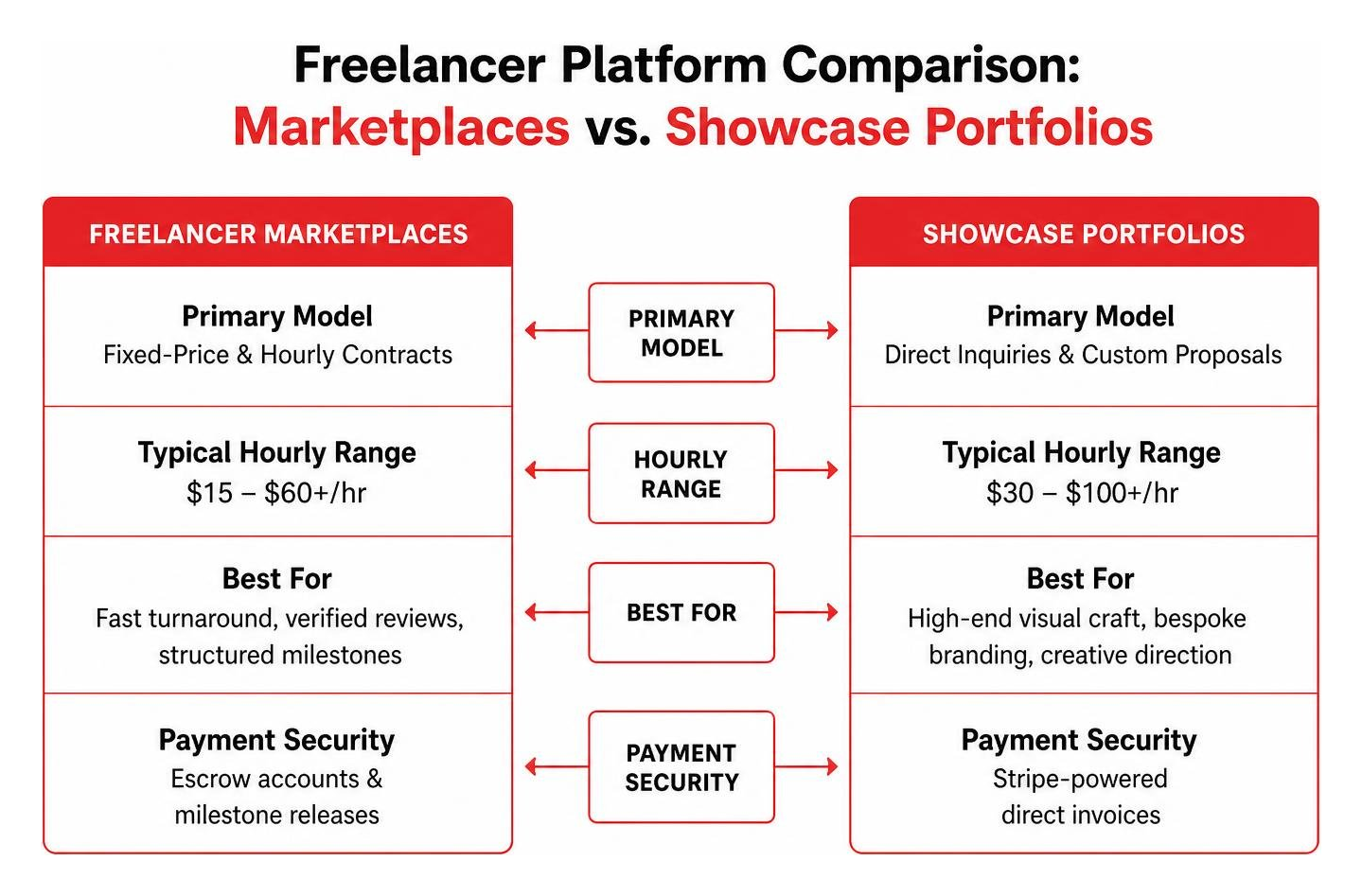
| Platform Type | Primary Model | Typical Hourly Range | Best For | Payment Security |
|---|---|---|---|---|
| Curated Freelance Marketplaces | Fixed-Price & Hourly Contracts | $15 – $60+/hr | Fast turnaround, verified reviews, structured milestones | Escrow accounts & milestone releases |
| Design Showcase Networks | Direct Inquiries & Custom Proposals | $30 – $100+/hr | High-end visual craft, bespoke branding, creative direction | Stripe-powered direct invoices |
| Independent Talent Hubs | Project Packages & Retainers | $25 – $75+/hr | Comprehensive identity systems, full brand kits | Custom milestone agreements |
Freelancer Marketplaces and Job Boards
Freelance job boards like Upwork and Fiverr remain the fastest routes to scout talent across every budget tier. These platforms streamline engagement by utilizing built-in escrow systems, where funds are held safely and only released when specific design milestones are met.
Job boards display transparent client satisfaction metrics, completion rates, and platform-verified badges (such as Top Rated or Top Rated Plus). These indicators highlight proven track records—often representing hundreds of successful contracts and thousands of logged hours. Furthermore, integrations with modern payment gateways like Stripe provide reliable end-to-end security without exposing sensitive financial data.
Portfolio and Showcase Communities
Creative showcase networks such as Behance and independent platforms like Contra present an alternative, visually driven discovery model. Rather than posting a public job and sifting through dozens of incoming bids, you directly explore curated case studies, mood boards, and complete brand identity presentations.
Connecting directly with independent designers via their visual portfolios allows you to evaluate real-world design depth. You can assess how an artist moves from early sketch concepts to packaging, responsive web assets, and complete visual systems.
How to Evaluate and Hire the Best Logo Design Freelancer
Hiring the right creative partner means looking beyond surface aesthetics. A polished image in a thumbnail is great, but your business needs a durable, scalable brand asset. Recognizing why good branding is worth the investment ensures you evaluate candidates based on strategic thinking rather than just low rates.
Always evaluate a freelancer’s communication clarity, past client feedback, and transparent revision policies before signing an agreement. A reliable professional will explain their process, ask thoughtful questions about your target audience, and outline explicit timelines from the initial discovery call to final asset handover.
Evaluating Portfolios When You Hire a Logo Design Freelancer
When reviewing candidate portfolios, look for structural versatility, style diversity, and alignment with core logo design principles. Top-tier creatives showcase clear sketch-to-concept workflows, demonstrating how their visual choices solve actual business challenges.
Key portfolio evaluation criteria include:
- Versatility Across Mediums: Does the mark remain legible on a small mobile screen, an embroidered shirt, and a physical billboard?
- Simplicity with Character: Does the mark use clean, memorable forms that stand out without unnecessary visual clutter?
- Niche Relevance: Has the designer worked with similar business models, or do they demonstrate adaptable industry research skills?
- Case Study Depth: Do they present full identity systems—including color palettes and typography pairings—or just isolated graphics?
Essential Deliverables and Vector Formats to Require
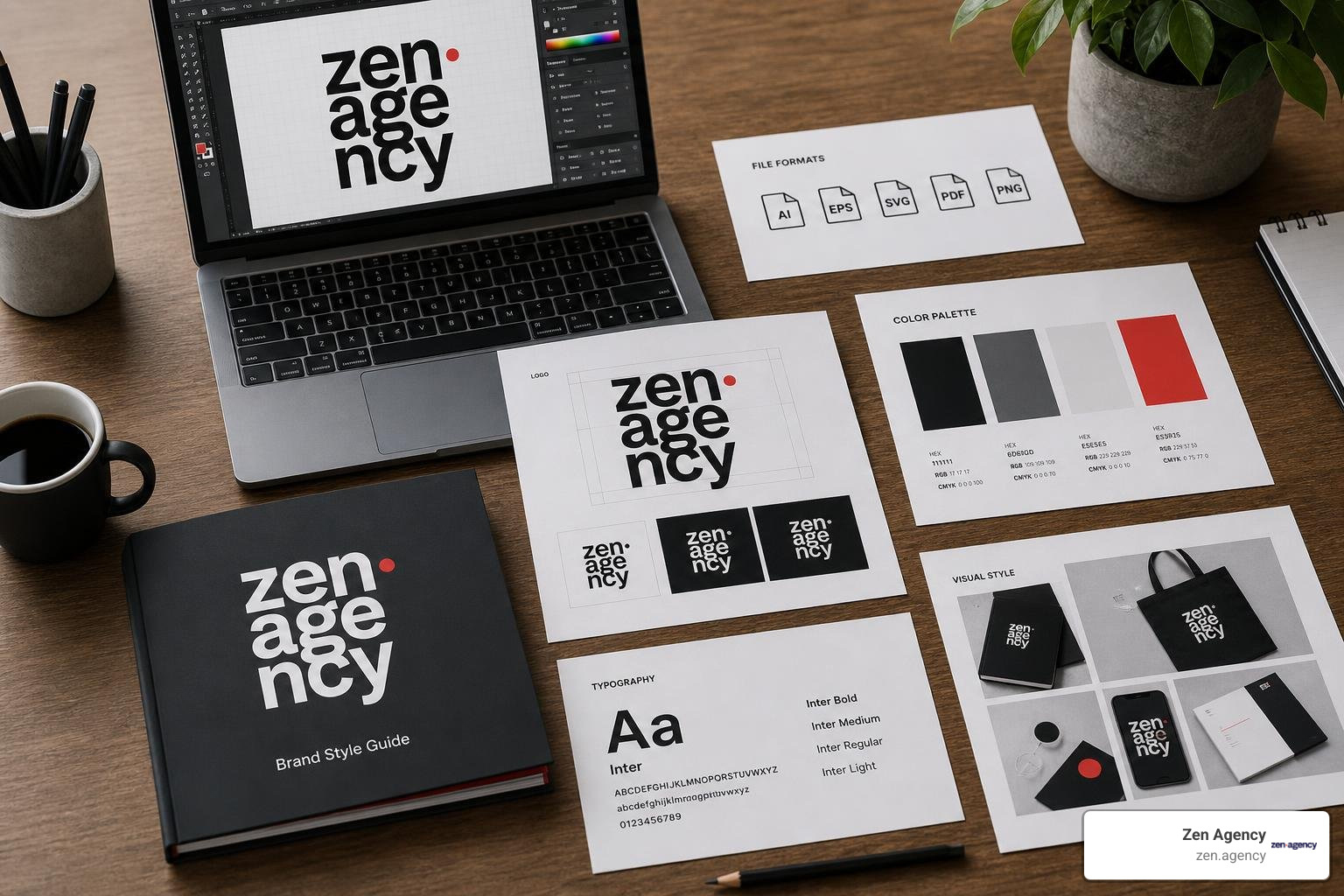
A complete logo delivery goes far beyond a single JPEG or PNG image. To ensure your brand scales seamlessly across all marketing collateral, your designer must supply native, scalable vector files along with standard raster exports.
Essential handover assets must include:
- Master Vector Files (
.AI,.EPS): Infinitely scalable master files necessary for high-end print, signage, and future graphic work. - Web-Ready Vectors (
.SVG): Lightweight vector assets for websites and web applications that remain crisp on high-density displays. - Transparent Rasters (
.PNG): High-resolution exports in RGB color format with transparent backgrounds for digital presentations and social channels. - Print-Ready Rasters (
.TIFF,.JPEG): High-resolution exports formatted in CMYK color mode for physical printing. - Brand Style Sheet: A concise guide detailing exact color values (HEX, RGB, CMYK, Pantone) and primary/secondary font pairings.
Setting Up Your Project for Budget and Execution Success
A successful freelance engagement relies on clear project constraints, mutually agreed-upon milestones, and explicit legal terms. Understanding why your business logo needs a professional touch allows you to approach your project as a strategic investment rather than a quick transaction.
How to Post a Job for a Logo Design Freelancer
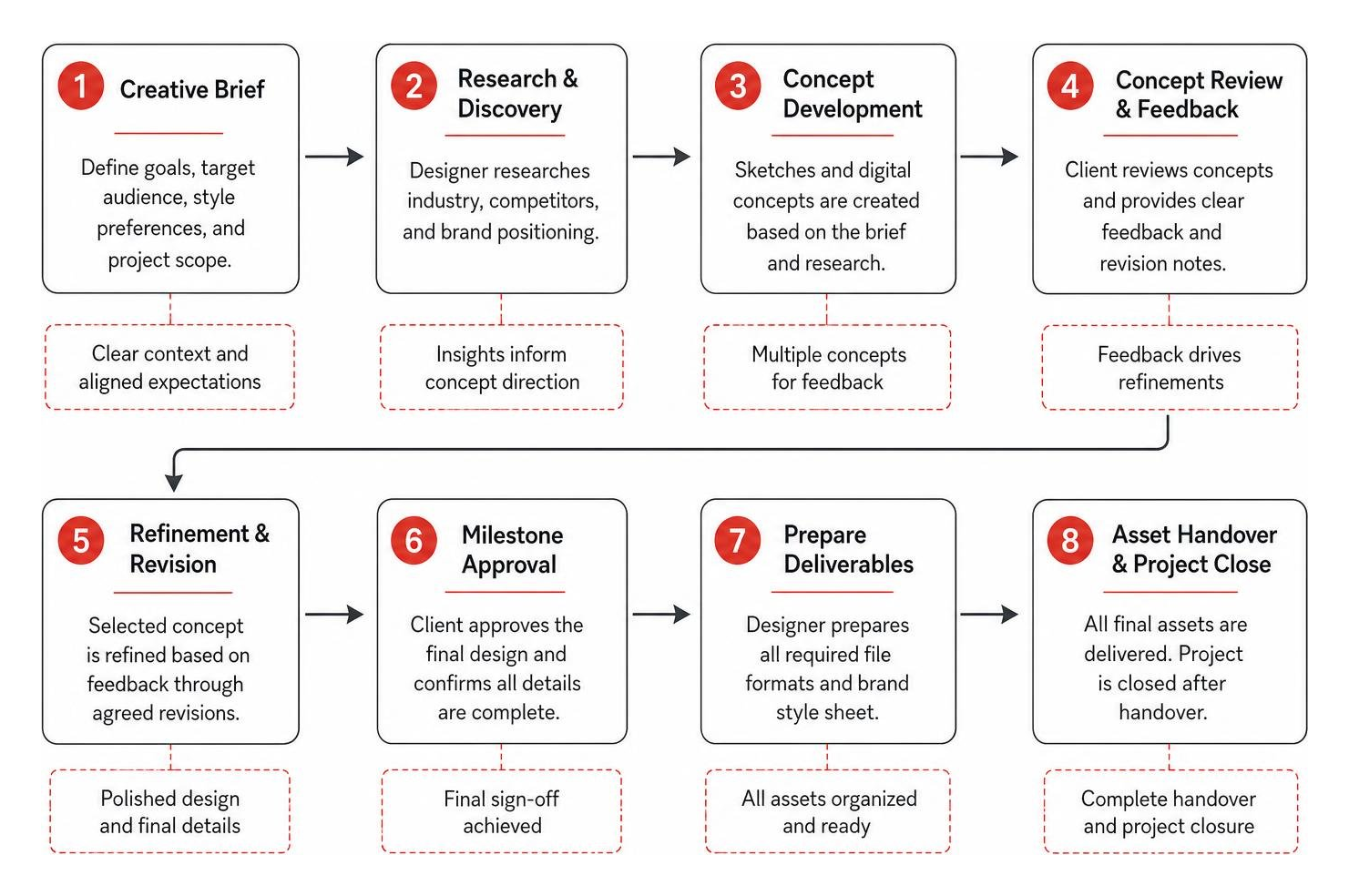
To attract elite design talent, your job posting must provide clear context and expectations. Vague listings attract low-quality, automated proposals, while detailed project briefs attract experienced problem solvers.
Your job posting should clearly state:
- Company Overview and Mission: Who you are and what unique value your business provides.
- Target Audience Profile: Detailed demographics, customer pain points, and industry positioning.
- Core Deliverables: Specific logo variations required (primary mark, wordmark, favicon, brand style guide).
- Visual References & Inspiration: Links to mood boards, styles you admire, and visual approaches to avoid.
- Budget Model and Timelines: Clear project deadlines, feedback turnaround times, and fixed-price milestone structures.
Pricing Expectations and Typical Hourly Rates
Logo design rates vary depending on freelancer experience, geographic region, and project scope. On major freelance platforms, base hourly rates typically range from $15 to $30 per hour, while highly specialized brand consultants often charge $50 to $100+ per hour.
| Experience Level | Typical Pricing Model | Cost Range | Scope of Deliverables |
|---|---|---|---|
| Junior / Entry-Level | Hourly / Fixed | $15 – $30/hr ($50 – $150 fixed) | 1–2 standalone logo concepts, basic PNG/JPEG exports |
| Mid-Tier Specialist | Fixed Package | $200 – $600 | 3–5 initial concepts, full vector formats, color variations, revisions |
| Senior Brand Designer | Milestone / Retainer | $750 – $2,500+ | Strategic discovery, complete visual identity, typography system, brand guidelines |
Common Mistakes to Avoid When Hiring Freelance Designers
Avoiding common hiring pitfalls ensures your design investment yields practical, long-term brand equity:
- Prioritizing Speed Over Discovery: Skipping audience research leads to generic designs that fail to resonate with your target market.
- Neglecting Explicit File Requirements: Failing to contractually specify vector formats (
.AI,.EPS,.SVG) can leave you with unscalable raster images that must be redrawn later. - Using Ambiguous Feedback: Directives like “make it pop” frustrate creatives; provide objective, actionable notes tied to your brand goals.
- Overlooking Copyright Transfers: Always ensure your contract explicitly transfers all intellectual property and commercial usage rights upon final payment.
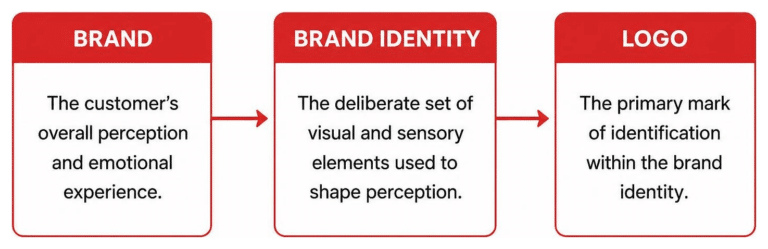
- Treating a Logo as a Complete Brand: A logo needs supporting fonts, colors, and layout rules to function effectively across real marketing campaigns.
Frequently Asked Questions About Freelance Logo Design
How much does a freelance logo designer typically charge in 2026?
Freelance logo design rates span a wide spectrum based on experience and project scope. Base hourly rates on major talent marketplaces average between $15 and $30 per hour for straightforward tasks. Comprehensive identity packages from seasoned freelance specialists generally range from $300 to $1,500+, which includes market research, concept development, iterative revisions, and brand style guides.
What file formats should a logo designer deliver upon completion?
A complete professional handoff must include editable vector master files (.AI or .EPS), web-optimized vector graphics (.SVG), and high-resolution transparent raster images (.PNG). Additionally, the designer should supply CMYK versions for physical printing, RGB files for digital screens, and a brand style sheet defining official color codes and typography rules.
Who owns the legal rights to the final logo design?
Upon full milestone payment, the commercial rights and intellectual property of the final approved design should transfer entirely to you. Ensure this IP transfer is explicitly detailed in your written freelance contract. Preliminary sketches and unused concept drafts typically remain the intellectual property of the designer unless negotiated otherwise.
Conclusion
Hiring an experienced freelance designer provides the creative agility, direct collaboration, and focused execution needed to build a distinctive visual foundation. Understanding what makes a great logo ensures you select a design partner who aligns with your long-term business goals.
At Zen Agency, we have spent over two decades helping businesses transform their visual identities and digital marketing strategies into sustainable revenue growth. By following structured vetting processes, establishing transparent project briefs, and demanding comprehensive vector deliverables, you set your business up for lasting brand authority and market impact.