Why These Branding and Logo Design Companies Are Killing It
Why the Right Branding and Logo Design Companies Can Make or Break Your Business
The best branding and logo design companies do far more than produce a pretty mark – they build the visual foundation that shapes how customers, investors, and competitors see your business from day one.
Here are the main types of branding and logo design partners worth considering in 2026:
| Provider Type | Best For | Starting Price | Key Strength |
|---|---|---|---|
| Enterprise brand consultancy | Enterprise / iconic brands | Custom quote | Deep research, governance, and large-scale rollout |
| Global brand strategy firm | Global enterprise | Custom quote | Strategy, design, experience, and brand architecture |
| Subscription creative team | Scale-ups and in-house teams | Subscription | Ongoing creative production and design capacity |
| Strategic boutique studio | Ambitious growth brands | Custom quote | Logo as a business instrument |
| Specialized creative studio | Tech, CPG, and lifestyle brands | Custom quote | Boutique craft and niche expertise |
| Fast brand kit provider | Startups and founders | From $395 | Full brand kit in 72 hours |
| Rapid identity studio | SMBs and startups | From $497 | Fast human-made branding |
| Budget logo provider | Small businesses | Budget tiers | Affordable logo concepts and revisions |
| Design contest platform | Solopreneurs and budget buyers | From $349 | Multiple design submissions and flexible options |
| Freelance marketplace | DIY and micro-budgets | Varies | Large pool of freelance design options |
A strong logo isn’t just a design decision – it’s a business one. Research shows that 70% of customers form their first impression of a brand based on its logo and packaging, and 60% of consumers actively avoid brands with outdated logos. Yet many business owners still treat logo design as an afterthought, turning to free tools or low-cost marketplaces that can’t deliver the strategic thinking a growing brand actually needs.
The gap between a generic logo and a real brand identity has never been wider – or more consequential.
Know your branding and logo design companies terms:
What Makes Branding and Logo Design Companies Stand Out in 2026
In 2026, a logo company stands out by doing one thing especially well: connecting design to business outcomes.
A modern logo has to work everywhere: website header, app icon, packaging, social profile, signage, investor deck, email signature, ads, video intros, and sometimes embroidered on a polo that someone definitely ordered in the wrong size.
That means the best branding and logo design companies are not just drawing symbols. They are building systems that create recognition, trust, and consistency.
The strongest firms usually offer:
- Strategic discovery before design begins
- Original creative direction instead of template-based visuals
- Clear ownership rights and usable final files
- Scalable logo systems that work in digital, print, and motion
- Brand guidelines that help teams stay consistent
- Visual identity assets beyond the logo itself
- Messaging, positioning, and campaign support when needed
This matters because trust is now one of the biggest drivers of brand growth. Research shows that 83% of consumers need to trust a brand before they consider buying, while 88% are drawn to brands they see as authentic.
In other words: your logo is not “just a logo.” It is a shortcut to belief.
Why Professional Logo Design Beats Free Logo Makers
Free logo makers are useful for experimenting. They can help a founder visualize a rough direction, test a name, or create a placeholder for an early concept.
But they have limits.
Many AI-generated or template-based logos are built from common shapes, stock icons, and predictable layouts. That creates three problems:
- Your logo may look like everyone else’s.
- Your brand may not be legally ownable in the way you expect.
- Your identity may fall apart when used beyond one simple layout.
Several logo platforms now warn that AI-generated logos may not qualify for copyright protection in many jurisdictions. That does not mean AI is useless. It means businesses need to understand the difference between “downloadable” and “ownable.” For businesses thinking about long-term protection, the U.S. Patent and Trademark Office’s trademark basics are a useful starting point for understanding how brand names, logos, and marks can be protected.
Professional logo design adds the missing layers:
- Original concept development
- Brand differentiation
- Trademark-awareness
- File preparation for real-world use
- Consistent typography, color, and layout systems
- Strategy behind why the design exists
A free logo can make you look open for business. A professional identity can make you look ready to grow.
Why Professional Logo Design Beats Freelance Marketplaces
Freelance marketplaces can be helpful for small, low-risk projects. If you need a quick badge, a simple refresh, or a low-budget experiment, they offer access to a huge pool of designers.
But the challenge is consistency.
A marketplace often gives you a designer. A professional branding partner gives you a process.
That process usually includes:
- Discovery calls
- Audience and competitor research
- Creative direction
- Concept rationale
- Structured revisions
- Quality control
- Brand guidelines
- Launch support
- Long-term scalability
The difference shows up later. A cheap logo might look fine on a white background, but what happens when you need a website, sales deck, packaging, social campaign, trade show booth, email template, and recruitment materials?
That is when many businesses realize they did not buy a brand. They bought a file.
The 2026 Shift From “Logo” to “Identity System”
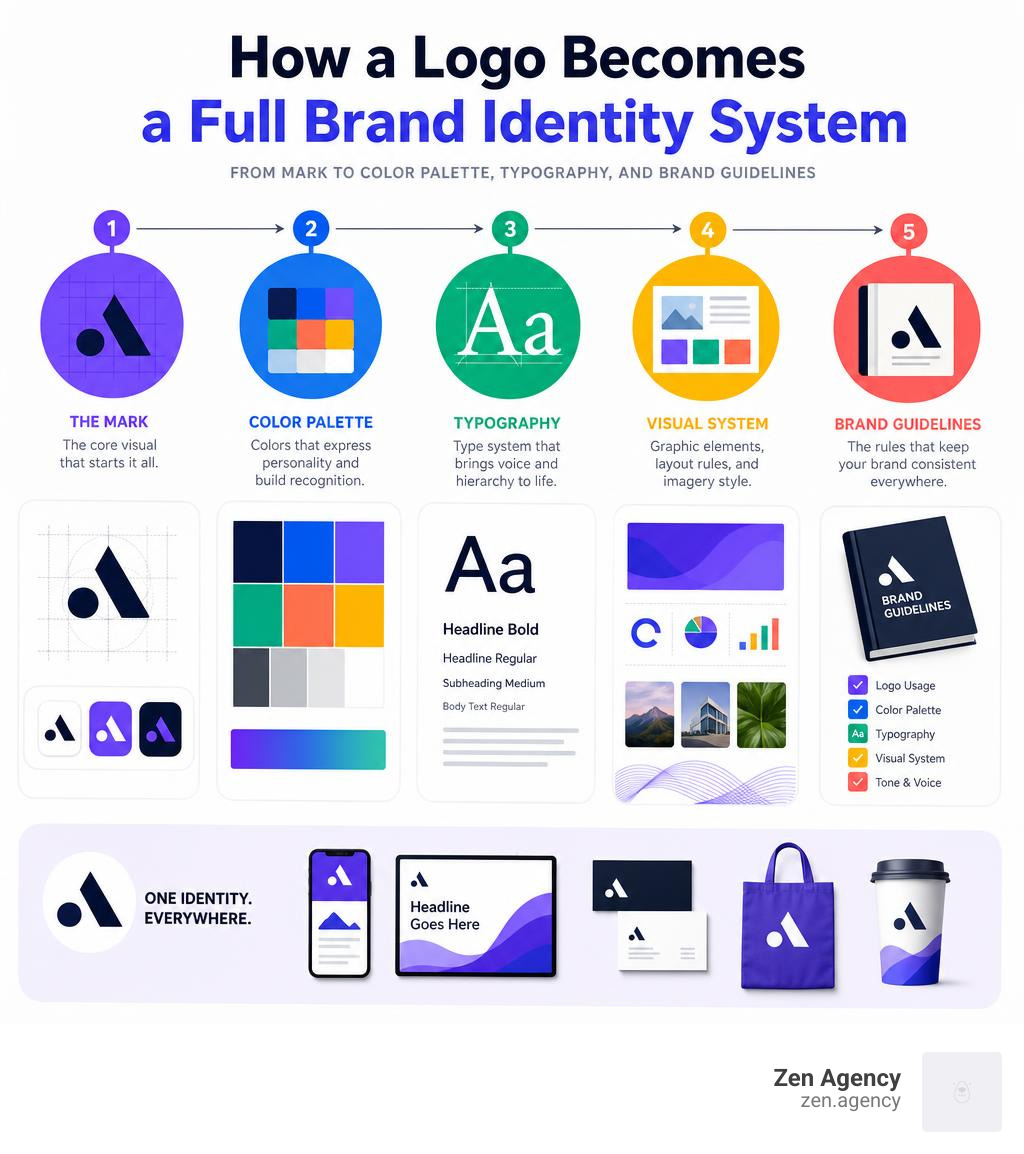
The biggest shift in 2026 is simple: the logo is no longer the whole project.
Today, a serious brand identity system includes:
- Primary logo
- Secondary logo
- Icon or symbol
- Wordmark
- Color palette
- Typography
- Graphic patterns
- Illustration or photography style
- Social templates
- Motion behavior
- Website assets
- Packaging or signage rules
- Brand guidelines
This is why we often tell businesses to think beyond “What should our logo look like?” and ask “How should people recognize us everywhere?”
For a deeper look at this, see our guide to brand identity systems.
The Best Types of Branding and Logo Design Companies for Different Business Needs
Not every business needs the same kind of branding partner. A startup in Scranton trying to launch fast does not need the same process as a national enterprise managing 20 product lines. A local service company in Wilkes Barre may need trust-building visuals, while a CPG brand may need packaging that wins on a crowded shelf.
Here is the practical breakdown.
| Provider Type | Best-Fit Business | Typical Pricing | Typical Timeline | Process | Deliverables |
|---|---|---|---|---|---|
| Global brand consultancy | Enterprise brands, large organizations | Custom / premium | Months | Deep research, workshops, governance | Strategy, identity, architecture, rollout systems |
| Boutique branding studio | Growth brands, niche industries | Custom / mid to premium | Weeks to months | High-touch creative process | Logo system, identity, guidelines, packaging or campaigns |
| Fast-turnaround studio | Startups, founders, SMB launches | $395-$2,100+ | 48-72 hours to 1 week | Structured brief, rapid design | Logo, colors, type, social kit, files |
| AI-assisted platform | Early concepts, validation, micro-budgets | Free to low cost | Minutes to days | Prompt or template-based | Basic logo files, editable assets |
| Design contest platform | Solopreneurs, budget-conscious buyers | Around $349+ | Days to weeks | Open brief, multiple submissions | Winning logo, files, usage rights depending on terms |
| Digital branding agency | SMBs and scaling businesses | Custom | Weeks to months | Strategy, design, website, marketing | Brand identity, website assets, campaigns, SEO-aligned creative |
| Local design firm | Local businesses, regional visibility | Varies | Days to weeks | Direct collaboration | Logo, signage, print, local marketing assets |
For businesses in Pennsylvania, Montana, and across the U.S., the best choice usually depends on growth stage, budget, urgency, and how much brand strategy you need before design begins.
Enterprise Branding and Logo Design Companies
Enterprise branding firms are built for complexity.
They help organizations manage:
- Multiple stakeholders
- Brand architecture
- Sub-brands
- Naming systems
- Verbal identity
- Governance
- Multi-market rollout
- Accessibility
- Environmental graphics
- Campaign systems
This type of provider is best when the brand has major business implications: mergers, international expansion, product portfolio restructuring, institutional identity, or a high-stakes rebrand.
Enterprise branding work usually extends beyond logos into visual systems, product experiences, data visualization, environmental graphics, and long-term brand governance.
The downside? Premium cost, longer timelines, and a process that may be more than a smaller company needs.
Boutique Branding and Logo Design Companies
Boutique studios are often a great fit for businesses that want custom craft without the scale of a global consultancy.
They may specialize in:
- Consumer goods
- Hospitality
- Wellness
- Finance
- Education
- Technology
- Cultural or lifestyle brands
A boutique studio can bring strong creative taste, founder-level involvement, and a more personal working relationship. Many boutique providers position logo design as a strategic commercial tool, not just a decorative asset.
The key is portfolio fit. If a studio’s work feels aligned with your market, personality, and ambition, that is a strong signal.
Fast-Turnaround Branding Studios
Fast-turnaround studios have grown because many founders need to launch now, not “sometime next quarter after six alignment meetings and a moodboard debate.”
These providers often promise:
- 48-hour or 72-hour delivery
- Flat-rate pricing
- Multiple concepts
- Social media kits
- Source files
- Brand guidelines
- Unlimited revisions
- Copyright transfer or usage rights
They can be a strong option for startups, early-stage businesses, and SMBs that need a polished launch identity quickly.
The tradeoff is depth. A rapid brand kit can be useful, but it may not include the same level of research, positioning, stakeholder alignment, or long-term brand governance as a full agency engagement.
AI-Assisted and DIY Logo Platforms
AI-assisted tools and DIY logo platforms are best for:
- Early-stage idea testing
- Temporary visuals
- Pitch mockups
- Very small budgets
- Quick internal concepts
- Brand direction exploration
Some platforms offer several paths, including AI tools, one-on-one designer collaboration, and contests. Freelance design marketplaces also show how broad the low-cost logo market has become, with many styles including minimalist, hand-drawn, vintage, cartoon, 3D, geometric, lettering, and more.
These tools are not “bad.” They are just not a substitute for strategic branding when the business depends on trust, differentiation, and long-term recognition.
How Top Providers Differ in Pricing, Process, and Deliverables
The easiest way to compare branding and logo design companies is to look at three things:
- How much strategy is included?
- How custom is the creative work?
- What do you receive at the end?
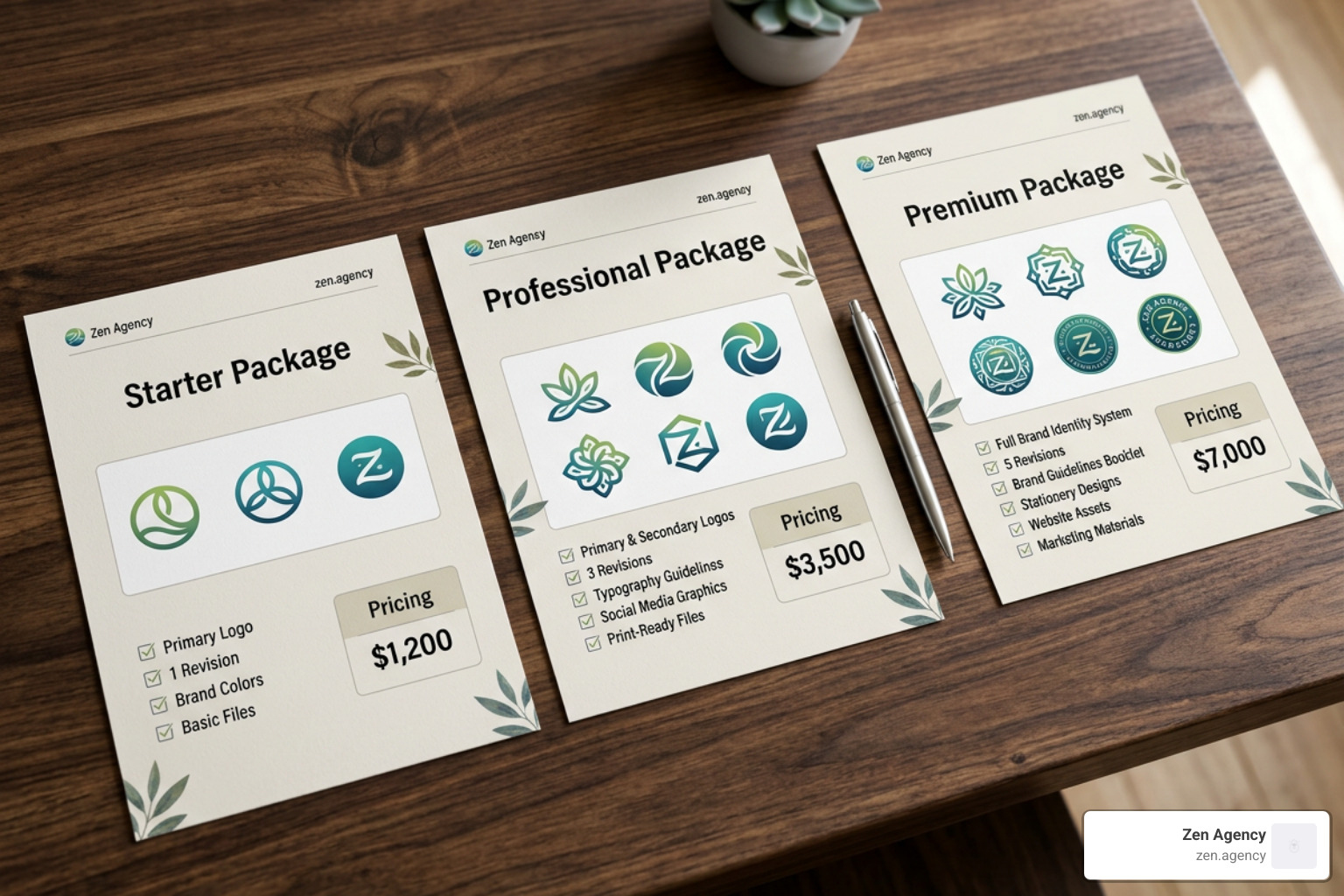
A $99 logo and a $25,000 branding program are not really selling the same thing. One sells a visual asset. The other sells research, positioning, identity, rollout, and consistency.
Budget Logo Packages
Budget logo packages often fall between $49 and $599.
They may include:
- 1 to 3 logo concepts
- Basic revisions
- PNG or JPG files
- Simple vector files in some packages
- Quick turnaround
- Limited discovery
These can work for:
- Side projects
- Temporary brands
- Simple local businesses
- Early validation
- Low-risk experiments
But they usually do not include deep strategy, full guidelines, competitor analysis, messaging, naming, packaging, web design, or campaign assets.
Budget logo design can be a starting point. Just do not confuse it with full brand development.
Mid-Market Brand Identity Packages
Mid-market identity packages often range from about $395 to $2,100, based on the research we see from fast-turnaround branding providers and package-based studios.
These packages may include:
- Multiple logo concepts
- Color palette
- Typography
- Brand guidelines
- Social media kit
- Stationery
- Web-ready files
- Print-ready files
- Source files
- Revision rounds
This tier is often attractive for startups and SMBs because it delivers more than a logo without requiring a major agency budget.
For many businesses in Wilkes Barre, Scranton, Kingston, Hazleton, Billings, and similar markets, this level can be enough to build a more professional presence quickly.
Premium Agency Branding Programs
Premium branding programs often start around $10,000 and can rise significantly depending on scope.
These projects may include:
- Brand research
- Stakeholder interviews
- Competitive analysis
- Positioning strategy
- Brand architecture
- Naming
- Messaging
- Logo system
- Visual identity
- Brand guidelines
- Website design
- Packaging
- Campaign creative
- Internal launch materials
- External rollout planning
This is where branding becomes a business transformation project.
A premium branding program is best when your company is scaling, entering a new market, attracting investment, repositioning, or trying to unify a fragmented brand presence.
What Deliverables Should Be Included
At minimum, a professional logo package should include:
- Primary logo
- Secondary logo or alternate lockup
- Icon or favicon
- Full-color version
- One-color version
- Black-and-white version
- Horizontal and vertical layouts
- SVG files
- PNG files
- PDF files
- AI or EPS source files when applicable
- Color codes: HEX, RGB, CMYK, Pantone if needed
- Typography recommendations
- Usage rules
- Clear ownership documentation
For a full identity system, you should also expect:
- Brand guidelines
- Social media templates
- Website design elements
- Photography or illustration direction
- Iconography
- Presentation templates
- Email signature
- Print collateral
- Packaging or signage rules if relevant
We break this down further in our guide to brand guideline creation.
How to Choose the Right Branding and Logo Design Companies for Your Industry

Choosing a branding partner is not only about who has the prettiest portfolio. It is about fit.
Before hiring, ask:
- Do they understand our industry?
- Do they ask strategic questions before designing?
- Can they explain the “why” behind their concepts?
- Do they show work similar to the level we want?
- Are revisions clearly defined?
- Who owns the final files?
- What formats are included?
- Can the logo scale into a full identity system?
- Do they understand digital marketing, websites, and customer acquisition?
- Will this identity still work in three to five years?
A logo should not just look good in a portfolio mockup. It should work in the messy real world, where people see it for half a second on a phone screen while also ignoring three emails and a calendar reminder. Branding has to survive reality.
Branding and Logo Design Companies for Startups
Startups need speed, clarity, and credibility.
The right partner should help define:
- Founder story
- Category positioning
- Investor-facing visuals
- Pitch deck identity
- MVP brand system
- Website look and feel
- Social launch assets
- Simple messaging
Startups often do not need a massive brand book. They need a flexible identity that looks credible, communicates clearly, and can evolve as the business learns more about its market.
Branding and Logo Design Companies for SMBs
SMBs need branding that builds trust and recognition.
For small and mid-sized businesses, especially local and regional companies, branding often affects:
- Website conversions
- Local visibility
- Customer confidence
- Packaging
- Signage
- Vehicle graphics
- Social media consistency
- Email marketing
- Sales collateral
This is where our experience as a digital marketing and web development agency matters. Since 2008, we have seen that visual identity works best when it is connected to the website, SEO strategy, paid media, and conversion path.
A strong logo gets attention. A strong brand system helps turn that attention into revenue.
Branding and Logo Design Companies for Enterprise Brands
Enterprise brands need governance.
That means the identity must work across:
- Departments
- Locations
- Product lines
- Sub-brands
- Campaigns
- Internal teams
- Agencies
- Digital platforms
- Accessibility standards
- Motion and video
Enterprise branding is less about one beautiful mark and more about consistency at scale.
A good enterprise branding partner creates rules that are clear enough for hundreds of people to follow without turning the brand into a lifeless spreadsheet. Which, let’s be honest, is where many brands go to nap.
Industry-Specific Fit: Tech, Retail, FMCG, Hospitality, Finance, and Wellness
Different industries need different signals.
Tech brands often need clarity, simplicity, and a digital-first identity that works in product interfaces.
Retail brands need memorability, signage strength, and shelf or storefront recognition.
FMCG and CPG brands need packaging impact. Since 70% of customers form first impressions through packaging and logo design, this category cannot afford weak visual identity.
Hospitality brands need atmosphere. The logo must fit the physical space, menu, signage, website, and guest experience.
Finance brands need trust, stability, and professionalism. Typography, spacing, and color choices matter heavily here.
Wellness brands need authenticity. Overly generic “leaf and circle” logos can feel forgettable fast.
For more detail, see our guide to custom identity design.
Why Logo Design Works Best When Paired With Full Branding Services
A logo is strongest when it is part of a complete brand system.
That means pairing logo design with:
- Brand strategy
- Messaging
- Naming
- Visual identity
- Verbal identity
- Website design
- SEO strategy
- Marketing assets
- Paid media creative
- Social content systems
- Email design
- Sales collateral
Research often points to the value of consistency. Consistent brand presentation has been linked to revenue increases of up to 23%. That makes sense: when customers see the same identity, message, and promise across every touchpoint, the brand feels more familiar and trustworthy.
Strategy Before Design
Strategy answers the questions design cannot answer alone:
- Who are we for?
- What do we want to be known for?
- Why should customers choose us?
- What do competitors already own visually?
- What emotional triggers matter to our audience?
- What promise can we make and keep?
Before we design, we want to understand positioning, differentiation, market context, and the ideal customer profile. Otherwise, design becomes decoration.
For more on choosing a strategic partner, read our guide to brand strategy companies.
Messaging and Naming Make the Logo More Memorable
A strong logo becomes more powerful when paired with clear language.
That includes:
- Brand name
- Tagline
- Mission
- Values
- Voice
- Story
- Product messaging
- Calls to action
A name gives people something to remember. A logo gives them something to recognize. Messaging gives them a reason to care.
If your business is still naming, renaming, or repositioning, our guide to brand naming is a helpful next step.
Digital Branding Turns Identity Into Growth
A logo sitting in a folder does not build a business.
A logo applied across a website, search presence, social campaign, paid ads, landing pages, email, and sales materials can.
Digital branding turns identity into:
- Better website trust
- Stronger conversion rates
- More consistent campaigns
- Better ad recognition
- Improved SEO engagement signals
- Higher customer confidence
- Clearer market positioning
That is why we connect branding to digital performance. A brand should not only look good. It should help people find you, trust you, and buy from you.
For a deeper look, read why your business needs a digital branding agency.
Frequently Asked Questions About Branding and Logo Design Companies
What should a business look for before hiring a logo design partner?
Look for a partner that understands both design and business strategy.
At minimum, evaluate:
- Creative fit
- Portfolio depth
- Industry experience
- Discovery process
- Revision policy
- Ownership rights
- File formats
- Timeline
- Pricing transparency
- Brand system options
- Trademark awareness
- Communication style
The best partner should ask smart questions before showing visuals. If someone jumps straight into design without understanding your audience, competitors, goals, or use cases, that is a red flag.
Also ask what happens after the logo is approved. Do you receive usable files? Guidelines? Social assets? Website-ready elements? Or just one PNG and a cheerful “good luck”?
How much do professional logo and branding packages cost in 2026?
In 2026, pricing generally falls into these tiers:
| Tier | Typical Cost | Best For | What You Usually Get |
|---|---|---|---|
| DIY tools | Free to low cost | Testing ideas | Basic logo, editable assets, limited originality |
| Budget logo design | $49-$599 | Small projects | Concepts, simple files, limited strategy |
| Fast identity kits | $395-$2,100 | Startups and SMBs | Logo, colors, type, brand guide, social assets |
| Agency branding | $10,000+ | Scaling companies | Research, strategy, full identity, rollout assets |
| Enterprise branding | Custom | Large organizations | Architecture, governance, multi-channel systems |
The right price depends on risk. If the logo will be used on a small side project, a budget option may be enough. If it will represent a growing company, influence investor confidence, appear on packaging, and drive customer trust, professional branding is usually worth the investment.
How is AI changing logo design in 2026?
AI is changing the speed of logo design, not the need for human judgment.
AI can help with:
- Moodboard exploration
- Concept generation
- Competitive visual scanning
- Style variations
- Early sketches
- Layout testing
- Fast mockups
But humans are still essential for:
- Strategy
- Originality
- Taste
- Cultural context
- Trademark awareness
- Refinement
- Brand consistency
- Emotional resonance
The strongest workflows are hybrid. AI can expand exploration, while experienced designers and strategists decide what is meaningful, ownable, and aligned with the business.
The risk is relying on AI output without checking whether it is generic, legally protectable, or strategically useful. Fast is nice. Distinct is better.
Conclusion
The best branding and logo design companies in 2026 are not just making logos. They are building identity systems that help businesses earn trust, stand out, and grow.
Whether you are a startup that needs a launch kit, an SMB that needs stronger local recognition, or a scaling company ready for a more mature identity, the goal is the same: create a brand people remember for the right reasons.
At Zen Agency, we bring together branding, custom website development, and digital marketing strategy to help businesses increase visibility, profitability, and ROI. Since 2008, we have helped companies move beyond disconnected visuals and into brand systems built for real growth.
If your current logo feels outdated, inconsistent, or too small for where your business is headed, it may be time to build something stronger.
Start here: explore our branding and graphic design services.