The Complete Guide to Embedding Rewards into Your Online Store
The Complete Guide to Embedding Rewards into Your Online Store
Why Loyalty Program Integration Is a Growth Engine for Online Stores
Loyalty program integration is the process of embedding a rewards system directly into your store’s existing tech stack — connecting your checkout, POS, CRM, email, and SMS tools so points are earned, tracked, and redeemed automatically across every customer touchpoint.
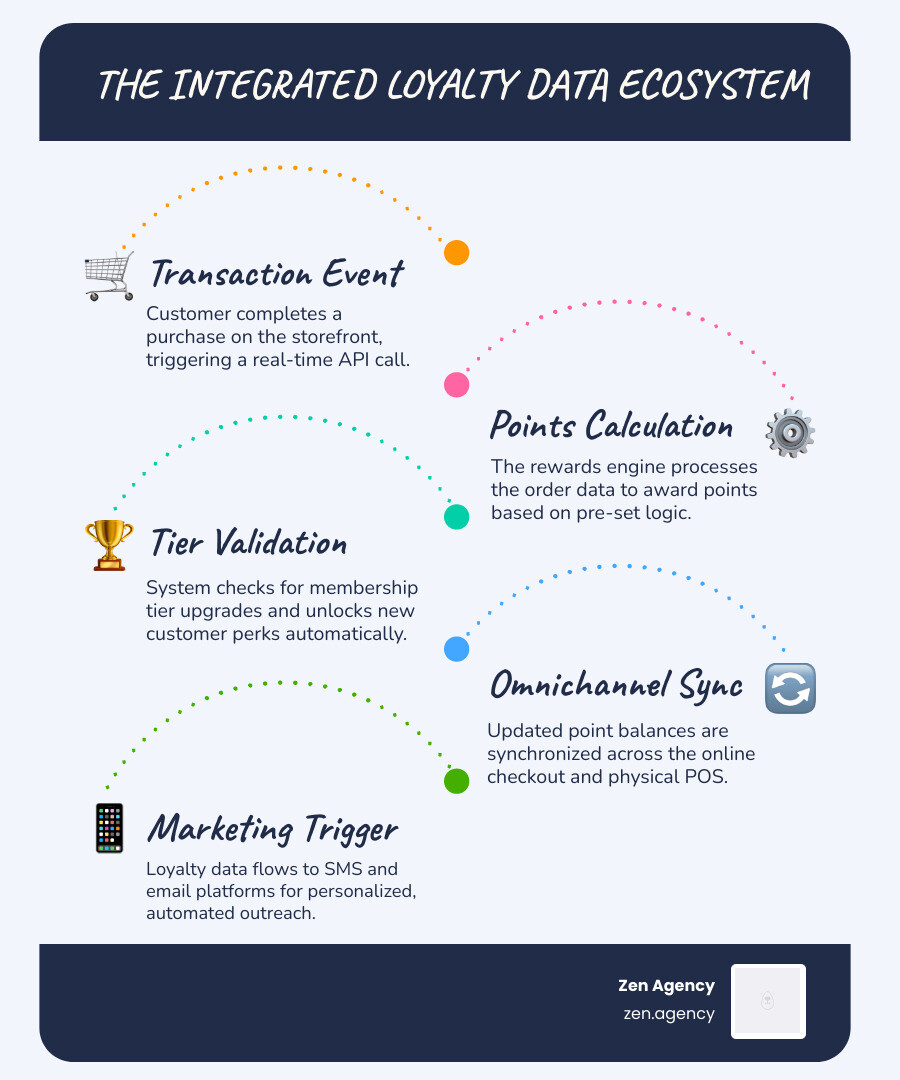
Here’s a quick breakdown of what that looks like in practice:
| Step | What Happens |
|---|---|
| Customer makes a purchase | Points are awarded automatically via API |
| Customer reaches a tier threshold | Membership level upgrades in real time |
| Customer checks out online | Rewards are visible and redeemable at checkout |
| Customer visits a physical store | Points balance syncs instantly with POS |
| Marketing platform triggers a campaign | Loyalty data segments the audience automatically |
This is fundamentally different from bolting on a standalone rewards app that lives in its own silo.
When done right, the results are hard to ignore. Brands that deeply integrate loyalty systems see customers purchase twice as often. Programs tied directly into checkout and marketing flows have driven a 48% increase in Customer Lifetime Value (CLV). One coffee brand grew its loyalty-generated revenue by 186% year-over-year after moving to a fully integrated approach.
The gap between a basic plugin and a true integration isn’t just technical — it’s the difference between a program customers ignore and one that quietly drives revenue every single day.
I’m Joseph Riviello, CEO and Founder of Zen Agency, and over my 22+ years leading digital strategy for scaling e-commerce brands, I’ve seen how a well-executed loyalty program integration can transform a store’s retention numbers and bottom line. In this guide, I’ll walk you through exactly how to build one that works.
Important Loyalty program integration terms:
Defining Loyalty Program Integration vs. Standalone Apps
When we talk about Loyalty program integration, we aren’t just talking about adding a “rewards” tab to the corner of your website. A standalone app is often a third-party widget that floats on top of your site; it doesn’t always “talk” to your other systems. If a customer buys something in-store, the app might not know. If they return an item, the points might stay in their account.
Deep system integration, however, merges the rewards logic into your core business operations. It’s the “digital handshake” between your sales data and your customer’s rewards profile. This ensures that every action—whether it’s a review, a referral, or a high-value purchase—is captured and rewarded instantly. For businesses looking to scale, this level of connectivity is essential. You can learn more about why this matters in our guide on The Benefits of Custom E-commerce Development.
| Feature | Standalone Rewards App | Integrated Loyalty System |
|---|---|---|
| Data Sync | Often delayed or manual | Real-time across all platforms |
| Customer UX | Separate login or popup widget | Native part of the checkout flow |
| Omnichannel | Limited to online store | Online, POS, and Mobile App sync |
| Personalization | Basic “First Name” tags | Hyper-targeted based on deep data |
| Scalability | Rigid, vendor-locked features | Flexible, API-first architecture |
Core Components of a Loyalty Program Integration API
To build a truly scalable rewards ecosystem, you need to understand the “building blocks” of a loyalty API. These aren’t just lines of code; they are the rules that govern your customer relationships.
- Points Engine: This is the heart of the system. It calculates how many points are awarded for specific events. Modern systems use “flexible primitives,” allowing us to set up complex earning rules (e.g., 2x points for purchasing a specific category on a Tuesday) without rewriting the entire backend.
- Membership Tiers: These create a “gamified” experience. By integrating tiers, you can automatically upgrade a customer from “Bronze” to “Gold” the moment they hit a spending threshold, triggering exclusive perks.
- Rewards Catalogs: This is the menu of what points can buy. Integration allows this catalog to be dynamic—showing different rewards to a VIP member than to a first-time buyer.
- Webhooks & Event-Driven Triggers: These are real-time notifications. When a customer redeems a reward, a webhook can instantly tell your email platform to send a “Congratulations” message or alert your fulfillment team to include a free gift in the box.
Measuring Success in Your Loyalty Program Integration
How do you know if your Loyalty program integration is actually working? You have to look past the “total points awarded” and focus on the metrics that impact your bank account.
- Redemption Rate: A healthy integrated program often sees redemption rates as high as 72%. If people aren’t using their points, they aren’t engaged.
- Purchase Frequency: Integrated systems have been shown to drive a 2x higher purchase frequency.
- Customer Lifetime Value (CLV): Deeply integrated rewards can boost CLV by 48%.
- Revenue Spikes: Bonus point promotions, when integrated with SMS and email, can boost revenue by as much as 370% within a 24-hour period.
By tracking these, you can Unlock Your E Commerce Potential Simple Steps To Increase Online Sales and ensure your tech investment is paying off.
The Technical Architecture: API-First vs. Plugin Approaches
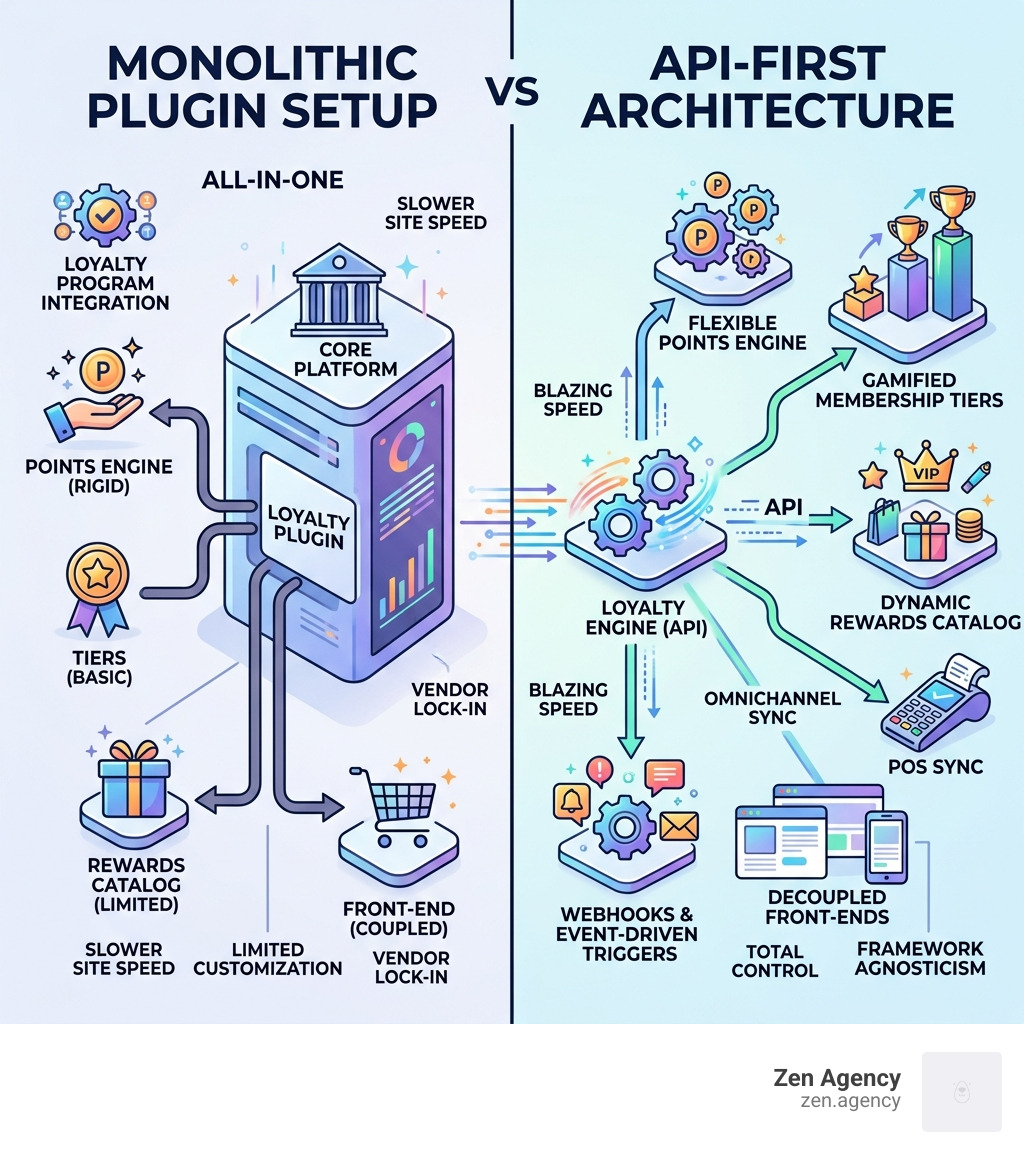
In e-commerce development, we generally see two paths: the “Plugin” and the “API-First” (or Headless) approach.
The Plugin approach is great for smaller stores. You install an app, configure a few settings, and you’re live. However, plugins can sometimes be “heavy,” adding extra JavaScript that slows down your site. They also offer limited customization; you have to play by the vendor’s rules.
The API-First approach is the gold standard for enterprise-grade stores. This architecture decouples the front-end (what the customer sees) from the back-end logic. This means:
- Framework Agnosticism: You can build your store on any platform and still use the same loyalty engine.
- Blazing Speed: High-performance loyalty APIs target sub-50ms to 120ms response times.
- Total Control: You can reward non-standard actions, like a customer attending a webinar or recycling old packaging.
At Zen Agency, we focus on optimizing API performance to ensure that adding a rewards program never compromises your site’s speed or user experience.
Creating an Omnichannel Experience with POS and E-commerce Sync
If you have a physical location in Wilkes-Barre or a shop in Billings, MT, your customers expect their points to follow them. There is nothing more frustrating for a customer than being told, “Oh, those points only work online.”
An integrated Loyalty program integration connects your online store with your Point of Sale (POS) system (like Square or Toast). This creates a “360-degree view” of the customer.
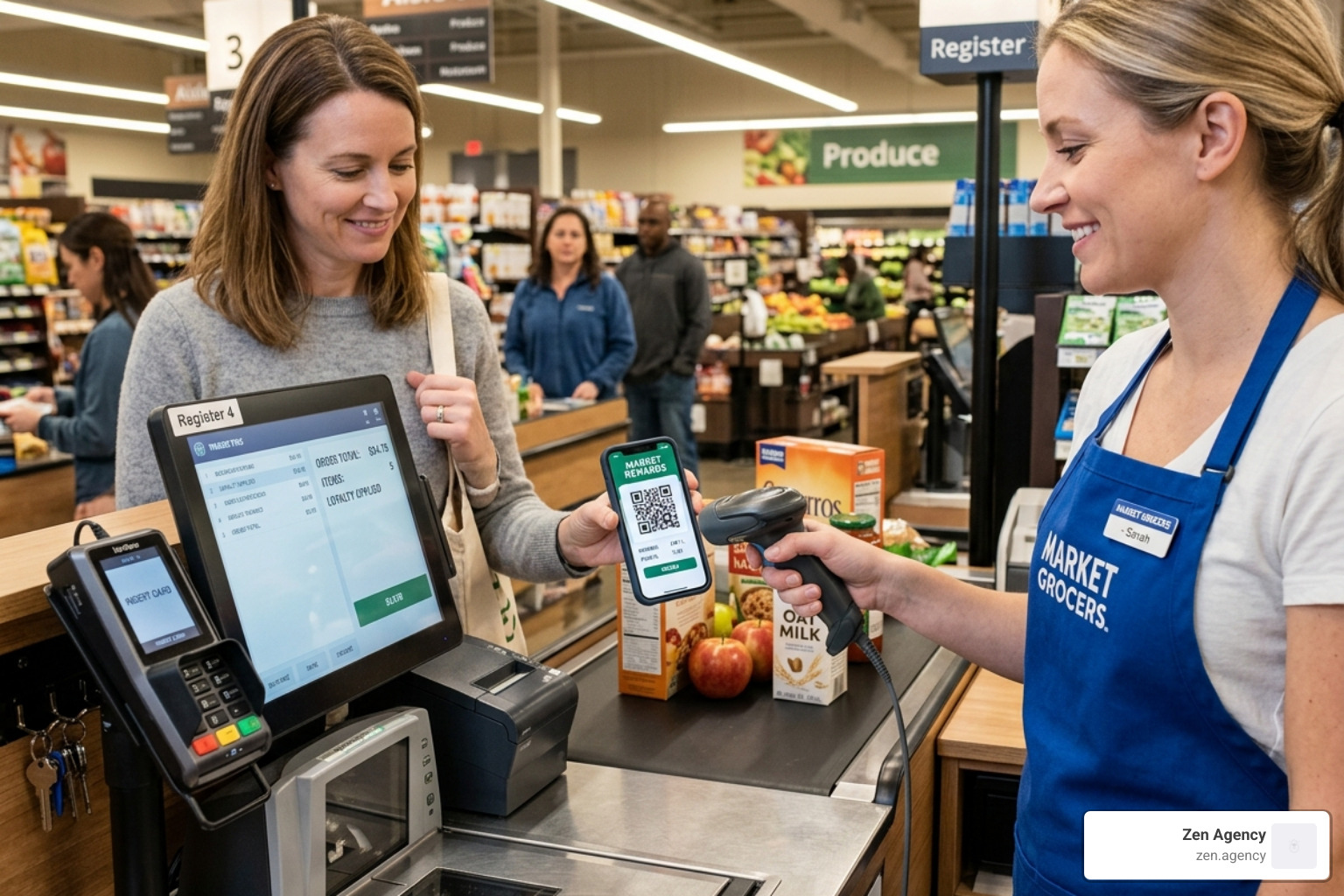
- Real-Time Synchronization: When a customer scans a QR code at your register, the POS calls the loyalty API to fetch their current balance and available rewards.
- Check-Level vs. Item-Level Discounts: Integration allows your staff to apply a $10 discount to the whole bill or a “Free Appetizer” reward to a specific item seamlessly.
- Offline Mode Challenges: One technical hurdle is handling internet outages. A robust integration should have logic to handle “offline mode,” queuing up point accruals to sync once the connection returns, ensuring no customer is left unrewarded.
This seamless experience is one of the best ways to Stop The Churn With These Ai Retention Tactics.
Data Hygiene and Tech Stack Audits: Preparing for Integration
Before we write a single line of code, we have to talk about data. If your customer data is messy, your loyalty program will be too. We call this the “pre-flight checklist.”
- System Auditing: Map out every piece of software you use. Does your CRM talk to your helpdesk? Does your POS talk to your e-commerce platform?
- Data Cleaning: This is the most critical step. You need to merge duplicate accounts (e.g., “[email protected]” and “[email protected]”) and standardize fields.
- PII Compliance: With GDPR and other privacy laws, you must ensure that personally identifiable information (PII) is handled securely. Many API-first systems allow you to keep PII in your local system and use mapped IDs for loyalty redemptions to stay compliant.
- API Rate Limits: You need to ensure your tech stack can handle the “chatter.” If you have 10,000 people trying to redeem points during a Black Friday sale, your API needs to be up to the task.
Taking these steps helps you How To Grow Your Business Without Losing Your Mind during a complex technical rollout.
Driving Growth: Hyper-Personalization and CLV Prediction
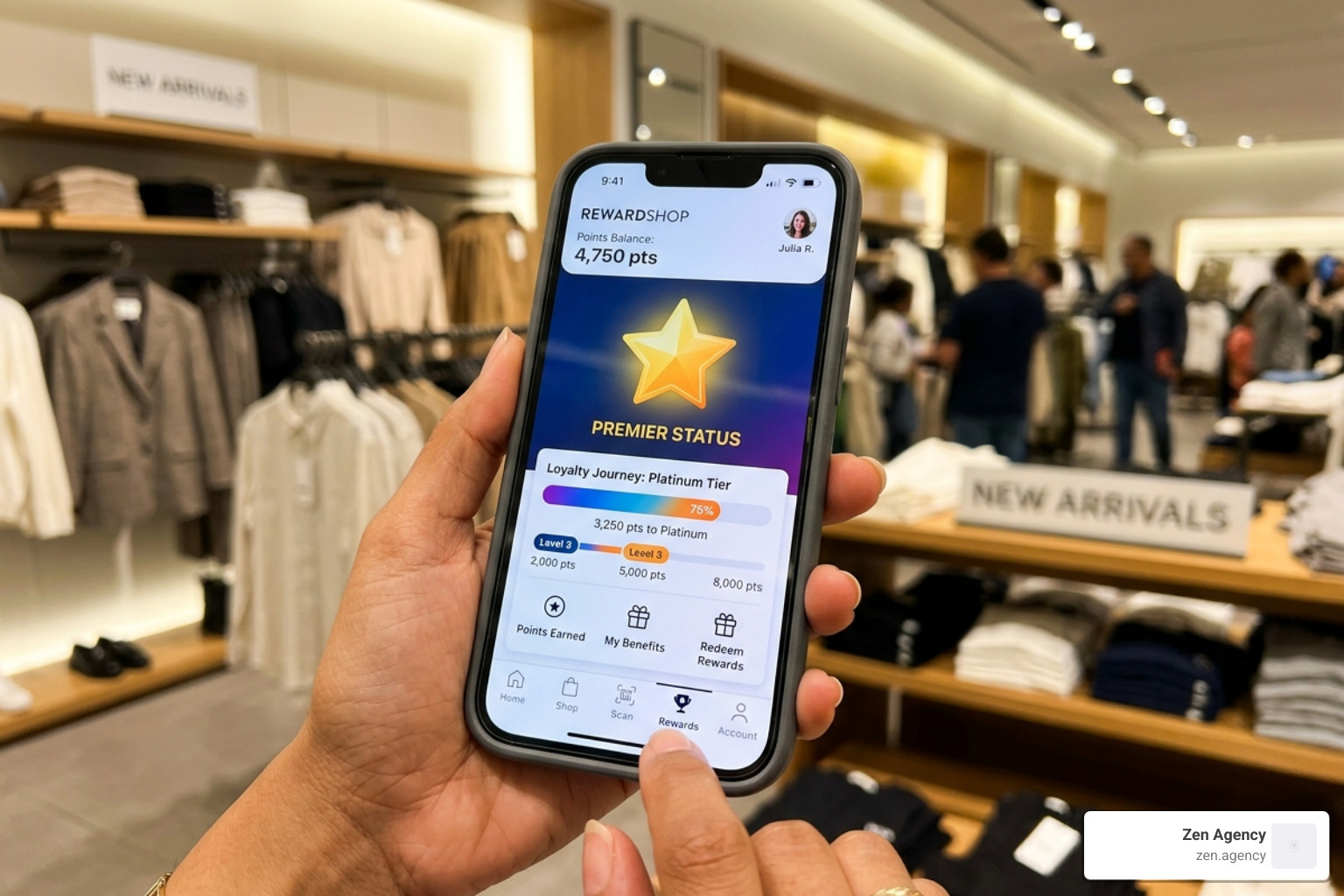
The real magic of Loyalty program integration happens when you use the data to drive marketing. When your loyalty system is integrated with platforms like Klaviyo or SMS tools, you can move away from generic “10% off” blasts and toward hyper-personalized interactions.
- 98% Open Rates: SMS messages that include a customer’s specific point balance or a “You’re 50 points away from Gold” notification see incredible engagement.
- Predictive Analytics: By looking at a customer’s “point velocity” (how fast they earn and spend), you can predict their Lifetime Value. If a high-tier member stops earning points, your system can automatically trigger a “We Miss You” email with a high-value bonus.
- Automated Rewards Triggers: You can set up flows where a customer is rewarded for their birthday, their “anniversary” with your brand, or for leaving a photo review.
Technical Challenges in Loyalty Program Integration
It’s not all sunshine and rainbows; there are real technical hurdles we solve for our clients:
- Data Synchronization: Ensuring that a point earned at 2:00 PM on a mobile app is visible at 2:01 PM on a desktop browser.
- Idempotent Operations: This is a fancy developer term for “don’t award points twice.” If a network glitch causes an API call to retry, the system must be smart enough to recognize it’s the same transaction.
- Security & Authorization: We’ve seen vulnerabilities where low-level users could manipulate point multipliers. Robust integrations require strict authorization checks (like CVE-2025-15260 mitigation) to prevent fraud.
- Fraud Prevention: Referral programs are often targets for “gaming.” Integrated systems use real-time fraud detection to monitor referral flows and block suspicious activity.
Frequently Asked Questions about Rewards Integration
How does loyalty integration differ from a standalone app?
A standalone app is a “bolt-on” that often lives in a silo, whereas Loyalty program integration embeds the rewards logic directly into your checkout, POS, and CRM for a unified, real-time data flow.
Can loyalty points be synced between online and physical stores?
Yes, provided you use an API-first loyalty provider that can connect to your POS system. This allows customers to earn points online and spend them in-person (and vice versa) seamlessly.
What are the primary technical challenges of an API-first approach?
The main challenges include managing API rate limits, ensuring low latency (under 120ms), handling “offline” scenarios for physical stores, and maintaining data integrity through idempotent operations.
Conclusion
At Zen Agency, we don’t believe in “one-size-fits-all” solutions. We know that for businesses in Pennsylvania, Montana, and across the USA, a loyalty program is only as good as the data and technology supporting it. Whether you are looking for enterprise-grade Loyalty program integration or a custom-built rewards ecosystem, our goal is to help you optimize ROI and build a brand that customers never want to leave.
Ready to turn your one-time buyers into lifelong advocates? Start building your integrated loyalty ecosystem today with Zen Agency.