Hotel Logo Design 101: Free Templates and Luxury Ideas to Inspire You
Hotel Logo Design 101: Free Templates and Luxury Ideas to Inspire You
Why Your Hotel Logo Design Makes or Breaks Your Brand
Quick Answer: What Makes a Great Hotel Logo?
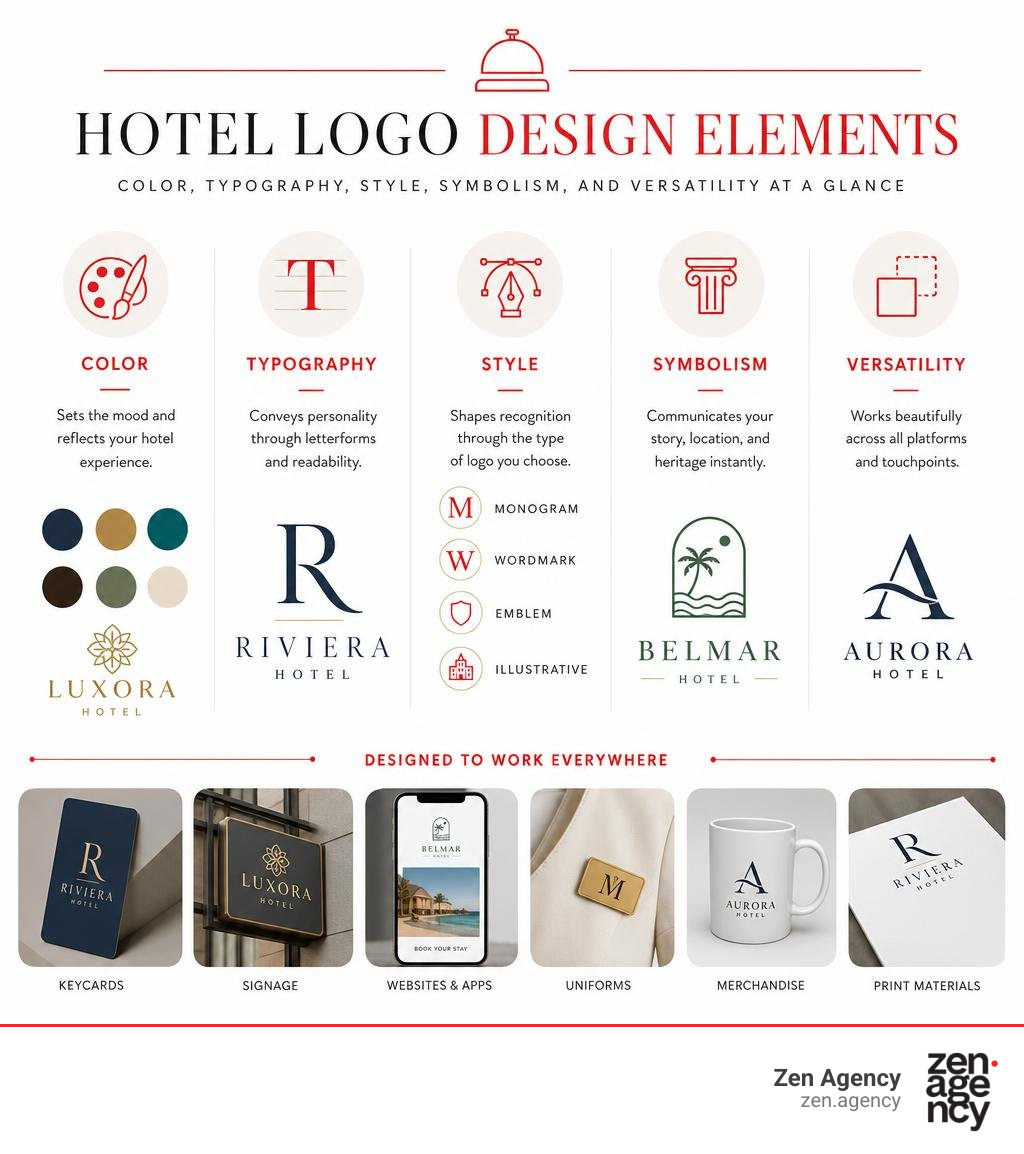
| Element | What to Look For |
|---|---|
| Style | Monogram, wordmark, emblem, or illustrative icon |
| Colors | Match your hotel type — gold for luxury, teal for beach, brown for mountain |
| Typography | Legible, elegant fonts that scale well on signage and digital |
| Symbolism | Reflect your location, heritage, or architecture |
| Versatility | Works on keycards, signage, apps, merchandise, and print |
Getting logo design for hotel properties right is one of the most important branding decisions you’ll make — because as one boutique hotel case study put it, “with a hotel, the brand is something you feel throughout the entirety of your stay.”
Your logo isn’t just a pretty mark on a business card. It lives on keycards, lobby signage, staff uniforms, menus, and booking websites. It’s often the first and last impression a guest carries home.
The stakes are high — and the options are wide. From free Canva templates (over 1,800 of them) to fully custom identities rooted in local history and architecture, the range of approaches can feel overwhelming.
This guide cuts through the noise. Whether you’re launching a new boutique property or refreshing an existing brand, you’ll find practical steps, real-world examples, and clear comparisons to help you move forward with confidence.
I’m Joseph Riviello, CEO and Founder of Zen Agency, and with over 22 years of experience helping businesses build stronger brands — including logo design for hotel and hospitality clients — I’ll walk you through everything you need to know to get this right.
Logo design for hotel vocab to learn:
The Core Principles of Logo Design for Hotel Properties
When we dive into logo design for hotel properties, we must look beyond standard corporate branding. A hotel is a physical, living space. Guests do not just buy a product; they check into an experience. The core principles of hotel logo design revolve around translating that physical reality into a scalable, two-dimensional visual asset.
First, your logo must communicate your brand personality immediately. Are you a high-end, historic luxury destination in Scranton, PA, or a rugged, cozy mountain lodge in Billings, MT? The visual language of your logo should set expectations before the guest even steps through the front doors.
Second, understanding your target audience is non-negotiable. An upscale boutique hotel catering to business executives requires a completely different visual identity than a family-friendly resort or an eco-lodge.
Lastly, scalability and versatility are paramount. Your logo must look as crisp on a massive outdoor roadside sign as it does on a tiny digital browser favicon or embroidered onto a bathrobe. To learn more about setting your own visual boundaries, check out our guide on Your Brand, Your Rules: A Guide to Custom Identity Design.
Color Psychology in Logo Design for Hotel Branding
Color is one of the first elements a guest’s brain processes. In the hospitality industry, a color palette has the power to invoke an immediate emotional connection.
- Luxury Gold and Silver: These metallic tones are universally associated with premium quality, elegance, and high-end service. They perform exceptionally well for historic landmarks and five-star city hotels.
- Teal and Blue: Ideal for coastal or beach resorts, these shades evoke feelings of calm, tranquility, and the refreshing nature of water.
- Mountain Brown and Forest Green: Perfect for properties nestled in the woods of Pennsylvania or the mountains of Montana, these earthy tones convey warmth, stability, and a deep connection to nature.
Consider how your chosen colors will look under different lighting conditions. A metallic gold logo might look brilliant on a website, but how does it translate to physical brass signage in your lobby or a dark-mode mobile app?
Typography Choices in Logo Design for Hotel Signage
Typography carries the literal name of your hotel, meaning it must balance aesthetic beauty with absolute legibility.
- Serif Fonts: Classic, timeless, and elegant. Serif typefaces are the go-to choice for heritage properties and luxury boutique hotels because they convey history, trust, and refinement.
- Sans-Serif Fonts: Clean, modern, and highly legible. If your hotel has a minimalist aesthetic or caters to tech-forward business travelers, sans-serif typography ensures your brand feels contemporary and accessible.
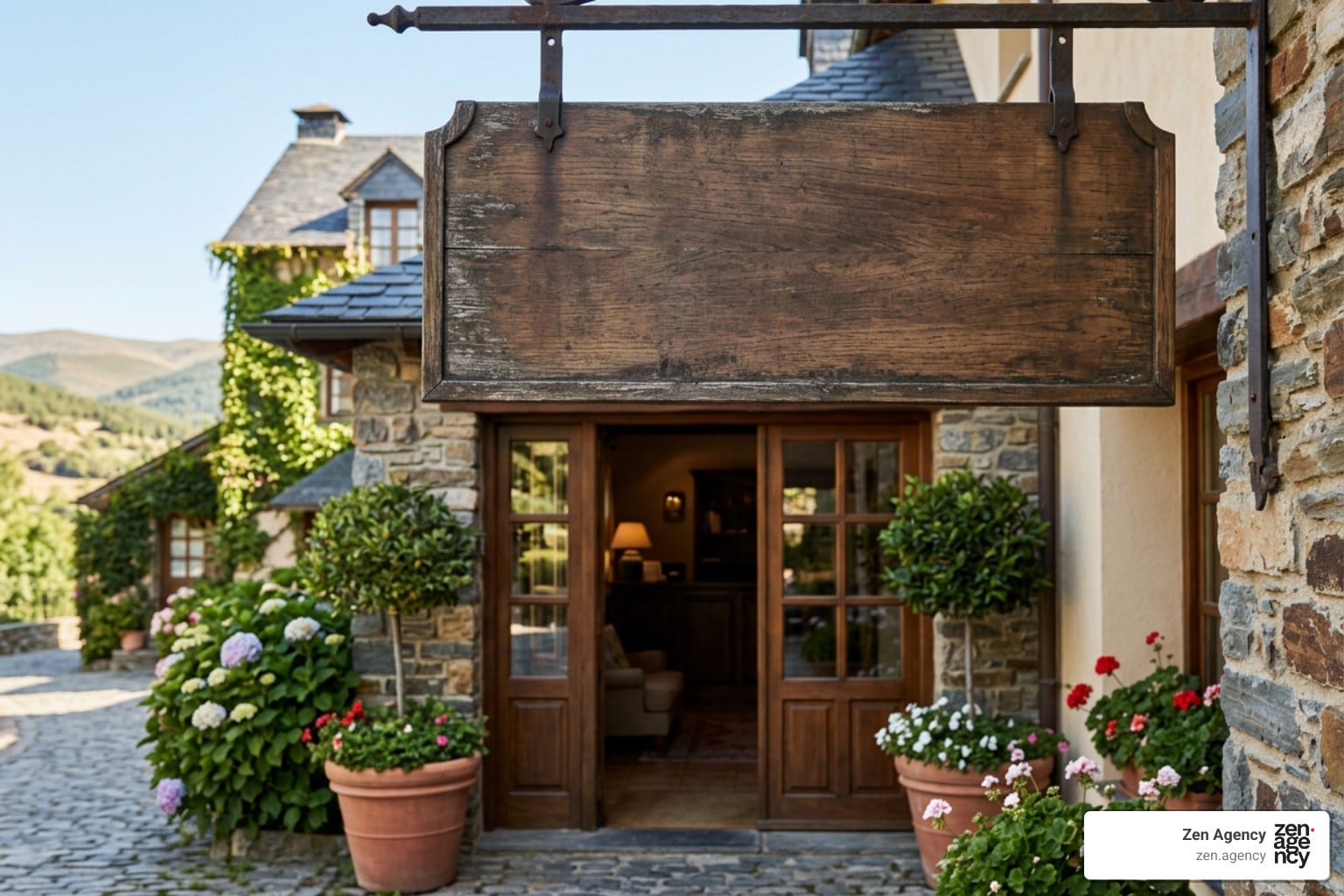
When designing for physical signage, pay close attention to stroke weights. Thin, delicate serifs look gorgeous on a high-resolution screen but can disappear entirely when fabricated into backlit metal lettering on an exterior hotel facade.
Choosing the Right Style: Monograms, Wordmarks, and Emblems
Selecting the foundational style of your logo is a critical step in building your brand assets.
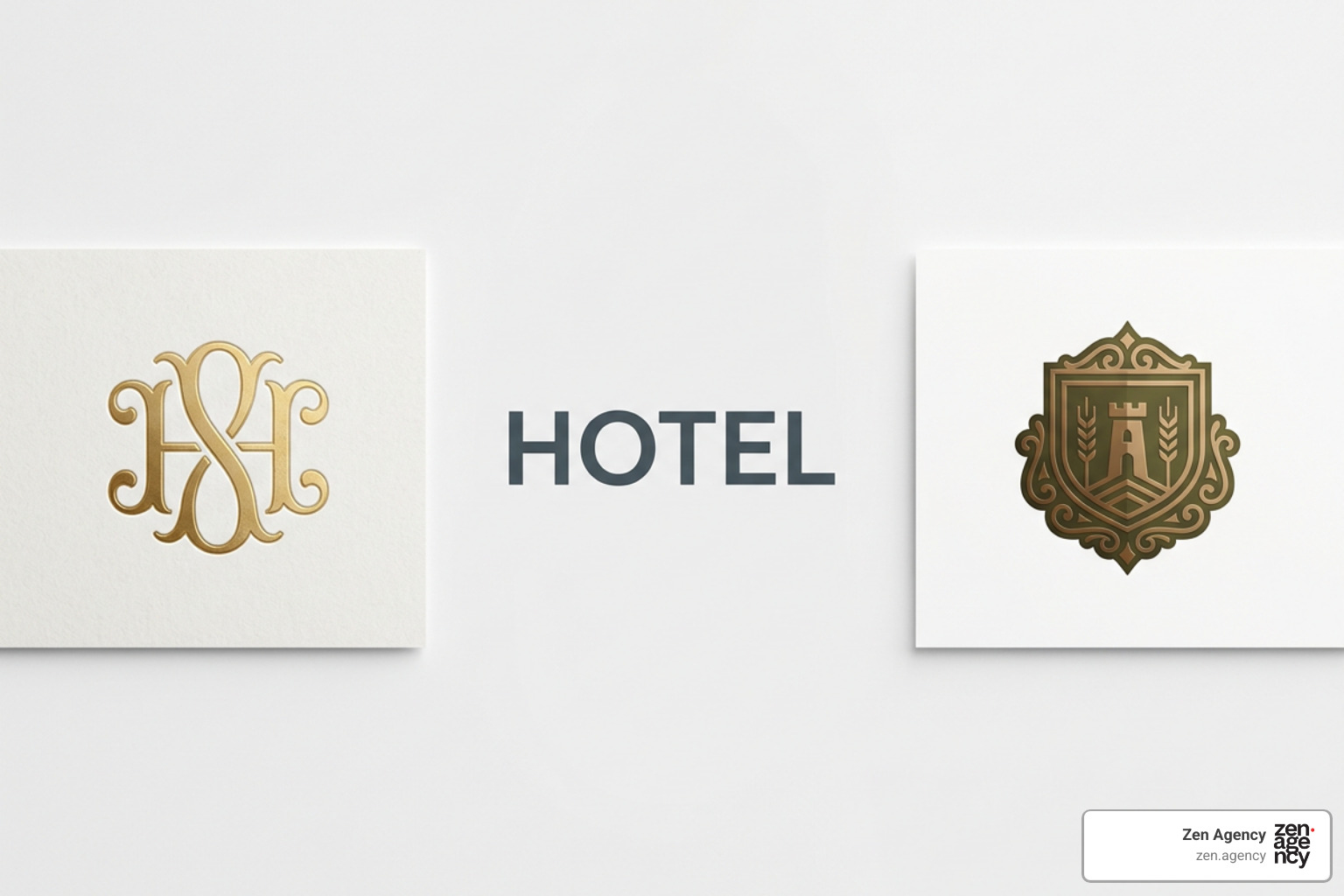
| Logo Style | Best For | Key Characteristics | Famous Example |
|---|---|---|---|
| Monogram | Luxury, heritage, historic properties | Emphasizes initials, highly elegant, works well as a seal | Hilton, Marriott |
| Wordmark | Modern, boutique, minimalist hotels | Focuses entirely on custom typography, clean lines | The Plaza |
| Emblem / Crest | Traditional, upscale, localized hotels | Combines text with a symbolic icon or geometric border | Historic landmark hotels |
Monograms and Lettermarks
Monograms focus entirely on the initials of the hotel. This style is deeply rooted in luxury branding. By simplifying the visual mark to one or two letters, you create an incredibly versatile asset that acts like a royal seal.
Major global brands like Marriott and Hilton utilize lettermarks because of their sheer simplicity. For historic hotels in Pennsylvania or Montana, a monogram can draw from archival materials or architectural ironwork found on the property, creating a beautiful link between the past and the present.
Wordmarks and Typography-Focused Logos
A wordmark relies entirely on custom-designed text to represent the brand. The Plaza is a classic example of a text-based logo that feels grand without needing an accompanying icon.
Clean lines and precise spacing calibration are the secrets to a successful wordmark. Every detail — from the rounding of the serifs to the consistent stroke weights — must be meticulously crafted to leave a sharp, lasting impression.
Crests, Emblems, and Illustrative Icons
Crests and emblems combine typography with illustrative elements, often drawing inspiration from local geography, Spanish tile patterns, or architectural details of the building itself. For instance, a historic boutique hotel might integrate local flora or native mountain peaks into its crest.
These detailed logos tell a rich story, but they require expert execution to ensure they do not become cluttered. If you need assistance finding a skilled designer who can balance these complex elements, read our article on How Logo Design Services Can Help You to Find Reliable Logo Designers.
The Step-by-Step Hotel Logo Design Process
Creating a professional logo requires a structured design workflow. It is a journey that moves from abstract ideas to concrete digital vector graphics. To explore this process in deeper detail, check out our guide on Beyond Moodboards: Mastering the Brand Identity Design Process.
Phase 1: Research and Brand Naming
Before sketching a single line, you must define who you are. This phase involves analyzing your target demographic, evaluating local competitors, and establishing your core brand values. If you are starting completely from scratch, your naming process should align with your visual goals. For insights on naming your property, read our piece on Beyond Brainstorming: Mastering the Art of Brand Naming.
Phase 2: Sketching and Digital Execution
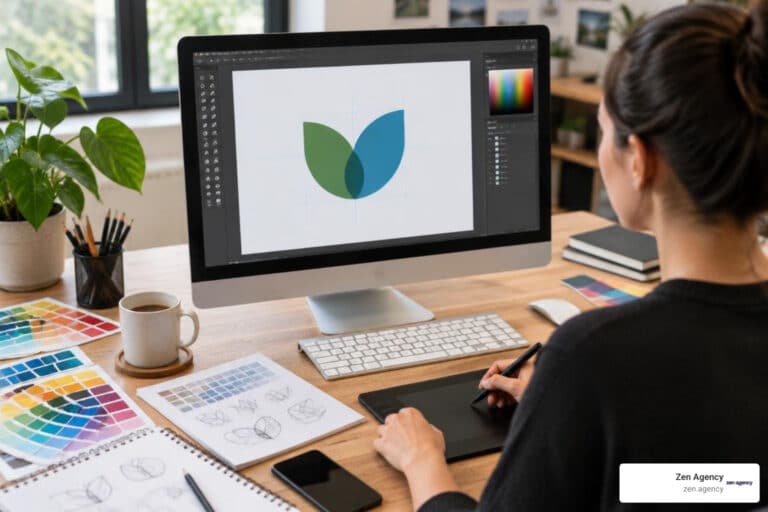
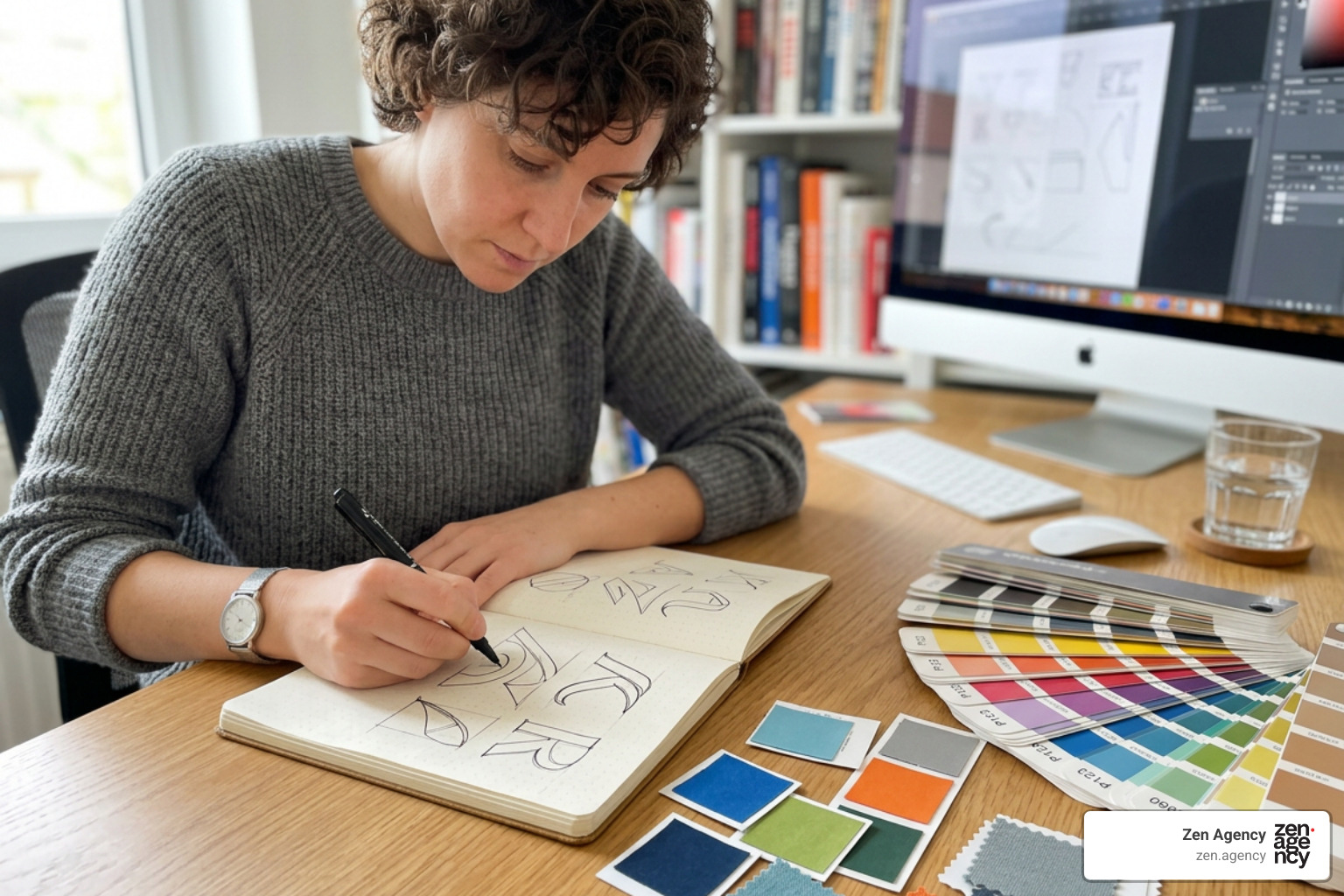
Once the direction is clear, the sketching begins. Designers generate dozens of quick thumbnail sketches to explore different concepts. The best ideas are then brought into vector software like Adobe Illustrator, where geometric shapes are refined, color variations are tested, and typography is paired. For those interested in the hands-on creation side, see The Lazy Entrepreneurs Guide to Custom Logo Making.
Phase 3: Creating Brand Guidelines and Deliverables
A logo is only as good as its implementation. The final phase involves exporting your logo into all necessary file formats (such as print-ready CMYK vectors and web-optimized RGB files) and compiling them into a comprehensive brand book. This document outlines print specifications, clear space rules, and color codes to ensure consistency across all touchpoints. Learn how to build these rules with The Ultimate Guide to Brand Guideline Creation.
DIY Templates vs. Professional Branding Services
Hotel owners often face a choice: use an online DIY tool or hire a professional agency.
Using Free Hotel Logo Templates
If you are working with tight budget constraints or launching a small, short-term lodging project, free templates can be a helpful starting point.
- Canva: Offers 1,882 free customizable hotel templates, making it easy to drag and drop elements. You can explore options here: Free customizable hotel logo templates – Canva.
- Logomakerr.ai: Provides rapid prototyping tools specifically for hospitality. You can check out their platform here: Hotel Logo Design Ideas & Templates – Logomakerr.ai.
While these tools are highly accessible, they come with significant customization limits. Because thousands of other businesses use the exact same templates, it is highly challenging to build a truly unique brand identity this way.
Hiring a Professional Design Agency
For hotels aiming to scale, attract high-value guests, and build a lasting legacy, a professional agency is a crucial investment. A custom agency does not just design a logo; they build a cohesive visual system.
From custom typography to strategic market positioning, professional branding offers a massive long-term ROI. If you want to build a brand that stands the test of time, read our guide on How to Build a Brand That Lasts: A Step-by-Step Strategy Guide and learn why your business might need a comprehensive approach in Beyond Logos: Why Your Business Needs a Digital Branding Agency.
Frequently Asked Questions about Hotel Logos
What are the most common mistakes to avoid in hotel logo design?
The most frequent mistake is overcomplicating the design. A logo with too many fine lines, intricate illustrations, or multiple gradients will not render consistently across different backgrounds and media. It will blur on a mobile screen and become impossible to embroider on a uniform. Another common error is following short-lived design trends that look dated within a couple of years, rather than aiming for timeless simplicity.
How does a hotel logo differ from other travel industry logos?
While travel apps, airlines, and booking agencies focus heavily on movement, speed, and digital transactions, a hotel logo must focus on the physical space and the guest experience. It is deeply connected to architecture, sensory branding, and physical comfort. A hotel logo is designed to live on physical items — like heavy brass keys, linen napkins, and stone monument signs — making its relationship with tangible materials much stronger than other digital-first travel brands.
How do I ensure my hotel logo works across physical and digital media?
Always design with a “mobile-first, physical-first” mindset. Ensure your design team creates a responsive system with multiple variations: a full primary logo, a simplified wordmark, and a compact monogram or icon. Test the design in high-contrast monochrome (pure black and pure white) to make sure it remains recognizable without color. Lastly, always request vector formats (like SVG, EPS, and PDF) so the artwork can scale infinitely without losing quality.
Designing a Visual Legacy for Your Hotel
At Zen Agency, we understand that your hotel’s visual identity is the foundation of your guest experience. Since 2008, we have provided enterprise-grade solutions and innovative branding strategies to help businesses increase visibility, profitability, and ROI across Pennsylvania, Montana, and beyond.
Whether you are looking to refresh a historic lodge or launch a modern boutique hotel, our team is here to help you craft a brand that lasts. Let us transform your vision into a stunning visual reality.
Get professional branding and graphic design services with Zen Agency today.